Rules of the Inn Makes Looking Away a Survival Skill—and Looking Closer Your Job
“If the shadow moves, lower your eyes.” Sensible enough, by the standards of an inn where you cannot leave your room at night. The awkward part is that something may arrive pretending to be the very thing that instruction describes. Follow the correct procedure for the wrong visitor and you have effectively completed your own room-service order.
I like a horror premise that can make reading the house rules feel like a lapse in judgement.
宿の掟 / Rules of the Inn comes from developer and publisher Pekomaro, with a release date of Nov 14, 2026, a price of $3.59, and platforms listed as windows, linux. That makes today's spotlight a look at a game released yesterday. The immediate reason to investigate is its peculiar bargain: survive the night by managing your attention, then spend the morning identifying the people who did not.
The house rules have an identity problem
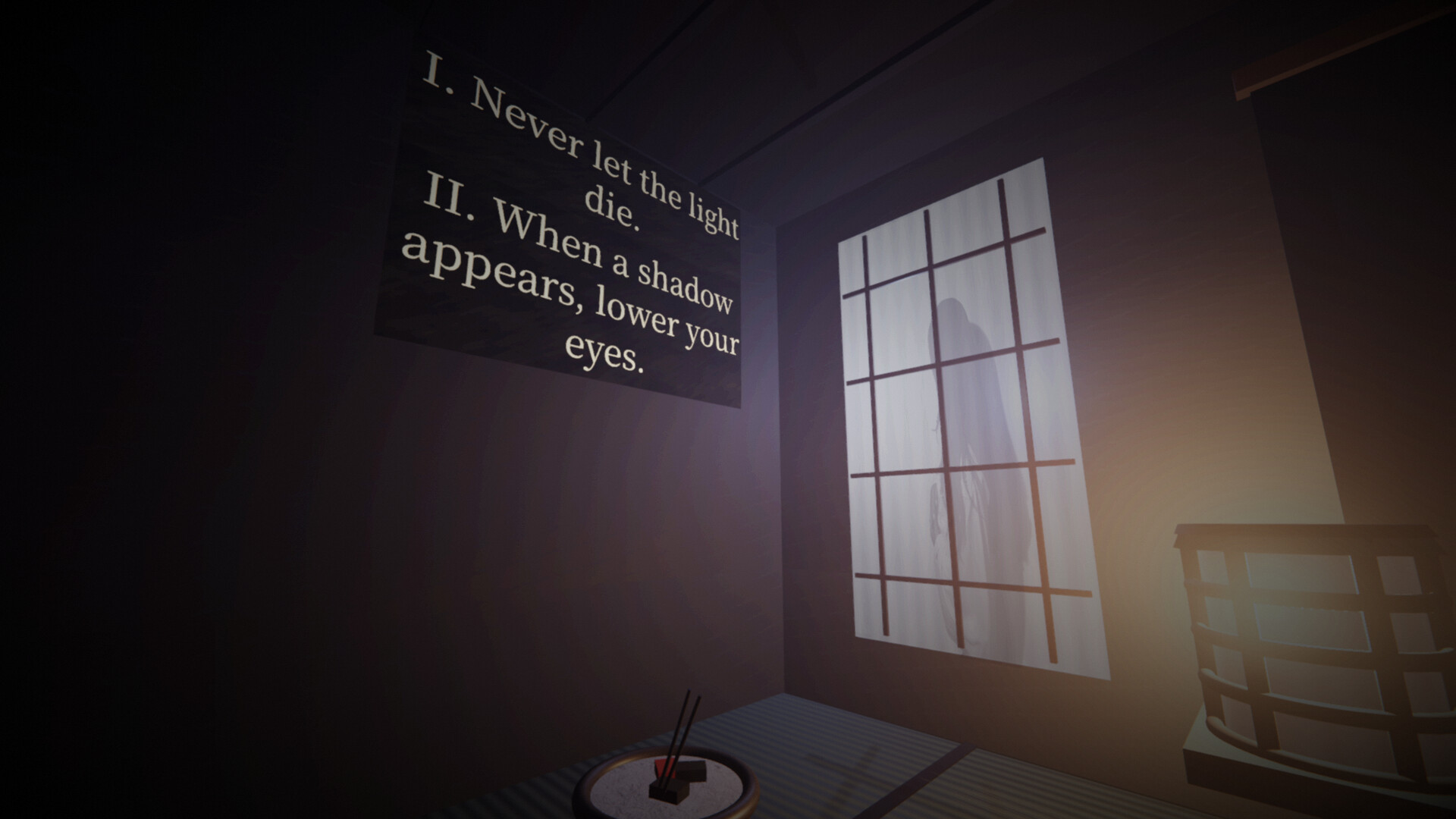
The inn sits on the border of the afterlife, which is already a poor location for a restful booking. Its more interesting offence is procedural. The rules never lie, according to the listing, but a thing can pose as something the rules name. That distinction gives the premise teeth. Your instructions can remain perfectly accurate while your interpretation gets you killed.
The establishment has apparently outsourced its entire safety policy to the guest's observational skills.
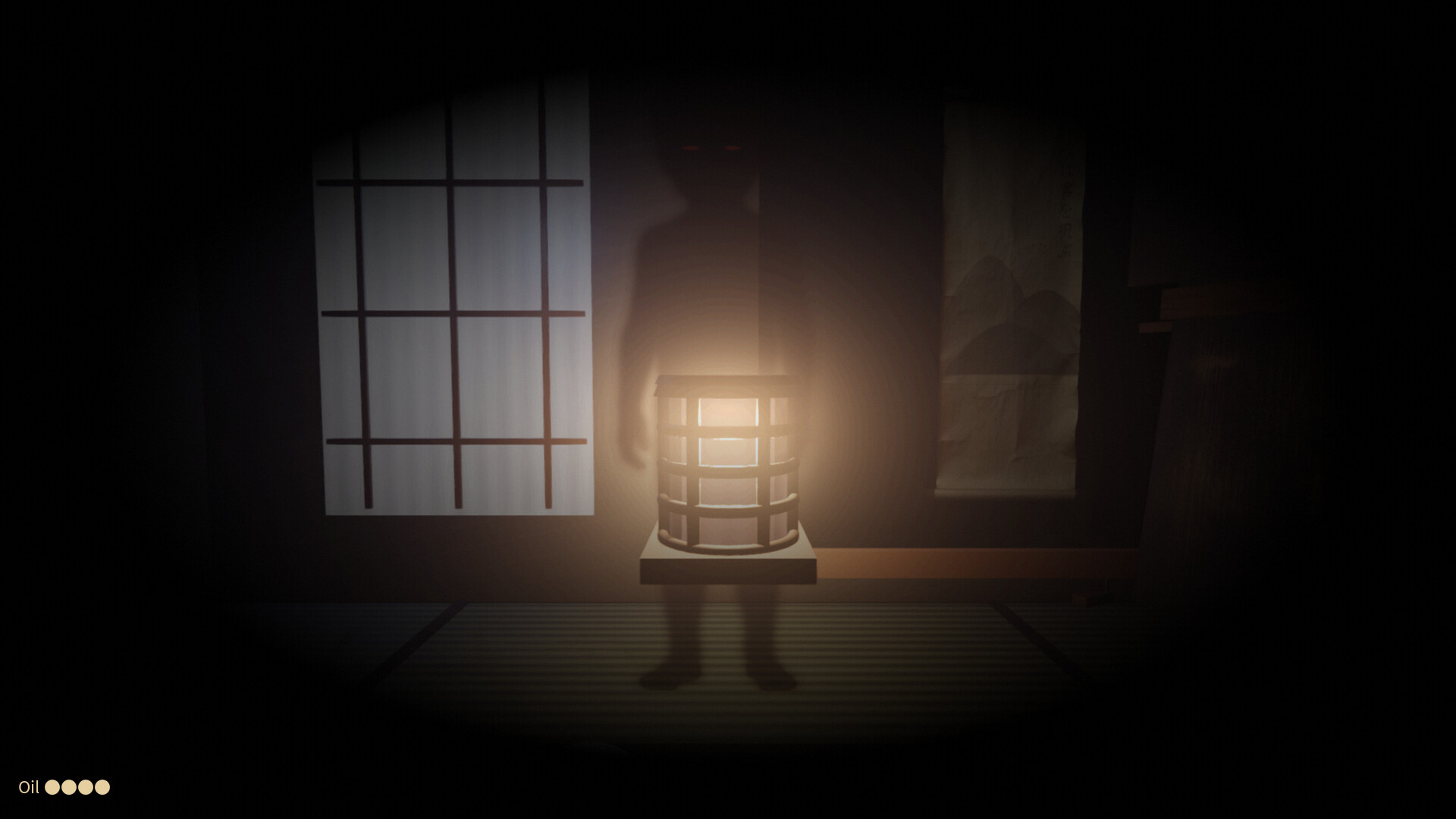
That is a stronger hook than a simple list of forbidden actions. A command such as lowering your eyes sounds reassuring because it offers a response you can rehearse. Here, rehearsal only solves half the problem. First you have to decide whether the event in front of you actually qualifies. Something behind a paper screen might have moved; something might want you to think it moved.
The threat lives in the gap between recognising a sign and trusting that recognition.
Papers, Please is the useful comparison for that mental work: rules establish a procedure, and your task is to judge whether the particular case fits. Rules of the Inn gives that process a nastier physical consequence. Instead of keeping your eyes on the evidence until the discrepancy resolves, you may need to lower them, turn away, or refuse to look back. The act that protects you can also interrupt your investigation.
That is the part I keep thinking about: obedience does not relieve you of responsibility for deciding what you saw.
Your futon is a terrible observation post
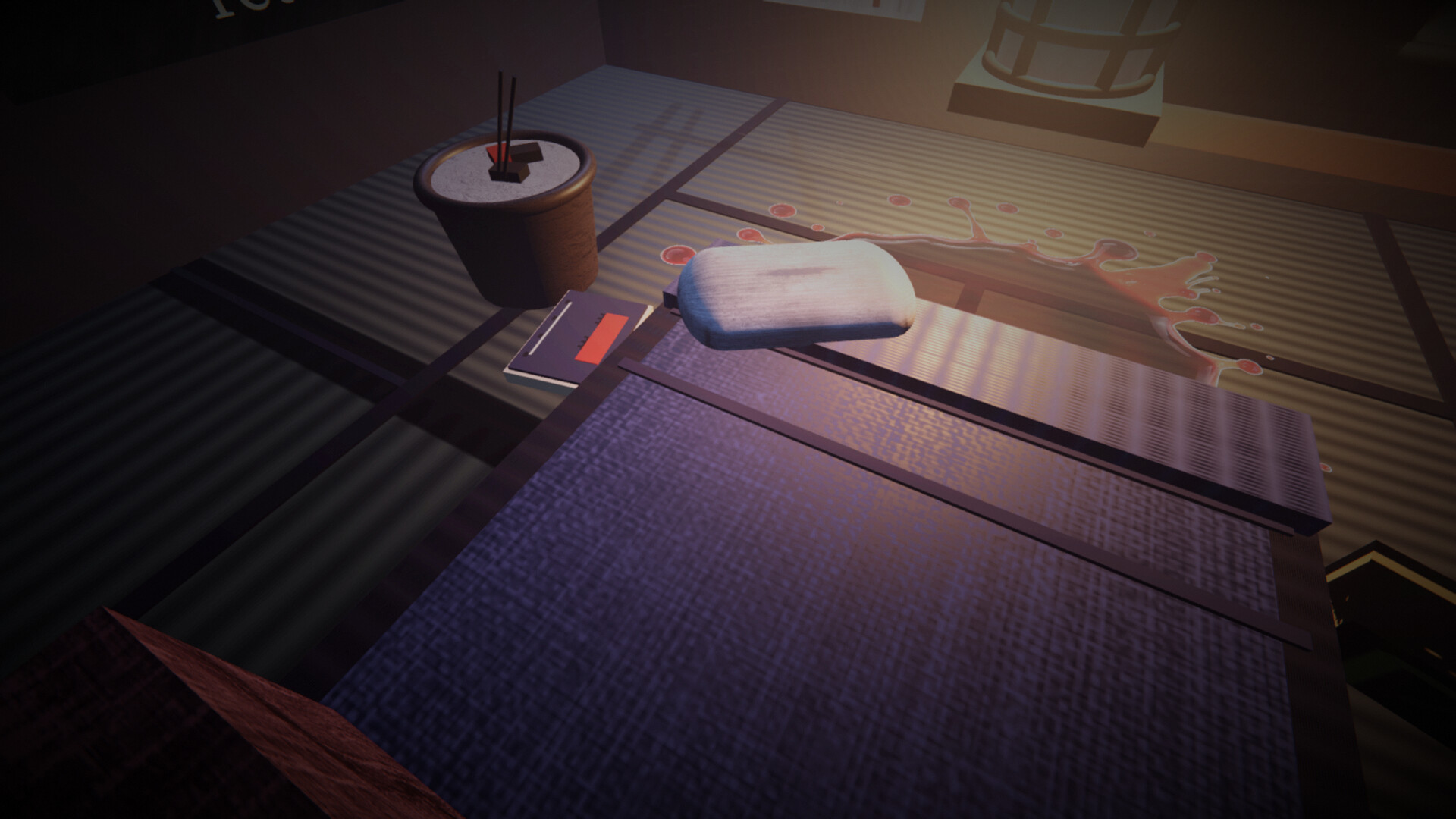
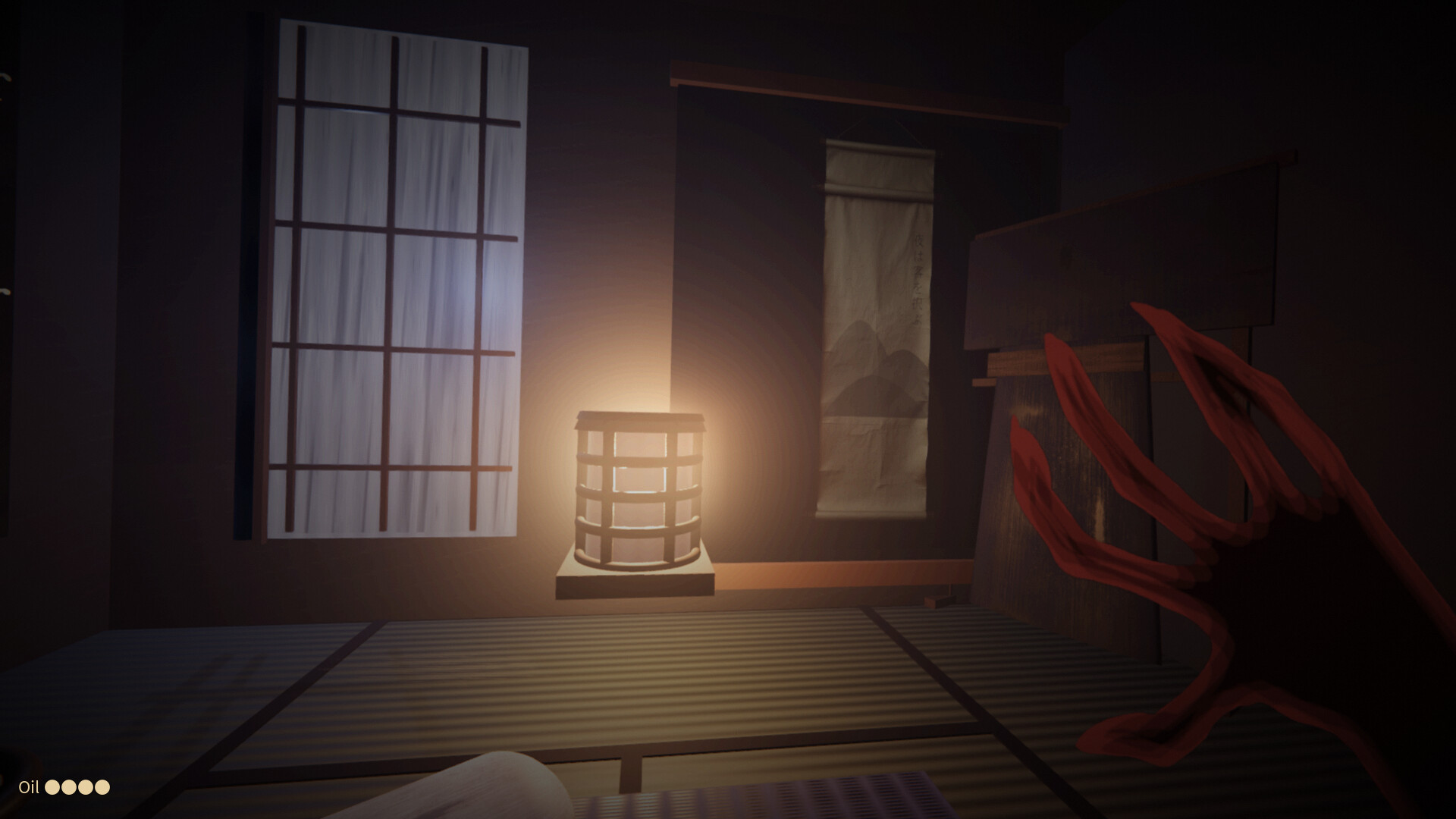
At night, you watch the room from your futon. A faint noise, a shadow, or a change in the lamplight can signal trouble. Find the disturbance, decide what it is, and perform the required rite. The demo's actions include pouring oil into the lamp, not looking back, lowering your eyes, turning away from a hole in the wall, staring at a red stain, and lowering the lamp shade.
These are small gestures with sharply different demands on where you look.
The distinction between staring at a stain and turning away from a hole matters more than an elaborate inventory would. Each makes the room a different arrangement of things you must monitor and things you must stop monitoring. A horror game can put a monster in a doorway; this one proposes making the correct use of your eyes the emergency. On paper, that is an economical way to make a confined setting do substantial work.
Then the earlier guests complicate the job. While something is in the room, traces of them can surface beside the futon or along the walls. You stare at a trace to note it. The active threat continues while you do so. Evidence therefore has a cost measured in diverted attention: the clue you want is available at precisely the moment you have an excellent reason to concentrate on something else.
This is where the listing's loop becomes more than anomaly spotting. Noticing an oddity starts a decision rather than finishing a checklist. Do you perform the rite immediately? Can you afford to record that trace first? Is the thing even what it appears to be? I have not played it, so I cannot judge how clearly those choices read in motion.
But the proposed conflict is specific and persuasive: curiosity and survival compete for the same pair of eyes.
Morning brings paperwork for the dead
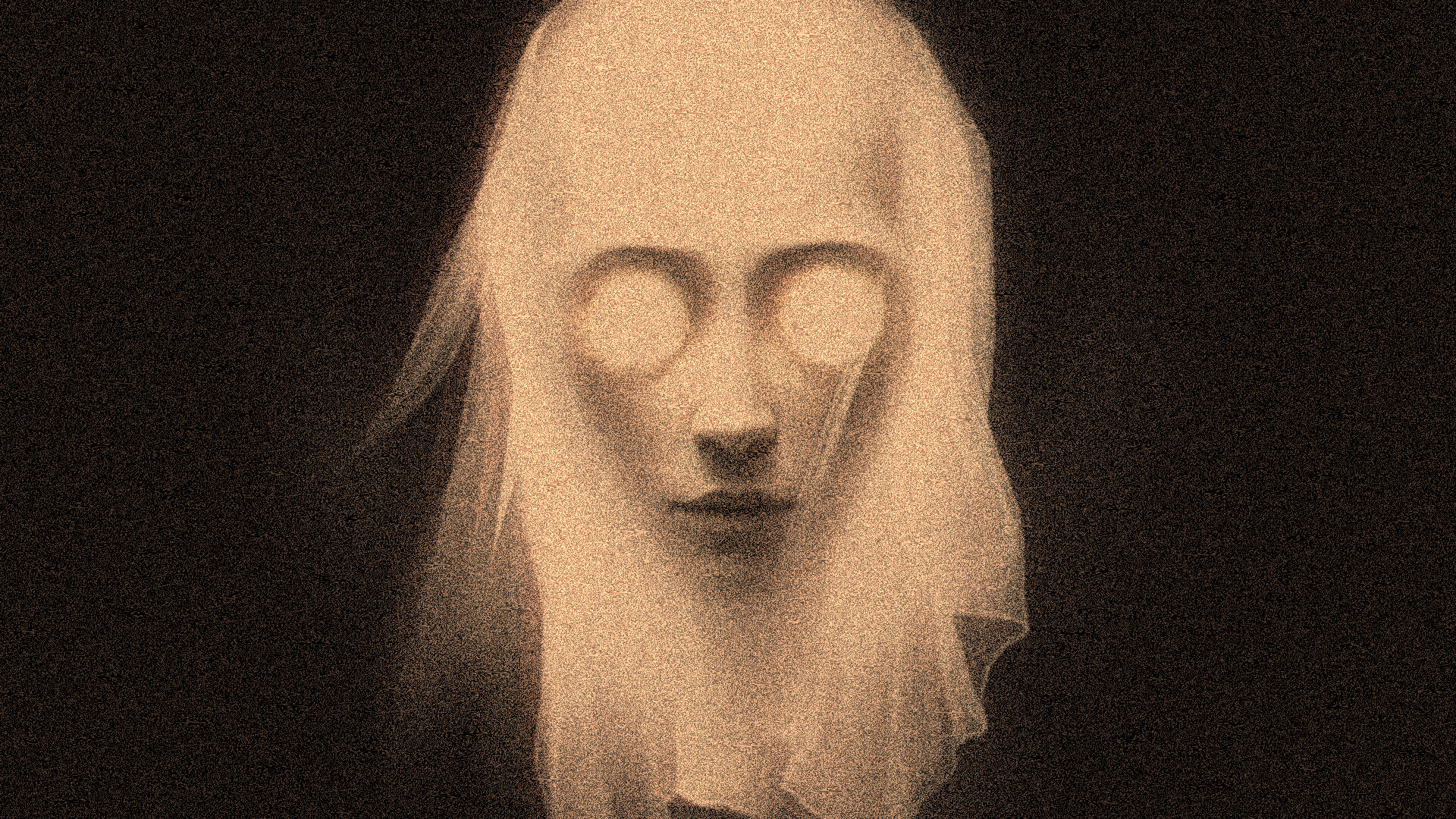
By morning, the Register turns those stolen glances into a mystery. You compare the traces you noted with writing in the margins, then enter who each earlier guest was and how they died, page by page. The listing's particularly grim detail is that guests who obeyed the rules left only their names. An empty record is not much help when your current accommodation requires urgent research into previous customers.
The Register gives the night a second purpose. Merely lasting until dawn would make every distraction an obvious liability. Trying to identify the dead gives you a reason to risk one. That is an appealing structural choice because it makes the player complicit in the pressure: you are looking away from the immediate danger because you want an answer, not simply because a task marker has demanded a detour.
The listing promises multiple endings in the full game, but it does not explain their conditions. I would not assume that every Register entry changes the conclusion, or that a particular mistake locks you into one. The supported appeal is narrower and still substantial: seven nights of survival sit alongside a longer record to complete.
The mystery supplies something to think about after the immediate question of whether you should be staring at that stain.
There is no need to dress this up as a social horror outing. The described activity is one guest watching from a futon and working through a Register; the supplied information does not establish co-op or other multiplayer support. Treat it as an individual observation-and-deduction proposition when deciding whether it suits you.
If your purchase depends on bringing friends into the room, the evidence here does not support that purchase.
Seven nights, increasingly bad instructions
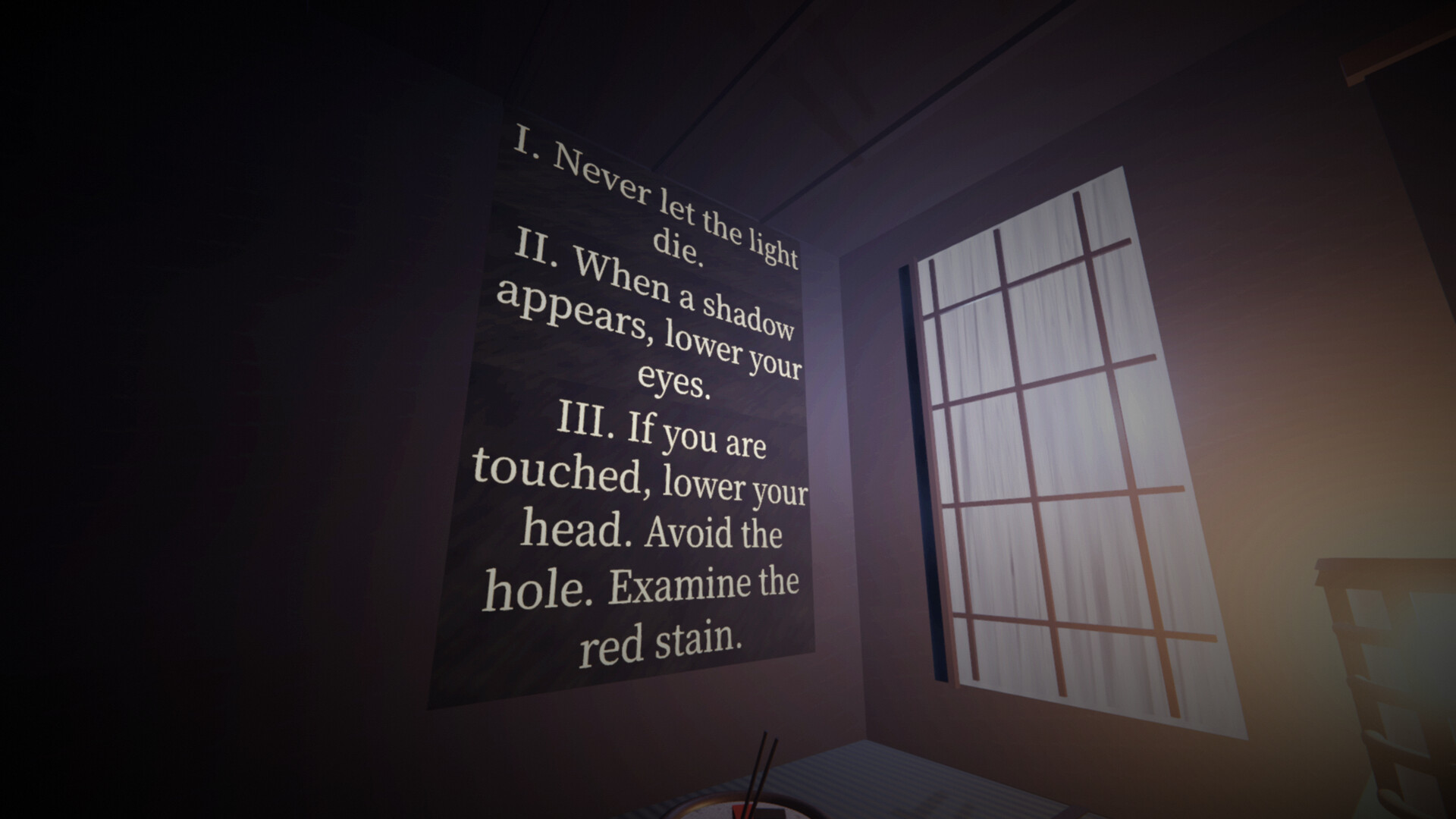
Each dawn adds another rule, increasing the number of responses you must remember. The full game introduces new rites after the third night, and on some nights one wall rule cannot be read. That is progression through accumulating responsibility. The listing describes more to recognise and more to remember, rather than an upgrade system that makes the guest increasingly powerful.
Your growing familiarity has to contend with a room that asks more of it.
The full game lists 34 kinds of anomaly and 40 individuals. Those are separate counts, not 74 interchangeable scares, and neither number proves that every encounter feels distinct. The more promising detail is variation within a kind: an appearance can change surface, size, and distance between runs.
Learning that something exists may therefore be less useful than learning how to identify it under an inconvenient new presentation.
That gives repeat attempts a plausible purpose. A memorised reaction must survive a different arrangement, while additional rules compete for recall. Whether the loop holds will depend on readable cues and meaningful differences between appearances. If a death leaves you understanding what you misread, repetition could sharpen the mystery.
If it leaves you guessing which tiny visual distinction mattered, the same design could become exhausting. The listing establishes that risk; it cannot settle it.
For $3.59, the stated package is seven nights, multiple endings, and a longer Register than the demo's. There is no supplied runtime, so translating seven nights into a confident number of hours would be fiction. The more useful buying information is that the demo covers Nights 1–3 and lets you identify earlier guests and their deaths within a Register limited to those nights.
It offers a direct way to test both halves of the premise before paying.
One player is a beginning, not a stampede
The supplied Steam snapshot records 1 current player. That is the only audience number available, and it does not establish a breakout. There is no supplied total review count, review score, or discount information, and the player-quotes list is empty. There are consequently no player testimonials to quote or early consensus to report. Calling this a sensation would turn a useful discovery into an invented success story.
Its claim on this week's attention is instead unusually concrete: a Nov 14, 2026 release with a three-night demo and a horror mechanism built around the conflict between collecting evidence and protecting yourself. The timing makes it new; the mechanics make it worth a feature. One current player is a thin traction signal, but it also puts the scale of this recommendation in perspective.
This is an invitation to investigate a small launch, not an instruction to join a crowd.
Try it if you enjoy close observation, procedural uncertainty, and mysteries that make acquiring information feel dangerous. Skip it if repeated visual scrutiny or remembering an expanding set of commands sounds like unpaid night work. My main reservation is that the crucial distinction between a genuine sign and an impersonation has to feel legible under pressure.
The demo is the sensible test of that fairness, especially before committing to four further nights of accumulating rules.
What earns Rules of the Inn a look is the Register waiting on the other side of the scare. Surviving requires attention; understanding the dead requires spending some of that attention elsewhere. For $3.59—or first through the demo—that is a sharper proposition than another haunted room asking you merely to notice its contents.
This inn gives you a reason to keep looking after you have already found something you wish you had missed.
Source: [Official Steam listing for 宿の掟 / Rules of the Inn](https://store.steampowered.com/app/5045430/). Release details, price, platforms, content descriptions, and the current-player snapshot above use the supplied listing information and Steam numbers.