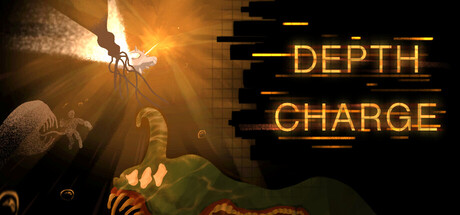
Depth Charge Makes You Pump Nitrogen Out of Sleeping Divers for $2.99
The diver is asleep. Your job is to manually pump the nitrogen out of their bloodstream, preferably without waking them, because waking up during the procedure might damage their mental state and, more importantly, their productivity. I appreciate an employer that can locate the real tragedy in a medical emergency.
Depth Charge sends you to the deepest trench of the Atlantic Ocean, then suggests that the most reliably horrible thing down there may be the personnel policy.
Wackstache, credited as both developer and publisher, released Depth Charge on Nov 6, 2026 for windows at $2.99. Its listed genres are Indie, Strategy; its premise is horror by way of a deeply undesirable job as a bellman. You complete shifts inside a heavily jury-rigged diving bell, keep divers alive and try to survive whatever is swimming outside. The price is modest. The responsibility sounds grotesquely disproportionate.
Please keep the screaming within budget
The detail that sells this to me is the instruction to keep the lights off if a sleeping diver starts tossing and turning. It turns a familiar horror action—sitting in darkness—into something you do for an unpleasantly practical reason. Darkness is part of the care procedure. Or the productivity procedure. The distinction appears to have been filed somewhere inaccessible on the surface.
That is a sharper starting point than simply putting monsters at the bottom of the sea. The bell gives your work a physical boundary, the divers give you people to worry about, and the wage gives survival an insultingly ordinary reward. You are trying to finish your shift. I find that much more persuasive than a grand declaration that humanity has discovered something it was never meant to know.
Humanity has apparently discovered another terrible workplace.
There is a useful comparison with Papers, Please here. Both premises make another person's welfare part of a job governed by procedures and money. Depth Charge changes the pressure by putting your own survival inside the same precarious apparatus.
I am comparing the design pitches, rather than claiming equivalent complexity: the listing establishes tasks, wages and responsibility, but does not establish how many difficult decisions those systems actually produce.
A to-do list with something listening outside
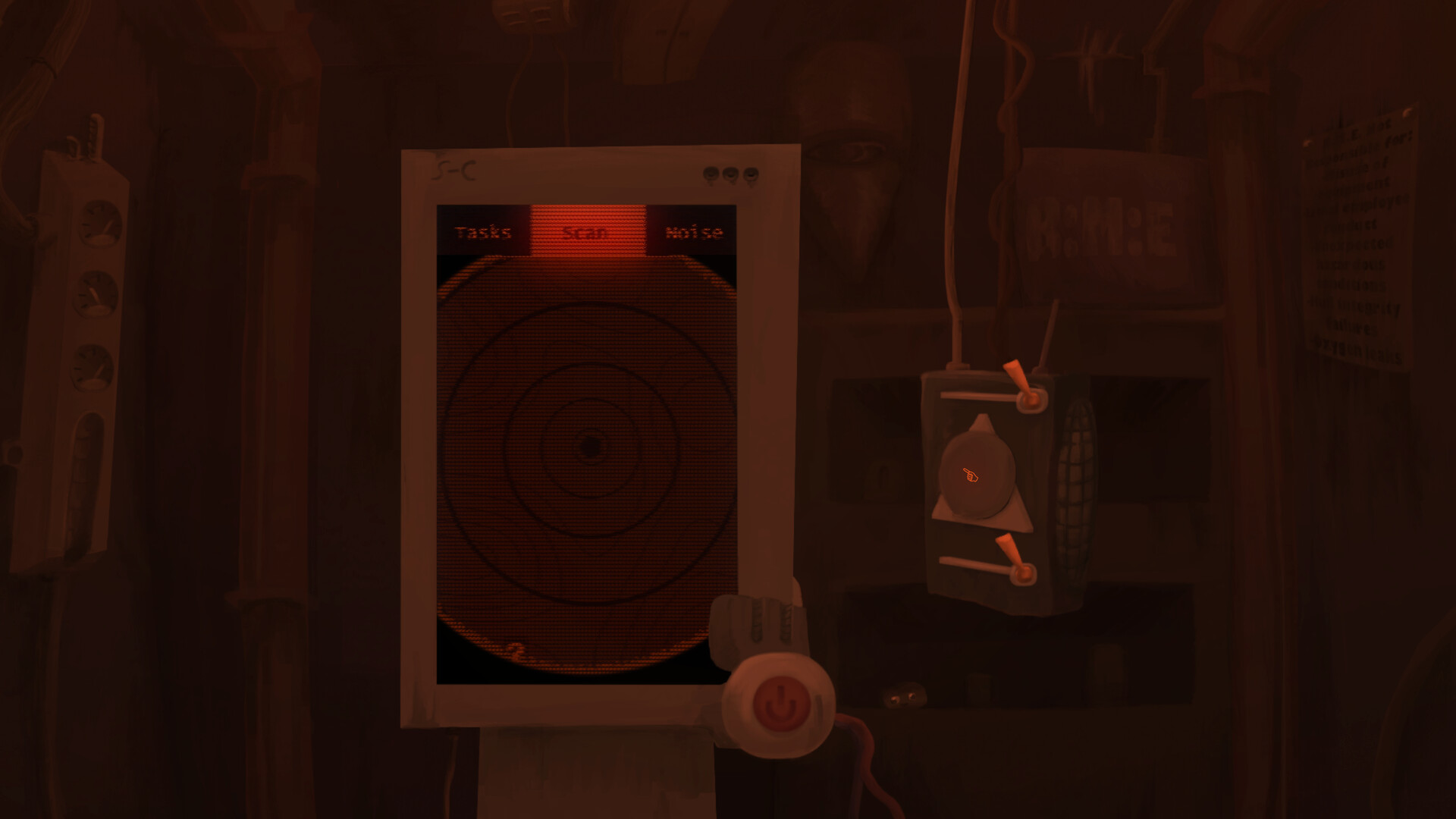
Minute to minute, the stated loop is completing tasks while watching your noise and surviving encounters with a variety of deep-sea monsters. That combination gives the chores a promising complication. A task is rarely frightening on its own; a task you need to finish while considering how much noise you can afford is a more interesting proposition. Work and self-preservation are pulling on the same pair of hands.
The listing calls the gameplay “AUDIO-HEAVY” and says speakers or headphones are important. Take that seriously when deciding whether this belongs in your evening. Sound is presented as part of the central activity, alongside managing noise, rather than merely an atmospheric accompaniment. This does not sound like a sensible purchase for a session played on mute while something else occupies your ears.
PowerWash Simulator is the useful opposite number. It makes a sequence of practical tasks satisfying through the act of getting them done. Depth Charge takes that basic appeal of having a job to perform and introduces a reason to dread performing it. The question I want answered is whether finishing a task feels like progress, exposure, or both.
The description supplies the conflict; the quality of its timing remains something a prospective player has to discover.
There is an important limit to what the pitch tells us. It does not specify the individual task set, how monsters differ, or exactly how noise affects encounters. I would not turn those gaps into imaginary machinery. My interest rests on the relationship the listing does establish: you have work, you must mind the sound you make, and your diving bell is not a reassuring place to do either.

Congratulations, you can afford a better bell
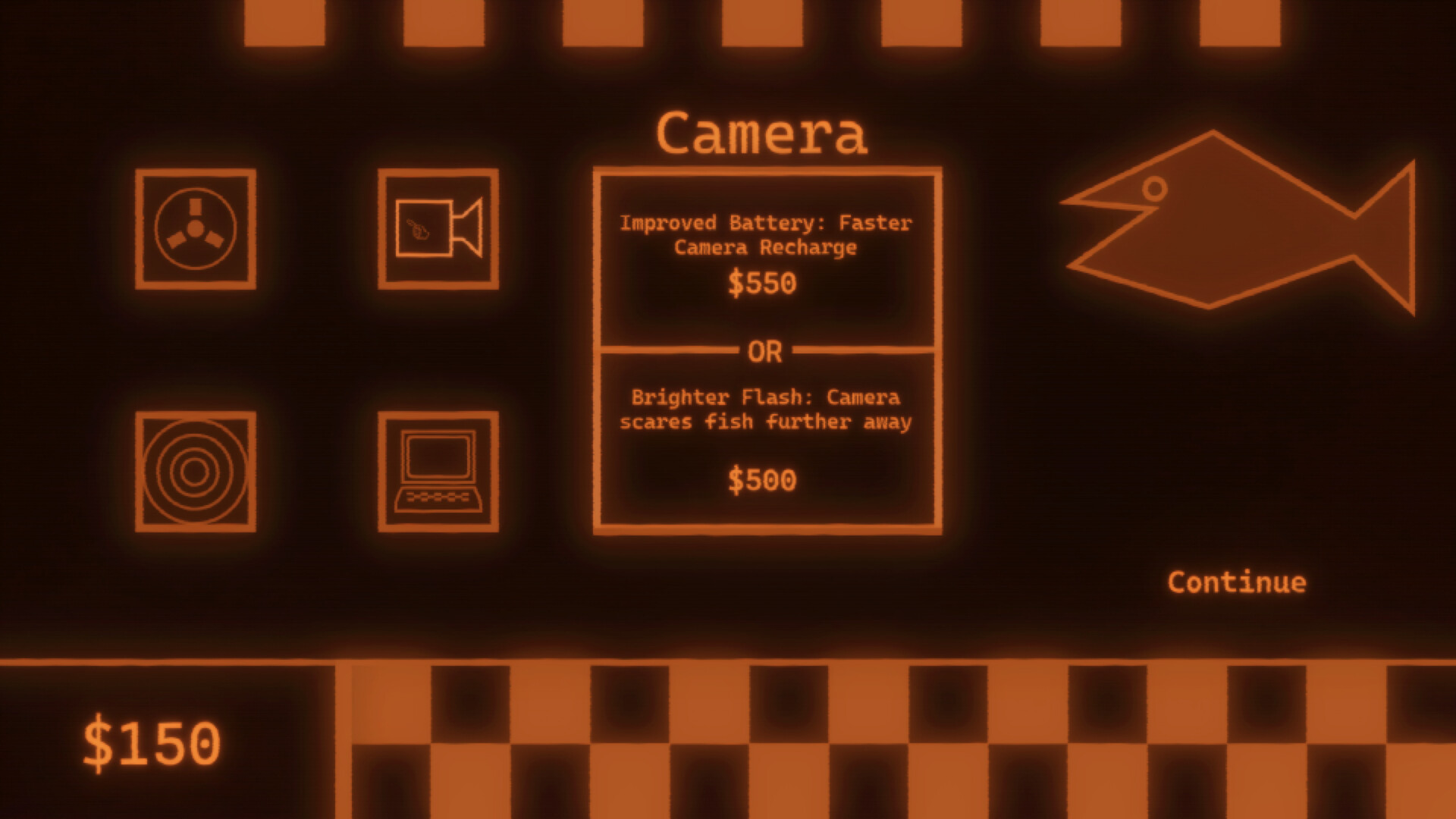
Performance during each shift determines your wage, which you can spend on diving-bell upgrades. That is a strong piece of workplace nastiness: successfully enduring the equipment earns you money to improve the equipment. It also gives the shifts a reason to connect. A good result can change what you take into the next stretch of work, rather than existing only as a congratulatory number.
Whether that loop holds depends on what the upgrades ask you to choose. The listing encourages experimenting with different upgrades to find endings, which suggests purchases matter beyond simply making the bell more comfortable. It does not describe the upgrade catalogue or its trade-offs, so I cannot tell you there is a beautifully balanced economy hiding here.
I can say that tying pay, equipment and narrative discovery together is a more tempting proposition than wages with nothing interesting to buy.
The divers complicate this progression in a particularly unpleasant way. Bringing at least one back after a successful dive triggers your responsibility to pump out their nitrogen while they sleep. Saving someone therefore creates further work, with instructions about lights and the consequences of waking them. I like the refusal to let rescue be a clean punctuation mark.
The person comes back, and now you have to look after them inside the same dreadful bell.
Do not mistake those divers for a promised group of friends to invite. The supplied listing describes your responsibilities as the bellman but does not state multiplayer or co-op support. It gives me no basis to sell Depth Charge as a communal shouting session. If your purchase depends on sharing duties with another player, this description does not establish that you can.
Four endings, then the clock gets involved
Depth Charge advertises four unique endings, each supplying pieces of a larger narrative. The route towards them involves experimenting with upgrades and looking for secrets. That makes the ending count relevant to the work loop: there is a stated reason to revisit your choices and examine the bell's possibilities, rather than treating the first conclusion as everything the game contains.
Getting any ending for the first time also opens HYPOXIA MODE, a timed post-game challenge. That is a concrete second use for the underlying tasks. Once you know enough to reach an ending, a clock can put pressure on how efficiently you perform the work. Whether that is appealing depends on whether you enjoy the procedures themselves; a timer will not rescue chores you already resent doing.
At $2.99, four endings and a further mode are enough to make me curious, but they are not a measurement of duration. There is no supplied playtime, shift count or estimate of how long the secrets take to find. Four endings could share substantial ground.
My reservation is that the bureaucratic joke and the diving-bell setting sound immediately compelling, while the variety needed to sustain repeated shifts remains unproven by the description.
That distinction matters even at this price. If you dislike repeating tasks under pressure, the promise of more endings may sound like additional paperwork rather than additional value. If you enjoy learning an unpleasant little routine until you can carry it out efficiently, the combination of wages, upgrades and a later timed challenge has a clear appeal.
Depth Charge is asking you to become better at a job you should probably quit.

Fresh from the trench, without a crowd
Here is the honest case for covering it on November 7: it released yesterday, and its central absurdity is unusually specific. The supplied Steam signal is 0 current players. That is no evidence of a breakout, and I would not dress it up as one. A concurrent count is a snapshot; it also cannot tell us how many people have bought the game or what they thought after closing it.
No total review count, review score, discount or player quotations are supplied. There are consequently no enthusiastic customers to quote and no positive ratio to lean on. The $2.99 figure is the listed price, with no supplied basis for calling it a sale. This is a discovery recommendation built around a newly released game's design proposition, with a conspicuous absence of supporting audience evidence.
What earns Depth Charge a look is the way its details belong together: noise-sensitive work in a jury-rigged bell, wages spent on that bell, divers whose rescue becomes another delicate procedure, and an employer's vocabulary that reduces mental distress to lost productivity. Those are specific reasons to click through and judge the proposition for yourself.
I want to know whether the shifts make good on that ugly little arrangement. For $2.99, the Steam page has my attention; the monsters will have to compete with management for it.