BlockBabe Turns Match-3 Combos Into Flirting Across 99 Levels
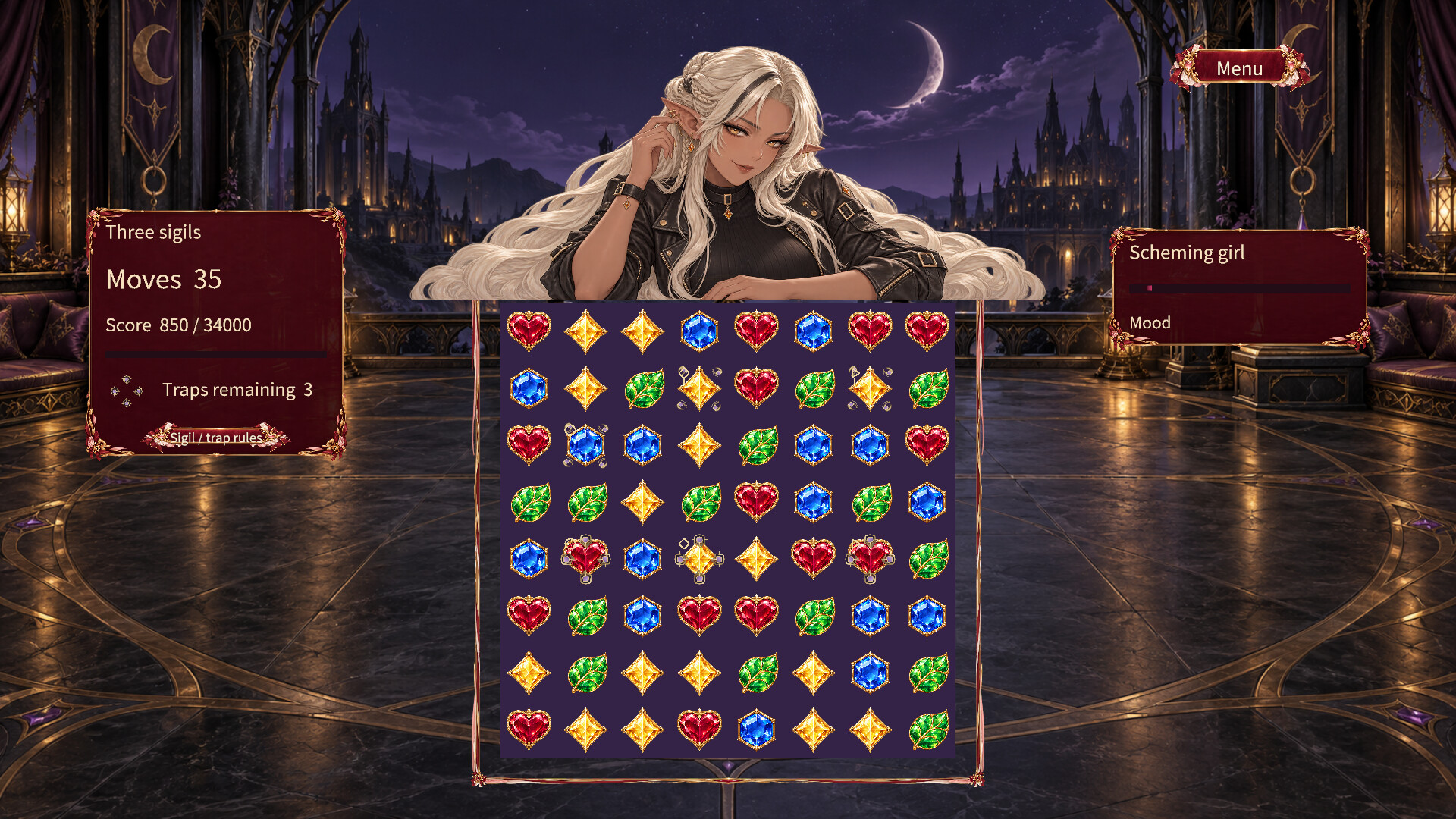
Apparently, clearing a board of gems now counts as making a good impression. In BlockBabe, a successful combo can change a character’s expression, pose and vocal reaction, turning the familiar business of swapping coloured tiles into a miniature performance of romantic competence. There is something beautifully ridiculous about trying to look charming while cracking layers of ice.
My interest, though, rests on a less glamorous question: does the board have enough ideas to make the flirting worth earning?
Released Nov 9, 2026, BlockBabe comes from developer and publisher FlowBreak断水流工作室, costs $3.59, and lists its platform as windows. That makes today, November 10, its first full day after the stated release date. The proposition is unusually easy to measure: ten characters, ten themed chapters and 99 levels of single-player match-3.
The harder part is deciding whether those chapters represent ten useful changes of rhythm or ten decorative reasons to keep matching.
Your combo has an audience
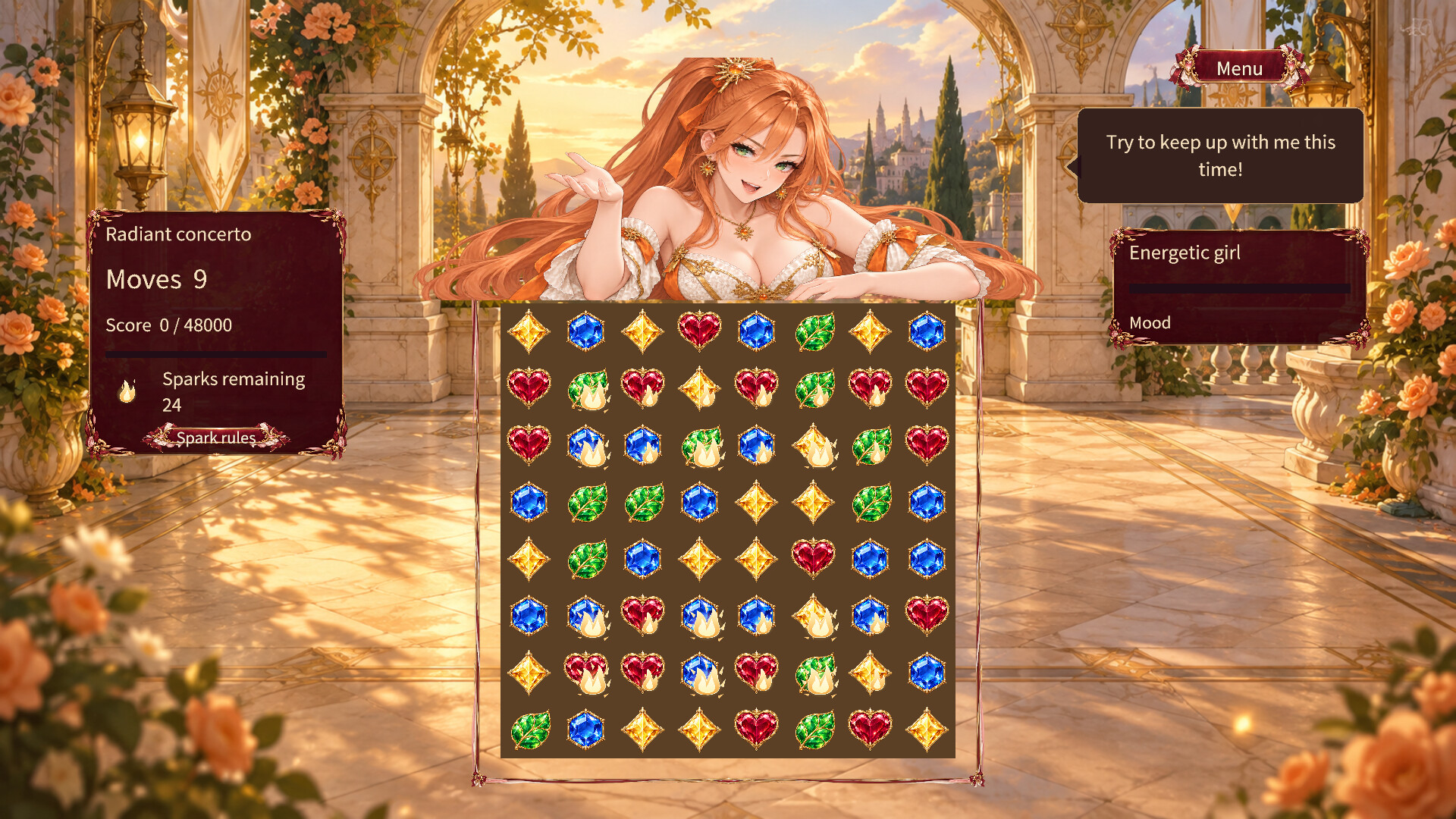
BlockBabe’s central joke is that the person beside the puzzle appears invested in your tile-swapping abilities. Expressions, movement and short emotional voice reactions respond to successful play; build combos and you can trigger FEVER. It takes the little celebration that normally belongs to an exploding gem and gives it a face.
As a premise, that is considerably more memorable than another abstract demand to improve a number.
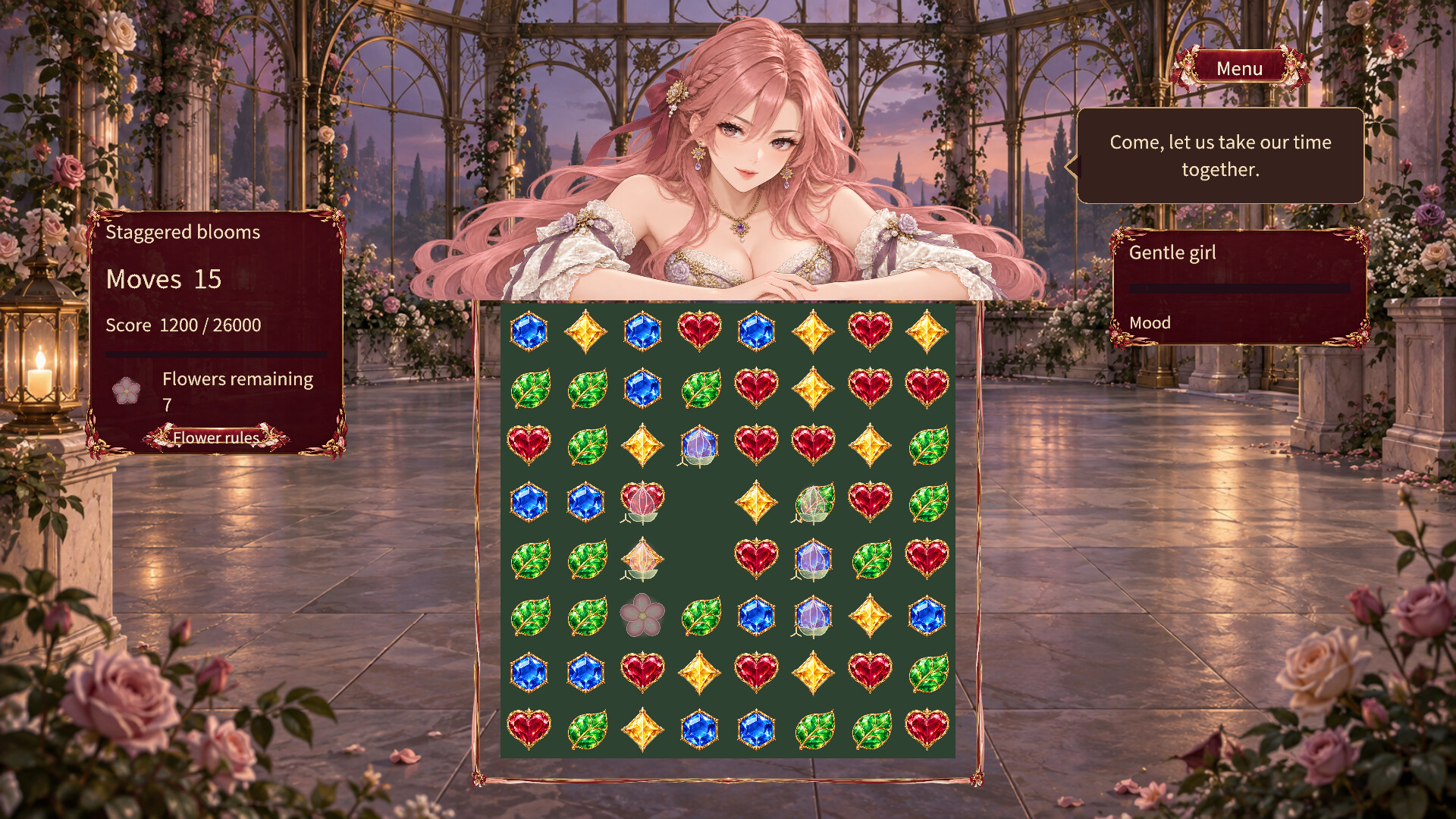
The distinction matters because the character presentation is tied to performance rather than merely offered as a backdrop. A stubborn glance or cool response supplies a different atmosphere from an inviting smile, while chapter settings range from a sunlit garden to a moonlit study and a royal throne room. On paper, the board is both a puzzle and a stage.
Whether those reactions remain entertaining after repetition is something the listing cannot establish, and I would not mistake a lively description for evidence that they do.
Bejeweled is the useful mechanical reference: swap tiles, make matches, pursue the satisfaction of a productive cascade. BlockBabe keeps that readable foundation and attaches a character’s visible response to the result. Candy Crush Saga is the closer comparison for the emphasis on obstacles and level objectives.
The change here is the packaging of those demands into ten character-led chapters, with flirting supplying the reason to care about another successful chain. Those comparisons describe the pitch, not a claim that its puzzles equal either game’s best work.
The ice is doing more work than the flirting
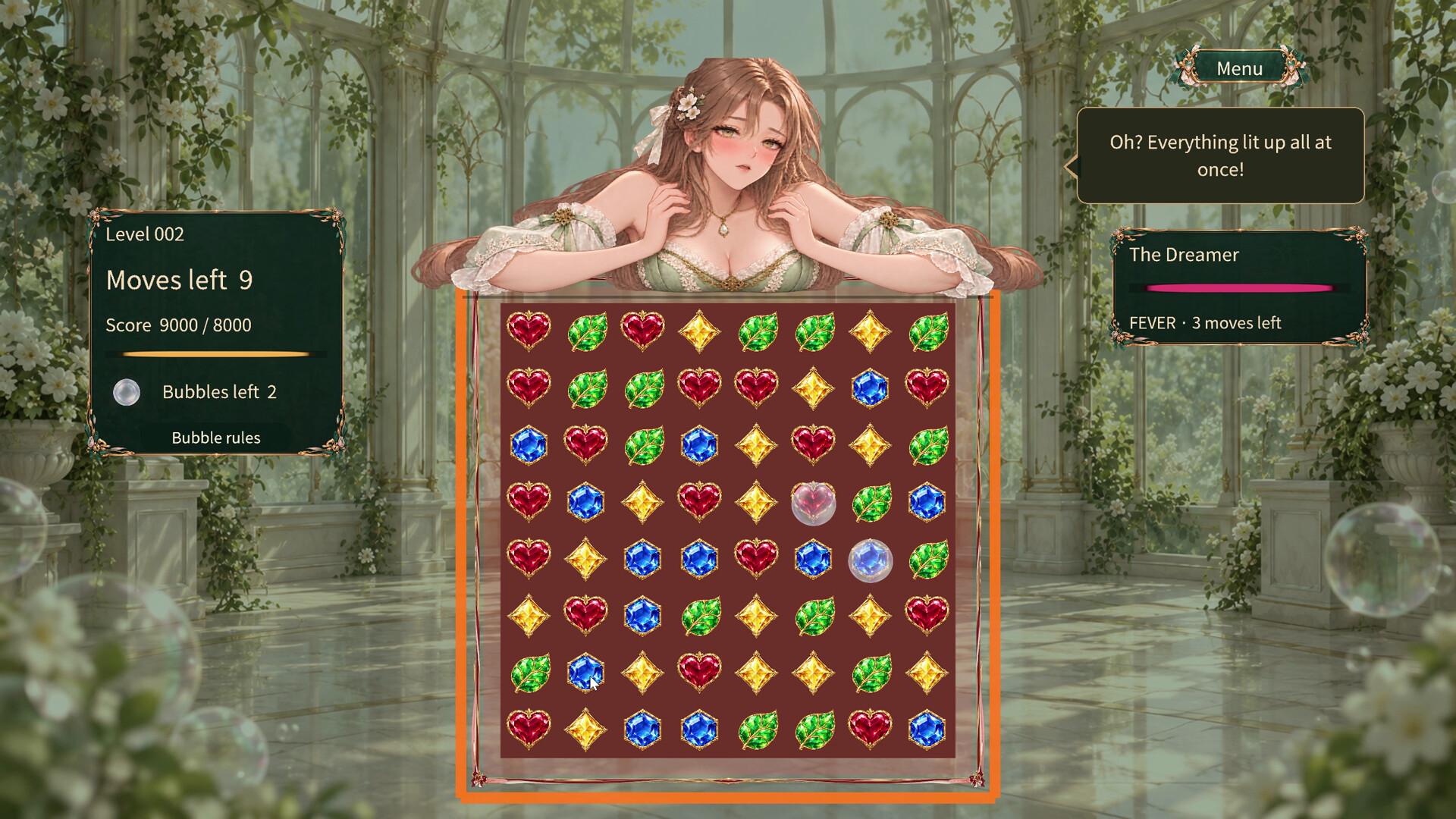
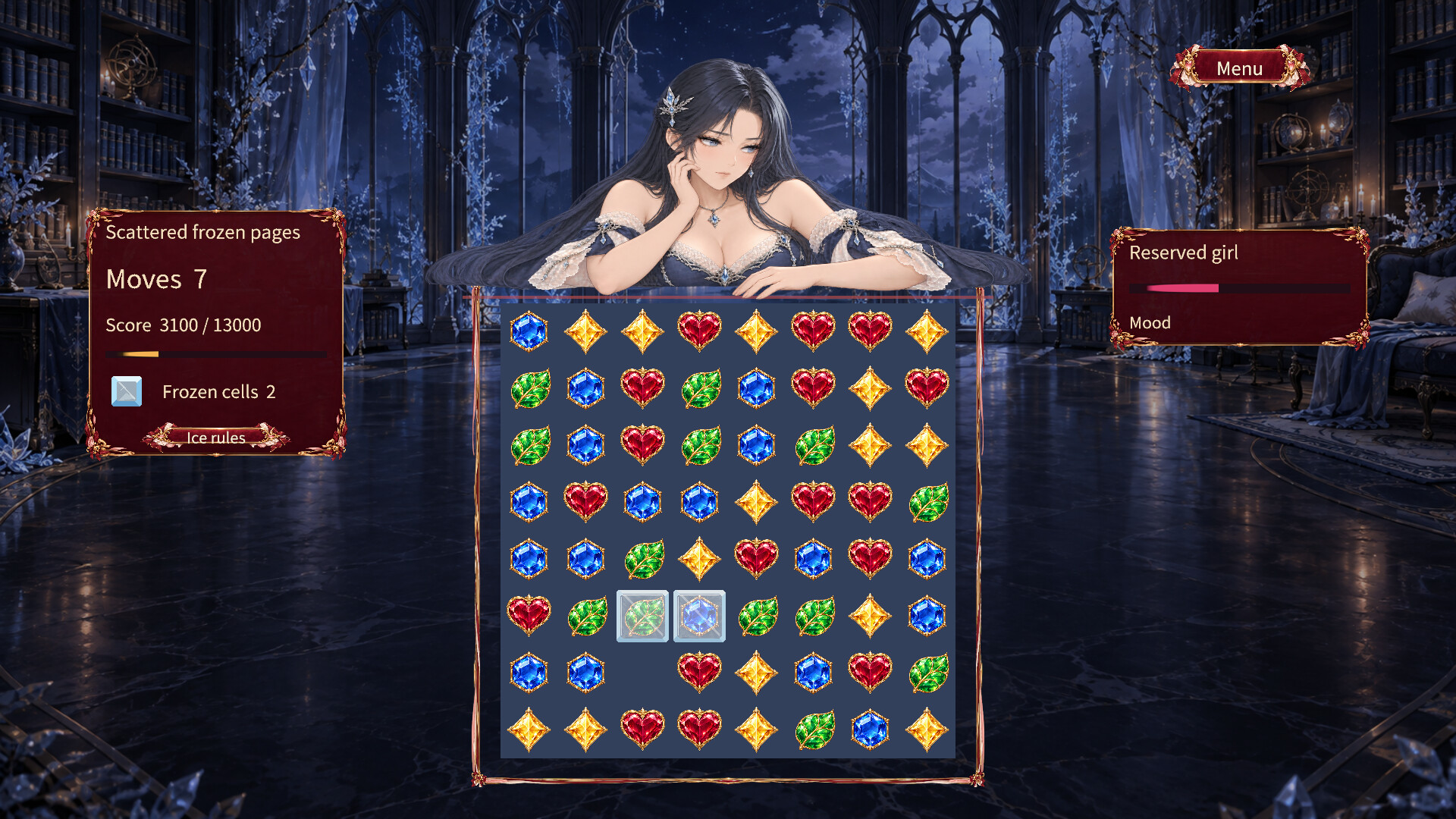
Minute to minute, the task is to swap tiles, build combinations and fulfil the current chapter’s objectives while raising your score. Bubbles need popping, heart locks need breaking, and ice comes in layers to crack. Those are concrete demands on where a match happens, rather than simply how many gems disappear. A large combo is an attractive result; a useful combo is one that also addresses the board’s particular problem.
The later chapter mechanics are the strongest reason to look past the cheeky premise. The listing names garden obstacles, delivery routes, directional targets, wake-up windows, persistent marks and royal orders. That is a promising spread of puzzle concerns: routing, direction, timing and conditions that persist.
The names suggest different pressures on a familiar action, although the listing does not explain each rule closely enough to judge its depth. I want those differences to change which swap looks sensible, not merely change the decoration around it.
That is also where BlockBabe can earn its 99-level length. A match-3 campaign needs a reason for the next board to ask something the previous one did not. Introducing chapter-specific rules offers that reason without requiring an entirely new control scheme. The attraction is continuity with interruption: you keep the basic act of swapping tiles, then face a new condition that makes an old habit less reliable.
Whether the difficulty curve makes good on that structure remains an open question.
Ninety-nine levels need somewhere to go
Progression is framed around ten themed chapters and their ending challenges. Those chapter bosses give the campaign identifiable tests, while the final chapter adds a two-stage encounter. That is a more useful promise than an unspecified pile of puzzles: there are stated points at which the game asks you to demonstrate what you have learned.
The royal throne room sounds particularly appropriate for a game that eventually hands down “royal orders” about your gem arrangement.
There is a second pursuit alongside completing the campaign: higher scores. Steam achievements and online Boss Conqueror records provide additional targets, with the latter requiring an internet connection and Steam sign-in. That makes the boss challenges the clearest advertised destination for competitive replay.
It does not establish how varied repeat attempts will feel, but it does identify something to chase after simply reaching the next chapter stops being enough.
The supplied listing describes no upgrade system, equipment builds or persistent character-stat progression. The expectation should therefore be mastery of boards and objectives, rather than a promise that repeated attempts will buy a stronger character. I find that a sensible fit for this premise: if a combo earns an extravagant reaction, the amusing part is that the player arranged it.
Still, anyone looking for a deep build-making layer should avoid reading one into the chapter structure or the word FEVER.
A solo date with a public scoreboard
Despite the ten-character ensemble, BlockBabe is explicitly single-player. There is no advertised co-op partner to rescue a poor move, and online score competition does not turn it into a shared-board game. Its social element is comparison through Boss Conqueror records; its immediate company is the reacting character.
That combination suits someone who enjoys working through a puzzle alone but likes having a score worth improving afterward.
The voice detail deserves precision, too. Character voices are short emotional reactions, while dialogue text is localized separately; the listing specifies five interface and text languages. That describes a performance layer punctuating play, not evidence of extensive voiced conversations. Anyone drawn chiefly by the prospect of a substantial relationship story should keep that distinction in view.
The clearest commitment here is to expressive match-3, and that is the basis on which I would choose it.
At $3.59, the advertised content volume is straightforward: 99 levels across ten chapters, plus achievements and score competition. That is an accessible asking price for testing an eccentric combination, but level count cannot tell us how long the campaign lasts or how much repetition it contains. No discount figure is supplied, so $3.59 is the price to assess on its own merits.
The value argument depends on enjoying the repeated action of arranging matches, not on dividing a low price by a large-looking number.
New yesterday; a phenomenon is another matter
The reason to feature BlockBabe this week is its Nov 9, 2026 release and its specific collision of reactive characters with chapter-based puzzle rules. The supplied Steam snapshot records 0 current players. That is a concurrent-player reading, not a sales total, and it provides no evidence of launch momentum.
This is a newly released curiosity worth inspecting, rather than a popularity story with the inconvenient numbers removed.
There are no supplied player quotes, total review count or review score. Consequently, there is no honest way to quote two satisfied players, describe a positive review ratio or claim that a community has embraced the bosses. That absence limits the recommendation: the case rests on the official feature set and the appeal of its design choices.
With 0 current players in the provided snapshot, “hot right now” can only sensibly mean newly available with a distinctive hook, not demonstrably busy.
My reservation is the potential gap between character spectacle and puzzle substance. Ten characters can make a campaign look varied while leaving its decisions much the same; 99 levels can extend a good idea or expose a thin one. The chapter-specific mechanics are what make this listing worth attention, because they offer a plausible answer to that problem. The reactions are the invitation.
Delivery routes, directional targets and a two-stage final encounter are the details that might persuade a puzzle player to stay.
Try BlockBabe if you enjoy objective-led match-3, prefer solo play and find the idea of a character getting increasingly expressive about your combos amusing. Skip it if flirtatious presentation irritates you, if co-op is essential, or if you need player testimony before buying a new release.
For $3.59, its strongest pitch is modest and specific: familiar tile swapping, a new set of chapter demands, and someone making rather a lot of your ability to break a heart lock.