3 Estrellas Puts Six Players on One Couch and Three Teams on One Pitch
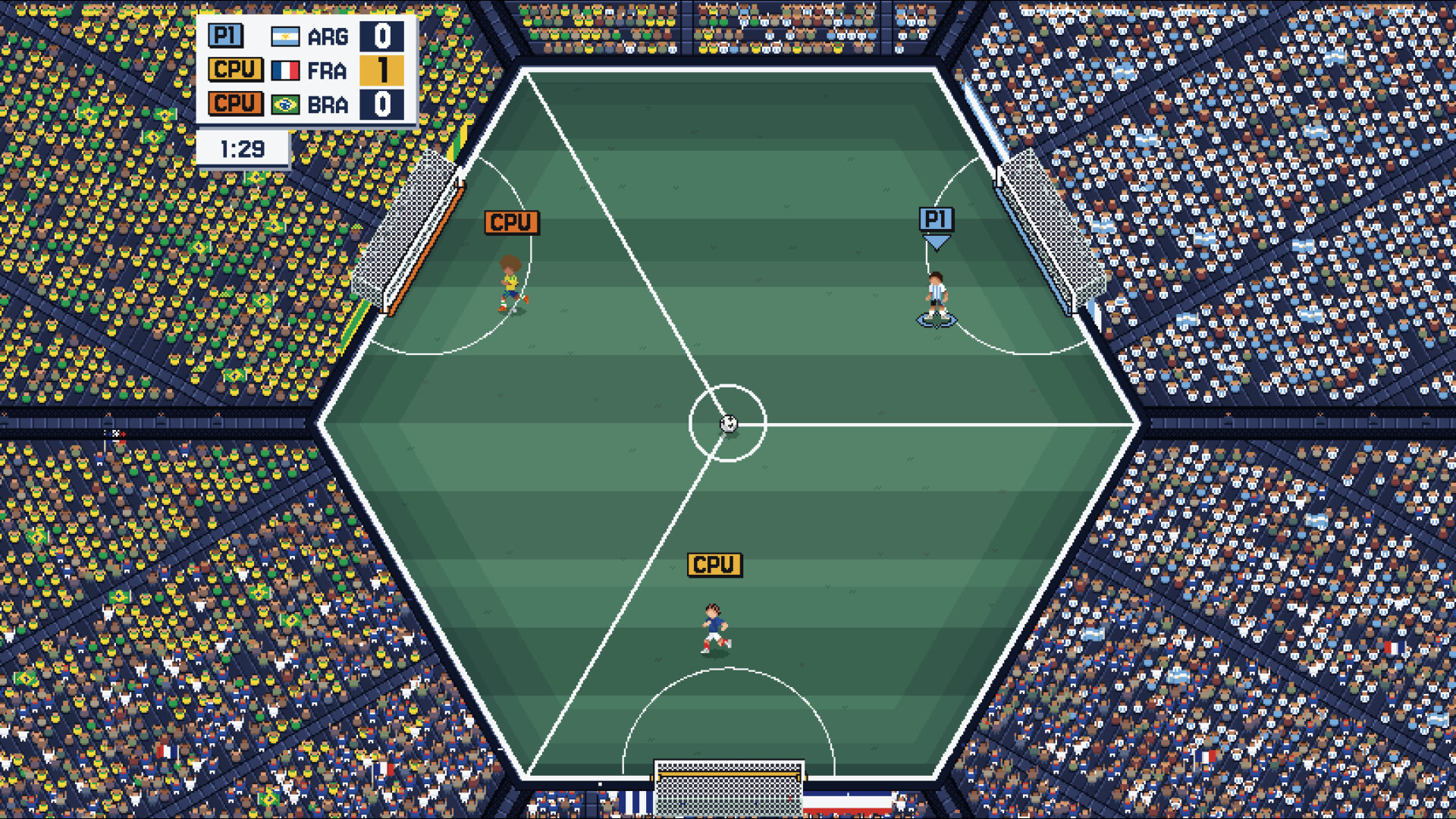
Three teams, one pitch. Football already struggles to accommodate two sets of supporters without someone questioning the referee's ancestry; 3 Estrellas proposes adding a third interested party. I like this as a design pitch because it immediately creates a problem I want to see people solve. Who defends when there are two other teams worth worrying about? How long before a temporary alliance becomes a personal grievance?
The official listing calls this mode Triangular. I would call it a promising way to make the next match somebody else's fault.
Midnight Sunrise, credited as both developer and publisher, released 3 Estrellas on Nov 7, 2026. Today, November 8, that makes this a day-old proposition: $8.49 for top-down arcade football on windows, with up to six players sharing a screen and online play with friends over Steam. The important qualification arrives early: the supplied live Steam signal is 0 current players.
This is a game whose case rests on what you can organise with friends, rather than evidence that a crowd has already organised itself.
The couch is doing most of the recruiting
The listing's best slogan is “THE COUCH IS SACRED,” which is a reasonably bold theological position for a football game. Underneath it sits the useful detail: up to six people can play on a single screen using keyboards and controllers. That is the feature I would put above the pixel art, above the original soundtrack, and certainly above the claim that the game is impossible to put down.
Getting six people involved in one match gives an inexpensive sports game a clear job to do.
My reference point is Sensible Soccer: the appeal of seeing football from above, reading the available space and treating the pitch as something you can understand at a glance. 3 Estrellas positions that broad appeal around a gathering. Its official description puts immediate access ahead of menus and tutorials, then fills the invitation with alternative modes.
The proposed pleasure is less about administering a football institution than finding out which of your friends will become unbearable after scoring once.
That emphasis also gives the game's promises a useful test. The developer says you can pick a team and be shouting at a goal within ten seconds. I cannot certify that timetable, but it tells me what the design ought to prioritise: a short route from choosing sides to doing something consequential. If arranging a match becomes an evening's paperwork, the central pitch fails.
Six-player support earns its place when the sixth person can join the fun without needing a lecture.
Three teams make a better argument than nostalgia
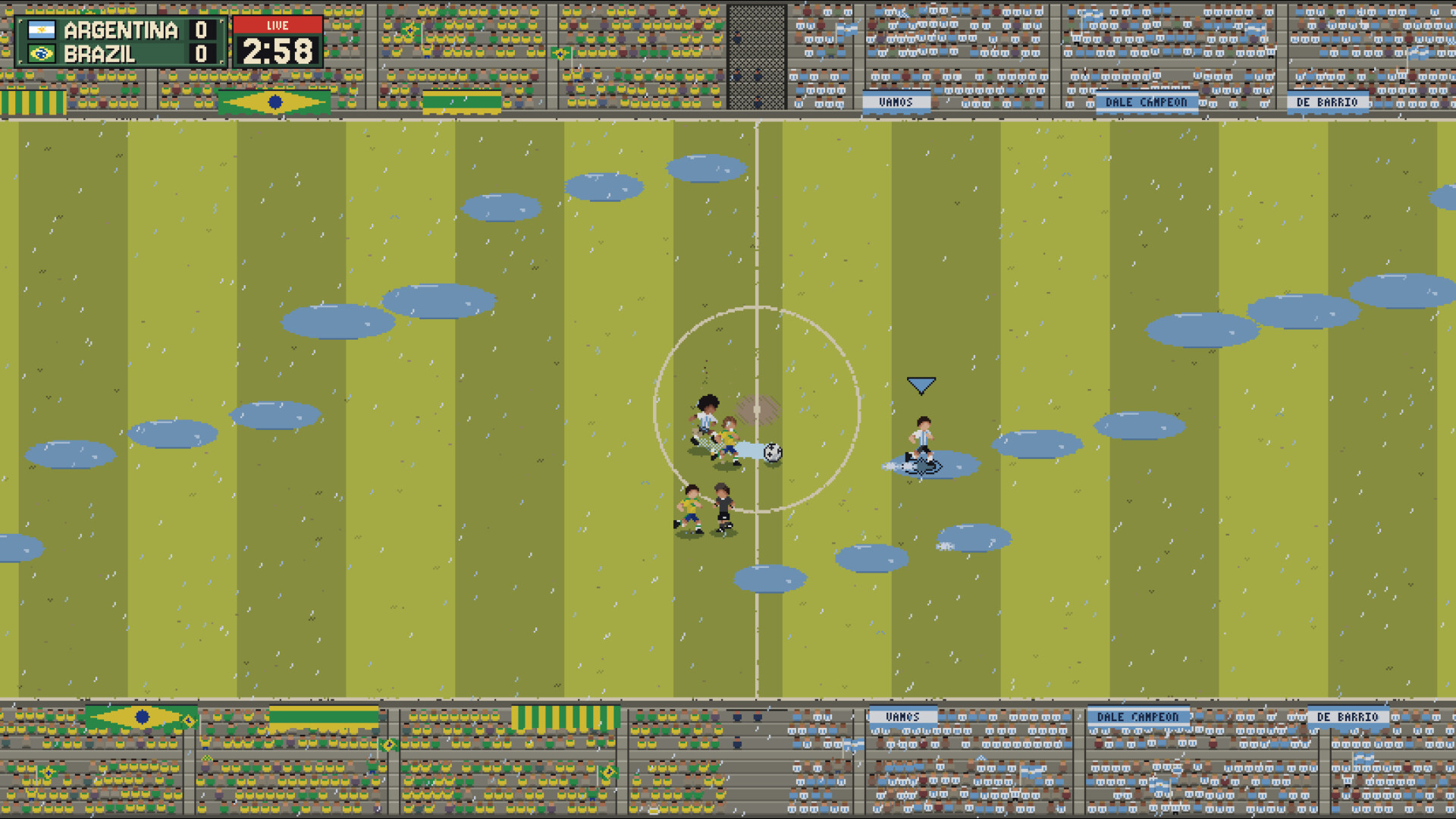
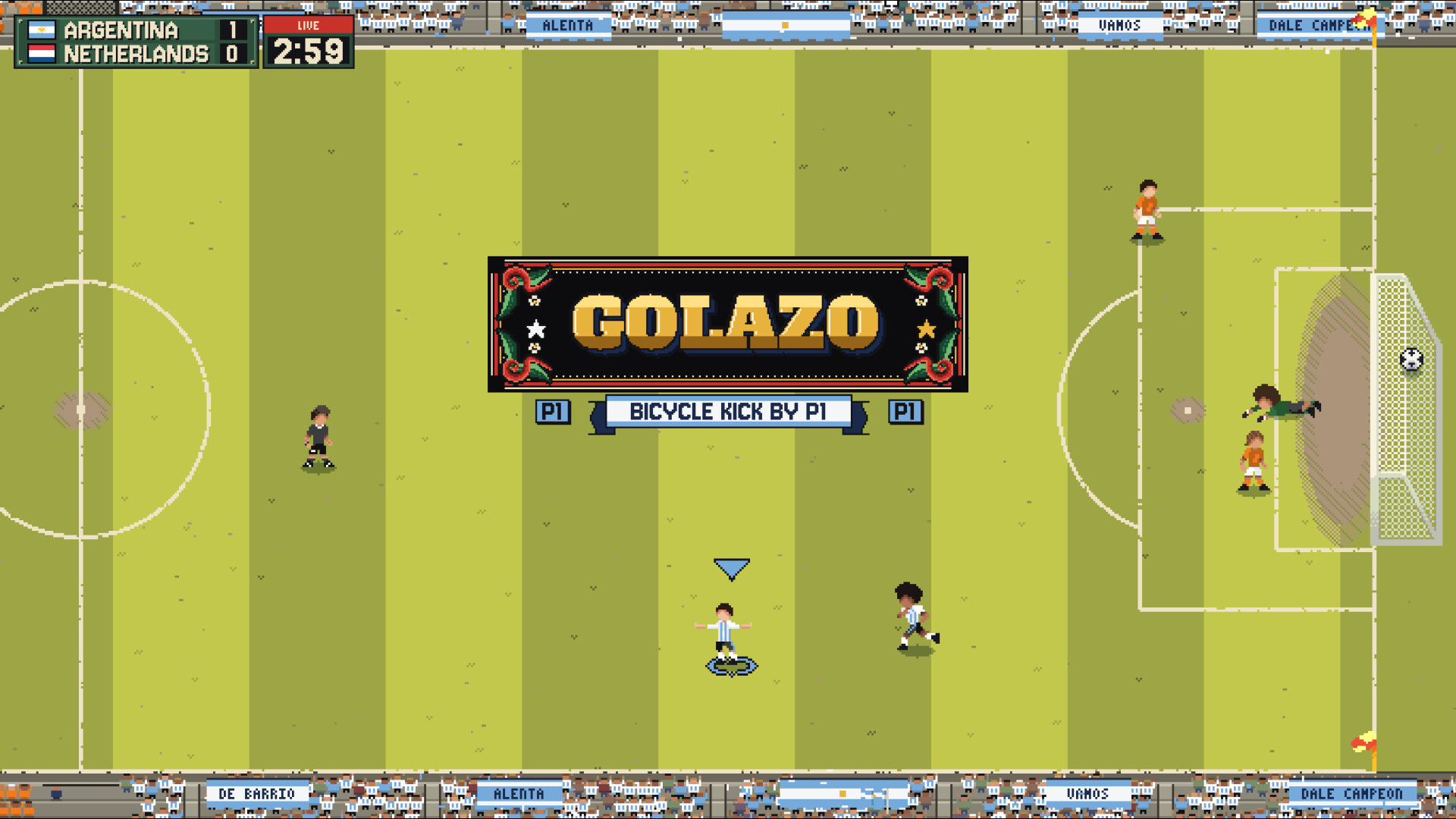
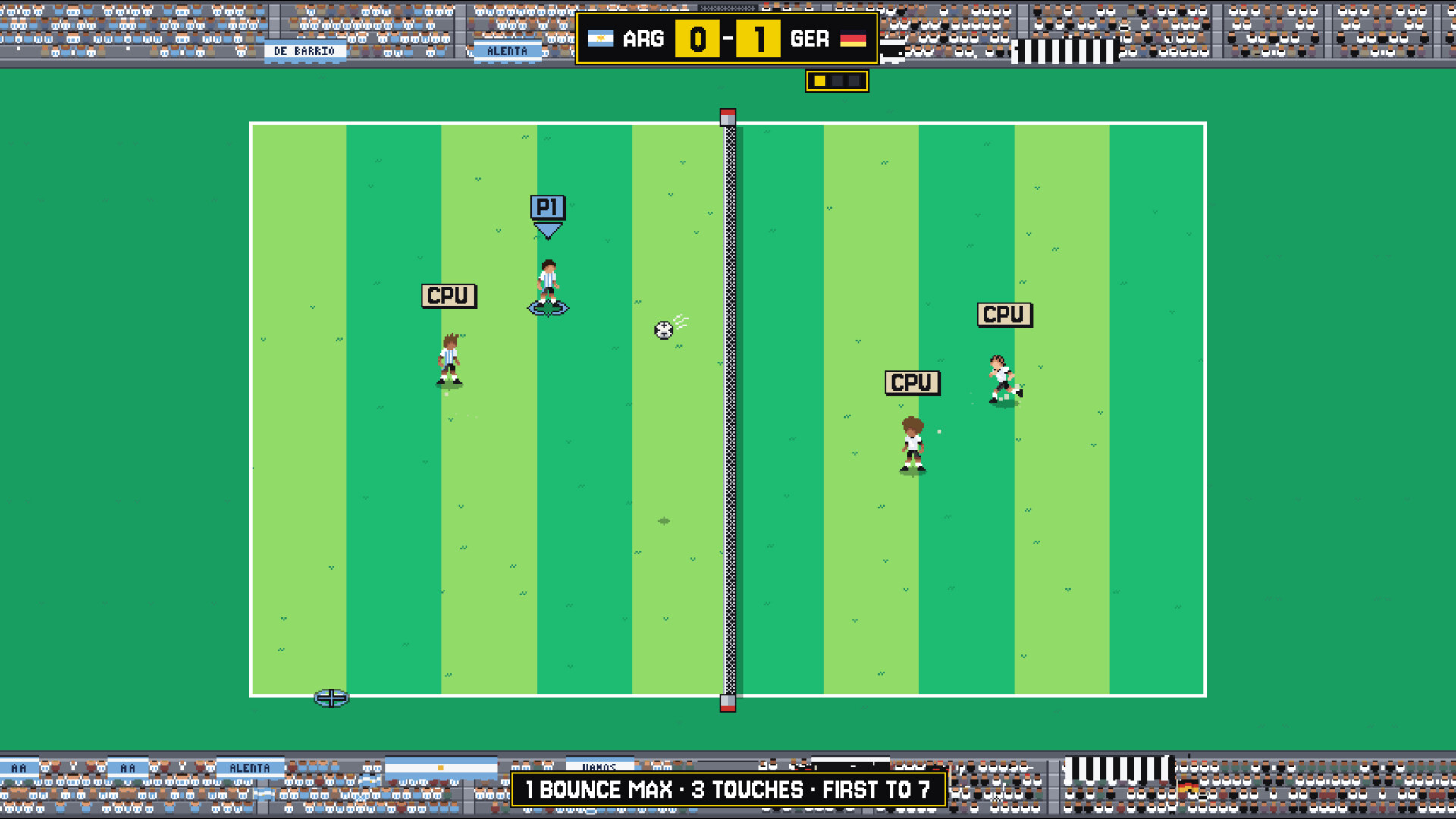
Minute to minute, the advertised activity is refreshingly legible: choose teams, play arcade football, score goals. The top-down presentation and controller support supply the basic invitation. What makes me look twice is the decision to put several different football problems around that core. A quick match asks you to win a match; Football-Tennis asks you to keep the ball from bouncing twice.
That single rule changes what precision is for, even before anyone starts arguing about whose ball it was.
Triangular is the standout because its entire description—three teams, one pitch—suggests a different way to read danger. An ordinary contest gives you one opponent to track. A third team makes attention itself part of the proposition. I am interested in whether that produces clever opportunism or simply a magnificent loss of collective dignity.
The listing does not explain its scoring or team arrangements, so those remain questions for the game to answer. The basic disruption is enough to earn my curiosity.
Rocket League is the other useful comparison, as a reference for football becoming a social occasion through an altered set of rules. 3 Estrellas makes its own alteration by offering multiple forms of the sport, from a shootout to three-team competition, within a top-down arcade package. That is a more convincing identity than the invocation of an '80s arcade-cabinet vibe. Nostalgia can sell me a colour palette.
A third team can sell me a reason to invite somebody over.
The weather gets a vote in your excuses
Rain, wind, snow and heat each change how the ball moves, according to the official listing. That is a meaningful design promise because ball behaviour sits underneath every decision in a football game. Changing it gives familiar space a new complication: the same intended action need not lead to the same result.
I like the prospect of weather becoming something a group learns to accommodate, then immediately blames whenever accommodating it becomes inconvenient.
There is a reservation attached to that appeal. A game built around quick understanding needs changes in ball behaviour to be readable. Weather could add texture to repeat matches; it could also make a newcomer wonder why the ball has stopped cooperating. Without hands-on evidence, I cannot tell you where 3 Estrellas lands. I can say that this is the part of its design I would scrutinise first.
Party football benefits from surprises, but people still need to understand enough to claim that their good goals were intentional.
The same distinction applies to the promise of online play over Steam. Midnight Sunrise advertises friend invitations and makes confident claims about its netcode. Those are developer claims, not a connection-quality verdict I can pass along as my own.
Online support makes the invitation practical for friends in different rooms; it does not, on the supplied evidence, establish how reliably a close match survives their internet connections. That matters more here than whether the soundtrack lodges in your head.
A cup run, a streak, and five bits of history
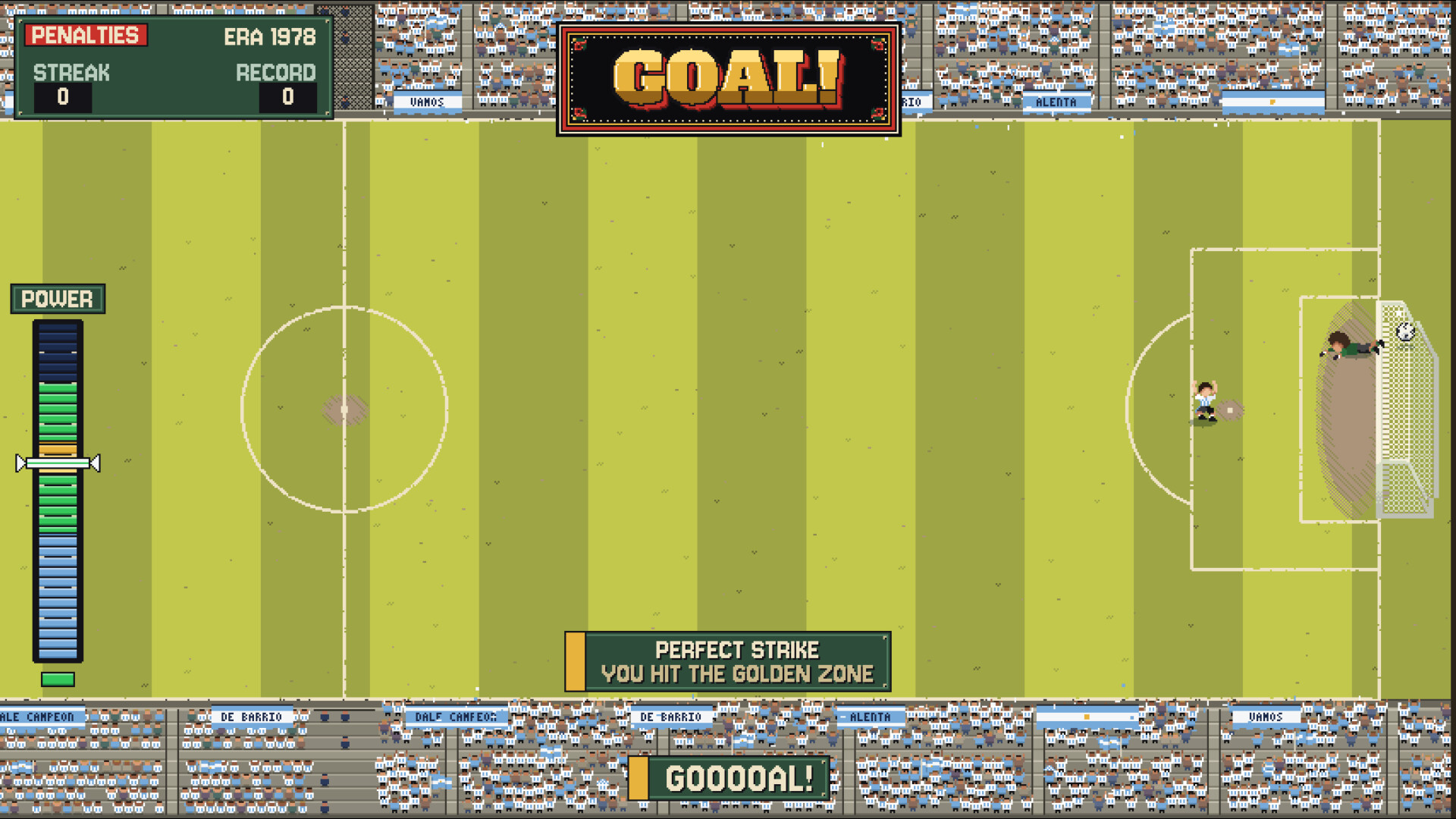
The progression described on the page is organised around contests. Tournament mode lets you build a bracket and work towards a final. Penalties includes a streak mode. Those are understandable reasons to play again: finish the cup run, extend the sequence, recover from a miss that everyone else has decided to remember forever.
The listing does not describe an upgrade economy or a persistent unlock structure, so I would not buy it expecting either. The advertised reward is another competitive situation.
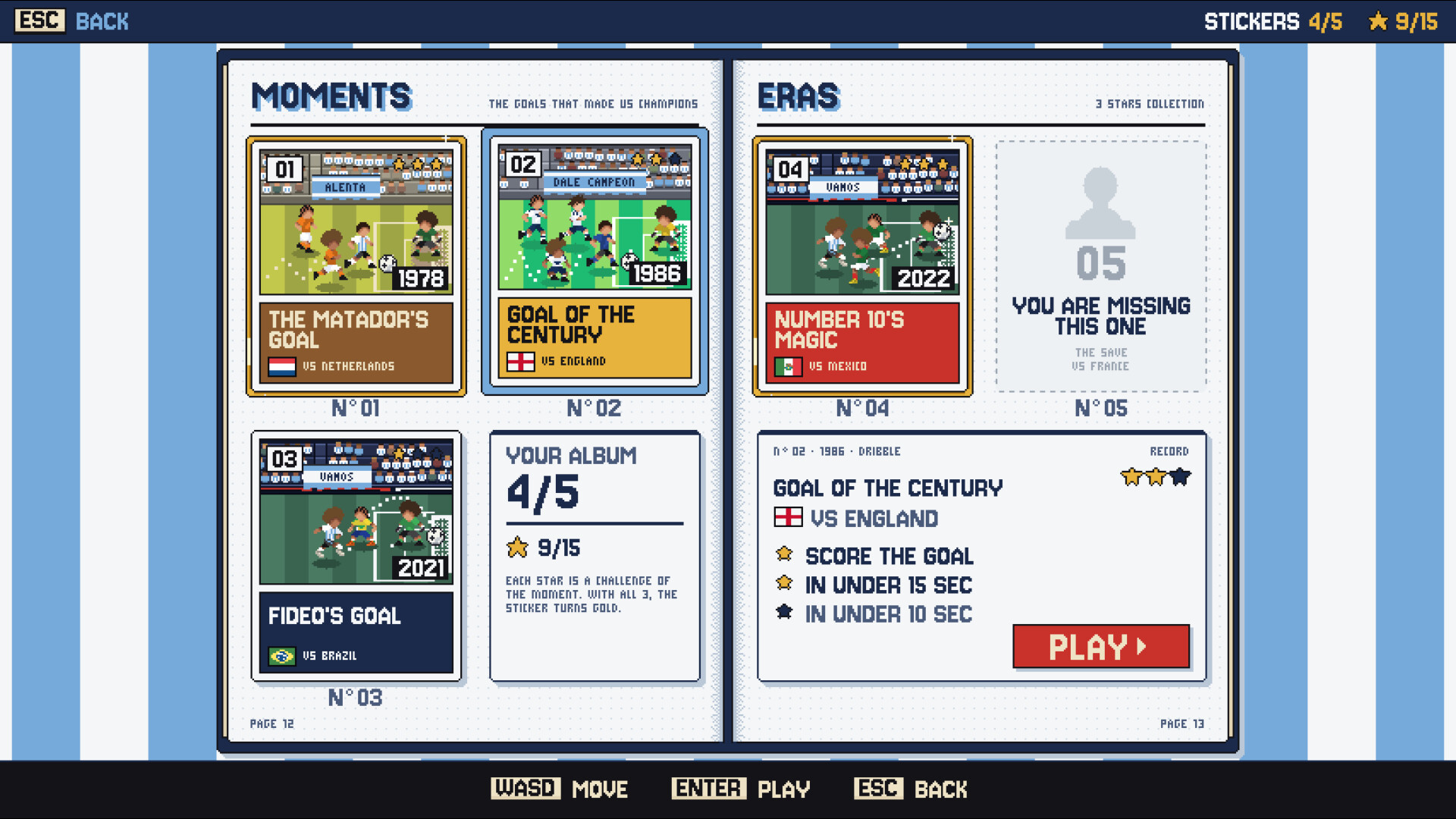
There are also five Legendary Moments, presented as iconic football plays you can attempt yourself. The listing gestures towards an impossible dribble and a crucial save without identifying the events. Five is a useful, finite piece of information amid the exuberance: this is a small set of challenges, not evidence of an enormous historical campaign. Their value will depend on how distinct those situations feel.
I like the idea of a specific football predicament offering a break from another full match.
At $8.49, the content argument is therefore about how often the modes might return to your evening. Quick matches, a tournament bracket, Football-Tennis, Triangular, penalties and those five moments give the group several reasons to change activity before changing games. That is a plausible source of longevity, but mode names cannot establish depth by themselves.
The loop holds if controlling the ball remains satisfying after the novelty of six people shouting has worn off. The listing gives me reasons to investigate that question, not permission to declare it answered.
Zero players is a warning, not a secret success story
The current-player figure is 0. It would be absurd to dress that up as momentum, and equally careless to turn one live reading into a lifetime verdict on a game released yesterday. There is no supplied total review count, review score or discount information. There are also no supplied player quotes, so there is no honest way to offer two approving voices from the stands.
Right now, the evidence supports a distinctive new release with an unproven audience. It does not support calling it a hit.
That changes my recommendation quite sharply. Bring your own group. The official description supports solo play, and co-op pairs two people against the machine, so an empty online reading does not erase every way to use it. But the six-player couch arrangement is the strongest reason to pay attention, and friends-over-Steam play offers another route for an existing group.
I would not spend $8.49 on the assumption that a busy pool of strangers is waiting to supply the evening.
Solo-first players should be more cautious, too. The page lists solo support, but gives the social modes much more of its attention. Anyone looking for detailed team management, a substantial documented campaign or a clearly described progression system has little here to justify that expectation.
Conversely, if your group wants a football game whose most interesting question is whether three teams can coexist for the duration of a match, this has a much more specific appeal than another vaguely retro sports release.
That is why 3 Estrellas deserves a look this week: it has just arrived with an unusually concrete invitation. Six people can share a screen; three teams can share a pitch; weather can interfere with the ball; a penalty streak can provide the next argument. None of that requires pretending its Steam numbers are healthy. I would click through to judge whether its football looks compelling enough to gather the people myself.
A day after release, that is the bet on offer—and the third team is what makes me consider taking it.