Stick It to the Stickman Brings an 8,552-Review Base Into 1.0
Stick It to the Stickman left Early Access on September 23 with an audience already large enough to make its 1.0 transition visible. At 1:05 p.m. Malaysia time on September 24, Steam's official endpoint reported 1,459 current players. The public all-language review endpoint contained 8,552 reviews, including 8,235 positive recommendations, or about 96.3% positive.
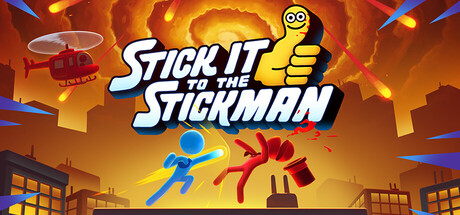
Stick It to the Stickman left Early Access on September 23 with an audience already large enough to make its 1.0 transition visible. At 1:05 p.m. Malaysia time on September 24, Steam's official endpoint reported 1,459 current players. The public all-language review endpoint contained 8,552 reviews, including 8,235 positive recommendations, or about 96.3% positive.
That lifetime review pool includes Early Access and should not be presented as one day of launch feedback. It does establish that Free Lives' corporate-satire physics brawler has converted a substantial number of players over time. This is launch market analysis based on official materials and public review patterns, not a hands-on review.
Why it is visible now
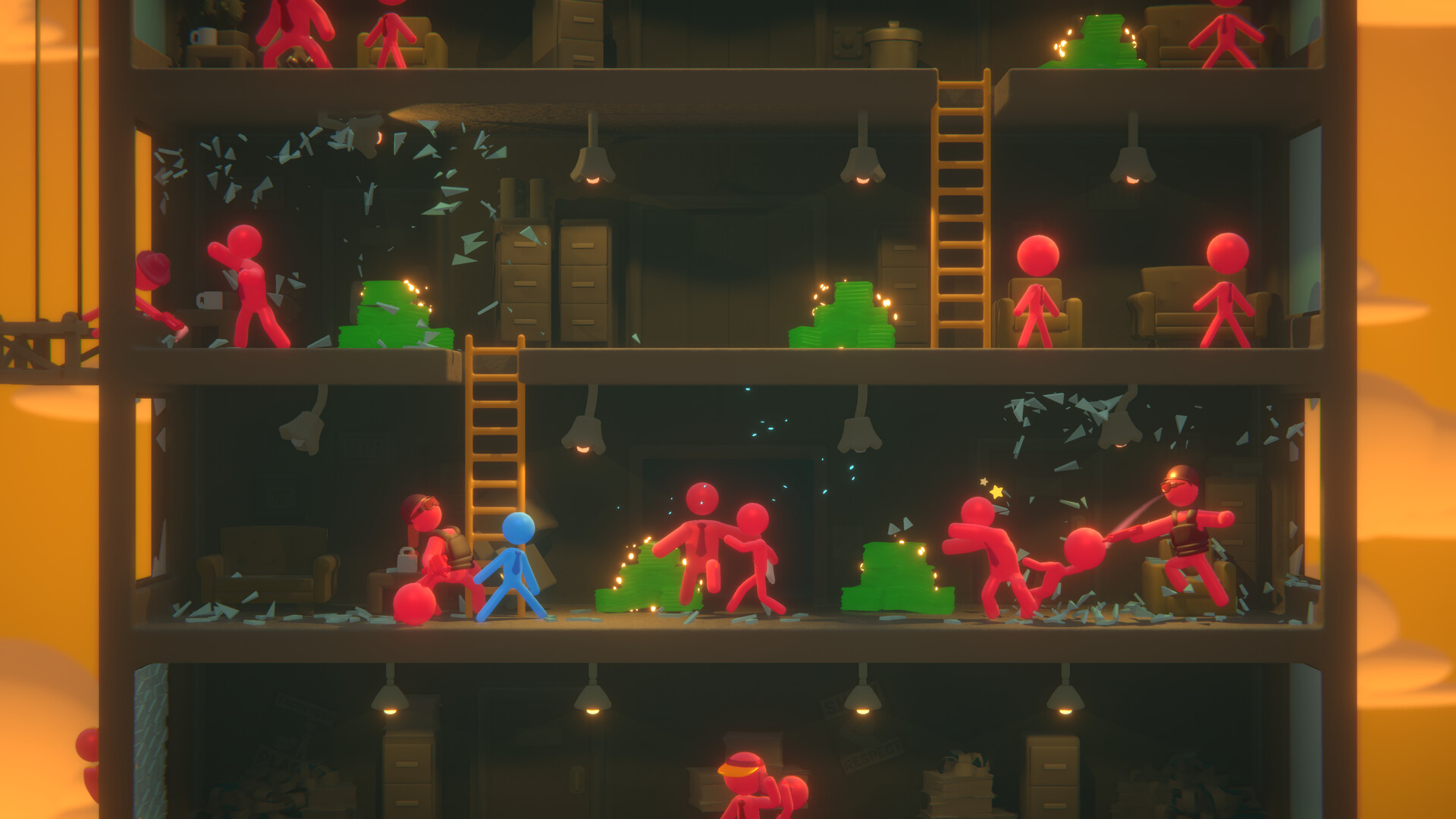
The full release turns a proven toy into a completed progression pitch. Players begin as expendable office workers, fight upward through a literal corporate hierarchy, assemble attacks into a combat “portfolio,” and unlock workers and additional modes. Reaching the top does not end the satire: the board can send the new chief executive back to the bottom.
The game is also easy to understand from motion. Stick figures collide with desks, walls, forklifts, weapons, and one another. A kick can send a manager through a window; a bad landing can collapse a combo. The physical result makes each input legible to viewers even when the underlying build contains many moves.
The September 23 release matters because the store now presents the product as complete rather than an Early Access work in progress. Recent player reviews repeatedly mention returning after the earlier version and discovering new buildings, bosses, characters, and story material. That response gives the 1.0 label substance beyond a version number.
Genre, platform, and release state
Steam lists Stick It to the Stickman as a released action-indie game for Windows and macOS. Free Lives developed it and Devolver Digital publishes it. The store supports single-player, shared-screen cooperative play, and Remote Play Together. At our United States store check, a 50% launch discount reduced the listed price from $11.99 to $5.99; regional prices vary.
The official page describes a roguelite structure, but the immediate interaction is a side-view physics brawler. Runs produce choices among moves, weapons, and powers. Unlockable worker archetypes change the starting vocabulary, while office and industrial scenarios add different hazards.
Buyers should separate the full single-player content from cooperative expectations. Public reviews include reports that two-player story progression can encounter bugs or soft locks. That is a recurring caution in the recent sample, even though overall sentiment is exceptionally strong.
Core loop and differentiation
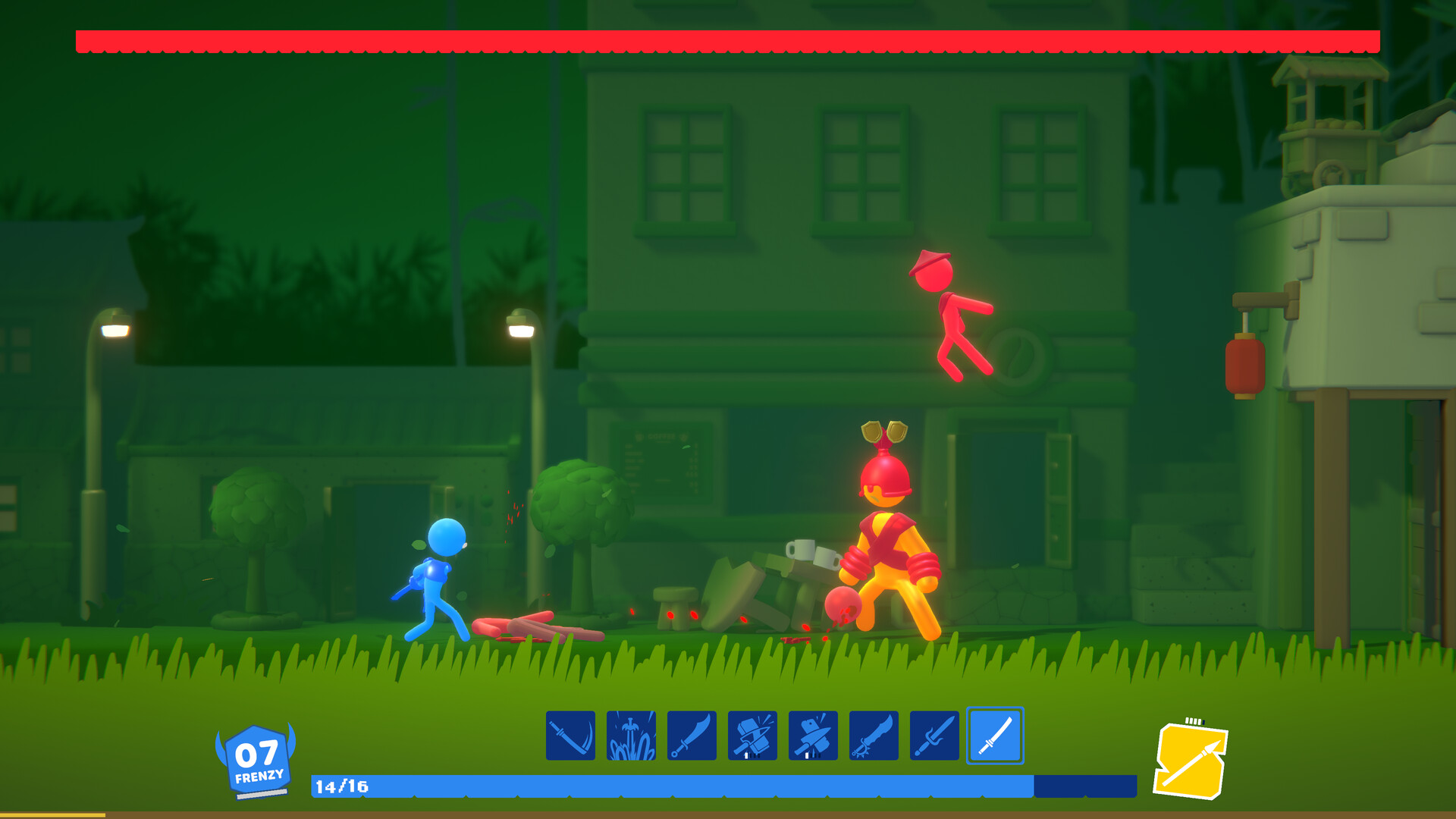
The loop is fight, choose a move, extend a build, defeat a boss, unlock another worker or mode, and begin again. Individual attacks have physical consequences rather than functioning only as damage numbers. Position, crowd control, wall contact, and accidental chain reactions turn the same move list into different scenes.
The corporate theme connects systems that might otherwise feel random. Promotions become vertical combat progress. A portfolio is a set of attacks. Shareholder value is the excuse for escalation. Warehouses, union busting, property speculation, brain implants, and executive fights extend the same hostile-workplace joke across modes.
Compared with a precise character-action game, the appeal is not perfect animation control. It is improvisation inside a deliberately unstable scene. Compared with a pure physics sandbox, the roguelite choices give slapstick a longer progression arc. That combination explains why short clips advertise the game effectively without revealing every unlock.
Verified market snapshot
Immediately before publication, the official public data showed:
- 1,459 current players at 1:05 p.m. Malaysia time on September 24;
- 8,552 all-language reviews, with 8,235 positive and 317 negative;
- an approximate 96.3% positive share across that lifetime sample;
- September 23 full release after Early Access;
- Windows and macOS support, with local co-op and Remote Play Together;
- 13 official screenshots on the store page;
- no official unit-sales, refund, revenue, or retention figure.
The momentum label is strong 1.0 transition, not “overnight hit.” Reviews accumulated across the earlier access period, while current players provide only a dated concurrency snapshot. Together they show a durable audience returning around a full release.
What players praise and criticize
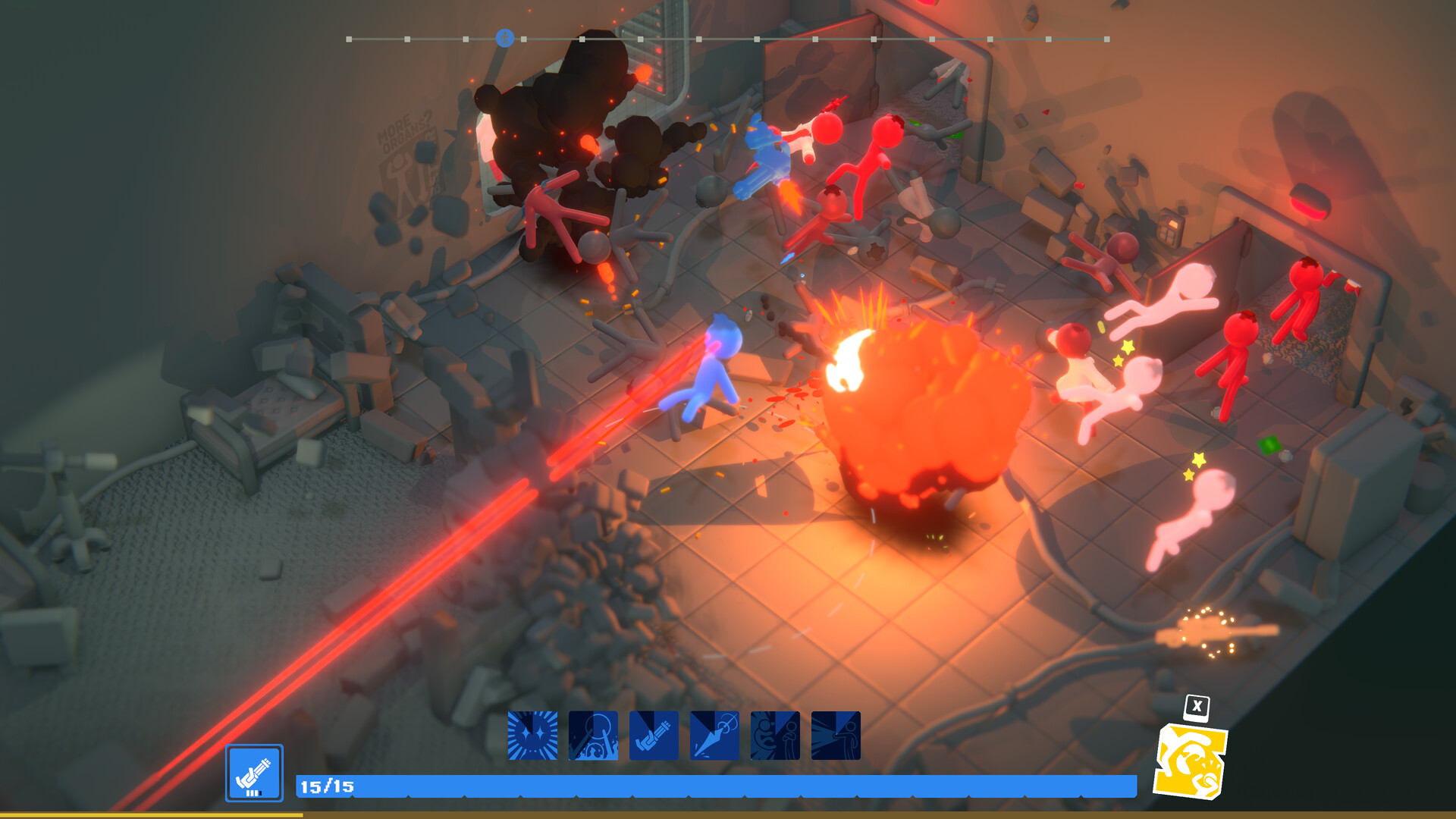
The recent public review sample repeatedly praises variety across buildings and worker builds, the speed of combat, jokes embedded in objectives, and the amount of new 1.0 material. Longer-playtime reviewers describe returning from the demo or Early Access and still finding new combinations. Short recommendations often reduce the appeal to its clearest strength: immediate physical fun.
The negative pattern is narrower but important. Cooperative story play receives reports of bugs and progression blockers. A few reviewers dislike the presentation or question some production choices. Physics comedy also implies imperfect control; a player who wants deterministic combos may experience the same collisions as noise rather than surprise.
Review counts are not a scientific survey. Steam's sample is self-selected, languages vary, playtime at review differs, and 1.0 reviews remain mixed with historical Early Access feedback. The strong lifetime percentage is evidence of broad satisfaction, but recent co-op defects deserve more weight for someone buying specifically to play with a friend.
Competitive meaning
Stick It to the Stickman sits between run-based action games, physics brawlers, and social satire. Its advantage over many roguelites is visual causality: the player can see exactly how a kick, projectile, or falling object changes a room. Its advantage over one-joke physics games is build variation and a campaign structure that asks players to return.
The risk is that quantity can dilute impact. More modes and attacks only help if each creates distinct decisions rather than a larger list of similar chaos. The 1.0 review base suggests the game has crossed that threshold for many players, while continued patches need to protect cooperative stability.
Who should buy—and who should wait
Buyers who enjoy physical comedy, short runs, build experimentation, irreverent workplace satire, and local social play have unusually strong public evidence. The launch discount lowers the cost of testing the premise.
Wait if cooperative campaign stability is essential, if screen shake and crowded collisions are uncomfortable, or if you expect the precision of a traditional fighting game. Watch current co-op patch notes rather than relying only on the lifetime score.
IndieGame.party verdict
Stick It to the Stickman's 1.0 release combines 1,459 observed players with 8,552 reviews at roughly 96.3% positive. The central loop is proven, the finished release appears meaningfully larger, and the corporate framing gives the physics chaos an identity. The main purchase caution is not whether the joke works; it is whether cooperative progression has stabilized for the way you plan to play.
Sources and image rights
- Official Steam store and media page, checked September 24, 2026: https://store.steampowered.com/app/2085540/
- Steam public review endpoint, checked September 24, 2026: https://store.steampowered.com/appreviews/2085540?json=1&language=all&purchase_type=all
- Steam current-player endpoint, checked September 24, 2026: https://api.steampowered.com/ISteamUserStats/GetNumberOfCurrentPlayers/v1/?appid=2085540
- Images: official Steam header and screenshots supplied by Free Lives / Devolver Digital, © their respective rights holders. Downloaded locally September 24, 2026 and used without compositing in the minimum scope needed to identify and analyze the game.