SIGNOS: AI Robot Builder Makes Your 18cm Robot Live With Your Bad Decisions
An 18cm robot is small enough to blame on the furniture. Unfortunately, in SIGNOS: AI Robot Builder, its decisions are your responsibility. You choose its body, connect its instructions, and send it into a fight where you cannot grab the controls when your magnificent tactical plan starts looking like a clerical error. The little machine has no emergency adult supervision. You were supposed to provide that in advance.
Released Nov 9, 2026, from developer and publisher zeoperdise, SIGNOS costs $4.24 on windows. That makes today's spotlight a look at a game released yesterday, with a particularly legible proposition: build the combatant and write its decision-making, then watch whether those two designs agree. The supplied Steam snapshot records 1 current player. That is a launch worth examining for its idea, not evidence of a crowd.
Your robot has read the instructions, unfortunately
The central joke is that SIGNOS sells you a fighting robot and then removes the activity most fighting games are built around. You never pilot it during battle. Movement, searching, attacks and situational decisions depend on the logic you assembled beforehand. A beautifully equipped machine can therefore become an unusually expensive way of expressing a poorly considered instruction.
That is also the hook worth taking seriously. A conventional combat game lets a player compensate for a bad plan with quick reactions. SIGNOS makes the plan stand up by itself. I like the severity of that arrangement: if a robot should maintain distance, search before attacking or respond differently at another range, those intentions need to become actual instructions.
Wanting it to behave intelligently is insufficient paperwork.
The useful comparison is an auto-battler such as Teamfight Tactics, but with attention shifted from arranging a fighting force to authoring an individual machine's behaviour. The shared appeal is committing a plan before combat resolves automatically. SIGNOS's distinguishing promise is that the commitment includes the decision process itself.
You are not simply hoping the combatant chooses sensibly; you have helped specify what choosing sensibly means.
Its title's “AI” is best understood through that concrete description. The listing describes flowchart-style “Thought Tiles,” connected into behaviour logic. The interesting thing here is a visible chain of decisions that you can construct, complicate and trim. An autonomous robot is more compelling when its mistakes have an address.
The head is where the budget gets embarrassing
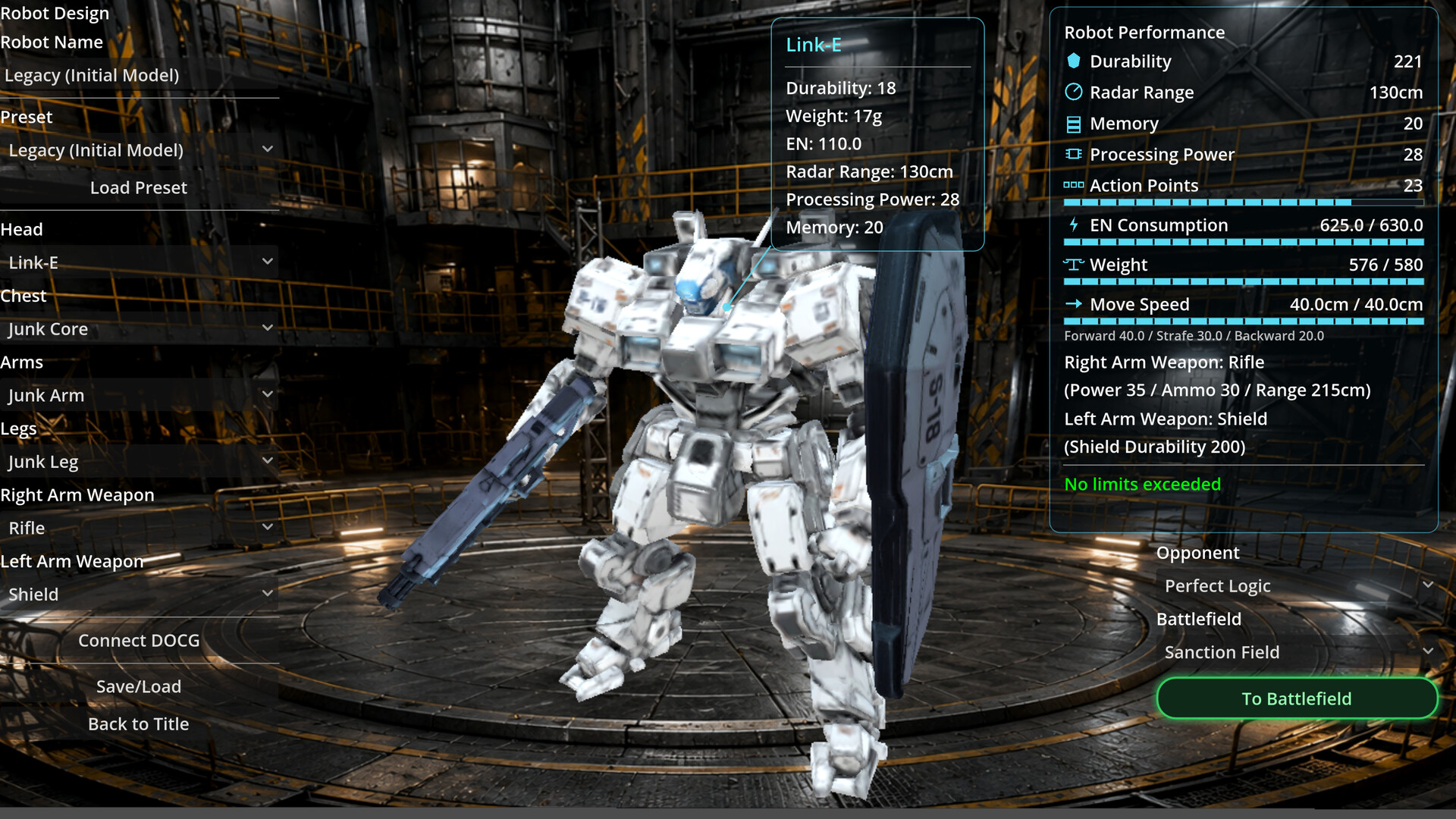
Construction starts with head, chest, arm and leg parts, whose properties include durability, weight, EN consumption, processing power and firing arc. Those details give the assembly screen a tactical purpose beyond producing a handsome miniature. A part changes what your robot can withstand, support or bring to bear; a decision chain determines how it tries to use those capabilities.
The listing sketches several competing approaches: heavy firepower, shield-led endurance and mobility used to control distance. Those are useful examples because they expose the relationship between the two halves of the game. Building for movement only makes sense if the instructions exploit movement. Equipping substantial firepower does not settle when the machine should attack.
Hardware is an argument that the software still has to finish.
The sharper constraint sits in the head. Each head has limited memory capacity, and overloading it with too much logic delays execution. That turns an apparently obvious upgrade—add another contingency—into a decision with a cost. A robot that considers more situations may take longer to act. There is something satisfyingly rude about a miniature combat machine losing time because its owner has made it overthink.
This is the feature that earns SIGNOS more than a passing mention. Plenty of construction pitches promise freedom to add things. This one explicitly makes subtraction part of tactical design. Cutting an unnecessary branch could matter as much as choosing another component.
Whether the available parts and opponents sustain that tension is unproven here, but the underlying constraint is strong: intelligence has to fit inside the machine you built.
Flowcharts, with consequences
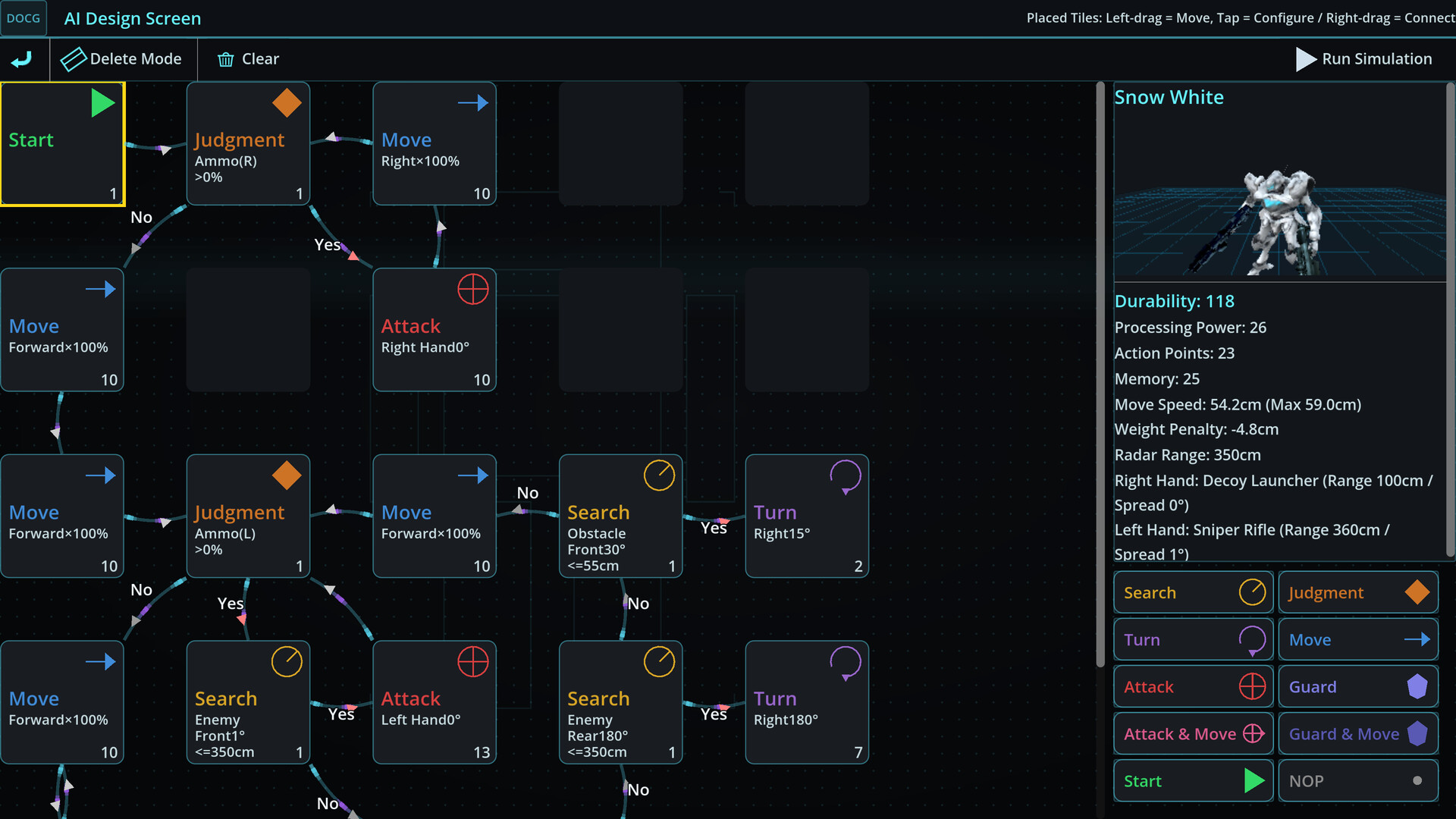
The actual work is connecting Thought Tiles such as “Move,” “Search,” “Attack” and “Judgment.” The official example is straightforward: search for an enemy, judge the distance, then choose whether to attack or move. Start with that sort of simple sequence, add conditional branches, and you have the makings of a robot whose behaviour changes with its situation.
Think of the attraction of a programming puzzle such as SHENZHEN I/O: an intended outcome has to survive translation into a working sequence. SIGNOS redirects that appeal toward a physical combatant, adding body configuration and battlefield behaviour to the problem. That comparison is about the pleasure of making instructions work, not a claim that SIGNOS shares its programming language, campaign structure or difficulty.
The supported loop is therefore assembly, logic construction and automatic battle. A fight is where the relationship between your components and your instructions becomes visible. The natural attraction is revision: decide what needs changing, adjust the machine or its behaviour, and see whether the next result better matches the tactic you meant to express.
That is a more specific invitation than simply collecting stronger robot parts.
The distinction matters when asking whether the loop holds. Its potential comes from having two places to look for an answer. Is the build poorly suited to the tactic, or is the tactic poorly expressed? Limited memory adds a third complication, because the most elaborate answer may execute too slowly. Those interacting constraints could make revision absorbing.
The supplied material does not establish how consistently battles make the cause of a failure clear, and that is a substantial open question for this design.
No heroic rescue at the last second
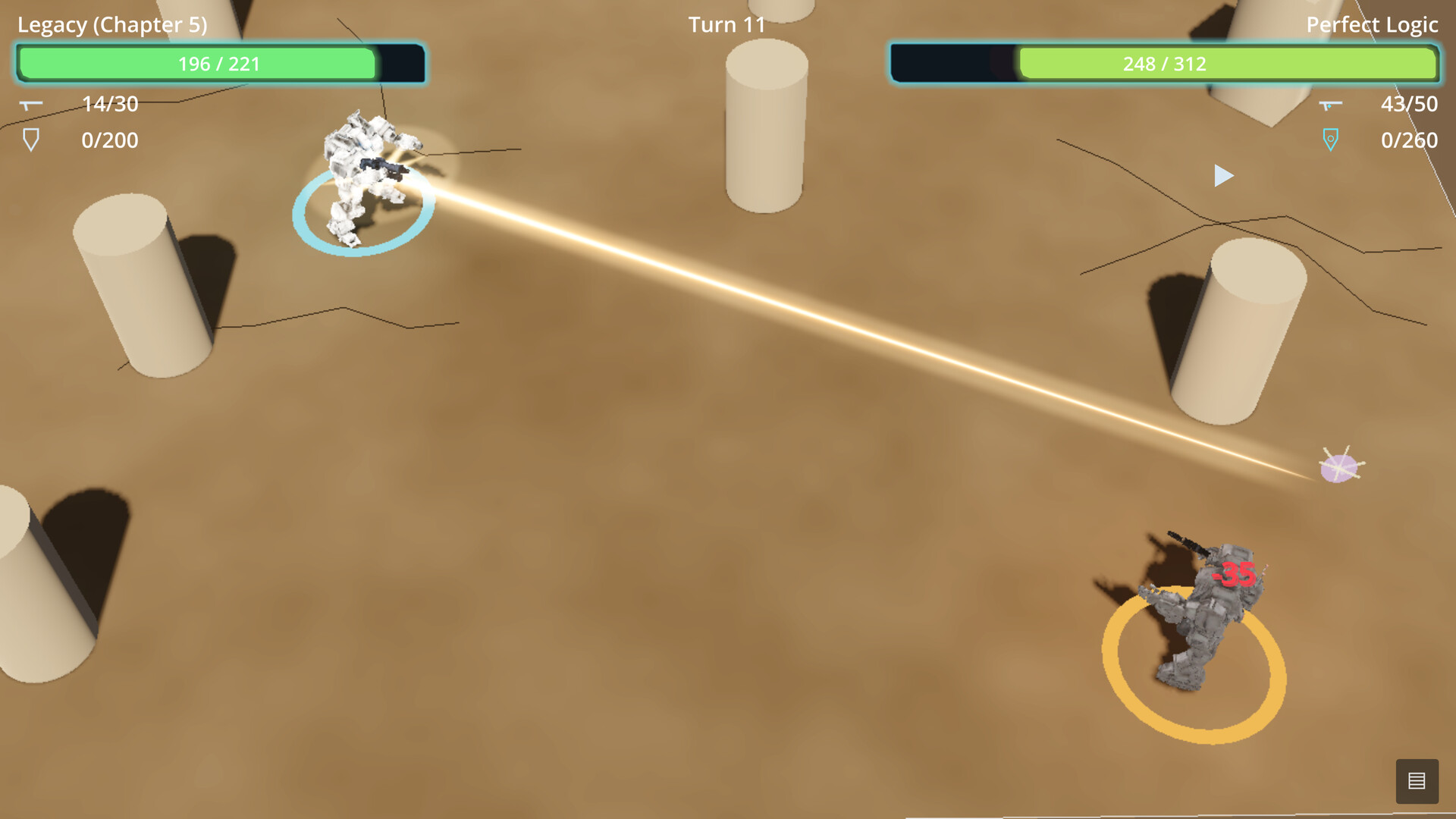
Fully automatic combat is both SIGNOS's selling point and its clearest reason to walk away. If your favourite moment in a robot game is landing a shot, dodging an attack or improvising under pressure, the listing rules that pleasure out. Here, the decisive input happens before the fighting. Watching an avoidable mistake continue without being able to intervene is part of the bargain.
I find that restriction appealing because it gives preparation consequences. It also makes clear feedback essential. A failed attack should ideally send you back to a useful question about range, firing arc, movement or the instruction chain. If the reason for failure is difficult to read, revision risks becoming guesswork.
That is a design concern raised by the premise, not a claim that I encountered a particular problem while playing.
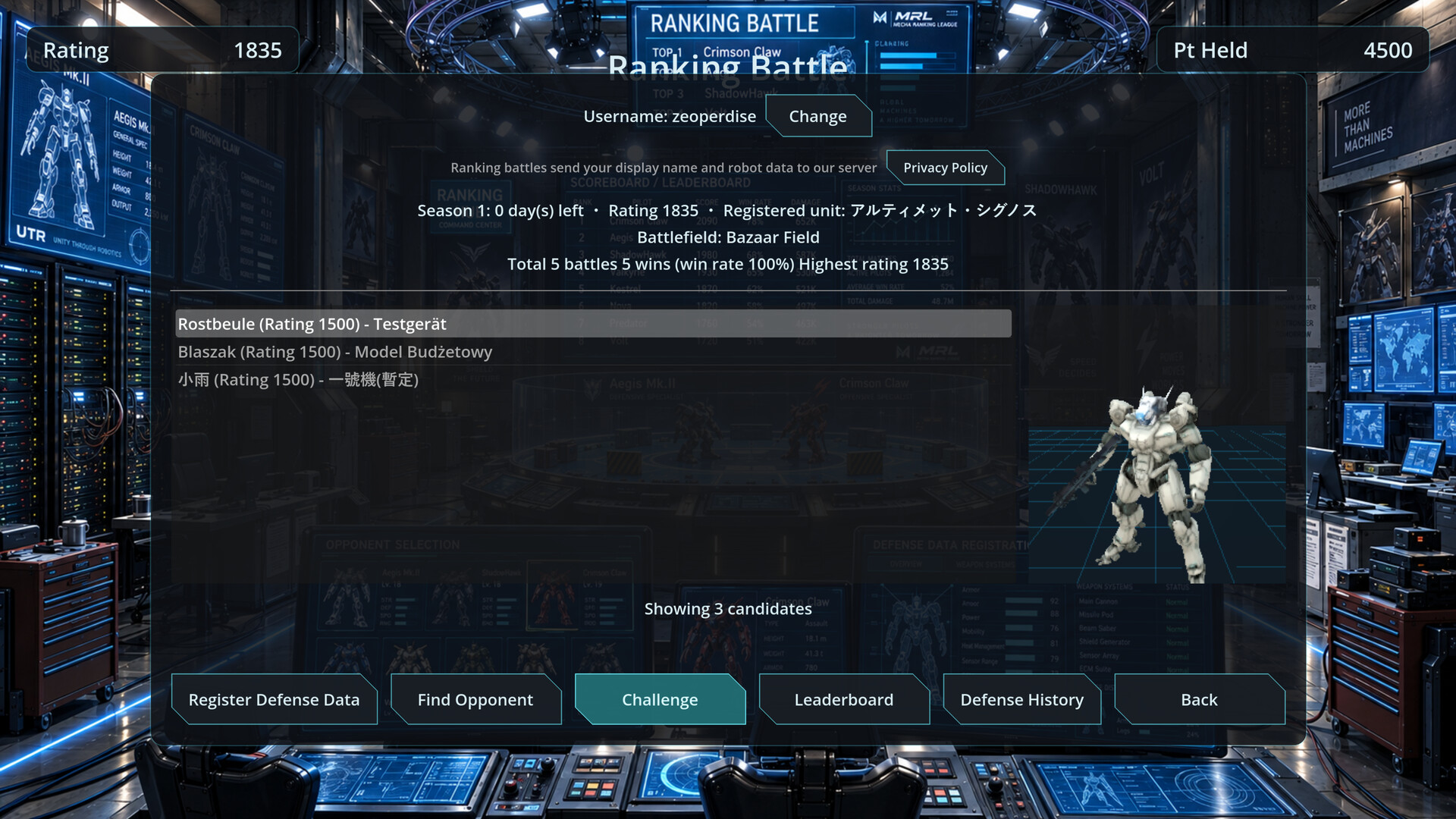
The social proposition needs equal care. The listing says designed robots fight each other, but the supplied text does not establish online matchmaking, local versus, co-op or a specifically solo campaign. Automatic combat does not tell us who supplies the opposing robot. Treat this as a construction-and-logic prospect, rather than a confirmed game-night purchase for friends.
Progression is another limit on what can responsibly be promised. There is no supplied account of a campaign, unlock tree, run structure, currency or persistent upgrades. The parts support different builds; that does not establish how those parts are obtained. The core design has enough substance to discuss without inventing a ladder of rewards around it.
A $4.24 experiment, with an audience of one
At $4.24, the purchase proposition is a small robot-design experiment with a clearly stated mechanical hook. The price makes that experiment easier to contemplate, but it cannot establish content volume. The supplied listing gives no part count, arena count, campaign length or estimate of playtime. Anyone buying primarily for a long sequence of missions needs information this brief does not contain.
Nor is there a discount figure to turn the price into a bargain narrative. $4.24 is the supplied price, full stop. The case for spending it rests on whether the combination of modular bodies, explicit behaviour logic and limited processing capacity appeals to you. For a player who enjoys refining a system after seeing it fail, that combination is unusually direct.
The timing is concrete: SIGNOS released Nov 9, 2026, and this feature is dated November 10. The traction claim must be narrower. With 1 current player in the supplied snapshot, there is no basis for calling it a breakout. No total review count, review score or player quotations were supplied, so there is no credible chorus of enthusiasm to quote.
One concurrent player is a snapshot of activity, not a verdict on quality or a measure of lifetime sales.
Why feature it this week, then? Because introducing a new indie game need not wait for a crowd to certify the premise. SIGNOS has a specific idea worth putting in front of the right reader: the robot's body and its judgement are separate constructions, and a limited memory budget forces them into negotiation. That is a stronger reason to investigate than an unsupported claim that everyone is already playing.
My recommendation is aimed squarely at people who regard a failed plan as something interesting to edit. Skip it if direct control is essential, or if confirmed co-op and a documented campaign are conditions of purchase. But if you can imagine spending an evening arguing with a flowchart over why an 18cm robot made precisely the decision you told it to make, SIGNOS has already found the right nerve.