Rust & Shine's Demo Makes Restoration Feed an Automation Workshop
Rust & Shine released a free Windows demo on September 23 built around a compact conversion: corroded mystery objects become clean antiques, antiques become cash, and cash becomes a larger automated workshop. At 1:05 p.m. Malaysia time on September 24, Steam's official endpoint showed 25 current demo players. The public review endpoint contained two positive recommendations.

Rust & Shine released a free Windows demo on September 23 built around a compact conversion: corroded mystery objects become clean antiques, antiques become cash, and cash becomes a larger automated workshop. At 1:05 p.m. Malaysia time on September 24, Steam's official endpoint showed 25 current demo players. The public review endpoint contained two positive recommendations.
That is enough to call the demo discovered, not enough to call it broadly validated. A two-review sample cannot support a trustworthy quality percentage or reveal stable sentiment. This is a demo preview and market-signal analysis from official materials and limited public reaction, not a hands-on review.
Why it is visible now
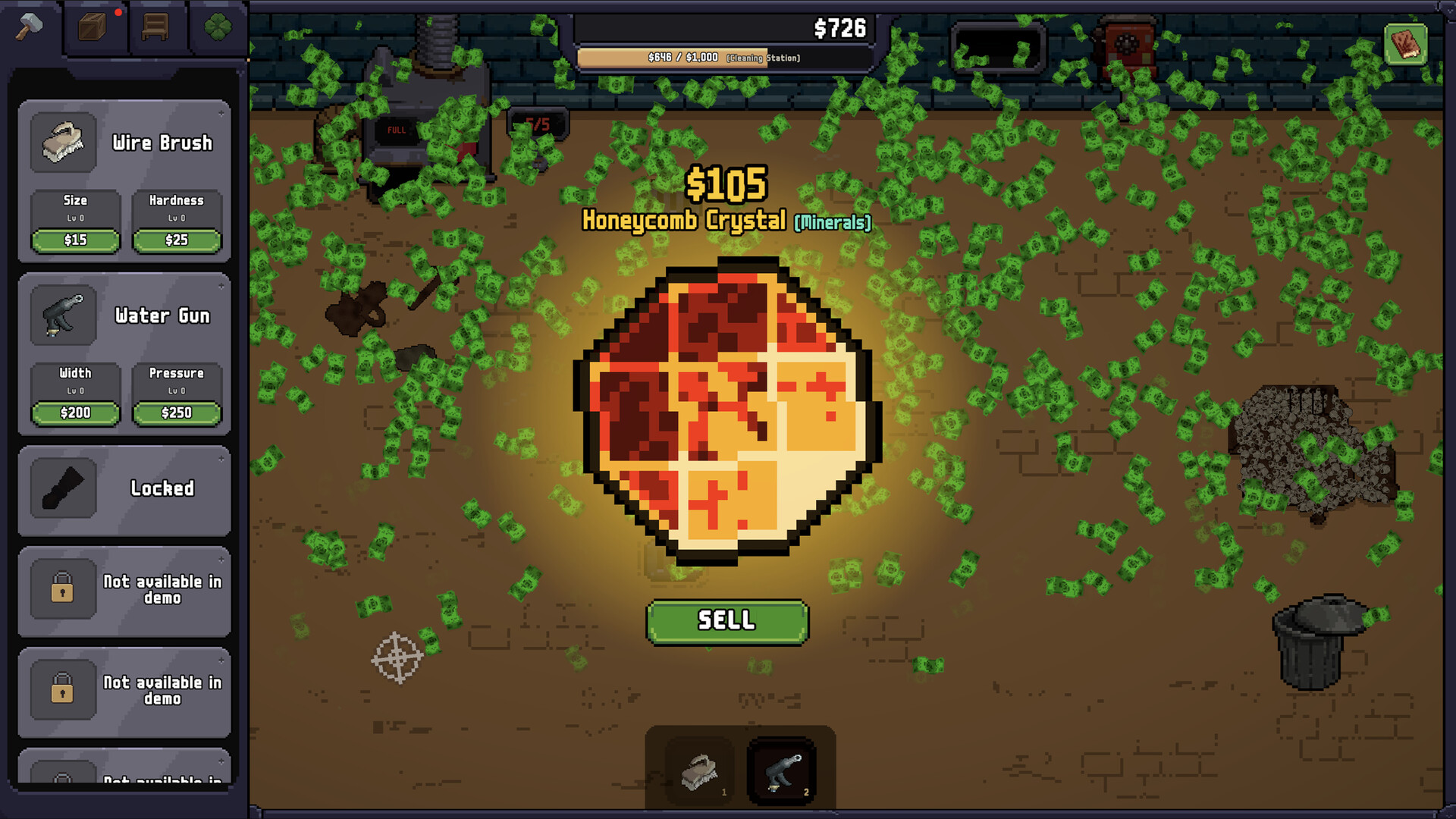
The demo attaches an incremental economy to a tactile cleaning fantasy. Mystery antiques arrive obscured by corrosion. Players use a wire brush, water gun, and sandblaster to remove layers, identify the item, sell it, and reinvest the proceeds. Common trinkets keep the cycle moving; rare objects promise a discovery spike.
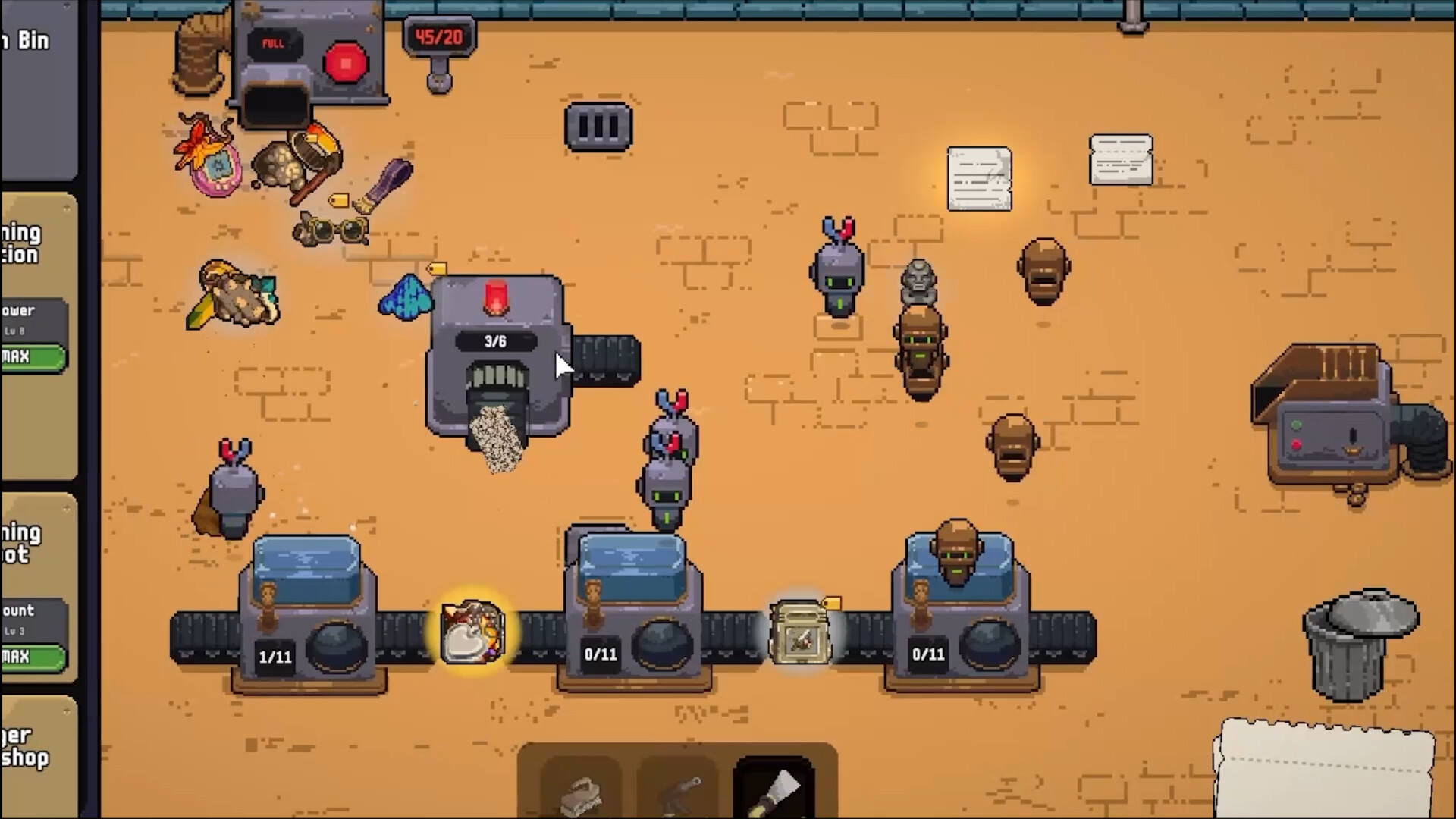
Cleaning games often end their design argument at visual satisfaction. Rust & Shine uses restoration as the input to a workshop-management game. Better suppliers offer rarer crates, improved tools speed manual work, contracts set targets, and repair bots can automate feeding, cleaning, and selling.
The public demo matters because it lets players test the friction that screenshots cannot communicate: how the mouse feels, whether layers come away clearly, how quickly upgrades arrive, and whether automation enhances restoration or replaces it too soon.
Genre, platform, and release state
Steam identifies Rust & Shine Demo as a free casual simulation for Windows. Enigma Games develops and publishes it. The full game's release date and price were not established on the demo page at our check, so this article does not infer either.
The official description promises three scales of play. At the bench, the player cleans individual objects. Across the workshop, cash buys tools, suppliers, and automated stations. Across resets or relocations, Renown unlocks permanent skills and an Heirloom Gallery preserves valuable finds.
Because this is a demo, content volume, balance, automation depth, and persistence can change. Its value is proving the interaction and progression concept, not predicting the final game's hours or economy.
Core loop and differentiation
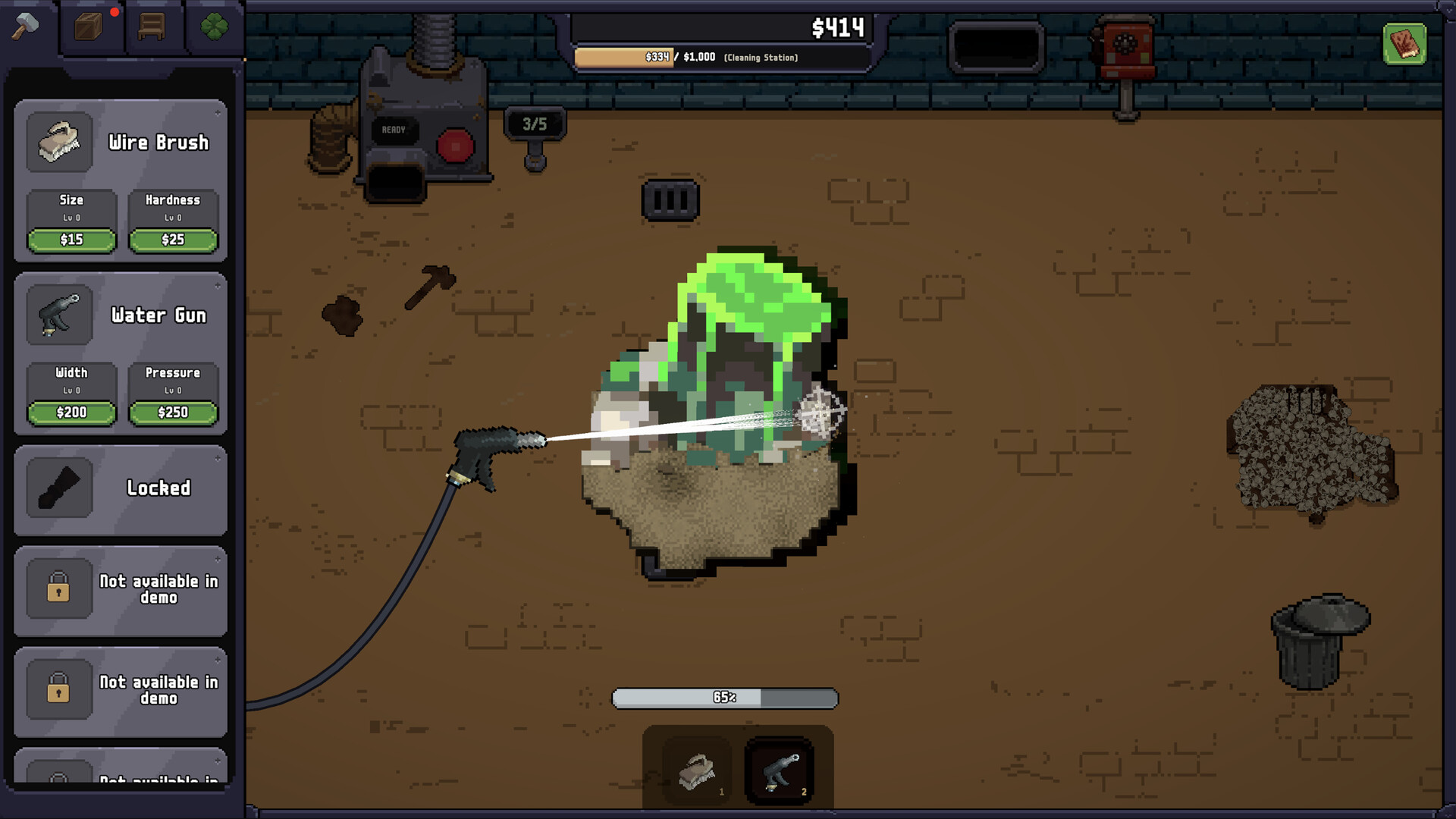
The core loop is acquire a hidden object, remove corrosion, reveal rarity, sell or keep it, buy an upgrade, and process a better crate. Contracts introduce constraints: quota jobs, specific-item bounties, or high-paying commissions that demand a clean result. The Heirloom Gallery gives rare discoveries a destination other than immediate conversion to currency.
The design's main tension is manual pleasure versus automation. A good incremental game makes early actions satisfying, then lets machinery remove repetition while exposing a new decision layer. A weak one automates the reason the player arrived. Rust & Shine needs bots to handle throughput without making careful restoration irrelevant.
Mystery helps the loop. An object is visually concealed until cleaned, so every workpiece contains a reveal. That creates a natural reward cadence without requiring combat or random loot boxes. The risk is that rarity can overwhelm technique: if outcomes depend mainly on crate rolls, restoration may become a long opening animation.
Verified market snapshot
Immediately before publication, official public data showed:
- 25 current demo players at 1:05 p.m. Malaysia time on September 24;
- two all-language public reviews, both positive;
- September 23 demo release on Windows;
- five official screenshots on the demo page;
- no disclosed wishlist, sales, conversion, peak-player, or full-release data.
The correct momentum label is small but observable demo signal. Twenty-five simultaneous users show that people found and launched it. Two reviews are anecdotes, not a consensus, and should never be reported as a meaningful 100% approval rate.
What the public response can and cannot tell us
One review praises the pacing of progression, helpful upgrade timing, and mouse settings. The other compares the concept with another scratch-and-reveal incremental game, likes the premise, and worries that automation may reduce later play to selling items. Both accounts reached almost one hour at review time.
Those observations align with the central design question, but two people cannot establish a pattern. They do not tell us whether the demo is accessible across input devices, whether contracts remain varied, how often valuable items appear, or whether the prestige layer supports repeat runs.
The most useful next signal is not a simple positive percentage. It is a larger review sample describing the same interaction over multiple sessions, plus developer information about the full game's scope and how feedback changes the demo.
Competitive meaning
Rust & Shine combines the visible transformation of cleaning and power-washing games with the compounding economy of idle workshop simulators. Compared with pure restoration, it offers a reason to process many objects. Compared with a spreadsheet-like incremental game, each unit of production has a recognizable physical before-and-after state.
Its strongest competitor is repetition itself. Brushes, water, and blasting must feel different enough to justify upgrades. Object silhouettes and corrosion patterns need variety. Contracts should change priorities rather than simply request more of the same. Automation should redirect attention toward rare or difficult pieces instead of deleting interaction.
Who should play—and who should wait
The demo is worth testing for players who enjoy cleaning reveals, gradual efficiency upgrades, collection galleries, and idle systems that grow from manual labor. Because it is free, the most important question can be answered directly: does removing corrosion feel good on your device?
Wait for the full release if you need a known content length, established accessibility support, mature controller controls, or evidence that the late workshop retains meaningful decisions. Players uncomfortable with clustered corrosion or barnacle-like textures should inspect the screenshots first.
IndieGame.party verdict
Rust & Shine has a clear loop and an appropriately sized early signal: 25 observed demo players and two positive but non-representative reviews. The restoration-to-automation connection is more interesting than either layer alone. The demo's job is now to prove that scaling the workshop deepens the fantasy instead of automating away its most satisfying action.
Sources and image rights
- Official Steam demo and media page, checked September 24, 2026: https://store.steampowered.com/app/5252990/
- Steam public review endpoint, checked September 24, 2026: https://store.steampowered.com/appreviews/5252990?json=1&language=all&purchase_type=all
- Steam current-player endpoint, checked September 24, 2026: https://api.steampowered.com/ISteamUserStats/GetNumberOfCurrentPlayers/v1/?appid=5252990
- Images: official Steam header and screenshots supplied by Enigma Games, © Enigma Games. Downloaded locally September 24, 2026 and used without compositing in the minimum scope needed to identify and analyze the game.