Japanese Ramen Simulator Tops Steam's Popular Upcoming List Before Early Access
Japanese Ramen Simulator is due to enter Steam Early Access on September 27 with an unusually legible co-op pitch: up to six players prepare ingredients, cook noodles, plate toppings, serve customers, clean the shop, and expand the restaurant. At 1:35 p.m. Malaysia time on September 26, Steam's official Popular Upcoming search placed it first in the observed results.

Japanese Ramen Simulator is due to enter Steam Early Access on September 27 with an unusually legible co-op pitch: up to six players prepare ingredients, cook noodles, plate toppings, serve customers, clean the shop, and expand the restaurant. At 1:35 p.m. Malaysia time on September 26, Steam's official Popular Upcoming search placed it first in the observed results.
That is a storefront-discovery signal, not a disclosed wishlist total or sales forecast. Steam showed zero public reviews because the game had not launched. This is a preview based on official store materials and dated market signals, not a hands-on review.
Why it is visible now
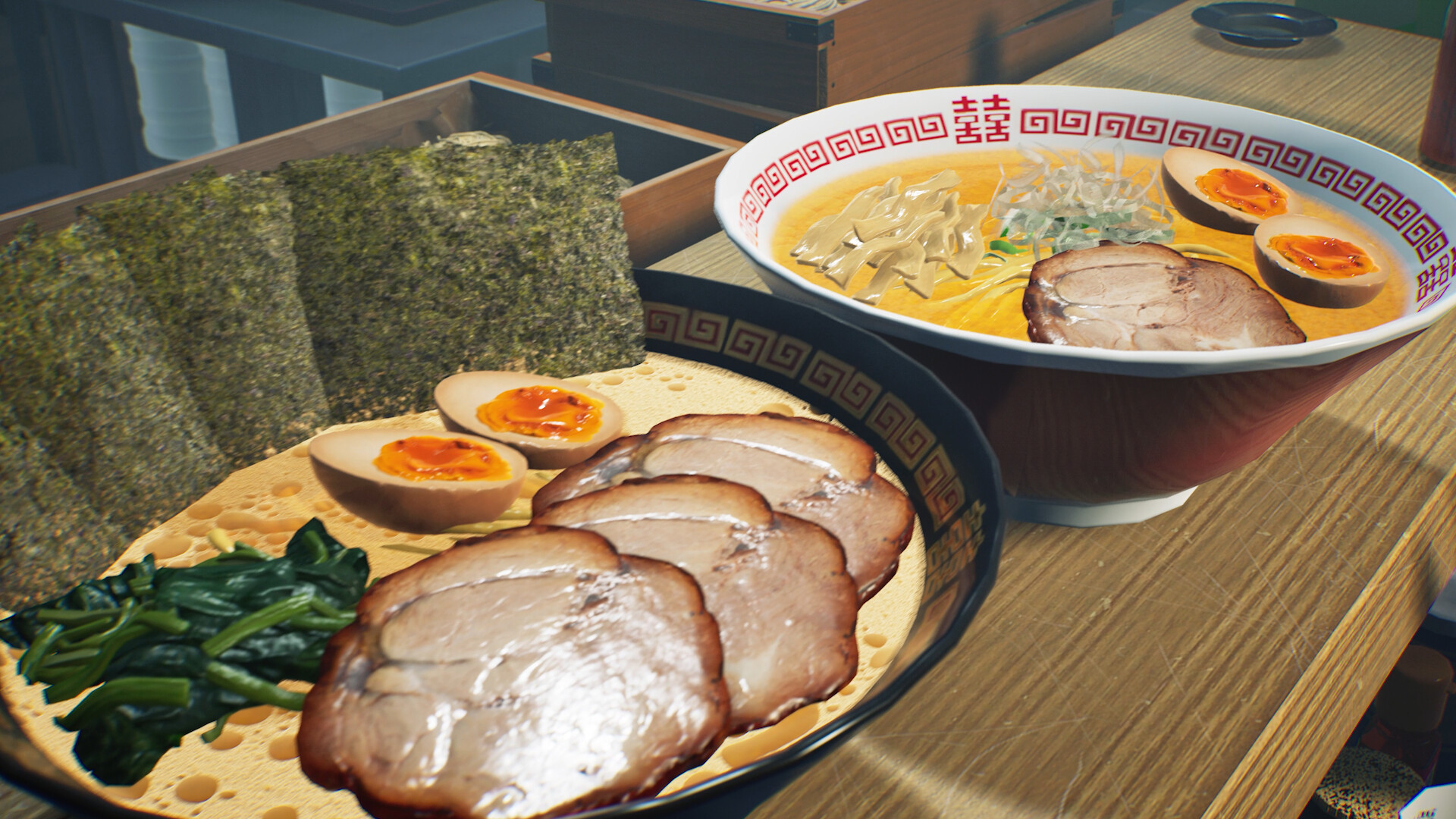
The launch window is immediate, the fantasy is clear in one image, and the multiplayer labor naturally produces moments that travel in clips. A bowl of ramen moves through recognizable stages, but every stage creates room for coordination errors: ingredients can run out, noodles can be mistimed, toppings can be misplaced, tables can remain dirty, and customers can wait.
Wild Dog also gives the simulation a tactile pitch. The listing mentions noodle texture, soup temperature, aroma, umami, service time, physics-based plating, gyoza browning, and beer foam. Those details distinguish it from restaurant games where food is only an icon moving through a timer.
The top Popular Upcoming position is meaningful because it shows relative discovery immediately before release. It does not reveal how Steam calculates the list, how many wishlists sit behind it, or whether attention will convert into purchases and retained co-op groups.
Genre, platform, and release state
Steam lists the game for Windows across casual, indie, simulation, and Early Access categories. It supports solo play, multiplayer, and online co-op. The official page names September 27, 2026 as the Early Access date and identifies Wild Dog as both developer and publisher.
Players can switch between first- and third-person views. That is a useful accessibility and comfort choice for a work-simulation game whose repeated camera motion may otherwise affect some players. The page also lists adjustable difficulty, text sizing, custom volume controls, save-anytime support, and Steam Cloud.
Early Access remains the largest qualification. Menu breadth, progression pacing, network stability, staff AI, economic balance, and the frequency of disruptive events can all change. The final value depends on the launch build and the developer's live roadmap, neither of which a prerelease store page can prove.
Core loop and differentiation
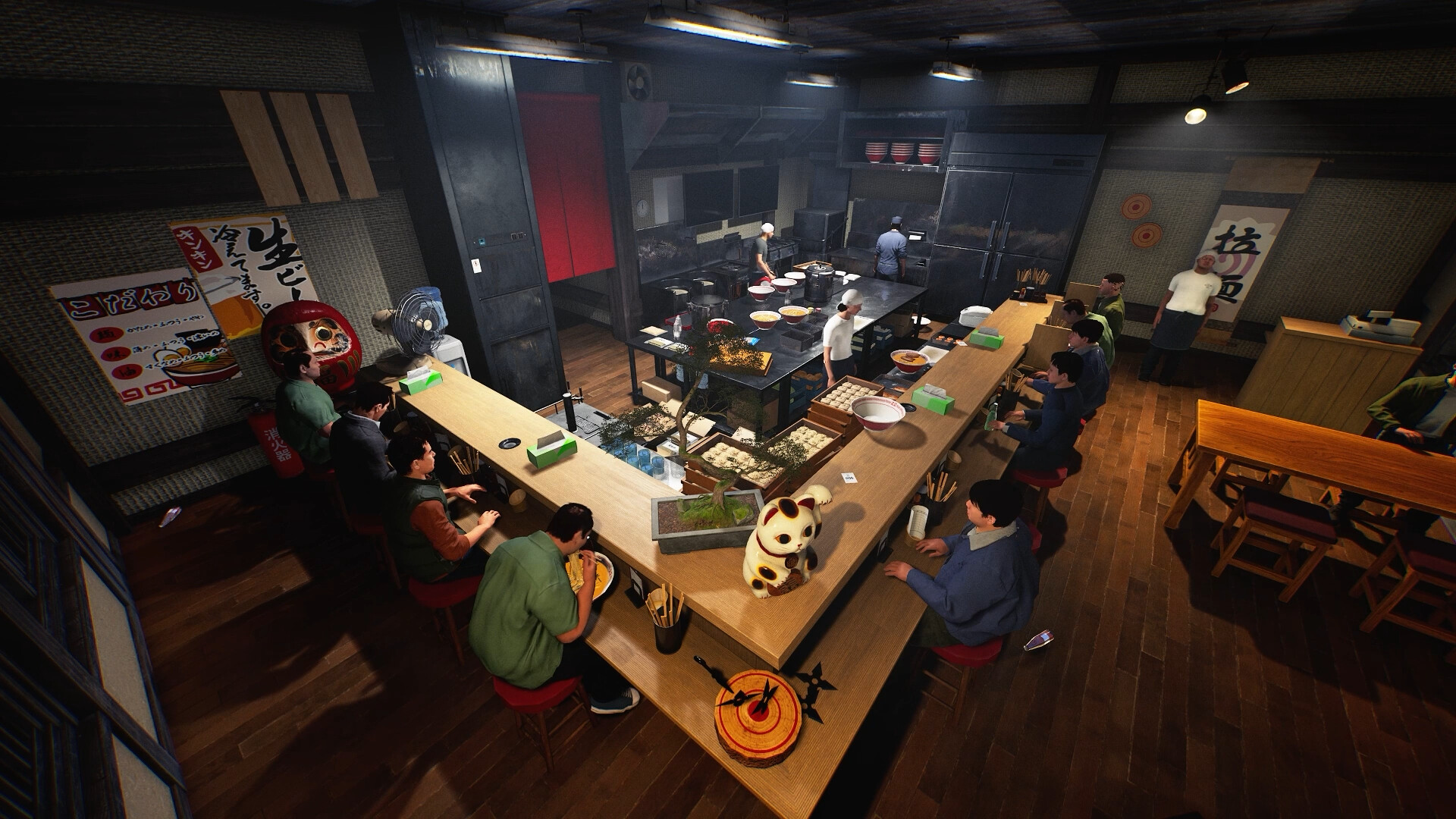
The proposed loop is prepare stock and toppings, accept orders, cook and assemble each bowl, serve the dining room, maintain the space, earn money, unlock ingredients and equipment, redesign the shop, and repeat at higher pressure. Solo players can hire NPC staff; groups can divide preparation, cooking, serving, customer care, and cleaning.
Spatial voice chat is a smart fit because distance and walls reportedly affect how voices sound. If implemented reliably, communication becomes part of the physical shop rather than a separate overlay. The risk is that six-player chaos can obscure responsibility. Good stations, clear order states, and strong audio cues will matter more than the number of available ingredients.
Customization adds a second appeal. Players can arrange the kitchen and dining room, apply their own drawings to shop objects and clothing, choose body shapes and emotes, and even customize noodle-draining animations. The official description also includes critics, thieves, fires, and a gambling hall. Those events may prevent the optimization loop from becoming mechanical, but they could also dilute a convincing restaurant simulation if they dominate ordinary service.
Verified market snapshot
At the September 26 check, official public sources showed:
- first position in the observed Steam Popular Upcoming response;
- an Early Access date of September 27, 2026;
- zero public Steam user reviews;
- 19 official screenshots on the app-details endpoint;
- solo, multiplayer, and online co-op support for up to six players according to the store description;
- no public wishlist count, price in our captured evidence, unit sales, or concurrent-player figure.
The momentum label is strong immediate prerelease storefront visibility with product quality unproven. Search order can vary by region and time, so the timestamp is part of the claim.
What public reaction can and cannot tell us
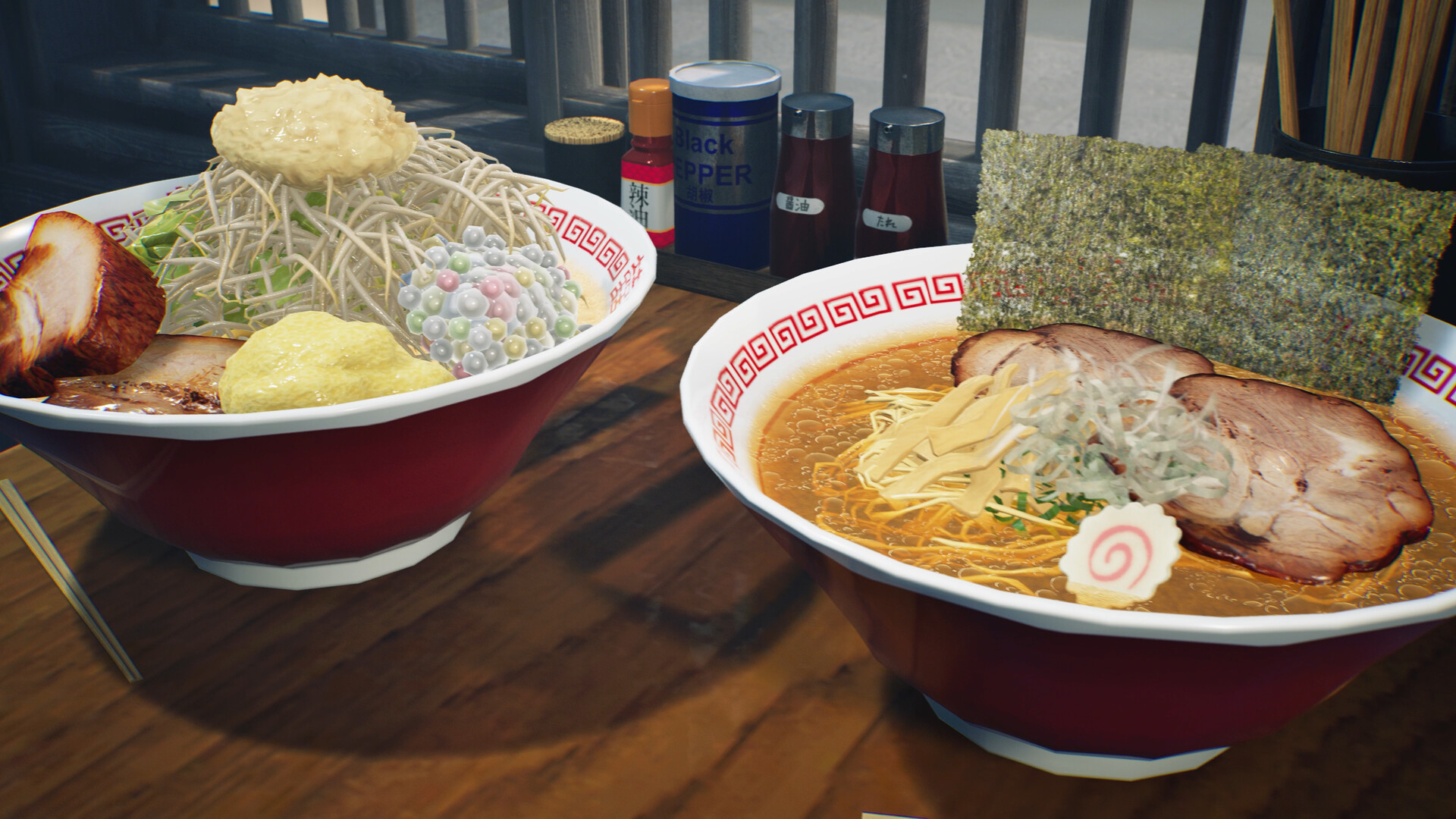
There is no review sample to summarize. Official screenshots and trailers support the existence of cooking stations, character customization, restaurant layout, and multiplayer scenes. They do not establish control precision, network performance, staff pathfinding, content depth, or how repetitive a long shift becomes.
The first review wave should be read for repeated patterns, not individual jokes. Watch for consistency around latency, order readability, tutorial quality, task ownership, motion comfort, and whether solo automation is capable enough to support the same progression loop.
Competitive meaning
Cooperative work simulations compete on communication density. The best tasks are simple enough to name quickly but interdependent enough to create stories. Japanese Ramen Simulator's advantage is cultural and mechanical specificity: noodle timing and bowl assembly are more expressive than generic “cook food” prompts.
Its disadvantage is scope. Shop decoration, ingredient physics, random emergencies, spatial voice, NPC labor, and six-player networking create many failure points for a small team. Early Access can be appropriate if the central service loop is already reliable and the roadmap expands depth rather than finishing fundamentals.
Who should follow—and who should wait
Follow it if your group enjoys dividing jobs, optimizing a shared space, and turning small service mistakes into social comedy. Solo simulation players may also find the shop-layout and recipe systems appealing if NPC staff perform predictably.
Wait if you require a mature economy, proven long-session variety, stable six-player networking, or a complete progression arc. Recheck the launch price, Early Access statement, review distribution, and first network-focused patches after September 27.
IndieGame.party verdict
Japanese Ramen Simulator has the strongest official prerelease storefront signal in today's sample and a loop that can be explained without marketing translation. The watchlist case is strong. The purchase case begins only when the launch build proves that tactile cooking, readable teamwork, and shop progression remain coherent under real multiplayer load.
Sources and image rights
- Official Steam store and media page, checked September 26, 2026: https://store.steampowered.com/app/4968640/
- Steam Popular Upcoming search, checked September 26, 2026 at 1:35 p.m. Malaysia time: https://store.steampowered.com/search/?filter=popularcomingsoon
- Steam public review endpoint, checked September 26, 2026: https://store.steampowered.com/appreviews/4968640?json=1&language=all&purchase_type=all
- Official developer site, checked September 26, 2026: https://wilddog.jp/japaneseramensimulator
- Images: official Steam header and screenshots supplied by Wild Dog, © Wild Dog. Downloaded locally on September 26, 2026 and used without compositing in the minimum scope needed to identify and analyze the game.