It's Fine Finds 643 Players With an Incremental Game About Dev Crunch
It's Fine launched on Steam on September 23 with an unusually self-aware premise: survive the final 24 hours before shipping an indie game while a talking dog named Joe acts as project manager. At 11:20 p.m. Malaysia time, Steam's official endpoint showed 643 current players. The review endpoint contained three reviews, all positive.

It's Fine launched on Steam on September 23 with an unusually self-aware premise: survive the final 24 hours before shipping an indie game while a talking dog named Joe acts as project manager. At 11:20 p.m. Malaysia time, Steam's official endpoint showed 643 current players. The review endpoint contained three reviews, all positive.
Concurrency gives the release a real discovery signal. Three reviews do not establish a reliable quality consensus. This is a launch signal and market analysis based on official materials and a very small public review sample, not a hands-on review.
Why the game is visible now
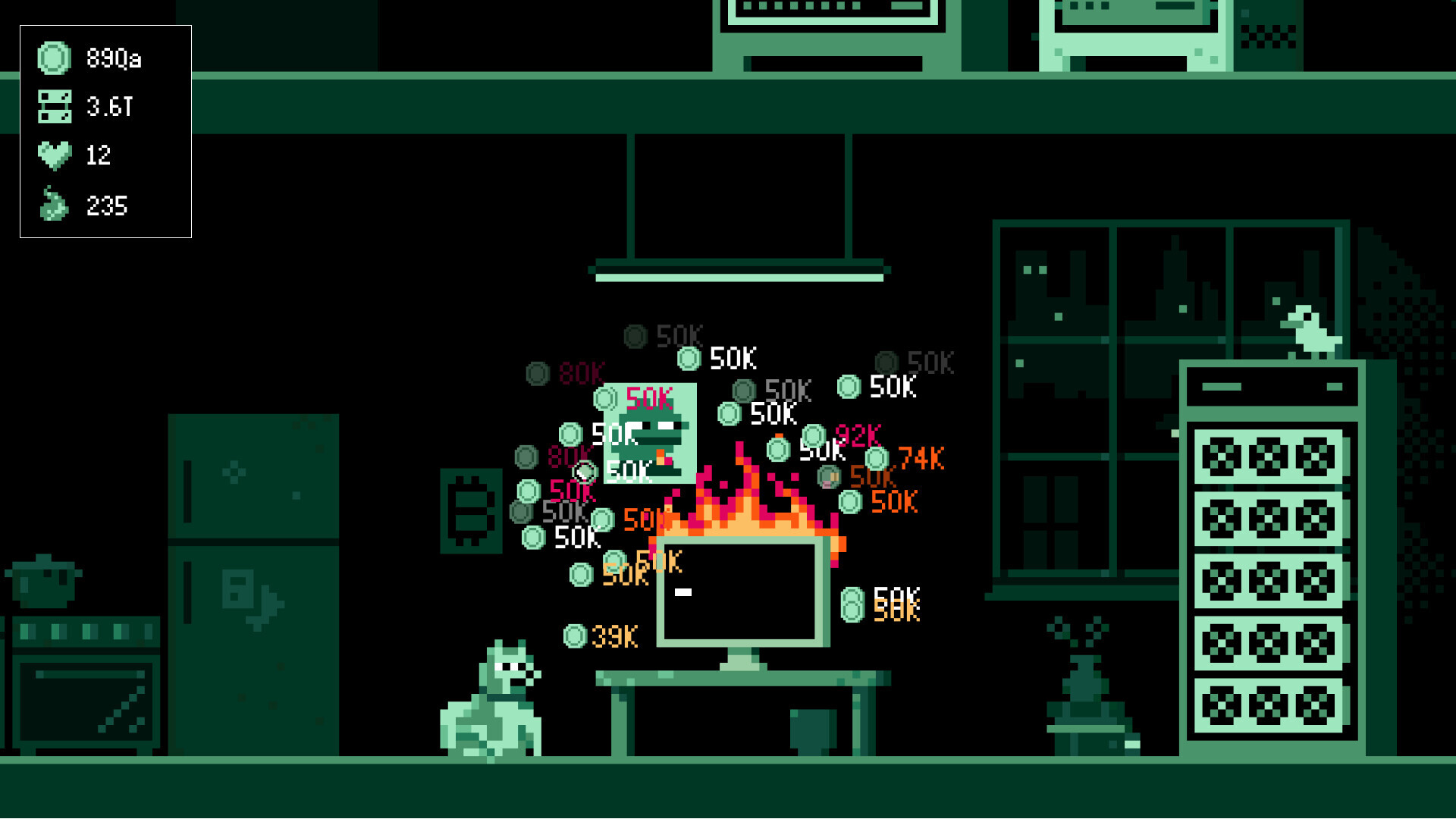
Incremental games often use abstract factories, fantasy resources, or cosmic numbers. It's Fine maps the familiar prestige loop onto a room full of game-development anxieties: code, computing power, wishlists, marketing, caffeine, deadlines, and sleep.
The joke is readable to anyone who has followed an indie launch, but the structure also serves the genre. Every new station gives the player another resource system to automate. A cramped room visibly becomes a ridiculous production machine. The comedy therefore grows from the mechanics rather than sitting only in dialogue.
Launching with hundreds of simultaneous players matters for a small paid incremental game. It indicates that the premise and store presentation converted a meaningful first-day audience. It does not show how many will return after the first prestige cycle.
Genre, platform, and release state
Steam lists It's Fine as a released Windows title across casual, indie, simulation, and strategy. It is single-player, supports achievements and cloud saves, and advertises mouse-only play, adjustable text, save-anytime support, and play without timed input.
The game launched at a listed base price of $9.99 with a 10% discount in the United States at our check. Regional prices vary. Buma Games developed the title, with Buma Games and SpaceJazz listed as publishers.
The store page explicitly says its pixel art and music were made by people rather than generated by AI. That is a positioning claim from the developer, not something IndieGame.party can independently audit from the binaries.
Core loop and differentiation
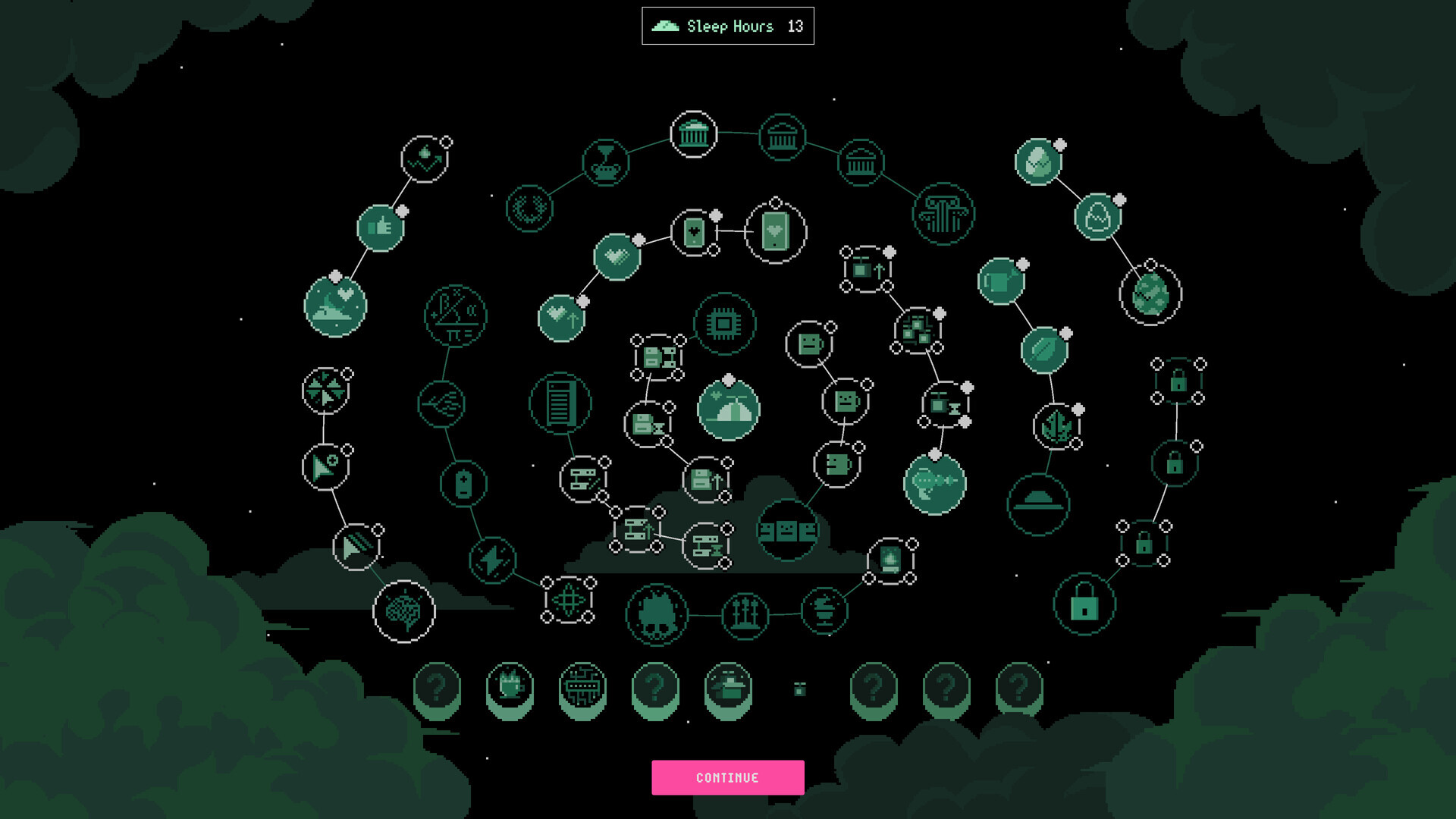
The basic loop is familiar: generate a resource, buy automation, increase production, unlock a new system, and reset for permanent advantages. Here, manual code clicks give way to automated production. Additional stations produce resources such as compute and wishlists. The room fills with absurd helpers and escalating effects.
Sleep is the prestige mechanic. Ending a run produces "Sleephours," which fund permanent upgrades through a Dreamtree. That reframes resetting as the one sensible act in a satire about crunch. The player loses immediate progress but returns more capable.
The official pitch promises mechanics that change rather than only numbers that increase. A bot farm generates wishlists; stranger systems and creatures enter the room; challenges and secrets alter effects; and multiple endings turn the release deadline into more than a progress bar.
That is the product's key test. Incremental fans tolerate repetition when each layer changes what they optimize. If new stations merely multiply the same resource curve, the theme will carry only the first hours.
Verified market snapshot
The public data checked shortly after launch showed:
- 643 current players at 11:20 p.m. Malaysia time on September 23;
- three all-language public reviews, all positive;
- a September 23 full release;
- a paid Windows product with a launch discount;
- 11 official store screenshots available;
- no public sales, refund, completion, or retention data.
The defensible momentum signal is hundreds of first-day concurrent players. It is too early to calculate a meaningful positive percentage from three reviews, even though all three recommend the game.
What the public response can tell us
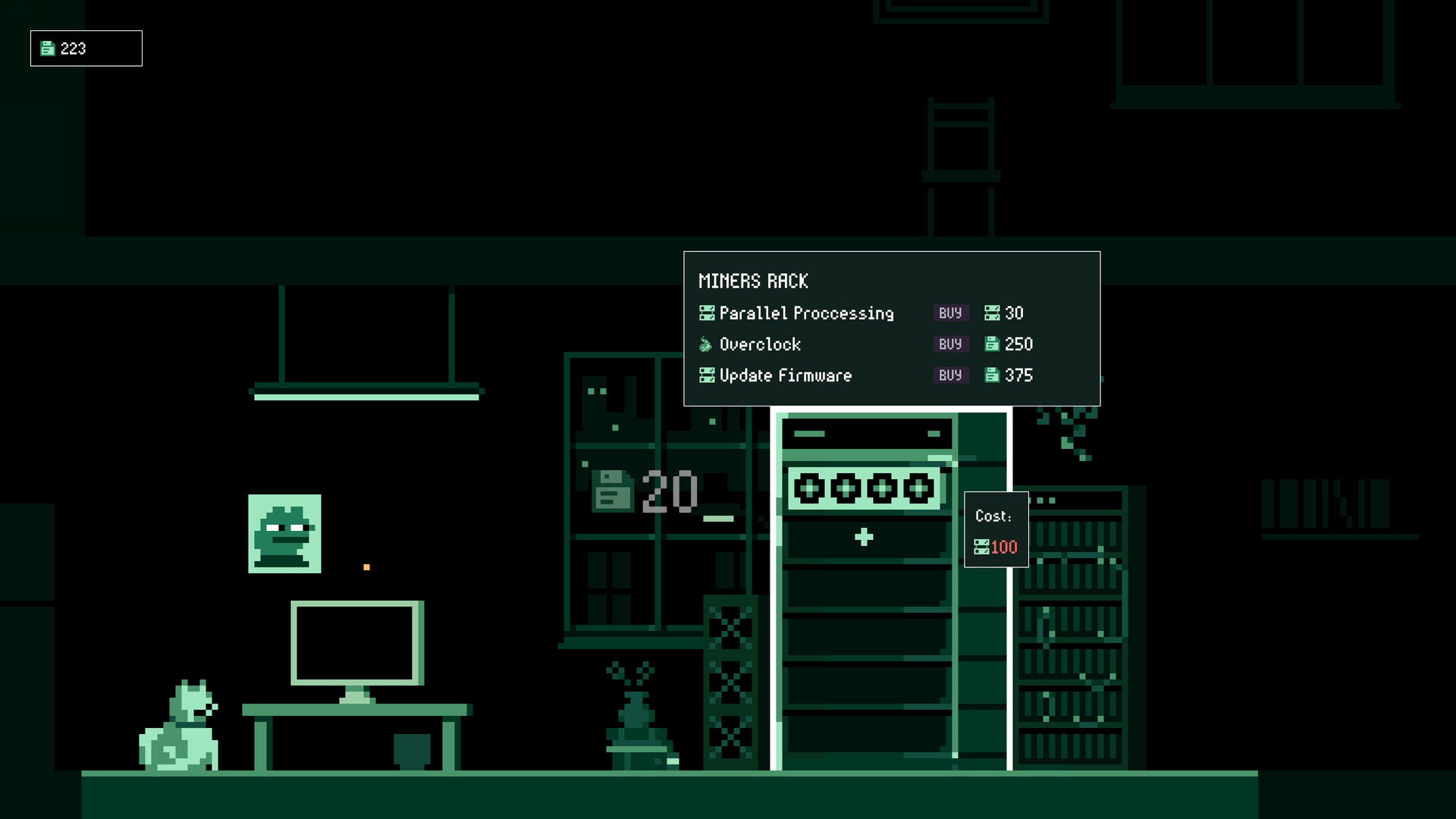
The small sample aligns with the intended design. Reviewers mention satisfying upgrades, secrets, the transition into automation, and humor about game development. One detailed review describes the room's systems becoming increasingly self-running after an initially manual start.
That is encouraging because it confirms the store pitch is visible in the released build for at least a few players. It is not enough to call those themes a broad consensus. With only three reviews, one negative report would change the apparent ratio sharply.
There is no recurring complaint pattern yet. Questions buyers should watch include the pace of the first reset, whether offline or background progress feels fair, how distinct later systems become, and whether secrets reward discovery rather than requiring outside guides.
Competitive meaning
It's Fine competes in a crowded incremental category where theme often determines discovery and progression design determines retention. Its dev-crunch setting has two advantages. It naturally explains automation, and it turns prestige into a joke with mechanical meaning.
Compared with a conventional idle factory, the room gives every resource a character and location. Compared with a management simulator, the systems are exaggerated resource generators rather than realistic production planning. Compared with a pure clicker, the promise of evolving mechanics and alternate endings provides a clearer authored destination.
The risk is audience mismatch. Developers may enjoy the satire but want deeper production choices. Incremental fans may enjoy optimization but ignore the story. The game must make both layers support each other.
Who should buy—and who should wait
The launch is worth watching for players who enjoy incremental progression, visible room transformations, secrets, meta-upgrades, and game-development humor. The $9.99 base price is modest, but paid status raises expectations above a free browser clicker.
Wait if you need a mature review consensus, dislike prestige resets, or expect a realistic studio-management simulation. Players sensitive to grind should wait for reports about later layers and total completion time.
IndieGame.party verdict
It's Fine has a credible first-day audience and a theme that explains its systems instead of decorating them. The 643-player snapshot is a real launch signal; three positive reviews are not yet a verdict. The next evidence should be second-day review growth, the first weekend's concurrency, and whether players praise distinct late-game mechanics rather than only the premise.
Sources and image rights
- Official Steam store and media page, checked September 23, 2026: https://store.steampowered.com/app/3936270/
- Developer site linked from Steam, checked September 23, 2026: https://itsfinegame.com/
- Steam public review endpoint, checked September 23, 2026: https://store.steampowered.com/appreviews/3936270?json=1&language=all&purchase_type=all
- Steam current-player endpoint, checked September 23, 2026: https://api.steampowered.com/ISteamUserStats/GetNumberOfCurrentPlayers/v1/?appid=3936270
- Images: official Steam header and screenshots supplied by Buma Games / SpaceJazz, © their respective rights holders. Downloaded locally September 23, 2026 and used without compositing in the minimum scope needed to identify and analyze the game.