Dressmaker Turns Real Sewing Steps Into a 12,700-Player Launch
Dressmaker has converted a very specific craft fantasy into one of September's clearest indie launch signals. At 11:30 p.m. Malaysia time on September 23, 2026, Steam's official current-player endpoint showed 12,703 players in game. The public review endpoint reported 1,455 reviews: 1,405 positive and 50 negative, or 96.6% positive.
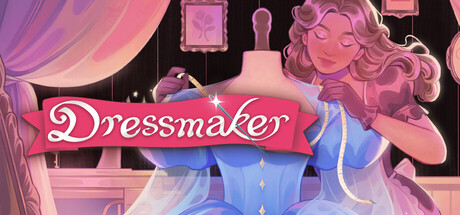
Dressmaker has converted a very specific craft fantasy into one of September's clearest indie launch signals. At 11:30 p.m. Malaysia time on September 23, 2026, Steam's official current-player endpoint showed 12,703 players in game. The public review endpoint reported 1,455 reviews: 1,405 positive and 50 negative, or 96.6% positive.
Those figures do not reveal sales, refunds, or long-term retention. They do show that a game built around choosing fabric, cutting patterns, sewing pieces, and presenting finished clothes has moved beyond a novelty pitch. This is launch market analysis based on official materials and public review patterns, not a hands-on review.
Why Dressmaker is visible now
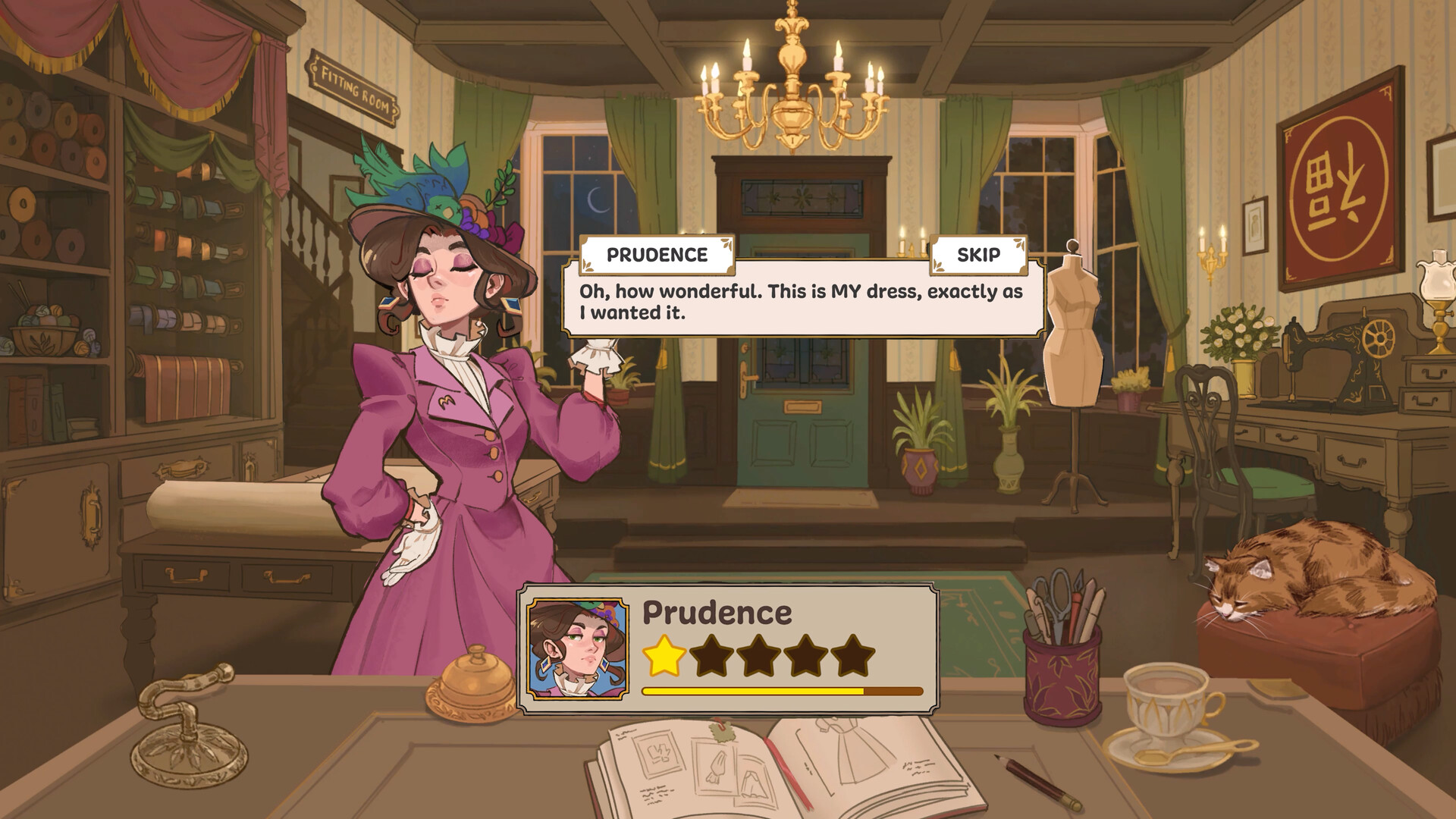
Dressmaker launched on September 21 and appeared in Steam's Popular New Releases view at our check. Its discovery advantage is immediate: many fashion games emphasize styling a finished avatar, while Dressmaker turns construction into the main verb.
The player chooses fabric and decoration, works from pattern pieces, cuts the material, and uses a sewing machine to assemble a garment. The fantasy is not merely owning a wardrobe. It is understanding why a dress hangs, shines, and fits the way it does.
That specificity makes the game easy to demonstrate in video. A flat piece of fabric becomes a recognizable garment through visible steps. It also reaches two audiences at once: players nostalgic for fashion games and people who sew, tailor, or craft in real life.
Genre, platform, and release state
Steam lists Dressmaker as a released Windows game in the casual and simulation categories. Cozy Lives is the developer and Free Lives the publisher. It is a paid single-player title, not Early Access, and its store pitch emphasizes both satisfying customers and the possibility of deliberately making the wrong garment for them.
The game is not presented as a strict tailoring course. Real processes are simplified into readable interactions and a narrative structure. That distinction protects both expectations and the design: authenticity supports the fantasy, but the product still needs to make thousands of repeated cuts, stitches, and choices comfortable on a mouse or controller.
Core loop and differentiation
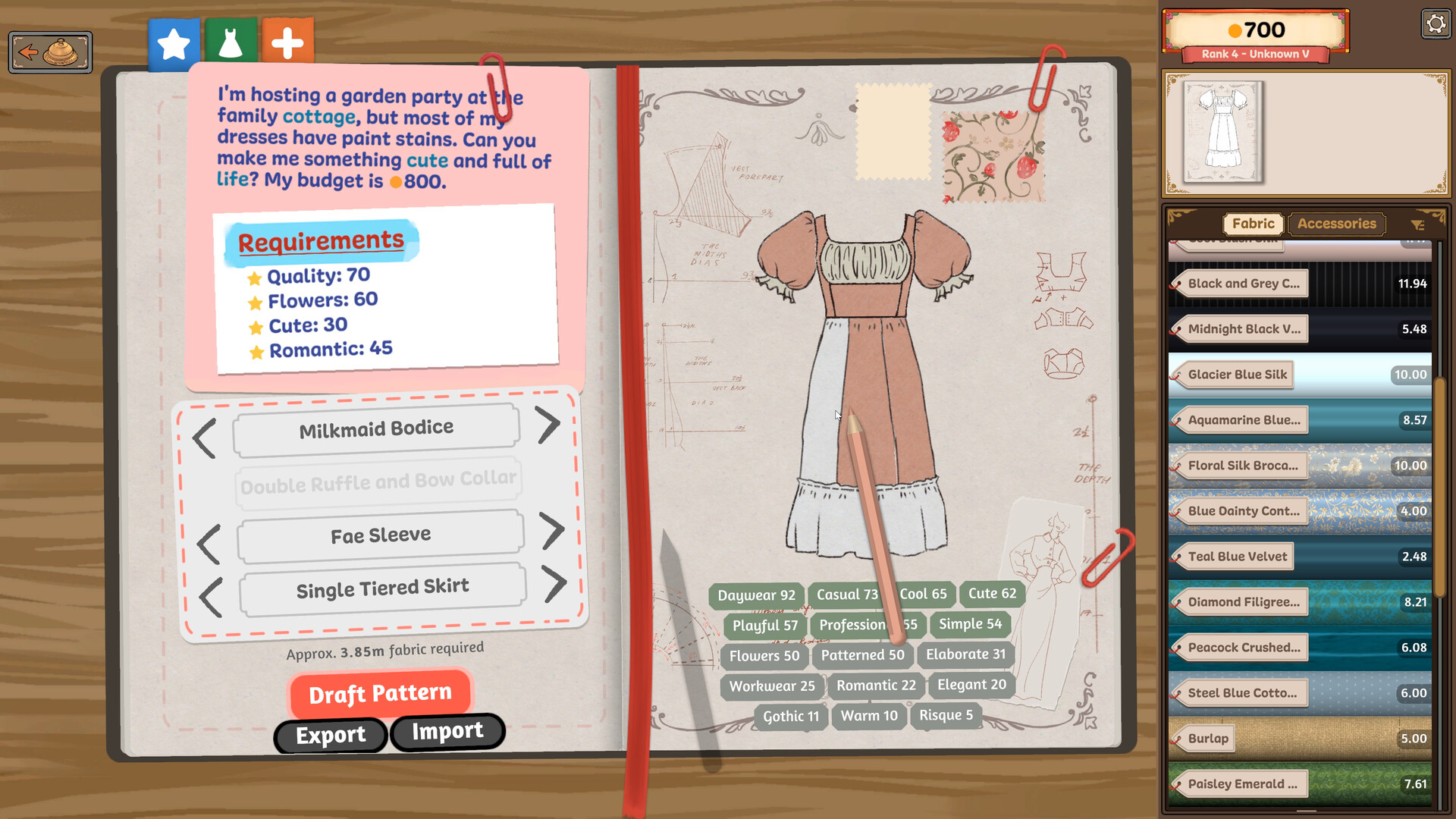
The loop begins with a client and a brief. Players interpret shape, occasion, color, and personality, then select material and build the garment through a sequence of pattern, cutting, sewing, and decoration tasks. The finished dress is both a creative artifact and a response to a request.
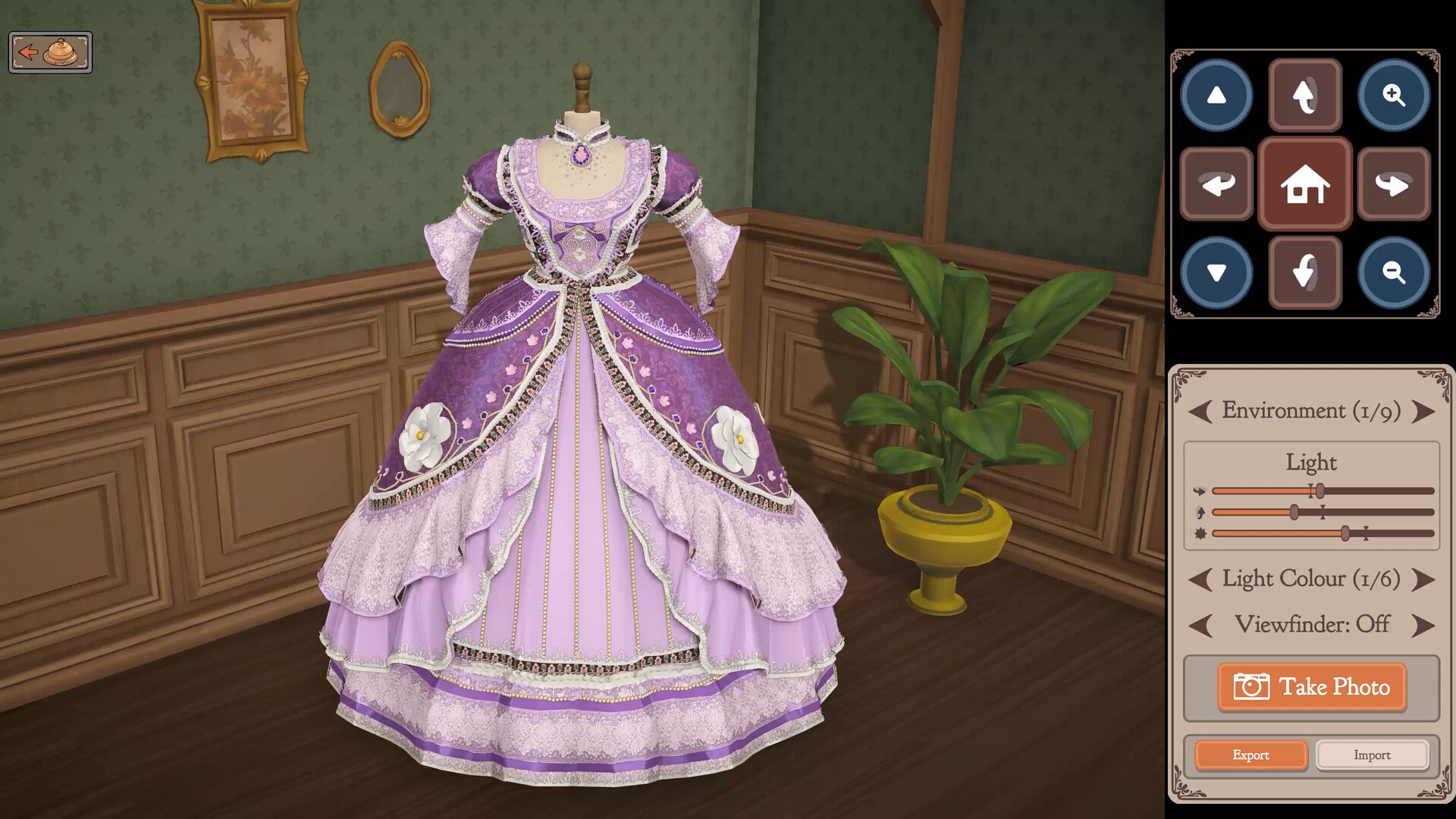
Material behavior is the strongest differentiator. Silk, heavier fabrics, colors, and trims communicate different visual outcomes. Pattern pieces connect a two-dimensional plan to a three-dimensional garment. The game therefore creates a form of procedural creativity: expression is constrained by construction rather than reduced to a menu of complete outfits.
The story and client requests provide reasons to make something other than the player's default taste. That can prevent a creative sandbox from becoming one repeated aesthetic. It also creates room for comic sabotage, imperfect work, and social consequences.
Verified market snapshot
The September 23 snapshot supports a strong but narrow conclusion:
- 12,703 current players at 11:30 p.m. Malaysia time;
- 1,455 public all-language reviews;
- 1,405 positive and 50 negative reviews;
- calculated positive share of 96.6%;
- September 21 full release on Windows;
- placement in Steam's Popular New Releases view;
- no official sales, revenue, refund, completion, or retention figure.
Current players are a moment, not a daily active-user total. Reviews are self-selected, and launch buyers can differ from the later audience. Even with those limits, the combination of five-figure concurrency and more than a thousand reviews is far stronger than a handful of enthusiastic launch comments.
What public reviews repeatedly praise
Across the public sample, praise repeatedly centers on the process itself. Players with sewing or tailoring experience recognize the order of choosing material, working with patterns, cutting, and stitching. Players without that experience describe the sequence as legible enough to enjoy.
Creative freedom is another recurring theme. Reviews highlight the range of combinations and the satisfaction of producing an object that looks personally authored rather than selecting a preset. Several compare the game with older fashion titles while describing this as a more detailed adult version of that fantasy.
The atmosphere also matters. Music, fabric presentation, and the deliberate pace make the workshop feel cozy even when the player is completing a request. That emotional tone broadens the audience beyond simulation purists.
Where the complaints concentrate
Positive reviews still identify friction. The most common complaint in the sampled reviews concerns controls during cutting, sewing, placing decoration, or manipulating the mannequin. Some players want clearer highlighting that connects each pattern piece with its location on the final dress, especially when several fabrics have similar colors.
Another repeated request is a better payoff after completion. Players want to see the client wearing the garment, not only the dress as an object. For a game built around matching a person, body, and occasion, the absence or weakness of that feedback can reduce the final reward.
Some reviewers ask for stronger business-management or difficulty systems. Others prefer the current creative focus. That is a design fork, not a simple defect: deeper economics could add consequence while distracting from the tactile craft that attracted the audience.
Steam Deck and localization comments are mixed by language and setup. Buyers should check current compatibility and language support rather than treating individual reviews as universal.
Competitive meaning
Dressmaker sits between fashion styling, tactile crafting, and job simulation. Compared with avatar dress-up games, it exposes how the garment is made. Compared with professional sewing software, it removes measurement precision and production risk. Compared with broader workshop simulators, it concentrates on one craft deeply enough to establish identity.
The launch suggests underserved craft processes can support substantial audiences when the work creates a visually expressive result. The crucial lesson is not simply "make a sewing game." It is that a specialized manual process becomes marketable when every step visibly transforms the final object.
Who should buy—and who should wait
Dressmaker is a strong fit for players who enjoy fashion, customization, tactile job simulations, detailed creative tools, and story-led client briefs. The review volume makes a cautious quality recommendation reasonable.
Wait if imprecise drag-and-drop controls quickly frustrate you, if you want a deep shop-management economy, or if seeing clothing modeled on clients is essential to your sense of completion. Patches addressing control clarity and final presentation could materially improve the experience.
IndieGame.party verdict
Dressmaker is not merely benefiting from an attractive theme. Five-figure concurrency and a 96.6% positive share across 1,455 reviews validate a specific, process-driven creative loop. Its challenge is converting that launch enthusiasm into long-term creation by smoothing the controls and strengthening the moment when a finished dress meets its wearer.
Sources and image rights
- Official Steam store and media page, checked September 23, 2026: https://store.steampowered.com/app/4019220/
- Steam public review endpoint, checked September 23, 2026: https://store.steampowered.com/appreviews/4019220?json=1&language=all&purchase_type=all
- Steam current-player endpoint, checked September 23, 2026: https://api.steampowered.com/ISteamUserStats/GetNumberOfCurrentPlayers/v1/?appid=4019220
- Steam Popular New Releases page, checked September 23, 2026: https://store.steampowered.com/search/?filter=popularnew&os=win&supportedlang=english
- Images: official Steam header and screenshots supplied by Cozy Lives / Free Lives, © their respective rights holders. Downloaded locally September 23, 2026 and used without compositing in the minimum scope needed to identify and analyze the game.