Crawling Desktop Pet Lets You Redesign the Creature Crawling Across Your Work
Your cursor has acquired a dependent. It follows you across the screen, expects feeding, and can apparently have its anatomy revised when ordinary pet ownership starts to feel insufficiently ambitious. Crawling Desktop Pet offers a peculiar bargain: put a little creature beside your work, then give yourself another thing to look after. I find the editable body parts more persuasive than the promise of company.
A desktop animal is pleasant enough; a desktop animal whose proportions and movement you can meddle with has the makings of a very specific distraction.
AnKer's Casual, Indie game lists its release as Nov 8, 2026, making it a day-old arrival for this November 9 spotlight. The listed platform is windows, and the price is $4.49. AnKer is both developer and publisher. Those modest particulars suit the pitch: this is a creature-raising diversion that can occupy the edge of your computer screen, with a more elaborate construction kit hiding inside its pet-care routine.
Your mouse pointer has responsibilities
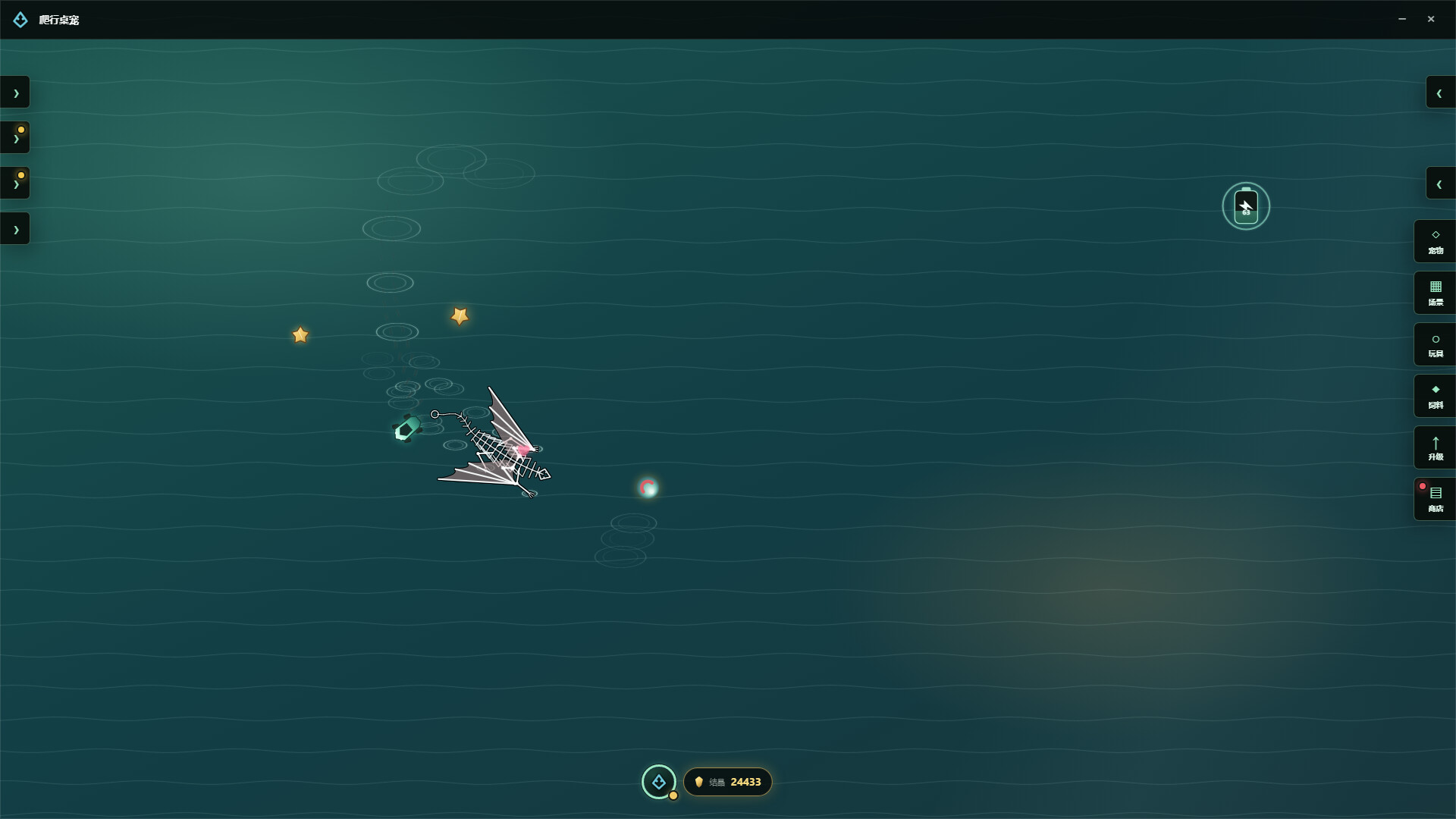
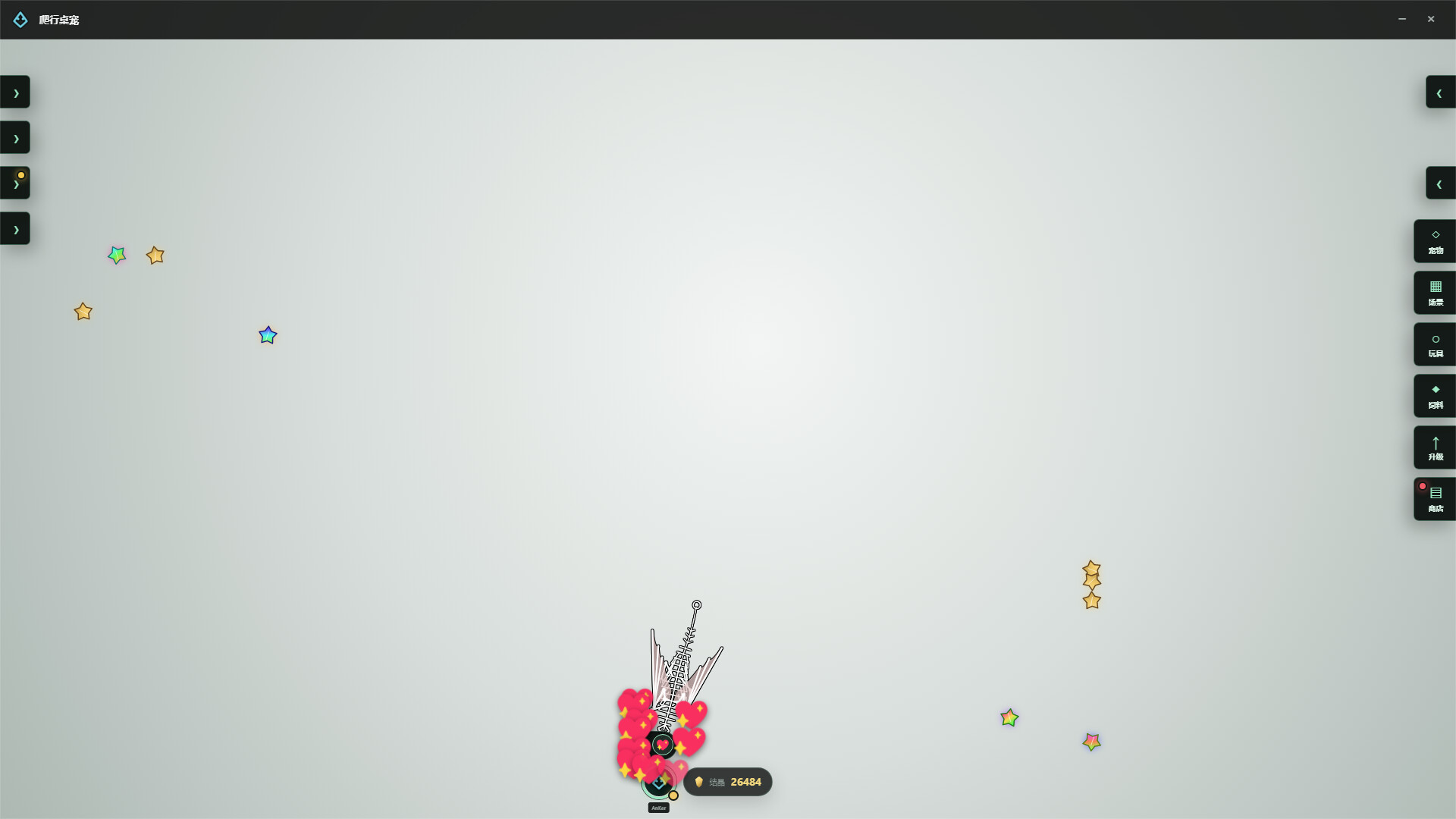
The opening ritual is pleasingly literal: tap an egg's shell to hatch your companion. From there, you feed it, care for it, and watch it grow and evolve. It follows the cursor, crawls across the screen, and reacts to toys and its surroundings. The joke is that your computer becomes a habitat, despite already being crowded with applications competing for your attention.
Whether that feels companionable or deeply unhelpful will depend on how much affection you can spare for something moving near your work.
The Tamagotchi comparison fits the care structure: hatch something, attend to it, become invested in its development. What changes is the creature's address and your authority over its form. This pet lives on the desktop, and its body is open to adjustment. That makes the fantasy less about accepting a predetermined animal and more about raising something you have helped design.
The distinction matters because affection and authorship are different reasons to return; Crawling Desktop Pet is trying to give you both.
I would approach the companion language as an invitation to make your own attachment, rather than a guarantee that the software will produce one. Cursor-following and toy reactions provide specific opportunities for character to emerge. The listing cannot establish how expressive those reactions feel over time.
Still, a creature crawling through the same space where you answer messages is a stronger premise than another pet confined to a menu. Its location is part of its personality.
Feed the pet, fund the toy cupboard
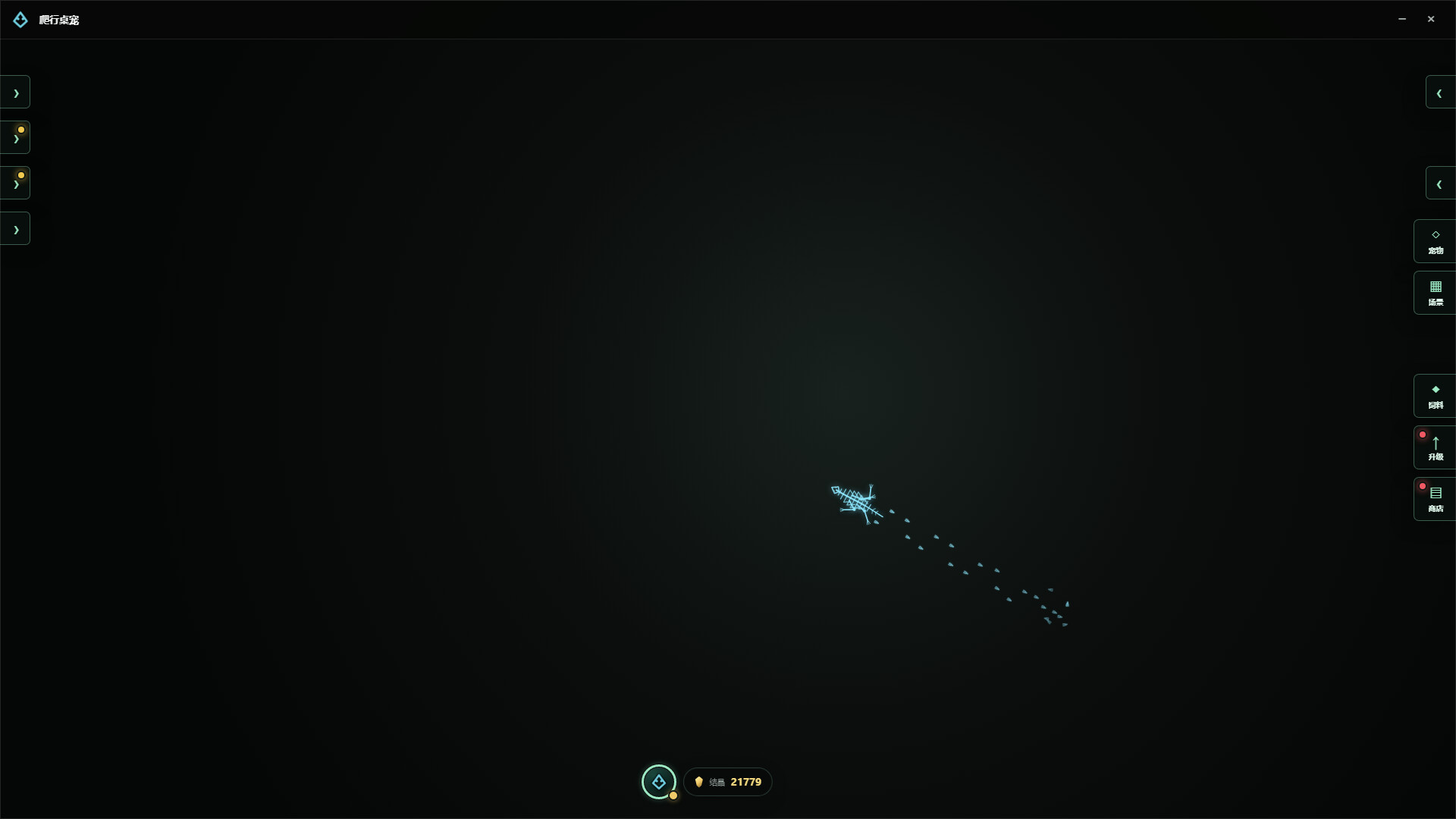
The progression has a straightforward spine. Your pet produces Crystals, which obtain food, upgrades, scenes, toys, and new companions. Care and growth gradually open further interactions and collectibles. Minute to minute, the advertised activities are feeding, tending, arranging a scene, placing toys, and seeing how the animal responds.
The useful detail is that the currency feeds several appetites: practical care, more things to interact with, and a broader collection of creatures.
There are different eggs to hatch and multiple companions to raise, with the option to switch which pet stays beside you. Achievements and personalization items add further targets. This is presented as continuing care and collection, so there is no advertised run structure to explain or restart strategy to master.
The question is whether another toy, another scene, or another developing creature gives you a reason to return after the initial novelty of a pet on your desktop has settled.
Stardew Valley is a useful comparison for the appeal of tending something and turning the proceeds into further possibilities. Crawling Desktop Pet concentrates that appeal into a companion and its surroundings. Its listed activities do not establish anything like Stardew Valley's breadth of farming, relationships, and exploration.
The attraction here is the smaller footprint: a care loop that can sit alongside another activity. If you need a sprawling world to make incremental progress meaningful, feeding a desktop creature may feel very slight.
The anatomy editor is the real invitation
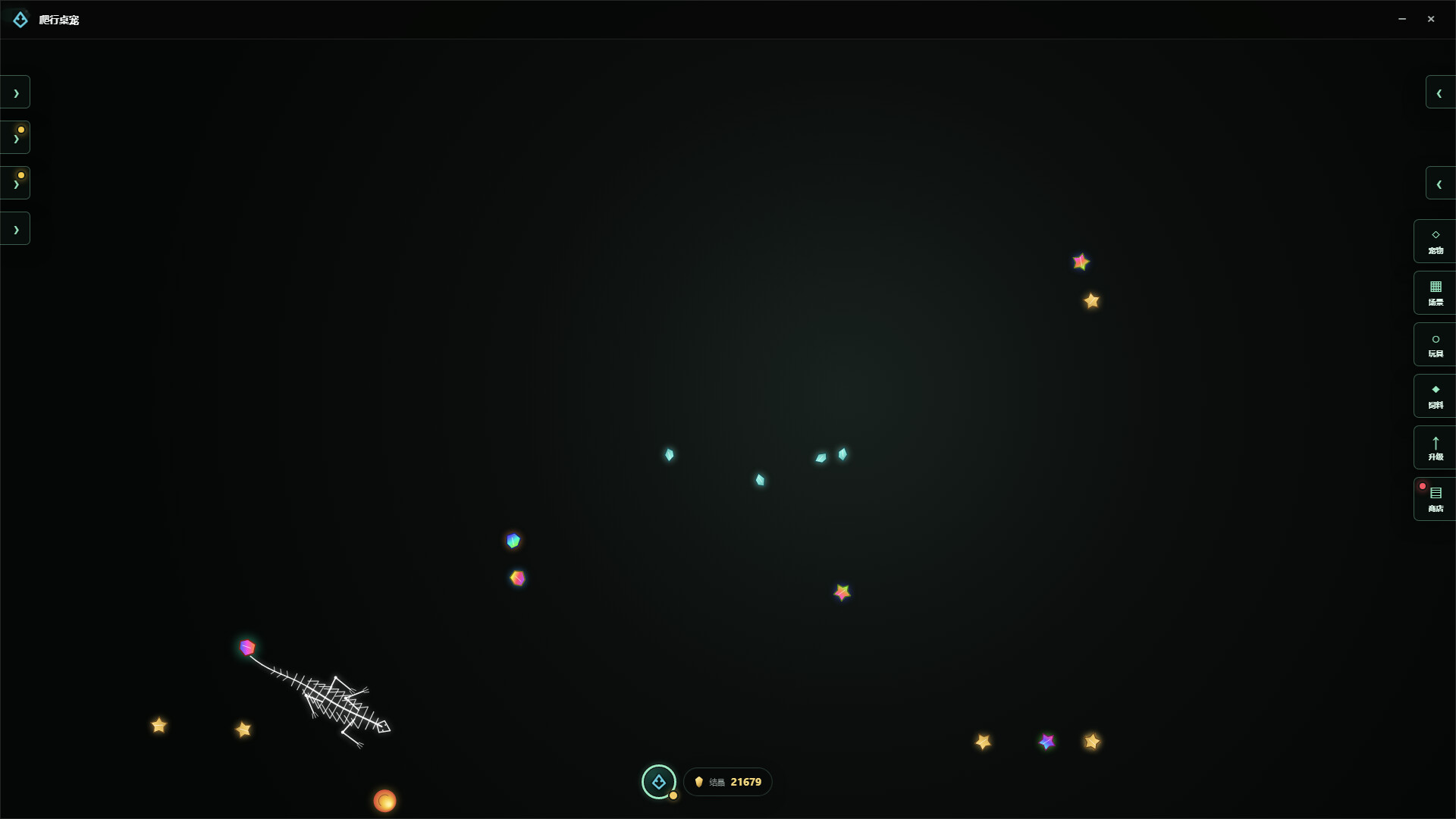
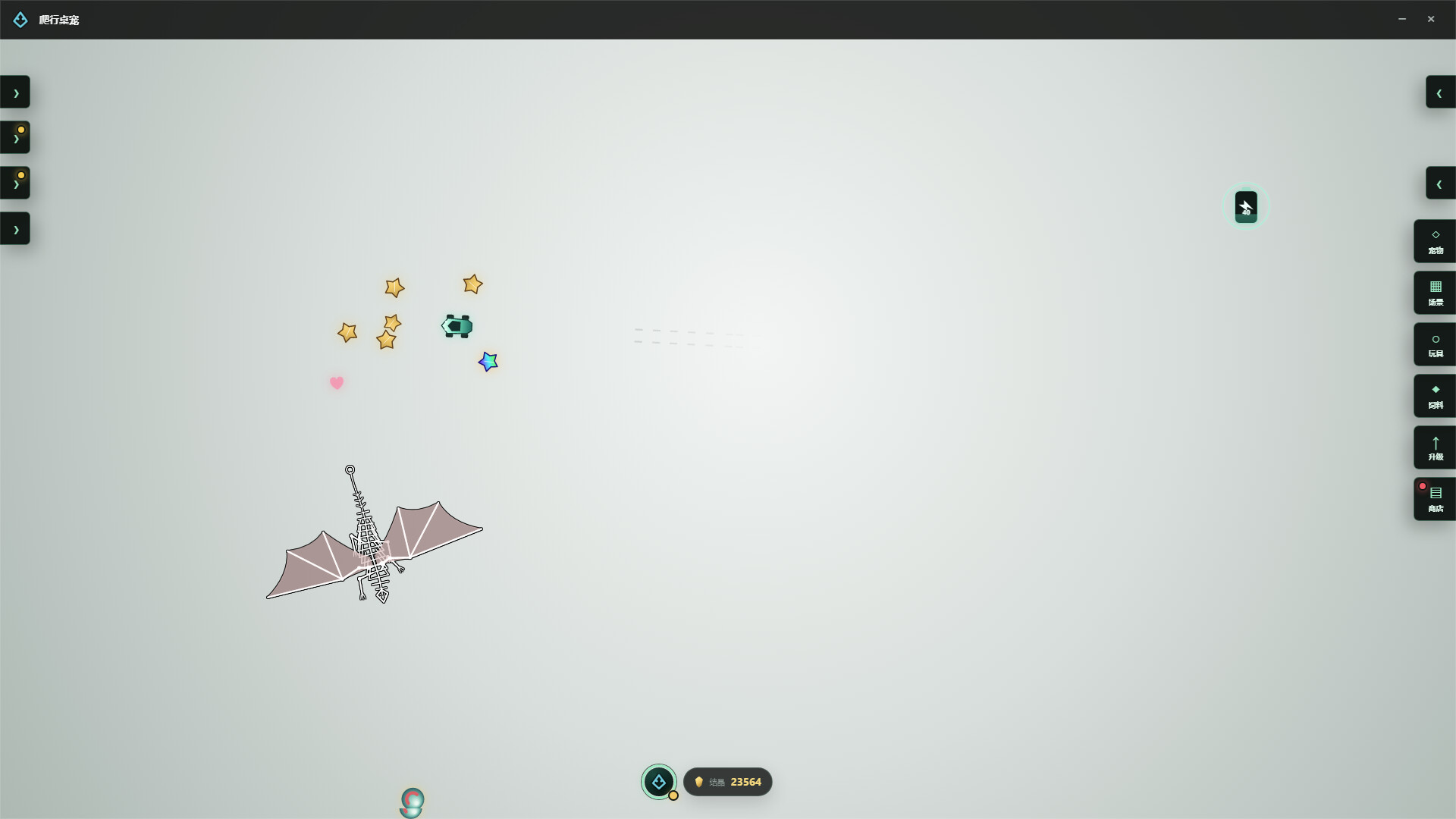
The most distinctive promise is under the skin. AnKer describes a real-time procedural skeletal system rather than fixed, pre-rendered animations. Individual body parts can have their proportions, structure, movement, and appearance adjusted. That is a much stronger hook than choosing a colour and calling the result your own.
It suggests a creature whose locomotion is part of the creative material, with the potential pleasure of seeing an odd design attempt to carry itself across the screen.
Spore is the obvious comparison for anyone drawn to assembling an unusual animal. Crawling Desktop Pet puts its advertised emphasis on a persistent companion, care, and desktop presence. The interesting question becomes what sort of creature you want to keep around: something gentle, something elegant, or something whose structure reflects a series of questionable artistic decisions.
I keep coming back to the movement controls. Changing how a body behaves could make customization feel consequential even when the immediate ambition is simply to make a stranger-looking pet.
Designs can be saved, imported, and exported. That gives experimentation a useful foundation: you can retain a creature while trying another idea, and the listing explicitly allows sharing creations. For readers who enjoy adjusting a character until its silhouette feels right, this may be the main source of value. The supplied information gives no count of body options or measure of the editor's flexibility, though.
Its ceiling remains an open question, and I would want more evidence before treating it as an unlimited creature workshop.
A pet needs desktop manners
The practical controls deserve almost as much attention as the skeleton. Crawling Desktop Pet offers a full window and a transparent desktop mode, plus hidden interface elements, reduced notifications, and mouse click-through. Those are concrete concessions to the fact that a companion must share space with whatever you opened the computer to do.
A creature crossing the screen is amusing until interacting with the rest of the desktop becomes a negotiation.
Click-through is especially relevant to the pitch: the pet can remain visible while mouse input passes through. Combined with fewer notifications and a hidden interface, it offers a way to reduce the creature's demands on the screen. I like that the listing addresses quiet presence explicitly.
The appeal of an ambient pet depends partly on being able to leave it alone, although the supplied description does not specify care timers or what happens during a long absence. Busy readers should keep that uncertainty in mind.
You can also invite friends online for interactions and show off pets and personalized looks. That supports a social reason to build an unusual creature, but the description supplies no shared objectives, cooperative progression, or player limit. I would buy for the solo care and creation tools, then regard online visits as an additional possibility.
Anyone seeking a structured co-op evening has too little detail here to make this their next group purchase.
Eleven players, one very small launch
The why-now case begins with yesterday's release and a supplied count of 11 current players. Eleven is a small live audience, not evidence of a breakout. It does make this an early discovery: the sort of newly released oddity a magazine can examine while its defining proposition is still more interesting than its popularity.
A customizable, procedurally animated desktop creature is specific enough to deserve attention without dressing a modest player count up as a phenomenon.
There are no player quotes in the supplied material, so there is no player testimony to quote. Total reviews, a review score, and a discount are also absent. That limits the verdict: I can make a case for the concept and its listed features, but cannot claim that buyers find the care satisfying or the editor deep.
At $4.49, the described package includes multiple companions, scenes, toys, progression, and saved creature designs; it supplies no reliable measure of how many hours those will sustain.
My reservation is that the editor may have to do much of the lasting work. Feeding, collecting Crystals, and buying another object could become routine if the reactions and evolution offer too little surprise. Readers who dislike recurring pet care, want a substantial campaign, or find movement beside their work distracting should skip it.
For the person already imagining an animal with inadvisable proportions crawling past an unfinished document, however, the pitch has landed. Crawling Desktop Pet earns this week's spotlight by making desktop companionship into a creature-design problem—and pricing the invitation at $4.49.