BuGarden Turns a Desktop Corner Into a Low-Pressure Collection Loop
BuGarden arrived on Steam on September 21 with a compact proposition: keep a small flower garden at the edge of the desktop while work, study, or browsing happens elsewhere. At 1:33 p.m. Malaysia time on September 22, 2026, Steam’s official endpoints showed 119 current players and 16 all-language public reviews, all positive. The US store listed a 20% launch discount from US$4.99 to US$3.99.

BuGarden arrived on Steam on September 21 with a compact proposition: keep a small flower garden at the edge of the desktop while work, study, or browsing happens elsewhere. At 1:33 p.m. Malaysia time on September 22, 2026, Steam’s official endpoints showed 119 current players and 16 all-language public reviews, all positive. The US store listed a 20% launch discount from US$4.99 to US$3.99.
Those numbers are an early momentum signal, not a sales estimate or settled verdict. Sixteen reviews are too few to establish long-term satisfaction, and current players are a moment rather than a peak. This is launch market analysis based on official store data and a bounded review sample, not a hands-on review.
Why BuGarden is visible now
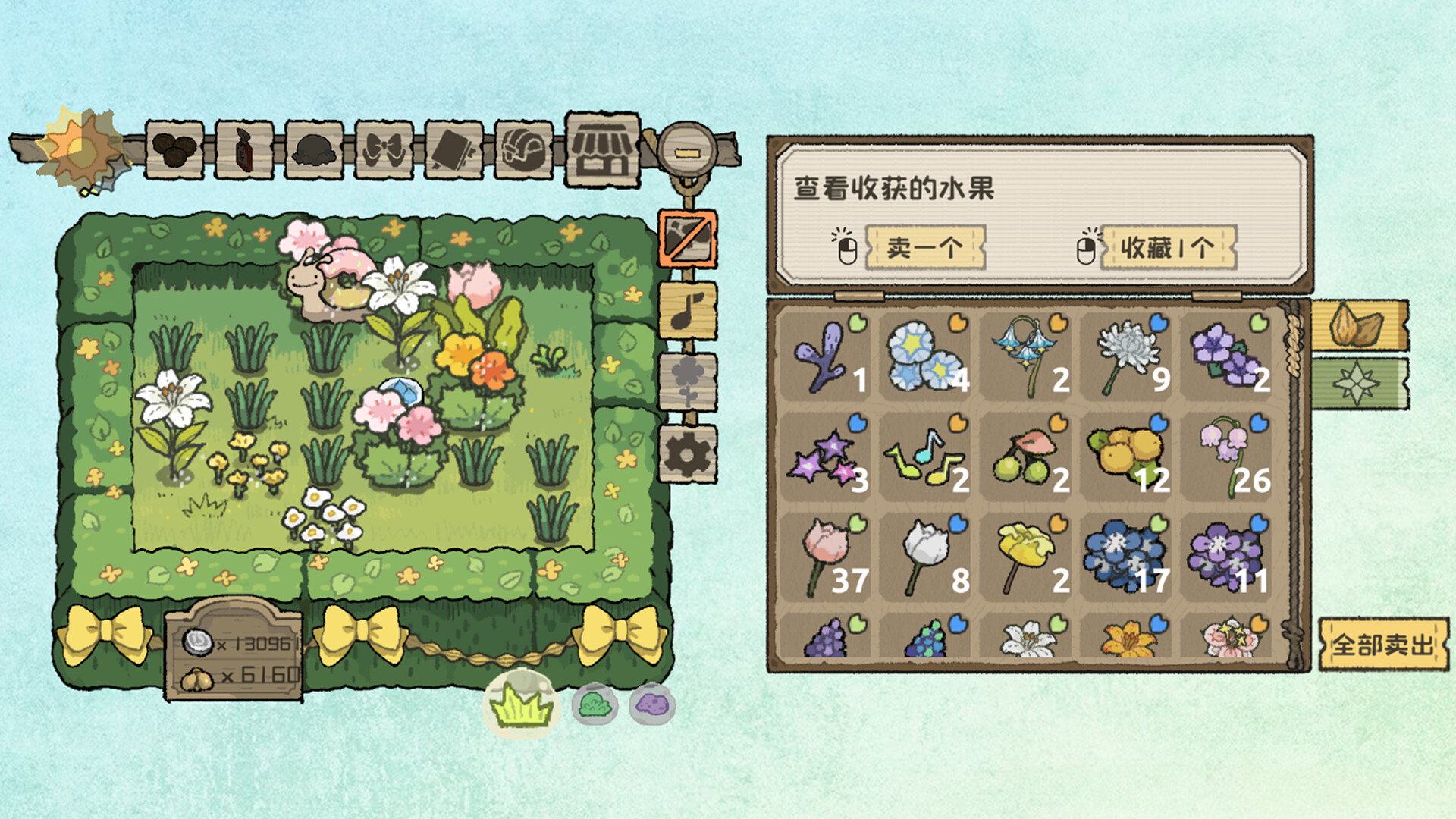
Desktop companion games have become a recognizable Steam niche because they occupy unused screen space and tolerate interrupted attention. BuGarden fits that format but gives it a readable gardening fantasy: plant seeds, water and fertilize them, collect flowers and fruit, clear insects, and let a snail companion handle some routine work.
The early numbers are modest but coherent. More than one hundred people were running a paid, single-player desktop companion at the observation time, while the first sixteen reviews were positive. That combination is stronger than a page with only wishlists or unverified social claims, though it remains vulnerable to rapid change as broader players arrive.
Genre, platform, and release state
Steam lists BuGarden as a casual indie simulation for Windows and macOS. It is a full paid release, not Early Access, with achievements, cloud saves, and family sharing listed on the official store data. 西梅树工作室 is the developer and shares publishing credit with 3DM Games.
The release date matters because almost every public signal still reflects launch-day curiosity. A desktop game can accumulate long sessions because it remains open in the background, so current-player counts should not be compared directly with an action game where active play is continuous. Concurrency here measures presence and continued use, not intensity.
Core loop and differentiation
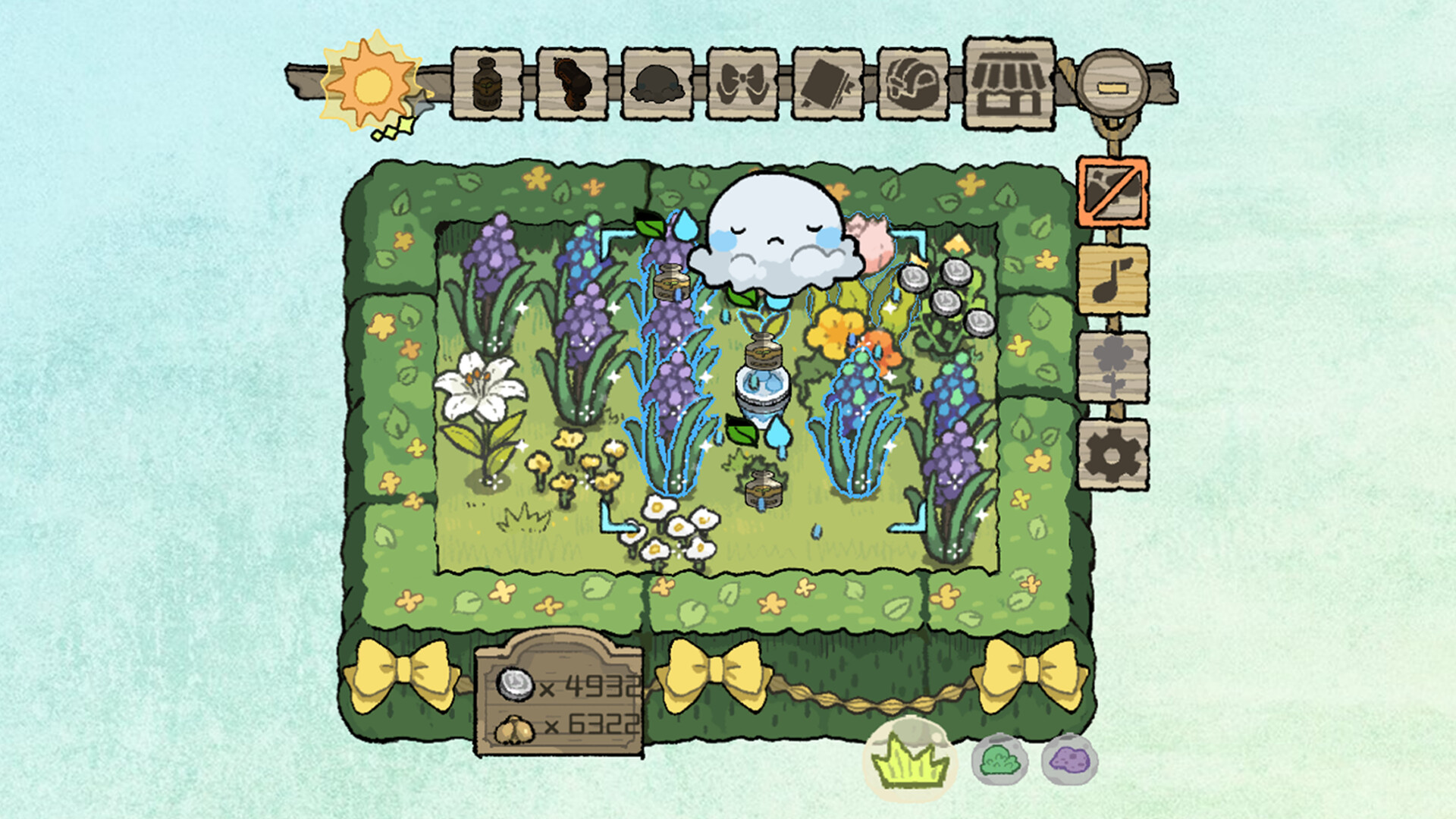
The loop begins with seeds and simple care. Plants mature, generate collectible flowers or fruit, and contribute currency that unlocks more seeds, tools, decorations, and garden options. Water and fertilizer accelerate or support growth, while insects introduce a small active task. The snail companion reduces upkeep by helping with watering and collection.
The differentiation is not the farming economy by itself. Many idle and cozy games already use plant timers, unlock trees, and decoration. BuGarden’s claim is that these systems remain peripheral to whatever the player is doing on the computer. The garden can be moved, resized, or hidden, and the official description emphasizes a distraction-free mode with no fail state.
That creates an important design tension. Too much required clicking would defeat the companion format; too little interaction would make new flowers feel like wallpaper. The snail and automatic assistance appear designed to move the balance toward observation while preserving occasional choices.
Current market signal
The verified launch snapshot showed:
- 119 current players at 1:33 p.m. Malaysia time on September 22;
- 16 all-language reviews: 16 positive and zero negative;
- a September 21 full release;
- US$3.99 during a 20% launch discount;
- official Windows and macOS support.
The 100% ratio should be read with its denominator attached. A single negative review would move it materially. The useful signal is that an initial audience is both present and willing to recommend the game, not that quality has been proven beyond dispute.
What players repeatedly praise
The sixteen-review sample is predominantly Chinese-language and uniformly positive. Across it, several patterns repeat: the art is described as cute and calming; the garden can sit unobtrusively beside work; planting and collecting are easy to understand; and the snail reduces pressure. Multiple players frame the game as a small emotional break rather than a demanding management project.
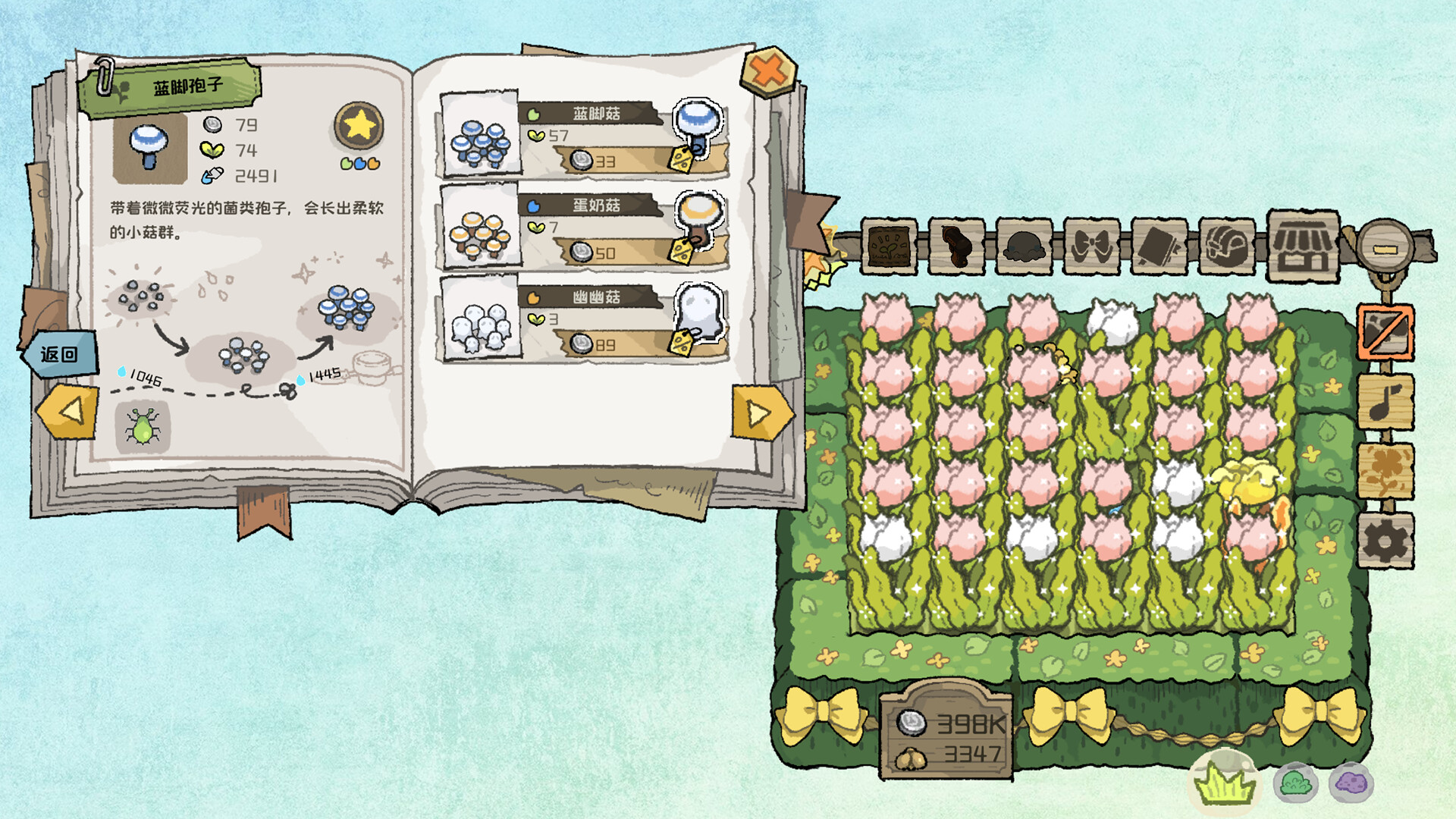
Longer comments also praise progression across plant types, garden areas, and cosmetic decoration. One detailed account describes variant collection as a reason to continue, while noting that completing a full collection can depend on luck. That is a useful caution even inside a positive review: collection systems can shift from soothing to repetitive when rare variants become the remaining objective.
There is not yet a meaningful negative sample. Absence of criticism among sixteen early reviews does not prove the absence of bugs, localization problems, performance costs, or late-game repetition. It only means those issues did not dominate the checked sample.
Competitive meaning
BuGarden competes less with traditional farm simulators than with desktop companions, idle collectors, and productivity-adjacent toys. Its advantage is legibility. A small garden, flowers, a snail, and a hide button communicate the use case immediately. The US$3.99 launch price also keeps the decision below the price of larger cozy games.
Its risk is sameness. The desktop-companion market now includes pets, fishing, studying aids, focus timers, and small farming systems. A garden theme alone is not a moat. Variety in plants, decoration, automation, performance efficiency, and a respectful relationship with attention must carry retention.
The developer’s no-pressure framing is commercially important. If progression later pushes excessive checking, randomness, or grinding, it would conflict with the product’s reason to exist. Reviews after the launch discount and after dozens of hours will be more informative than today’s enthusiastic first sample.
Who may enjoy it—and who should wait
BuGarden appears suited to players who already keep Steam open during desk work, enjoy slow collection, and want a visual companion that can be hidden quickly. Players who like decorating and filling a plant catalogue have a clearer reason to stay than people seeking mechanical farming depth.
Wait if background applications compete for limited system resources, if random collection frustrates you, or if you want a narrative campaign and defined ending. Mac users should also check current user reports for their hardware because official platform support does not guarantee identical performance across every configuration.
Editorial verdict
BuGarden has a credible first-day signal: 119 observed players for a small paid desktop game and sixteen positive reviews. The loop is clearly matched to its format, and the snail assistant helps protect the low-pressure promise. The evidence is still too thin for a strong quality recommendation.
Verdict: promising launch signal, with the best fit for desktop-companion collectors. Treat the perfect rating as an encouraging beginning, not a mature consensus. The next useful evidence will be review diversity, technical reports, and whether players still value the collection loop after the early unlocks.
Sources and image rights
- Official Steam store and media page, checked September 22, 2026: https://store.steampowered.com/app/4289410/
- Steam public review endpoint, checked September 22, 2026: https://store.steampowered.com/appreviews/4289410?json=1&language=all&purchase_type=all
- Steam current-player endpoint, checked September 22, 2026: https://api.steampowered.com/ISteamUserStats/GetNumberOfCurrentPlayers/v1/?appid=4289410
- Images: official Steam capsule and screenshots supplied by the developer/publishers, © 西梅树工作室 and 3DM Games. Downloaded locally on September 22, 2026 and used without compositing in the minimum scope needed to identify and analyze the game.