Big Walk Proves Conversation Can Be the Main Co-op Mechanic
Big Walk released on August 4 as a cooperative “walker-talker” from House House, the studio behind Untitled Goose Game. More than seven weeks later, it returned to Steam's New & Trending response during our September 25 check. The official review endpoint showed 38,655 all-language reviews, 37,096 positive, or about 96.0% positive. The current-player endpoint showed 3,333 players at 1:17 p.m. Malaysia time.
Big Walk released on August 4 as a cooperative “walker-talker” from House House, the studio behind Untitled Goose Game. More than seven weeks later, it returned to Steam's New & Trending response during our September 25 check. The official review endpoint showed 38,655 all-language reviews, 37,096 positive, or about 96.0% positive. The current-player endpoint showed 3,333 players at 1:17 p.m. Malaysia time.
This is a sustained market signal, not a launch-week spike. It is also not a sales estimate or a hands-on review. The analysis uses official store materials, public endpoints, and repeated themes in a large voluntary review sample.
Why it is visible now
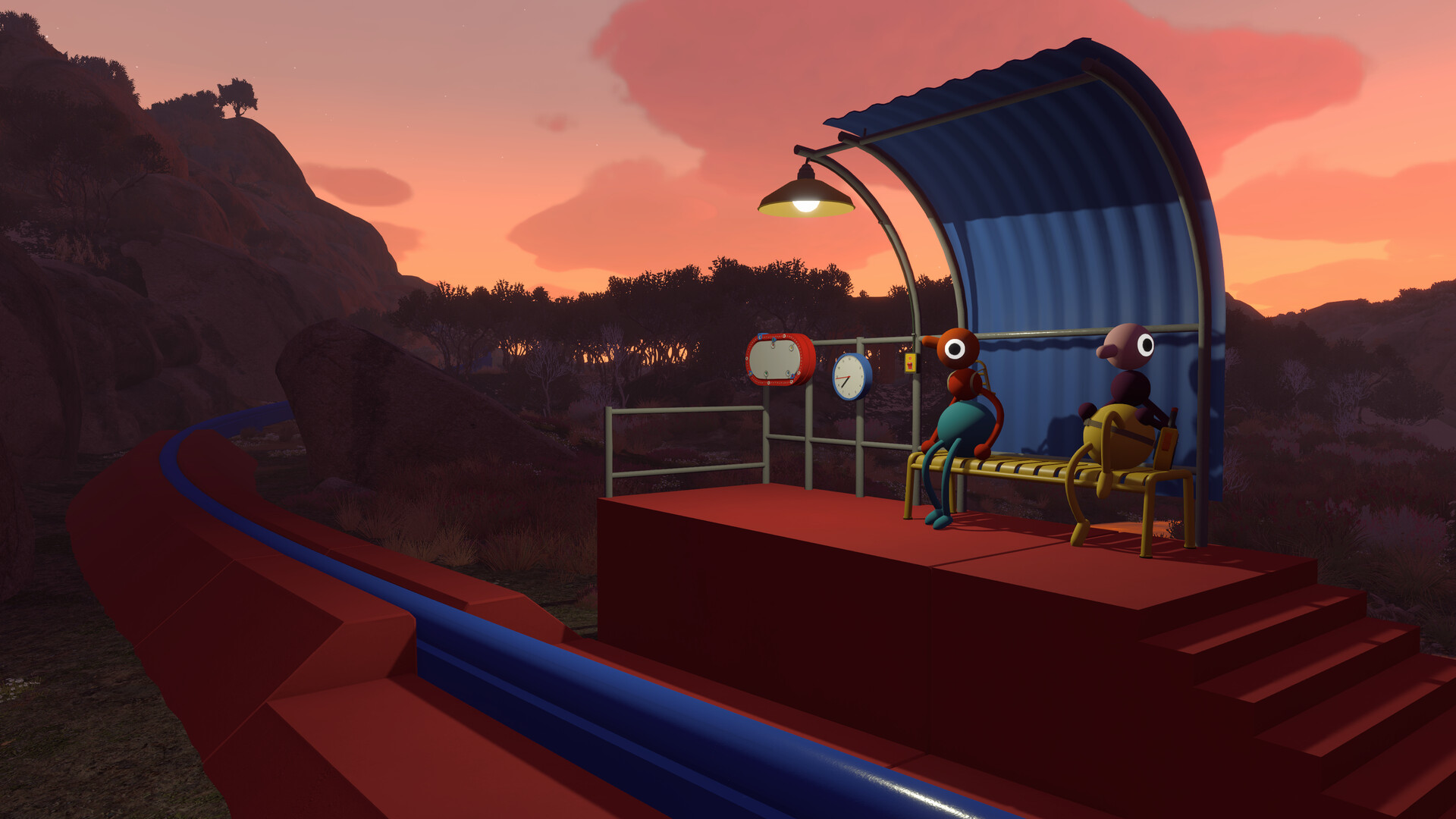
Big Walk treats conversation as play rather than background noise. Friends explore an open landscape, become separated, regroup, solve spatial problems, and use proximity-based communication to coordinate. The world provides goals without turning every minute into a checklist.
That structure produces stories that belong to the group: someone takes the wrong path, another person spots a landmark, a plan dissolves into wandering, and the eventual reunion becomes the reward. The design is unusually compatible with streaming and word of mouth because a viewer can understand the social failure or success without learning a dense combat system.
Its renewed storefront presence matters because cooperative games often depend on a concentrated launch audience. A game that still shows thousands of current players and a growing, strongly positive review base several weeks later has evidence of persistence. It does not prove that every region or time zone offers frictionless matchmaking; Big Walk is most clearly designed for existing friend groups.
Genre, platform, and release state
Steam lists Big Walk as an adventure game for Windows. House House develops it and Panic publishes it. It is a complete commercial release, not Early Access.
The official description emphasizes a big world, online cooperation, and communication. The game's identity is closer to a social expedition than a conventional survival or extraction game. There is movement and problem-solving, but no public store claim that combat, loot rarity, or competitive ranking is the main retention engine.
That positioning narrows the audience and strengthens the pitch. Players who want constant mechanical rewards may see empty travel time. Players who want an excuse to talk with friends may see that same space as the product.
Core loop and differentiation
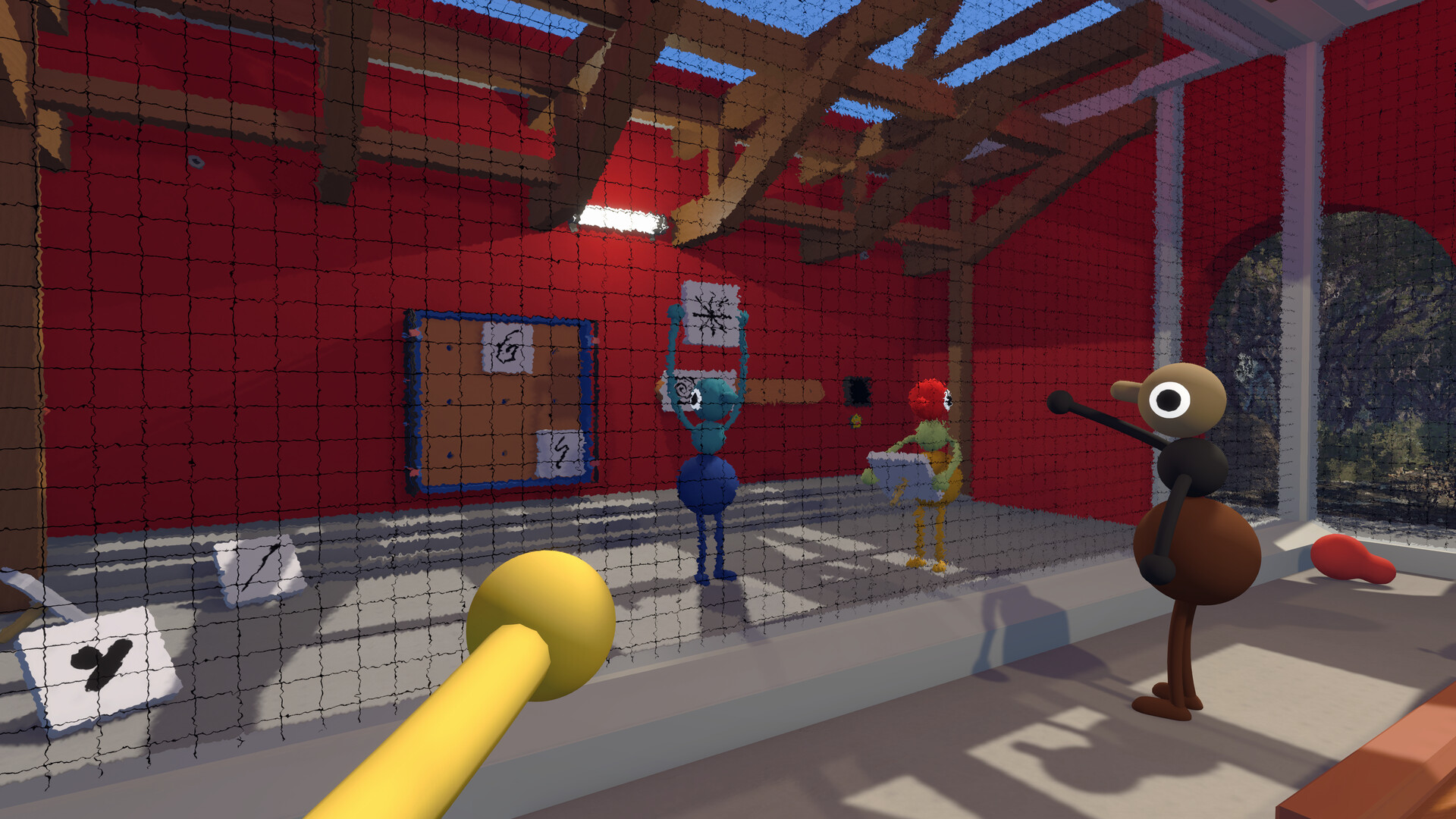
The core loop is explore, notice, communicate, separate, solve, and reunite. Environmental obstacles give the group a reason to share information. Distance and terrain shape who can hear or see whom, turning navigation into a social system.
Many co-op games place conversation above the actual mechanics: players discuss a build while the game is fundamentally about shooting or gathering. Big Walk makes the conversation itself mechanically consequential. A bad description, lost landmark, or impulsive route can change the group's next ten minutes.
Compared with physics-chaos party games, the tempo is slower and less dependent on slapstick. Compared with puzzle campaigns, the open landscape creates room for unplanned interaction. The differentiation is not technical complexity. It is a strong answer to why friends should occupy the same virtual place instead of merely joining a voice call.
Verified market snapshot
Immediately before publication, official public data showed:
- 3,333 current Steam players at 1:17 p.m. Malaysia time on September 25;
- 38,655 all-language reviews, with 37,096 positive and 1,559 negative;
- an “Overwhelmingly Positive” summary;
- eight official screenshots on the store page;
- no public sales, revenue, or platform-wide active-user figure.
The momentum label is strong sustained social-co-op signal. Review count is cumulative and includes the launch period. Current players are a single observation rather than a peak. Console or non-Steam audiences, if any, are outside these numbers.
What players repeatedly praise—and question
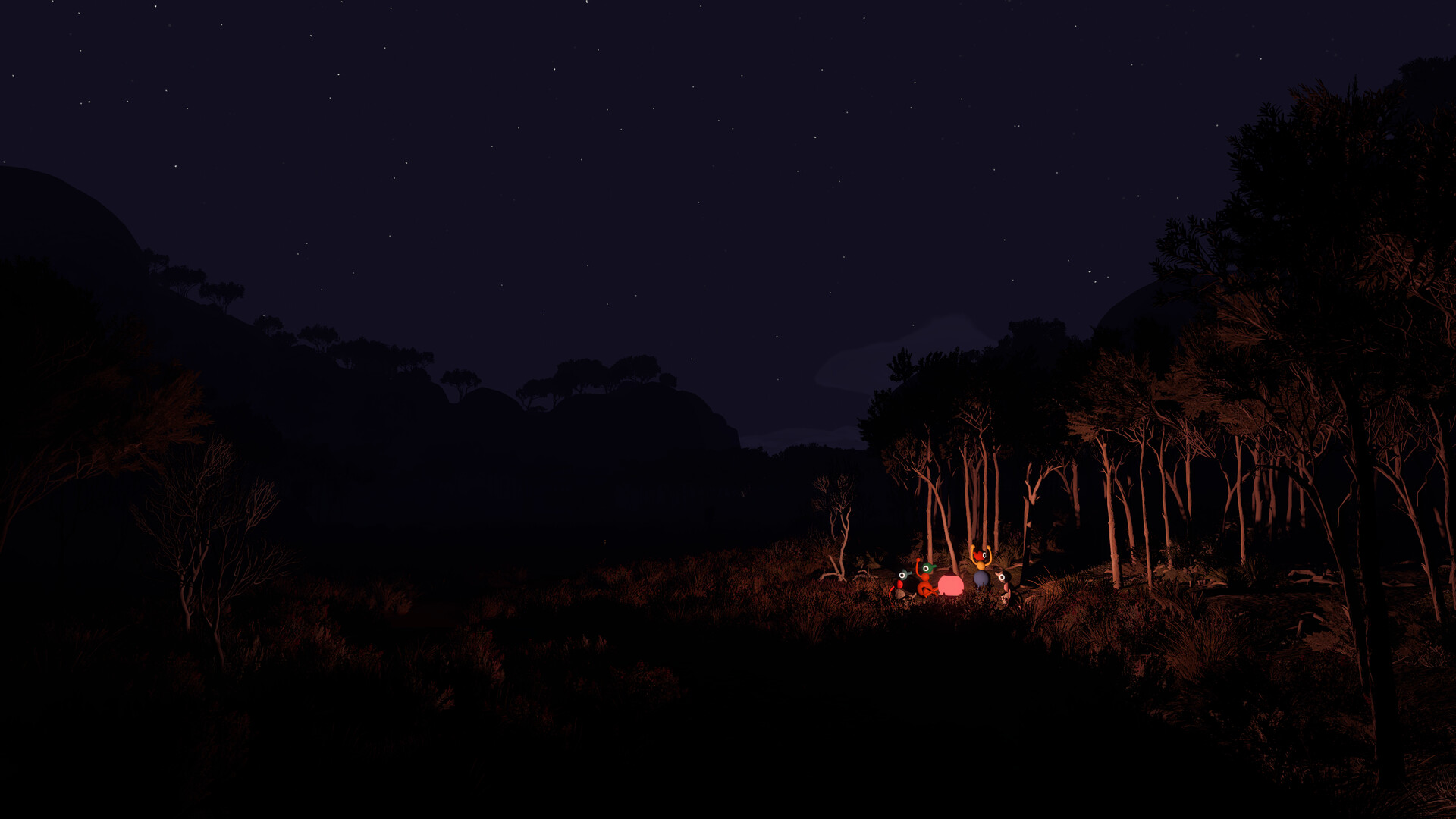
Recent reviews repeatedly describe the experience as memorable because it creates time for friends to talk while still giving them shared problems. Players praise the map opening gradually, the pleasure of getting lost and regrouping, and the emotional value of completing the journey with a familiar group. Multiple reviews recommend avoiding guides so discovery stays collective.
The positive pattern contains a buying condition: enjoyment depends heavily on the group. A person seeking a solo campaign, drop-in competition, or constant action may not experience the same value. Social games can also magnify scheduling friction, connection problems, and differences in play style. A review percentage cannot tell a buyer whether their particular group will enjoy slow exploration.
The public review pool is large enough to support broad themes, but it remains voluntary. We do not reproduce individual review sentences or treat a small visible page as a statistical survey of all players.
Competitive meaning
Big Walk joins a growing class of games that sell a social situation rather than a traditional progression treadmill. Its defensible asset is authored space calibrated for conversation: enough structure to prevent drift, enough quiet to let personalities fill the gap, and enough separation to make communication matter.
The risk is content exhaustion. Once a group understands landmarks and solutions, replay value must come from social variation or additional authored material. That can still support a successful finite game. Not every cooperative release needs endless retention, but buyers should distinguish a memorable journey from a forever platform.
Who should play—and who should wait
Play with a stable group that enjoys exploration, conversation, light coordination, and getting lost without optimizing every minute. It appears especially suited to friends who want a shared evening rather than ranked mastery.
Wait if you need a strong solo mode, public matchmaking to carry the experience, constant combat, or a long gear progression. Check the live store page for player-count requirements, language, network, and accessibility details before organizing a group.
IndieGame.party verdict
Big Walk's 38,655-review sample and 3,333 observed players show that its social design has outlasted launch novelty. House House built a co-op game where walking creates conversational space and losing track of a friend creates the next objective. Its recommendation is strong but conditional: the most important system requirement is not hardware. It is a group willing to wander together.
Sources and image rights
- Official Steam store and media page, checked September 25, 2026: https://store.steampowered.com/app/1478500/
- Steam public review endpoint, checked September 25, 2026: https://store.steampowered.com/appreviews/1478500?json=1&language=all&purchase_type=all
- Steam current-player endpoint, checked September 25, 2026: https://api.steampowered.com/ISteamUserStats/GetNumberOfCurrentPlayers/v1/?appid=1478500
- Official game site, checked September 25, 2026: https://bigwalk.game/
- Images: official Steam header and screenshots supplied by House House and Panic, © their respective rights holders. Downloaded locally September 25, 2026 and used without compositing in the minimum scope required to identify and analyze the game.