Welcome to Elderfield Makes Cozy Farming Feel Dangerous Again
Welcome to Elderfield launched on September 10 with a pitch that is readable in seconds: take the familiar routines of a farming and relationship RPG, then let cosmic horror infect the crops, animals, dreams, and surrounding town. That contrast is producing a real launch signal rather than a merely clever trailer.
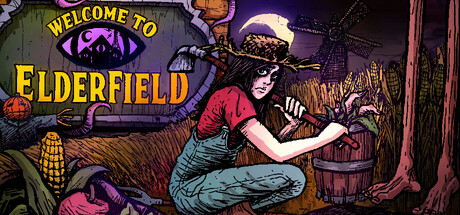
Welcome to Elderfield launched on September 10 with a pitch that is readable in seconds: take the familiar routines of a farming and relationship RPG, then let cosmic horror infect the crops, animals, dreams, and surrounding town. That contrast is producing a real launch signal rather than a merely clever trailer.
At 1:03 p.m. Malaysia time on September 14, Steam's official endpoints showed 3,351 concurrent players and 980 all-language reviews: 917 positive and 63 negative, or 93.6% positive. The morning market report had recorded 5,191 players and a SteamDB all-time peak of 5,886, so the audience is cycling through a healthy daily curve rather than disappearing after launch. This is market and review-signal analysis, not a hands-on review.
Why it is visible now
The game arrived during a crowded period for farming simulations, but its hook avoids another checklist comparison with Stardew Valley. Farming, fishing, cooking, decorating, romance, and town relationships create safety and routine. Eye-like crops, unsettling livestock, old gods, night danger, and turn-based combat repeatedly violate that safety.
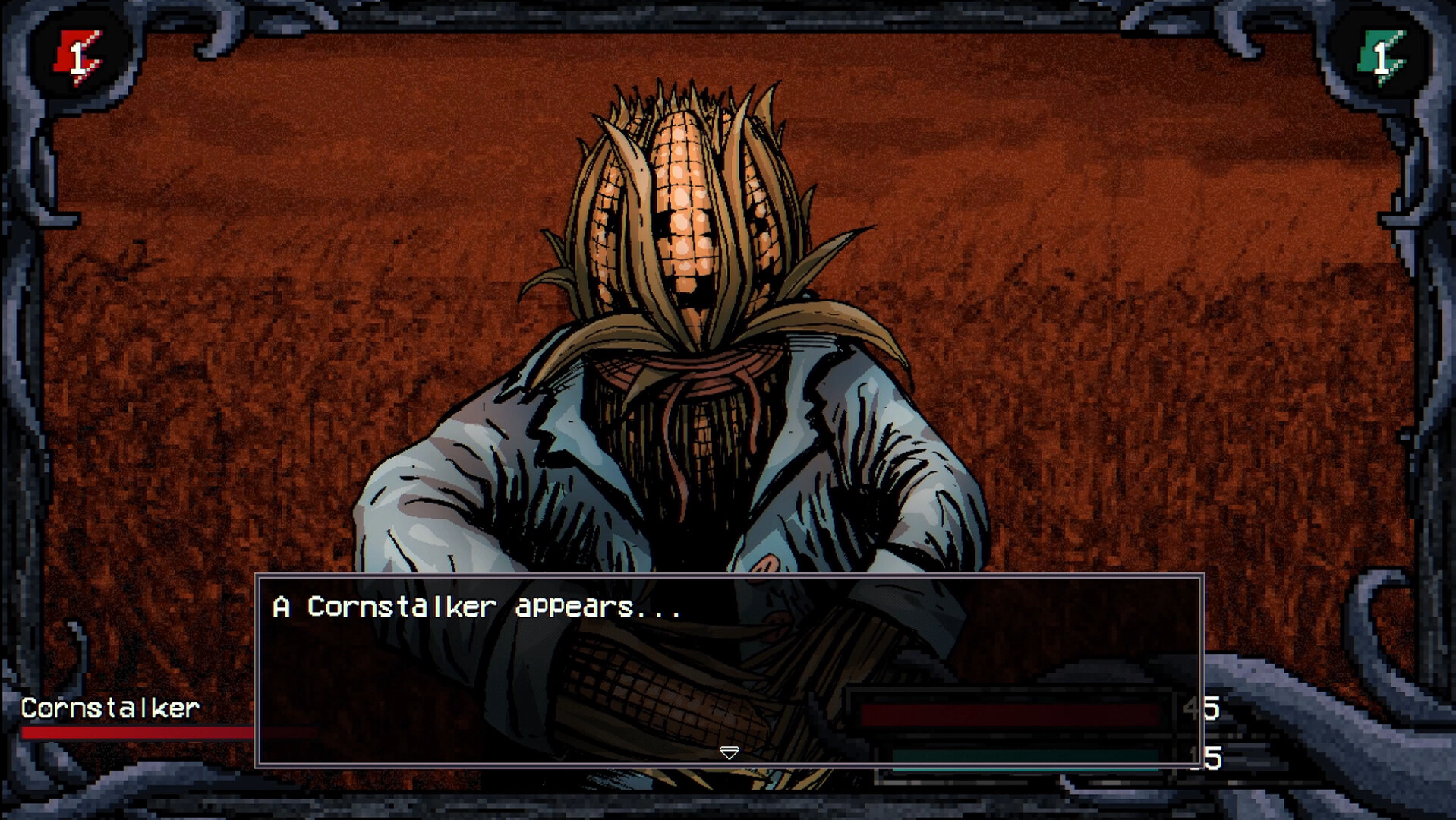
That is valuable marketing structure. A viewer recognizes the baseline genre before the image turns strange. The horror does not require a separate campaign or photorealistic spectacle; it changes the meaning of familiar actions. The September 14 report identified this as the strongest current indie signal among its tracked PC titles.
The launch price checked for Malaysia was RM38.69 during a 10% promotion, down from RM42.99. Regional prices and discounts change, so that is a dated observation, not a universal purchasing claim.
Genre, platform, and release status
Steam lists Welcome to Elderfield as a released Windows game spanning adventure, casual, indie, RPG, simulation, and strategy. Its store description emphasizes home decoration, relationships, mysteries, combat, fishing, cooking, and death during sleep.
The breadth is both a strength and a risk. Players can move between low-pressure production, character progression, exploration, and combat. That variety supports longer sessions and gives different audiences an entry point. It also increases the chance that one system feels shallower than the others or that progression across them becomes hard to explain.
The hand-drawn presentation supplies a distinct identity. Recent positive reviews repeatedly mention art direction, music, atmosphere, and the combination of spooky tone with a farm-RPG structure. Several compare it with Stardew Valley while emphasizing heavier role-playing and combat.
The core play loop and differentiation
The practical loop appears to be farm and gather, build relationships, investigate the town's mysteries, convert resources into equipment or food, enter turn-based danger, then return with knowledge and materials that improve the next cycle. Home decoration and romance make the town worth protecting; the horror gives ordinary progression a threat.
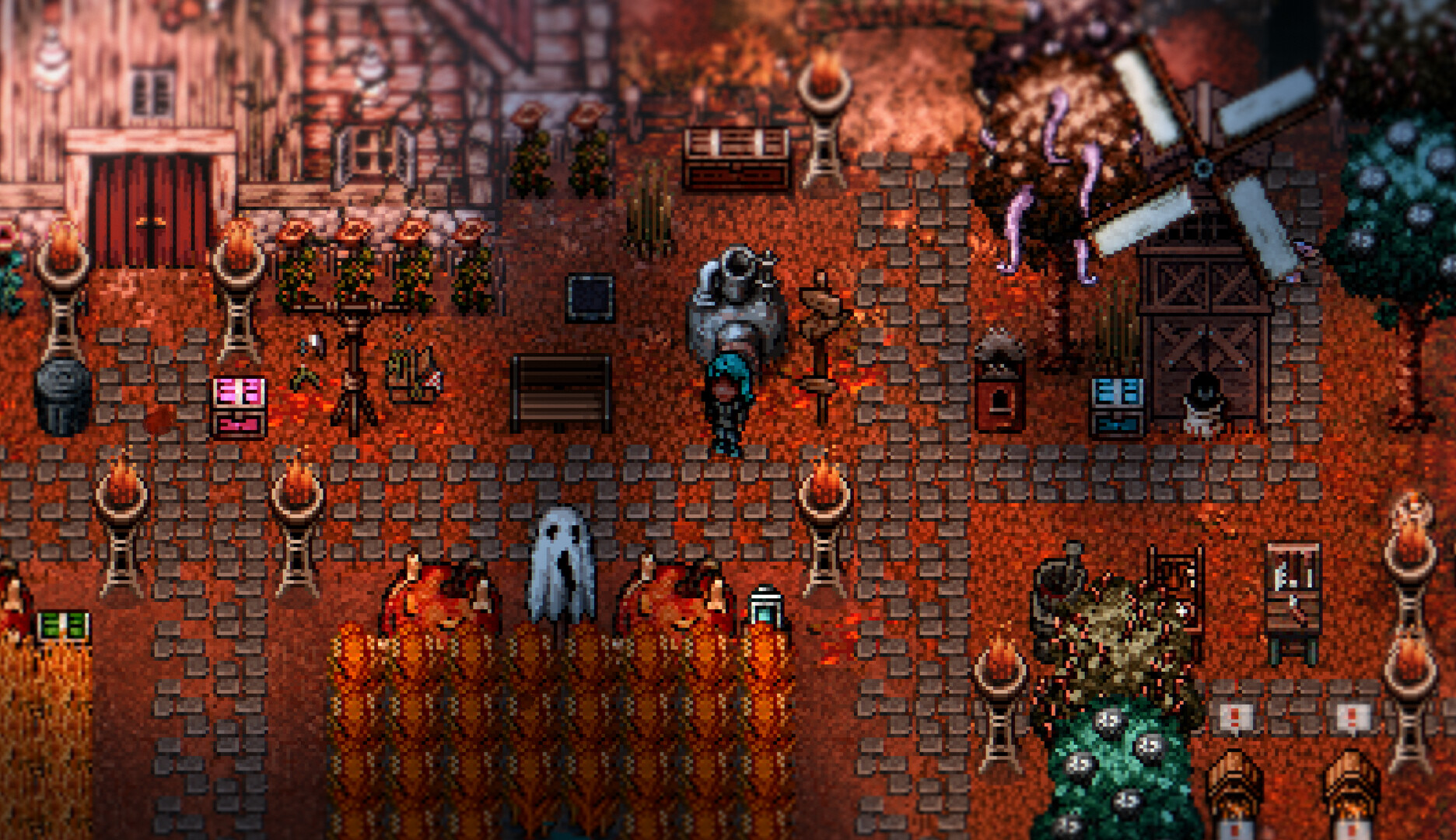
The differentiator is not simply “cozy plus dark.” The stronger design move is that the two modes share objects and places. A crop can be productive and disturbing. Sleep can recover the player and create danger. A relationship can be comforting and part of a mystery. Shared assets gain multiple meanings.
Quality-of-life details matter because the game carries many systems. One recent reviewer specifically praised crafting from storage and automatic overflow to personal storage. Features like these reduce menu friction and let the unusual content, rather than inventory housekeeping, dominate the experience.
The turn-based combat choice also separates Elderfield from farming games that treat fighting as light action. It creates space for status effects, party or equipment planning, and readable horror designs. Players who want uninterrupted cozy routines may find combat too central; players who find farming games passive may see it as the reason to stay.
Verified market snapshot
The official Steam review summary at the publication check contained 980 reviews, enough to describe an early consensus but not long-term retention. The 93.6% positive share is strong. Current players were 3,351 at 1:03 p.m. MYT, down from the report's 5,191 morning observation, while SteamDB's cited peak was 5,886.
These figures support four limited conclusions: the launch attracted several thousand simultaneous players; response quality is high; the sample is growing quickly; and activity remains substantial four days after release. They do not establish unit sales, revenue, profitability, refund rates, or six-month retention. Steam does not publicly disclose those figures.
The Steam store recommendation figure and public review endpoint can differ because they update on different schedules and apply display filters. This article uses the all-language, all-purchase-type review summary for the stated ratio and records the check time.
Repeated praise and complaints
The 20 recent reviews sampled at publication were overwhelmingly positive. Recurring praise focused on the art, story atmosphere, music, creepy moments, and the amount of activity available. Players frequently described the central comparison as a more combat-heavy or horror-inflected farming RPG.
Complaints were more fragmented. One player wanted more content despite a positive recommendation. Another noted inability to sleep early, occasional incomplete translation, awkward mouse interaction, and requests for crops not yet unlocked. These are not broad prevalence estimates; they are repeated or notable themes inside a small recent sample.
The strongest caution is scope. A solo-developed or small-team game combining relationships, farming, combat, mysteries, decoration, cooking, and fishing can accumulate edge cases quickly. A high launch score does not prove late-game pacing or save stability. Buyers should look for reports from players with substantially more hours as the first week progresses.
Competition and market meaning
Elderfield competes for attention with Stardew Valley, Sun Haven, Graveyard Keeper, and darker life-sim hybrids. It cannot win by matching the content volume of mature games with years of updates. It can win by owning a sentence: the comfortable farm is where the horror happens.
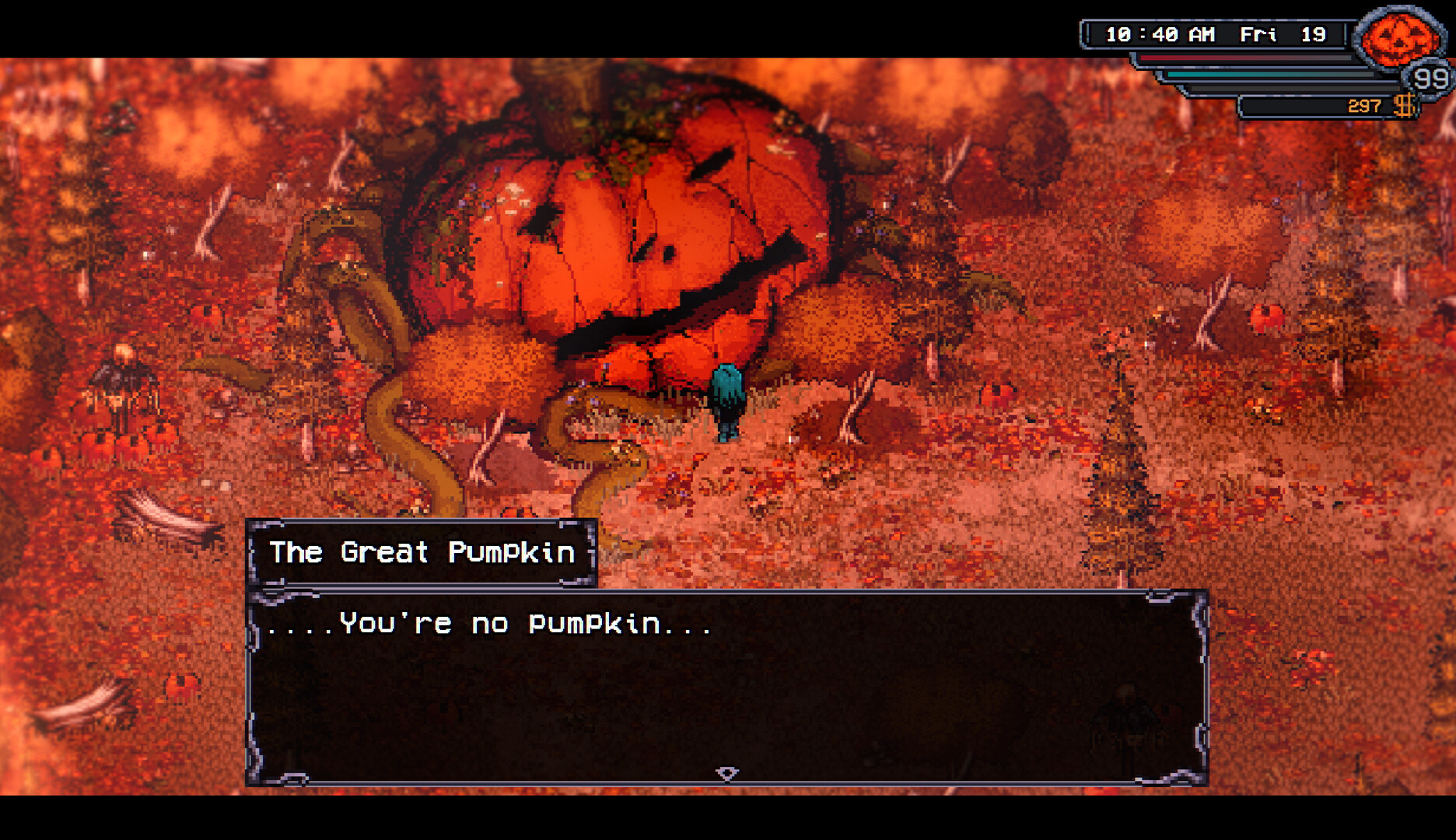
For indie developers, the result supports a cost-aware lesson. Genre contrast can create novelty without inventing two complete games. Reusing the same locations under different lighting, events, character states, or enemy transformations can multiply narrative meaning. The risk is tonal incoherence if the horror has no mechanical consequence.
The 5,886 cited peak is not blockbuster scale, but it is significant for a focused PC launch. More important than the peak is whether updates convert curiosity into stable reviews and returning play.
Who should buy and who should wait
Buy now if you enjoy farming routines but want substantial mystery, unsettling imagery, and turn-based combat. The launch discount, high review ratio, and current audience make it a defensible purchase for that specific overlap.
Wait if you require mature mod support, a proven long endgame, complete localization in your language, or a purely low-stress cozy experience. Players sensitive to bugs or progression friction should monitor patches and longer-duration reviews.
IndieGame.party verdict
Welcome to Elderfield is the strongest market signal in today's report because the product, visual hook, player activity, and review response all point in the same direction. It is recommended for players who want a farming RPG whose familiar routines can turn threatening. The launch is promising, not a guarantee that every ambitious system holds up across a full playthrough.
Data and image sources
- Official Steam store: https://store.steampowered.com/app/3195440/Welcome_to_Elderfield/
- Steam public review summary: https://store.steampowered.com/appreviews/3195440?json=1&language=all&purchase_type=all
- Steam current-player API: https://api.steampowered.com/ISteamUserStats/GetNumberOfCurrentPlayers/v1/?appid=3195440
- SteamDB market-history reference: https://steamdb.info/app/3195440/
- All four images are official Steam store assets, © Chris Cote and Kwalee, downloaded locally on September 14, 2026 for identification, reporting, and criticism without compositing or semantic alteration.