Tiny Eden's Cozy Indoor Garden Has a Real Audience—and a Progression Problem to Solve
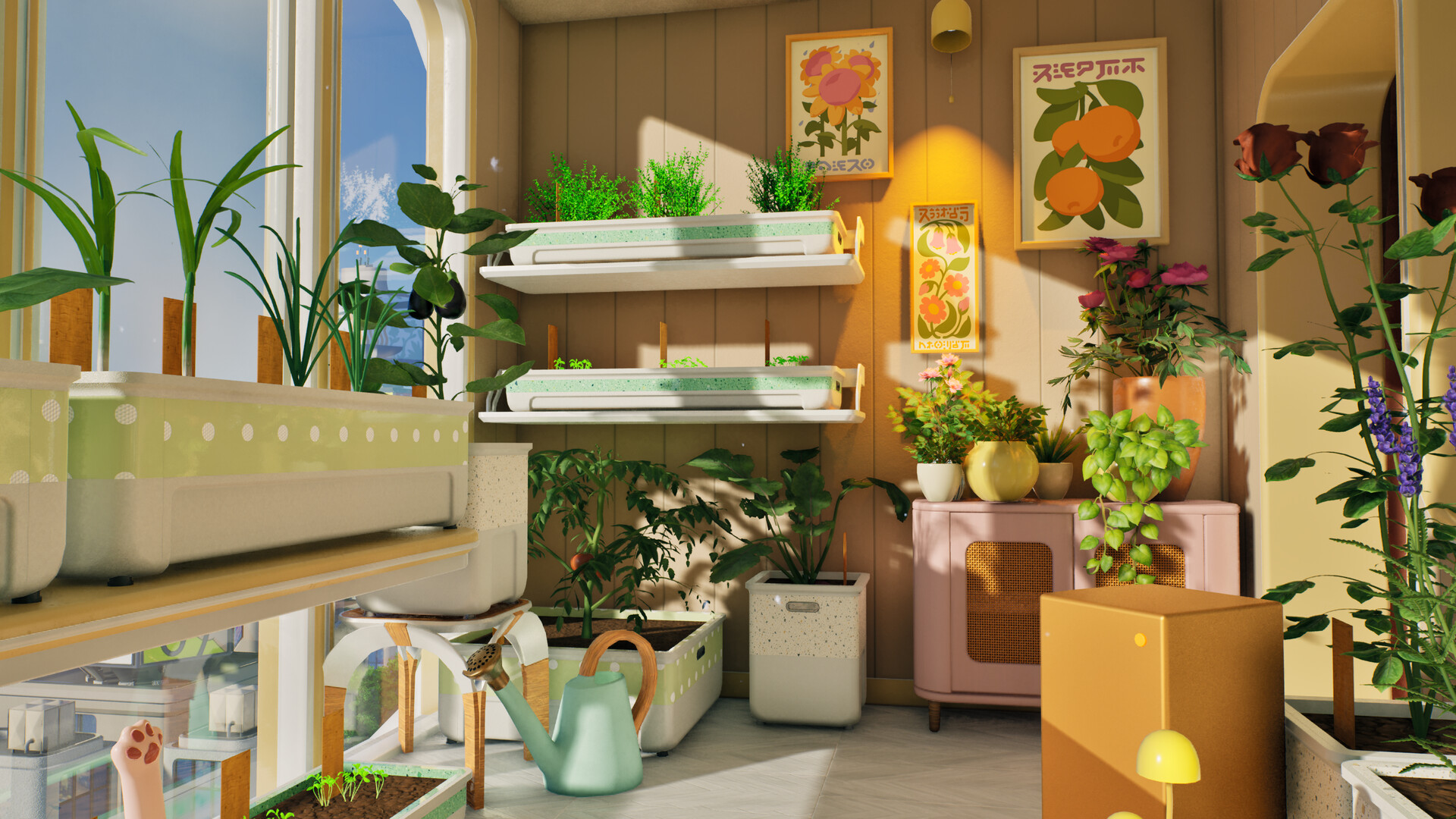
Tiny Eden replaces the enormous farm with a sequence of domestic rooms. Players choose pots, soil, light, and plants, harvest produce, cook or sell it, and gradually transform an apartment into a rooftop-growing operation. The scope is immediately readable and attractive. Its first-week market data also shows why a cozy premise is not enough by itself.

Tiny Eden replaces the enormous farm with a sequence of domestic rooms. Players choose pots, soil, light, and plants, harvest produce, cook or sell it, and gradually transform an apartment into a rooftop-growing operation. The scope is immediately readable and attractive. Its first-week market data also shows why a cozy premise is not enough by itself.
On September 13, Steam's review API returned 528 reviews: 386 positive and 142 negative, or 73.1% positive, categorized as Mostly Positive. The source market report recorded 1,134 current players and a 1,944 all-time peak. This is a launch analysis built from public signals, not a hands-on review.
Why Tiny Eden is visible now
The game launched on September 7 into a large audience for low-pressure growing and decorating games. Its indoor setting creates a crisp visual promise: start with a constrained room and make greenery take over.
The 1,944 peak demonstrates real discovery for a small independent title. The current population shows that a meaningful group remained active a week later. Yet the review ratio is far below today's other two report candidates. That gap between interest and satisfaction is the central story.
The Malaysia API snapshot showed RM33.07 during a 10% discount, reduced from RM36.75. Store region and sale timing affect the displayed price.
Genre, platforms, and release status
Steam lists Tiny Eden as a released casual indie simulation for Windows and Linux. It is single-player, with achievements, cloud saves, family sharing, save-anytime support, custom volume controls, camera comfort, and color alternatives listed among its features.
The accessibility-oriented tags are notable for a cozy game. Players attracted by low-pressure routines may also value control over timing, camera behavior, and sensory presentation. Store tags are a starting point, not proof that every need is met.
The competitive set includes Stardew Valley descendants, indoor decorating games, and compact shop or gardening simulators. Tiny Eden's differentiation is spatial intimacy: progress is measured by rooms becoming functional and alive, not by expanding across a giant map.
The core loop
The public loop is pot and soil selection, planting, light management, growth, harvest, cooking or sale, and room expansion. New spaces create opportunities for different layouts and eventually a rooftop greenhouse.

This structure reduces content cost compared with an open-world farm. The same room can change dramatically through plant stages, furniture, lighting, and production tools. Every unlock is visible in a familiar frame.
The design challenge is repetition. Growing cycles must create decisions about timing, placement, resource use, and goals. If the optimal action becomes a long sequence of identical clicks, the cozy routine turns into labor. Progress pacing determines whether a room feels like a canvas or a gate.
Cooking and selling can give harvests purpose, but additional systems help only when they interact. A recipe should influence what the player grows; demand should affect planning; room constraints should create tradeoffs. Parallel checklists without meaningful choices increase breadth while weakening depth.
Verified market snapshot
At the September 13 check:
- the title had been released for six days;
- Steam returned 528 reviews, 386 positive and 142 negative;
- the resulting positive share was 73.1%;
- the market report recorded 1,134 current players and a 1,944 peak;
- the checked Malaysia price was RM33.07 on promotion;
- Steam did not disclose sales, refunds, revenue, or wishlist conversion.
These numbers describe a moderate launch with mixed quality signals, not a failure. More than 500 reviews form a useful sample, but early patches and later buyers can still change the ratio.
What players praise and criticize
The repeatable positive themes are the appealing room transformation, gentle fantasy of indoor self-sufficiency, and satisfying visual progression. The premise suits short sessions: tend plants, complete a small goal, and see the apartment improve.
The negative share—142 reviews—is too large to dismiss as outliers. The market report specifically flags repetitive work and progression speed as concerns. Those themes fit the core design risk: a game built around routine must make the routine pleasant and the rewards frequent enough to sustain it.
Other common launch questions for the genre include interface efficiency, storage, economy balance, and whether later rooms introduce new decisions. We do not attribute those to a majority without a complete coded review sample. The defensible conclusion is that satisfaction trails discovery.
Meaning beside competitors
Stardew Valley offers relationships, exploration, combat, seasons, and a broad farm economy. Tiny Eden cannot and need not match that scope. Its opportunity is a focused plant-care toy where each room is a deliberate puzzle and decoration canvas.
Against pure idle or mobile gardening games, a premium PC release must offer more agency and fewer artificial delays. Timers should support anticipation, not become obstacles that exist only to stretch playtime.
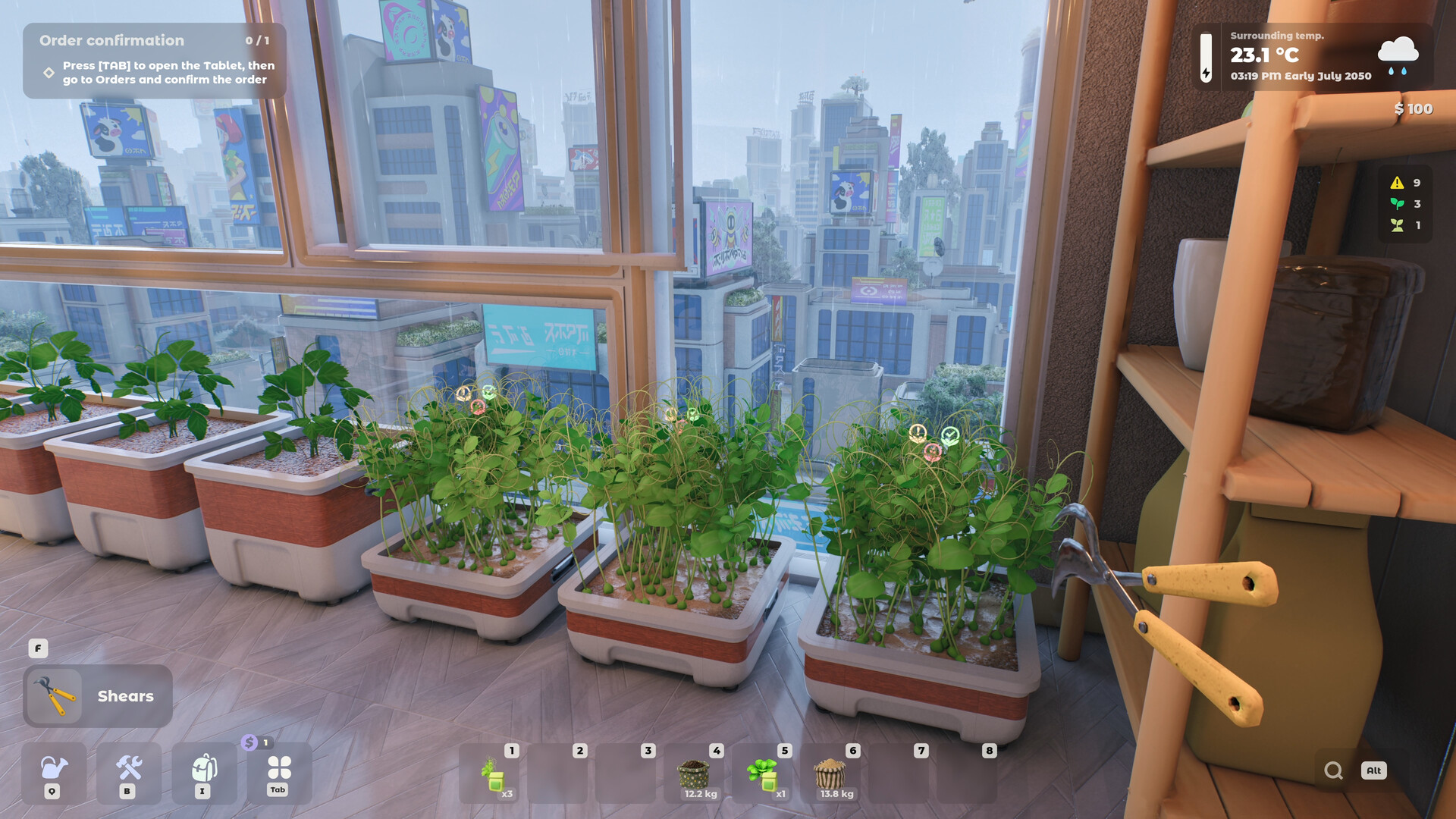
The rooftop greenhouse is an effective visible goal, but end-state imagery cannot carry the journey. Each intermediate unlock must change decisions, not merely raise capacity.
Who should buy and who should wait
Buyers who love plant collecting, interior progression, and gentle single-player routines may find the current audience size and Mostly Positive rating acceptable, especially at a discount. The Windows and Linux support also broadens access.
Wait if repetitive input, slow progression, or launch balancing quickly frustrates you. Read recent reviews after patches and look for concrete changes to task batching, pacing, and quality-of-life features. A demo would be especially useful if one becomes available.
IndieGame.party verdict
Tiny Eden has a marketable setting and verified first-week audience. It also has the weakest sentiment of the three games selected from today's report. That makes it more instructive than another easy success story.
Our verdict is promising for dedicated cozy-gardening players, but wait for progression and repetition improvements if you are undecided. The design shows how a small space can make growth visible. The review signal shows that visible growth must still respect the player's time.
Data and image sources
- Official Steam store: https://store.steampowered.com/app/3375110/Tiny_Eden/
- Steam public review endpoint: https://store.steampowered.com/appreviews/3375110?json=1&language=all&purchase_type=all
- SteamCharts: https://steamcharts.com/app/3375110
- All four images are official Steam store assets, © Bajka Games and Digital Vortex Entertainment, downloaded locally from the official listing on September 13, 2026 for identification and criticism, without compositing or material alteration.