Can a Train Management Game Also Be Psychological Horror?
What The Machinist says it is
The Machinist is a psychological horror management game from developer and publisher LazeeHaze. It releases today, Oct 26, 2026, at $5.39 on Windows. The Steam listing files it under Adventure, Indie, and Simulation. No play time was involved in this check; every claim below comes from the official store page.
That sourcing note matters more than it might first appear. Store pages are written to sell a game, not to describe it neutrally, so the language on the listing is a mix of mechanical detail and atmosphere-setting. What follows separates the two where the page allows it, and flags where it does not. The three tags — Adventure, Indie, Simulation — are the listing's own classification, and they already tell you something about the intended shape of the thing: simulation implies systems with state, adventure implies forward motion toward something, and indie describes the scale of the production rather than its content. The price sits at the low end of the paid market, which is consistent with a small team shipping a focused idea rather than a broad one.
The management layer
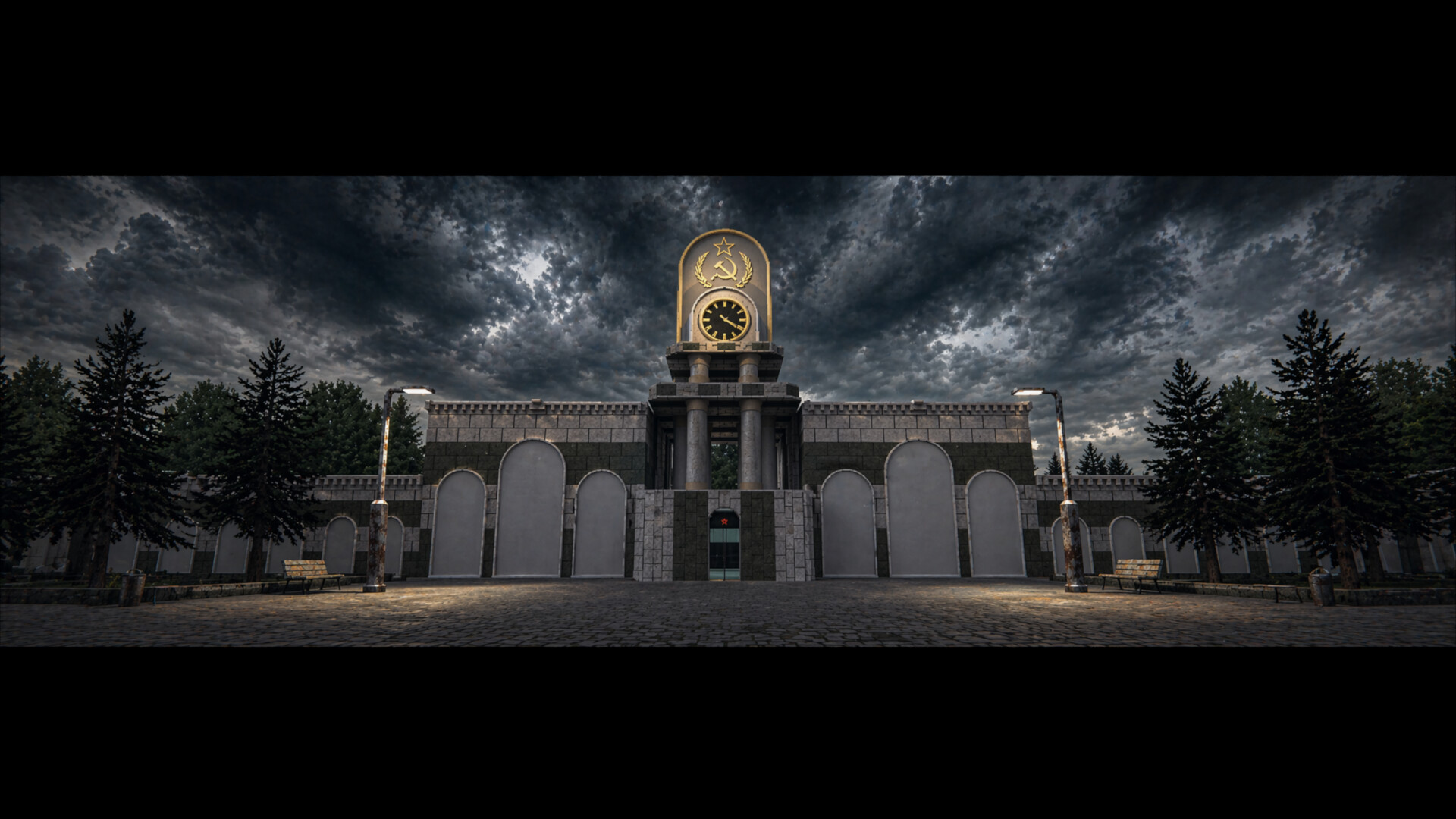
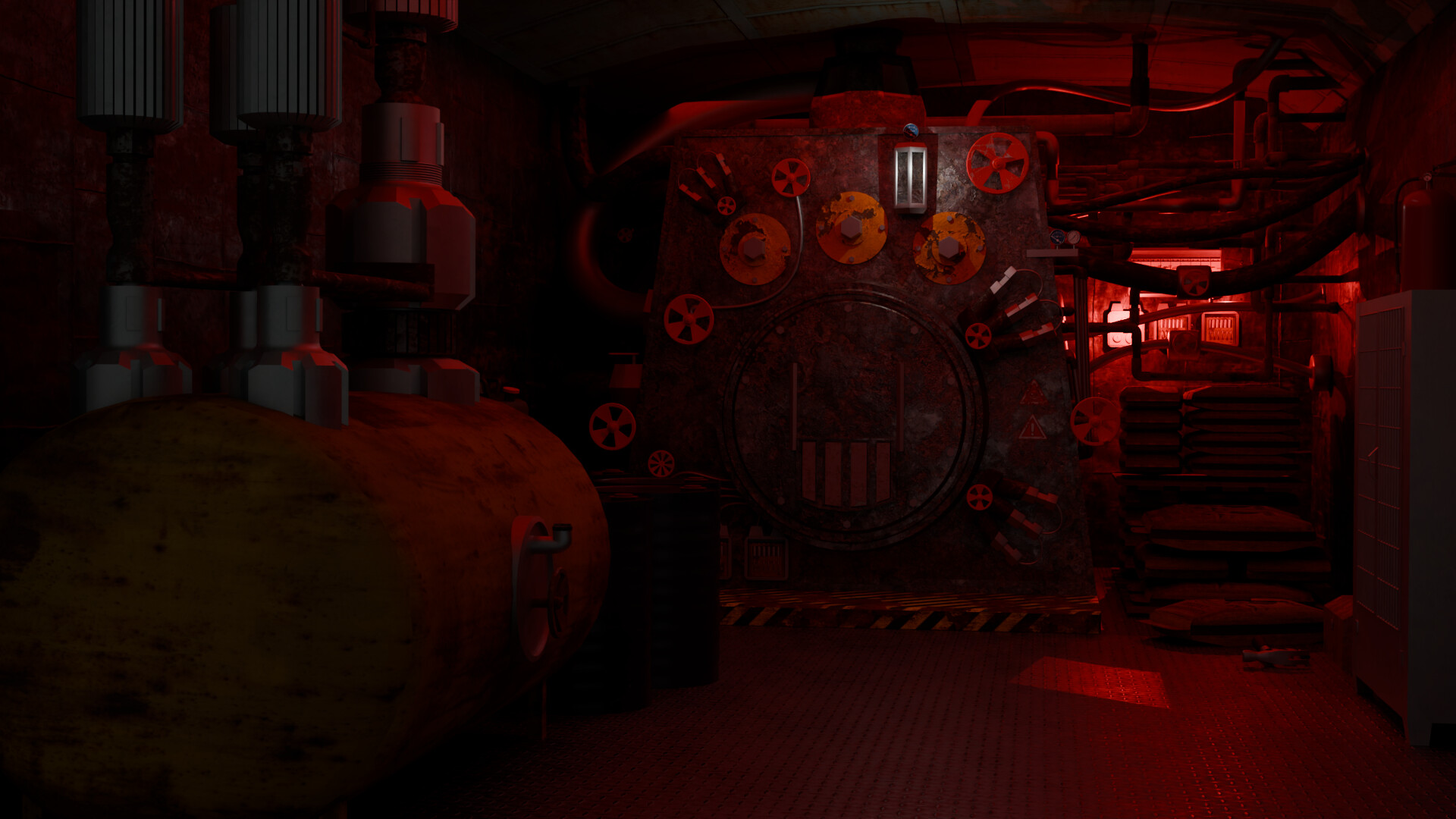
The listing's "About" section lists three maintenance tasks: keep the Fuel Generator and Main Coal Machine running, keep fuel, coal, and power levels under control, and reach the next station without losing your passengers. That is a resource loop with a destination attached. The player is not just watching gauges; the gauges decide whether the train and its passengers make it.
Read those three tasks together and a structure emerges. Two named machines sit at the center of the loop — a Fuel Generator and a Main Coal Machine — and three consumable quantities feed them: fuel, coal, and power. The pairing of fuel and coal with a generator and a coal machine suggests the two machines draw on different inputs, which in turn suggests the player is managing more than one supply chain at once rather than topping up a single bar. The listing does not spell out the conversion rates or whether one resource can substitute for another, but the fact that power is listed as a separate quantity from the fuel and coal that presumably produce it implies at least a two-stage process: inputs go in, power comes out, and the state of the machines governs that transfer.
The third task is the one that reframes everything above it. Reaching the next station without losing passengers converts an optimization problem into a survival condition. In a pure management game, a resource hitting zero is a setback — production stalls, efficiency drops, you recover. Here the resource levels are tied to whether people live. That is the mechanism by which the horror and the management layer connect: the horror is not layered on top of the systems, it is expressed through them. Failure states are not abstract numbers but outcomes for the passengers aboard.
This also explains why the listing's genre tags include Simulation rather than, say, Strategy. The emphasis is on maintaining a live system under continuous load, not on outmaneuvering an opponent. There is no rival described, no score to beat — only the train, its consumables, and the distance to the next station.
The door as a decision point
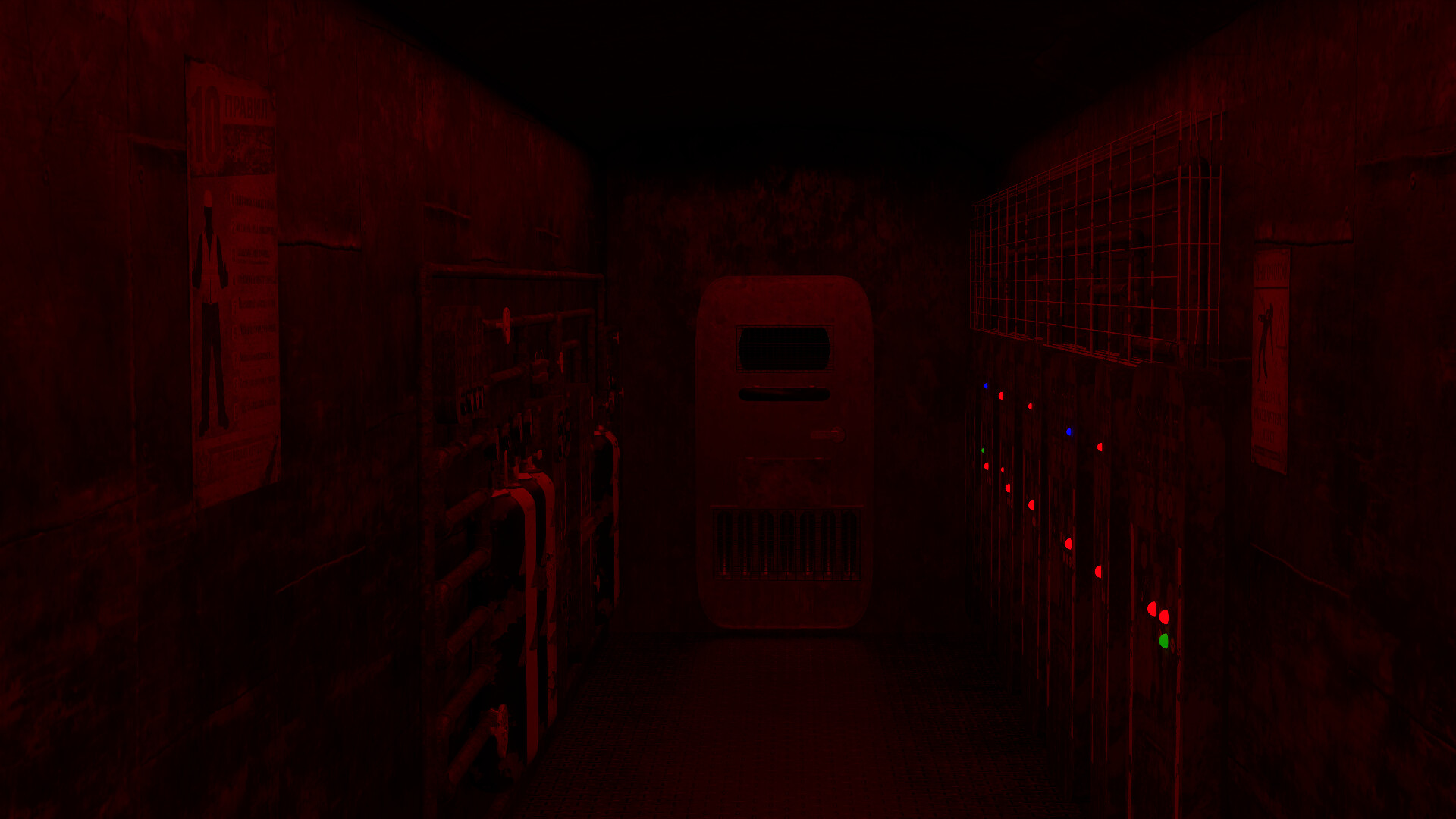
The short description says a knock at the door could save a life or end yours. The About section expands that: opening the door is always a risk, a harmless passenger may be waiting outside, or something that wants you dead. This turns a routine management action into a gamble. The listing does not say how the game signals which is which, only that the player must watch their surroundings and react quickly.
What is notable here is the asymmetry the page describes. The upside of opening the door is a passenger — someone to save, and presumably someone who joins the train and the population you are responsible for. The downside is death, presumably yours, which in a game built around keeping the train running would end the run. So the same button press carries a reward that helps the management loop and a penalty that terminates it. That is a sharper design than a simple random event, because the two outcomes are not equivalent in kind.
The phrase "watch their surroundings and react quickly" is the closest the listing comes to describing a tell. It implies the decision is not blind — that there is information available before the door opens, whether visual, auditory, or contextual, and that the skill being tested is perception under time pressure. The page stops short of naming the tell, which leaves open whether the game uses a consistent visual language for threats or varies it to keep players guessing. Either approach would be consistent with the description; the listing simply does not commit.
There is also a resource implication the page leaves implicit. If a harmless passenger is waiting outside, taking them in adds to the population the train must support — more mouths drawing on the same fuel, coal, and power. So the door is not only a risk to life but a decision about load. The listing does not confirm this, but the structure of the tasks makes it a reasonable inference rather than a claim.
Hidden threats among passengers
The listing also states that killers may be hiding among your passengers. That adds a second layer: the people you are keeping alive may not all be safe. Combined with the door mechanic, the game implies two kinds of uncertainty, one outside the train and one inside it. The store page does not specify how suspicion is raised or whether passengers can be removed.
This is the detail that earns the "psychological" label in the genre description. A threat outside the door is a reaction test; a threat inside the carriage is a standing condition. If killers are among the passengers, then every resource decision doubles as a social one — the people consuming your fuel and coal are the same people you cannot fully trust. The management loop and the paranoia loop share the same population, which means the game's two pressures pull on the same lever rather than running in parallel.
The listing's silence on mechanism is worth pausing over. It does not say whether suspicion is tracked as a hidden value, whether passengers behave differently when watched, whether there is any way to identify a killer before they act, or whether the player can eject someone from the train. Each of those is a common solution to the hidden-traitor problem, and the page declines to pick one. What it does commit to is the existence of the uncertainty itself, which is enough to set expectations: this is a game where the safe-looking choice and the correct choice may diverge.
Progression and replay
Tokens are earned by completing tasks and surviving the night. Those tokens unlock perks that enhance abilities, and the listing invites players to experiment with different combinations and create their own strategy. That suggests runs are meant to be repeated with different builds rather than played once for a fixed story.
The currency here is tied to two conditions: completing tasks and surviving the night. Both are performance measures rather than participation rewards, which implies the token economy scales with how well a run goes. The word "night" is the listing's own, and it establishes the run structure — a night is a unit, and surviving it is the boundary between one attempt and the next. That is a roguelike-shaped frame, though the page does not use the term.
Perks that "enhance abilities" imply the player character has abilities to enhance, which in turn implies the Machinist is more than a passive operator. The listing does not enumerate those abilities, but the existence of a perk system with combinable effects means the intended play pattern is iteration: take a build into a night, see how it fares, bank tokens, and try a different combination. The invitation to "create their own strategy" is the page's way of saying there is no single correct build, which is a meaningful claim about balance — it suggests multiple approaches are viable rather than one dominant path.
For a reader deciding whether to buy, this is the section that most directly addresses longevity. A game with a fixed story is played once; a game with combinable perks and repeatable nights is played until the combinations run out or the difficulty outpaces the builds. The listing does not state how many perks exist or how deep the combination space goes, so the actual replay value remains an open question — but the design intent is clearly stated.
Who it is for
The Machinist looks aimed at players who want management systems with pressure rather than pure optimization. The horror elements are described in terms of risk and reaction, not jump scares or combat. At $5.39, it is priced as a small indie experiment. Anyone expecting a pure train simulator should note the listing's emphasis on survival and deadly encounters.
The distinction between pressure and optimization is the useful one here. Optimization games reward mastery of a solvable system; pressure games reward composure when the system is not fully solvable. The Machinist's listing leans toward the second: the door cannot be solved in advance, only read in the moment, and the passengers cannot be fully trusted. A player who enjoys tuning ratios and shaving seconds will find systems to tune, but the page suggests the tension comes from decisions made under incomplete information rather than from perfecting a known optimum.
The absence of combat language is also telling. Threats are met with reaction and judgment, not with weapons, at least as far as the listing describes. That places the game closer to survival horror of the resource-management school than to action horror. And the price point sets expectations honestly: this is a small game, and the page does not oversell its scope.
What the listing does not say
No play time was involved here, so this check cannot speak to pacing, difficulty balance, or how scary the game actually is. The listing does not state how long a night lasts, how many stations exist, or whether the train can be upgraded beyond perks. It also lists Windows only, with no Mac or Linux versions. Those are open questions for players, not claims from the store page.
It is worth being explicit about what that means for a purchase decision. The page tells you the shape of the loop, the kinds of decisions it asks for, and the progression frame — enough to know whether the concept appeals. It does not tell you whether the execution lands: whether the door tells are fair, whether the perk combinations are balanced, whether a night is a tense twenty minutes or a tedious hour, or whether the horror reads as atmosphere or as annoyance. Those are questions only play can answer, and this check, by design, did not play.
The platform note is concrete and worth repeating plainly: Windows only, no Mac or Linux versions listed. For anyone on another operating system, that is a deciding fact rather than a caveat. For everyone else, the store page is a reliable guide to intent and an unreliable guide to feel — which is exactly what a store page is for.