The Loopler Turns One Tiny Track Into a Compulsive Build Engine
The Loopler is a compact launch with an unusually legible hook: build a tiny circular track, place gates and cards around it, then watch a slot car trigger an increasingly absurd chain of effects. Two days after release, the official Steam review endpoint showed 168 reviews, 160 positive and eight negative—95.2% positive. The September 13 market report recorded 1,532 concurrent players and a 1,903 peak at about 09:03–09:08 Malaysia time.

The Loopler is a compact launch with an unusually legible hook: build a tiny circular track, place gates and cards around it, then watch a slot car trigger an increasingly absurd chain of effects. Two days after release, the official Steam review endpoint showed 168 reviews, 160 positive and eight negative—95.2% positive. The September 13 market report recorded 1,532 concurrent players and a 1,903 peak at about 09:03–09:08 Malaysia time.
Those are strong early signals for a small independent game, not proof of lifetime sales. Steam does not disclose unit sales. This is a launch and market analysis based on public store data and reaction patterns, not a hands-on review.
Why The Loopler is visible now
The game launched on September 11 and compresses its pitch into one moving image. The car keeps circling; every lap makes the player's construction easier to read and more satisfying to watch. A run can escalate without requiring another biome, cinematic, or large character roster.
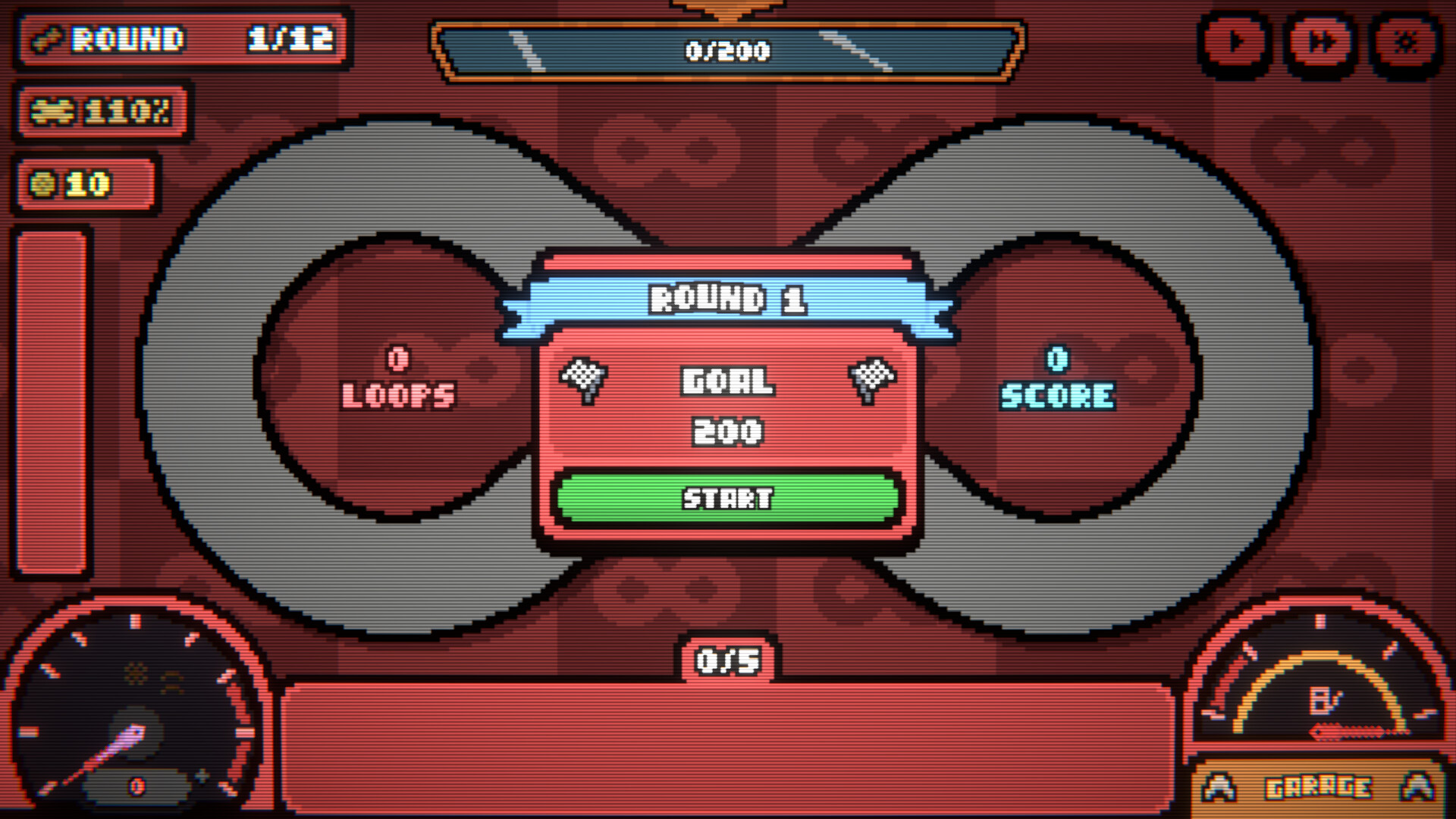
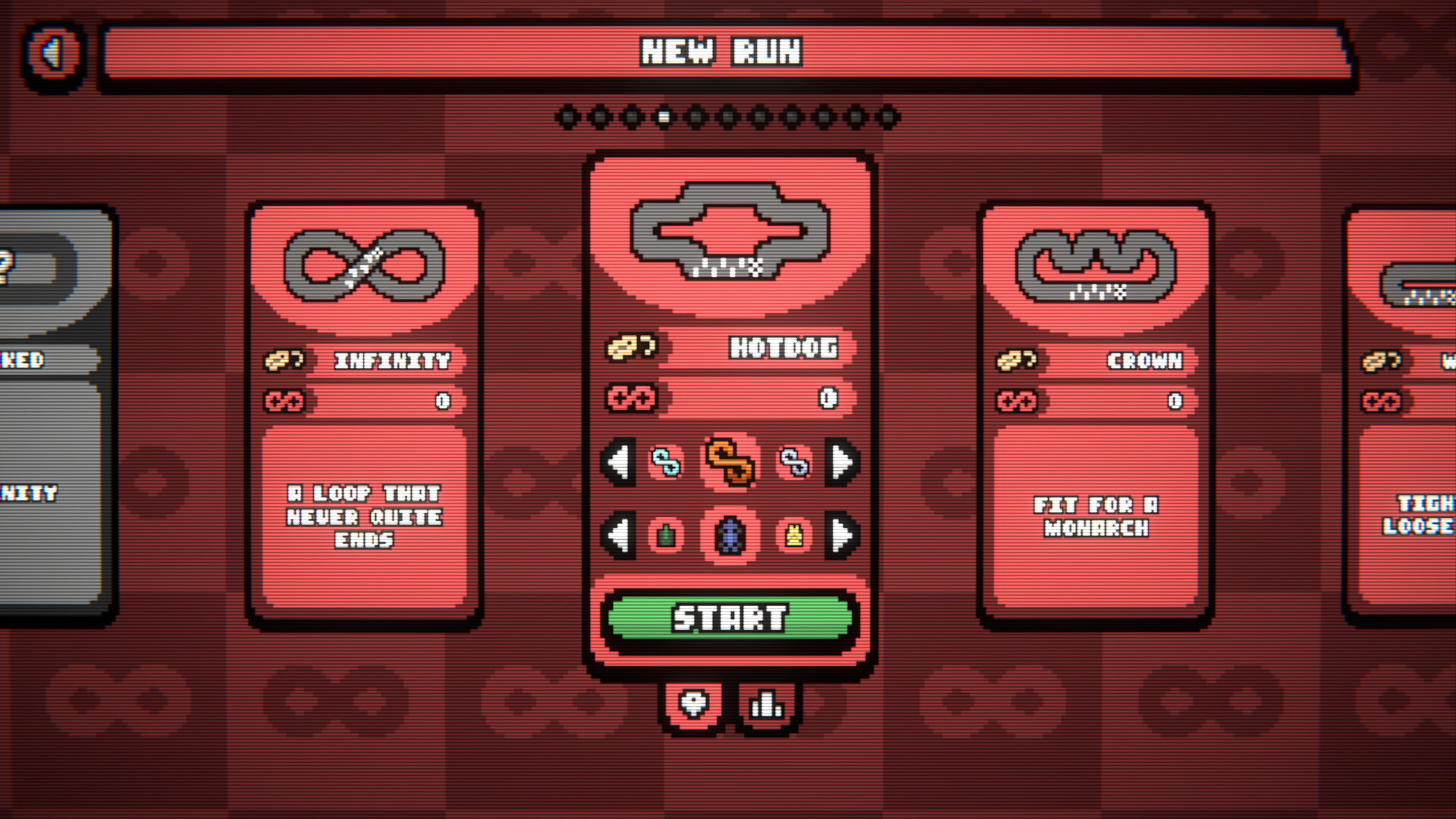
The report identified 50 cards, 30 gates, 70 charms, nine cars, and nine tracks in the public feature set. Their value comes from cross-combination rather than isolated quantity. A gate changes what happens at one point on the loop; a card or charm changes the meaning of the next pass; speed and order determine the resulting chain.
The early player count matters because it is large enough to generate visible discussion while remaining realistic for a niche PC release. The 95.2% positive review signal is more impressive than raw concurrency, though the sample is still young and likely weighted toward enthusiastic early buyers.
Genre, platform, price, and release status
Steam lists The Loopler as released on September 11 for Windows, macOS, and Linux. Its genres span casual, indie, racing, simulation, and strategy. The Malaysia store snapshot showed a launch-discount price of €8.99 in the API region used for one request, down from €9.99; local pricing can vary by account and region, so buyers should check their own store.
The game is single-player and supports achievements, controller use, cloud saves, statistics, leaderboards, and family sharing. Those features fit a score-driven roguelite built around short sessions and repeated optimization.
The developer and co-publisher Mheep previously offered a public itch.io demo. That matters because the central interaction can be tested cheaply: if placing one object and seeing the next lap improve is not satisfying, additional content will not rescue the concept.
The core loop and its differentiation
The playable promise is selection, placement, observation, and compounding. A player takes a card or gate, decides where it belongs, starts or continues the car, reads the outcome, then adjusts the build. New charms and cars change the constraints. The track is both board and timeline: spatial order communicates execution order.
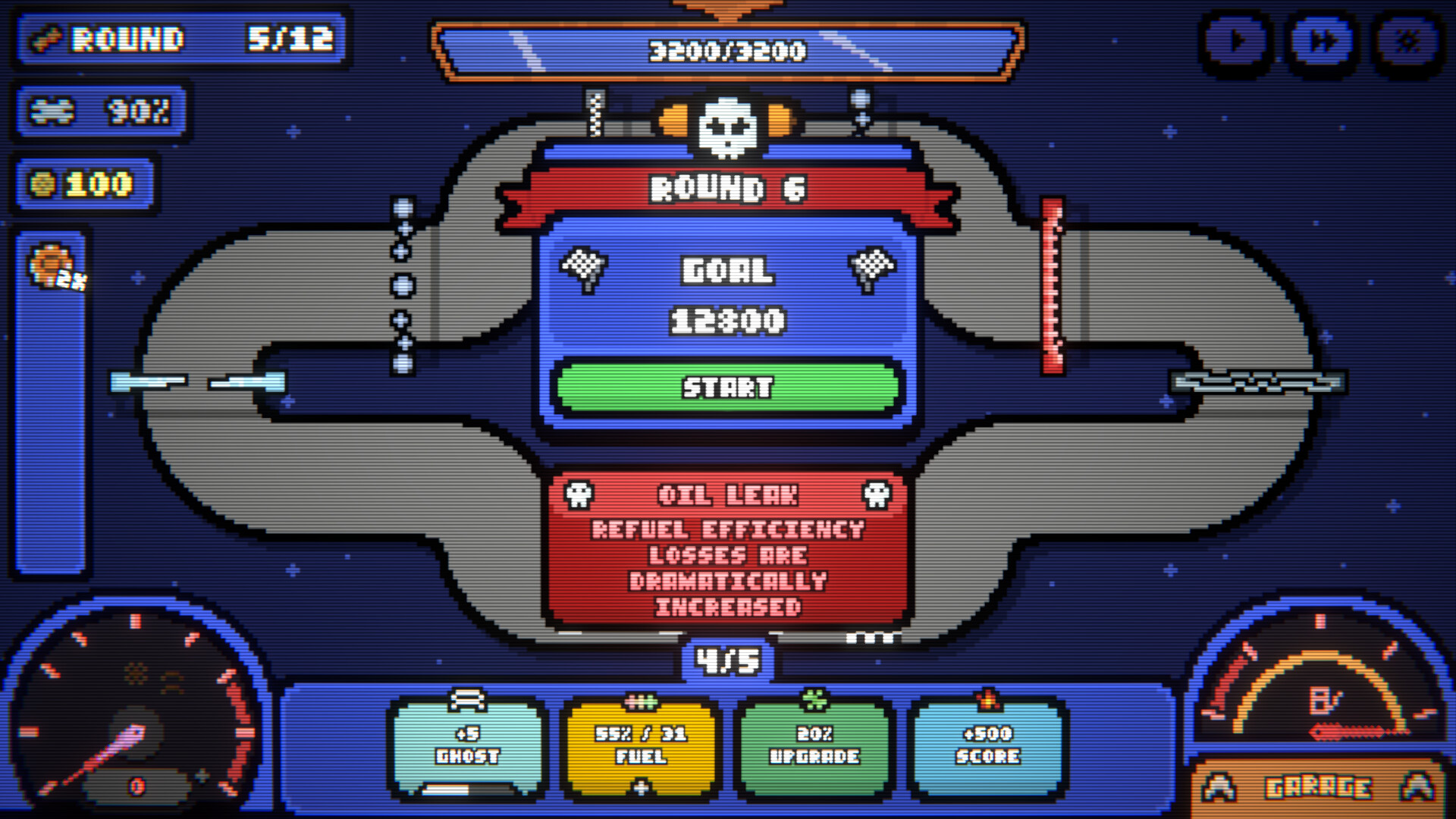
That is the main differentiation from conventional deckbuilders. Cards are not only resolved in a hand or combat log. Their consequences appear on a physical loop that repeats in front of the player. The repeated orbit makes failure understandable: a misplaced gate is visible, and the next attempted fix arrives within seconds.
The closest comparison is the wider family of automation and number-growth games. Balatro demonstrated the appeal of multiplying familiar scoring rules; Luck Be a Landlord made slot-machine adjacency into a deckbuilding structure; factory games turn layout into throughput. The Loopler's car supplies motion and timing, giving the build an almost toy-like readability.
The production lesson is important. A small team can make variety from systems interaction, but only if feedback is excellent. Numbers, particles, sound, camera emphasis, and clear icons must explain why a combo happened. Otherwise the same density that creates spectacle becomes noise.
Verified market snapshot
At the September 13 check:
- the market report recorded 1,532 current players and a 1,903 recent/record peak;
- Steam's review API returned 168 total reviews, 160 positive and eight negative;
- that equals 95.2% positive, displayed by Steam as Very Positive;
- the game had been publicly released for two days;
- sales, refunds, wishlists, and net revenue were not public.
Concurrency describes how many people were playing at a moment. Reviews accumulate across purchasers who meet Steam's rules. Neither converts cleanly into sales. The correct claim is that The Loopler has achieved a healthy, highly positive niche launch signal.
What players appear to value—and question
The dominant positive pattern in the review summary and public presentation is clarity of compounding. Players can see a humble track become a machine. Short runs, abundant combinations, and the satisfaction of watching a build execute are natural strengths.
The most credible long-term concerns are repetition, readability at high speed, and balance. Nine tracks and nine cars create permutations, but they must produce different decisions rather than cosmetic changes. Extremely strong combinations are fun discoveries until a small subset makes other choices irrelevant.
The current negative sample is only eight reviews, too small for a universal verdict. It should be treated as early friction, not a stable consensus. Patches, new player cohorts, and longer playtime can move the ratio quickly.
Purchase cautions
Buyers who need narrative campaigns, exploration, or direct driving should understand that the car is primarily the executor of a build. The pleasure comes from planning and compounding, not realistic racing.
Players sensitive to dense visual effects should examine video and accessibility options. High-speed loops can be stimulating, and the store's “playable without timed input” tag does not guarantee every individual's comfort.
The launch review ratio is excellent, but two days is not enough to judge content longevity. Waiting for longer-playtime reviews is reasonable for buyers who expect dozens of hours.
IndieGame.party verdict
The Loopler is the strongest game in today's source report for an immediate article because its launch status, review sample, and active-player signal are all verifiable. Its design also demonstrates an efficient indie principle: one screen can carry a large possibility space when every object changes the next cycle.
Our verdict is a confident recommendation for system-combo and score-chasing players, with a wait-and-see note on long-term variety. The market evidence supports “promising niche launch,” not “breakout sales hit.”
Data and image sources
- Official Steam store: https://store.steampowered.com/app/4150860/The_Loopler/
- Steam public review endpoint: https://store.steampowered.com/appreviews/4150860?json=1&language=all&purchase_type=all
- SteamCharts snapshot referenced by the September 13 market report: https://steamcharts.com/app/4150860
- Public demo: https://mheep.itch.io/the-loopler-demo
- All four images are official store assets, © Mheep and Zero Percent, downloaded locally from the official Steam page on September 13, 2026 for identification and criticism. They were not composited or materially altered.