SpeedRunners 2 Store Check: F2P Racing Sequel Risks and Signals
This is a store-data check of SpeedRunners 2: King of Speed (AppID 3183760), not a hands-on review.
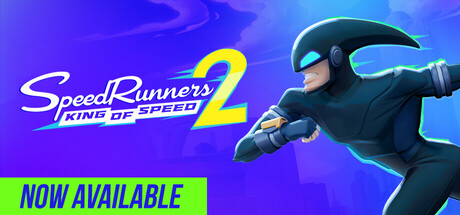
This is a store-data check of SpeedRunners 2: King of Speed (AppID 3183760), not a hands-on review.
The pitch
The Steam listing for SpeedRunners 2: King of Speed is unusually forthcoming about scope for a store page, and unusually vague about the one thing store pages are normally precise about: money.
On the record, the page identifies Fair Play Labs as developer and tinyBuild as publisher, with a release date of Sep 3, 2026. Platforms are listed as Windows only. Genres are Action, Casual, Indie, Racing, Sports, and Free To Play. The price field reads $9.99. Both facts appear on the same store page, and the listing does not reconcile them in the text provided.
That matters more than it might look. A free-to-play tag on Steam is a structural commitment — it tells players to expect an in-game economy, a live-service cadence, and a monetization layer that the store page must eventually explain. A $9.99 price tag is a different promise: a single purchase, a defined product, no storefront obligation after launch. SpeedRunners 2 is currently advertising both. Until tinyBuild clarifies which model applies — or whether a paid edition coexists with a free base game — any read on the game's commercial shape is provisional.
What the page does commit to is a feature set. The detailed description promises 8-player online lobbies, "upgraded netcode," 12 playable characters, 16 map layouts, dozens of unlockable cosmetics, local multiplayer and custom games, an expanded power-up arsenal, an "explosive story campaign," 64-player elimination tournaments, ranked play, and "experimental, rule-bending modes" in a Playground section. The short description frames the core loop: rival superheroes racing through 2D platformer levels with parkour, grappling hooks, and power-ups, with a shrinking ring of fire eliminating trailing players until one runner remains.
The sequel framing is explicit — "a sequel to the acclaimed competitive platformer" — and the campaign is positioned as expanding "the original story and lore." The listing leans on continuity with the first SpeedRunners rather than treating the sequel as a clean break.
What the loop actually asks of players
The store copy is specific about skill. "Master the movement: build momentum, swing with a grappling hook, and outmaneuver opponents" is the sentence the page uses to describe what players do, and the feature list calls the movement system "fluid, high-skill." That is a claim about the ceiling, not the floor. It signals a game where the difference between a new player and an experienced one is mechanical, not cosmetic — momentum management and hook timing rather than loadout choice.
The elimination structure reinforces this. A shrinking ring of fire that removes trailing players converts a race into a survival contest, and it compresses the skill gap in a particular direction: falling behind is punished immediately, and there is no mid-race recovery phase described. The page does not say how long a race lasts, how many laps a map runs, or how the ring's shrink rate is tuned — those are unknown from store data alone.
The mode list is broad. Quick Play, Ranked, 64-player elimination tournaments, and Playground modes with "rule-bending" variants suggest the game intends to serve casual drop-in play, competitive ladder play, and event-style large-lobby play simultaneously. That is three different populations with three different expectations of matchmaking, and the page's claim of "upgraded netcode" is the load-bearing element for all of them. Netcode quality is not verifiable from a store page; it is the single largest unknown in the pitch.
Local multiplayer and custom games are listed, which is a meaningful inclusion for a game whose genre — competitive 2D racing — has historically been strongest in same-room play. The page does not specify local player counts, only that local multiplayer exists.
The campaign is described as "explosive" and story-expanding, but the page gives no length, no structure, and no indication of whether it teaches the movement system or assumes it. For a sequel to a game built on competitive multiplayer, a campaign is often the onboarding path — or it is a side attraction. The listing does not say which.
Cosmetics are the only progression currency named: "dozens of unlockable cosmetic items." No numbers beyond "dozens," no battle pass mentioned, no currency named. If the free-to-play tag is accurate, cosmetics are the obvious candidate for monetization, but the page does not confirm it.
Where the risk sits
The first risk is the pricing contradiction. A store page that lists both Free To Play and $9.99 is either describing a free base game with a paid edition, a paid game with a free trial mislabeled, or a listing in transition. None of these are fatal, but all of them affect how players evaluate value, and Steam users read price fields before they read descriptions. The page as provided does not resolve it.
The second risk is netcode dependency. The sequel's headline additions — 8-player online lobbies, 64-player elimination tournaments, ranked play — all scale the networking load well beyond what the original SpeedRunners was built around. "Upgraded netcode" is a promise, not evidence. A 64-player elimination format in a 2D racing game implies either large simultaneous fields or staged brackets; the page does not specify which, and the difference is enormous for both server cost and player experience.
The third risk is audience fragmentation. Twelve characters, sixteen maps, a campaign, ranked, tournaments, Playground modes, local play, and custom games is a wide surface for a studio to keep populated. Competitive multiplayer games live or die on matchmaking density, and a game splitting its players across ranked, casual, tournament, and experimental queues at launch has to be either large or patient. Player counts are unknown at this stage.
The fourth risk is the sequel problem itself. The page leans on "fan-favorites like fireballs, freeze rays, and golden hooks" returning alongside new additions, which suggests the design intent is continuity plus expansion. Sequels to established competitive games face a split-base problem: the existing community has to migrate, and the new game has to be better enough to justify it without alienating the players who liked the original's tuning. The listing does not describe what changed in the movement system, only that it is "fluid" and "high-skill."
The fifth risk is timing. Sep 3, 2026 is a fixed date in a crowded indie calendar, and the page names no marketing beats, no beta, and no early access plan. Whether the date holds is unverifiable from store data.
Who this is for
The clearest audience is players who already know the first SpeedRunners and want more of it with larger lobbies and a story mode. The page is written for them — it assumes familiarity with fireballs and golden hooks, and it sells the sequel on expansion rather than reinvention.
The second audience is local-multiplayer groups. A 2D racing platformer with grappling hooks and elimination rules is a couch-game shape, and the listing explicitly includes local play and custom games. The page does not give local player counts, so groups larger than whatever the cap turns out to be should wait for clarification.
The third audience is competitive players looking for a ranked ladder in a genre with few of them. Ranked play is listed; its structure, seasons, and ranking system are not described.
The fourth audience is streamers and party-game players drawn to the chaos framing — "test your friendships," "hilarious PvP chaos." That language is aimed at social play, not solo progression.
Players who want a substantial single-player experience should treat the campaign as unproven. It is listed as a feature, not described as a mode with length or structure.
What to watch next
- Pricing clarification. Watch the store page for a resolution of the Free To Play tag against the $9.99 price — a paid edition, a free base game, or a corrected listing. This is the single most consequential open question.
- Netcode evidence. Watch for beta tests, stress tests, or developer statements about 8-player and 64-player performance, since "upgraded netcode" is the claim the entire multiplayer pitch rests on.
- Monetization disclosure. If the game is free to play, watch for the store page to name its economy — cosmetics only, currency, or a pass. The page currently names only "dozens of unlockable cosmetic items."
- Campaign and mode specifics. Watch for detail on campaign length, local player caps, and how the 64-player tournament format is actually structured. None of these are specified today.
Verdict
SpeedRunners 2: King of Speed is a sequel with a clear lineage and an unclear business model. The feature list is dense and specific about scope — 8-player online, 12 characters, 16 maps, ranked, tournaments, a campaign — but the store page contradicts itself on price, leaves netcode as an assertion rather than a demonstration, and does not describe the shape of its headline modes. For existing SpeedRunners players, the pitch is legible and the continuity is explicit. For everyone else, the listing is a promise sheet, and the two facts worth resolving before Sep 3, 2026 are what the game costs and whether its networking holds up at the player counts it advertises.