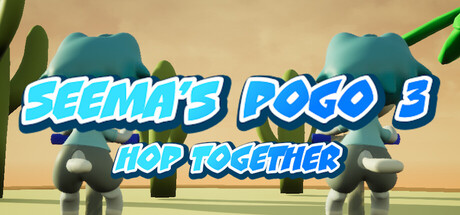
Seema's Pogo 3 Hop Together Asks 64 Cats to Bounce on the Same Level for $0.89
Kazarma's third pogo-cat platformer just launched with 64-player multiplayer, 40 levels, and a Neco-Arc cameo. At 89 cents, the absurdity is the selling point.
<figcaption>Official trailer — Seema's Pogo 3 Hop Together</figcaption>
</figure>
The pitch is the punchline
Sixty-four cats. One pogo stick each. Forty levels built for a single hopper, now stuffed with a crowd. That's the entire pitch for *Seema's Pogo 3 Hop Together*, and I keep thinking about how gloriously stupid it is.
The series' previous entries were solo affairs; this one, released yesterday by Kazarma and published by Kalifas, bolts a 64-player mode onto a 3D platformer inspired by the 3D Hopper tech demo for the Nintendo 3DS. The result is less a competitive game than a physics comedy where the joke is structural: everyone has the same terrible tool, and the level design has not been widened to accommodate them.
What makes the joke land is the specificity of the inheritance. The 3D Hopper demo was a tech showcase — a proof that a handheld could render a bouncing character in three dimensions with convincing weight. It was never a game about crowds. Kazarma has taken that solitary proof-of-concept and multiplied it by sixty-four, which is either an act of vandalism or the most honest use of a tech demo I've seen.
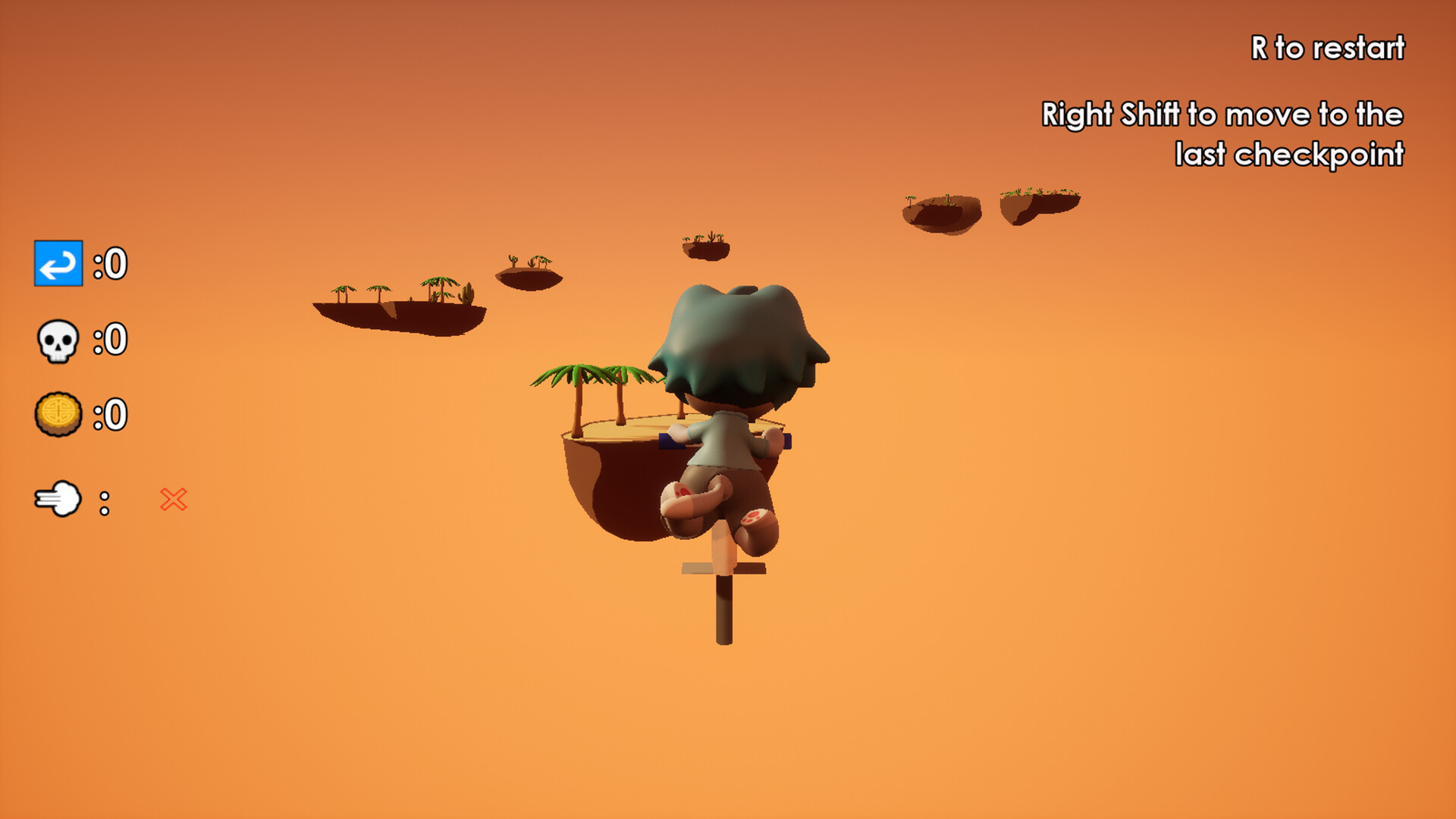
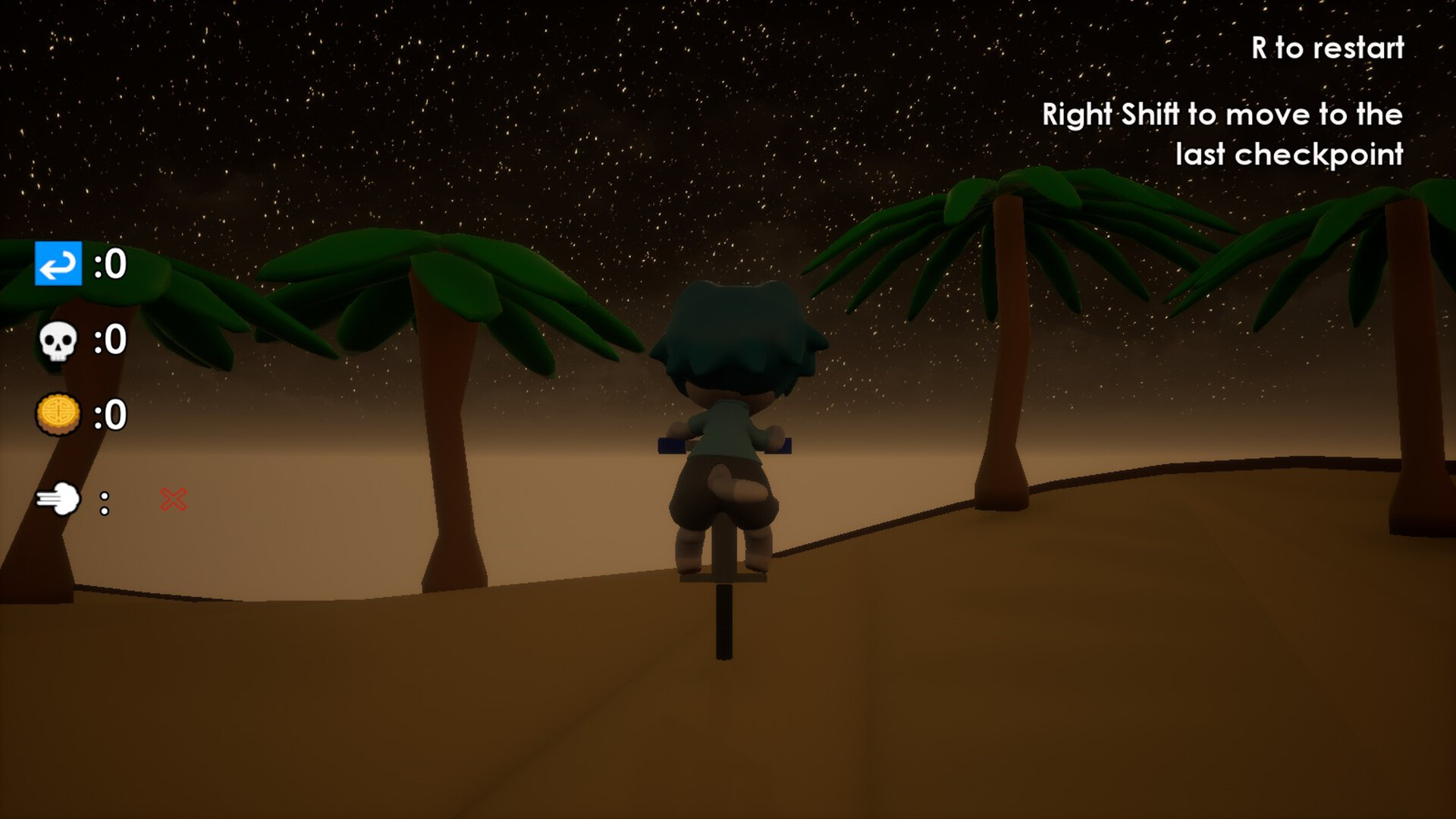
The store listing doesn't pretend otherwise. It promises "different settings" across the 40 levels, four playable cats including Neco-Arc and PlanetClue, and a warning that you will "fall down. A lot." That last line is the thesis statement. The pitch isn't "bounce well." It's "bounce, and watch what happens when everyone else bounces too."
What you actually do, minute to minute
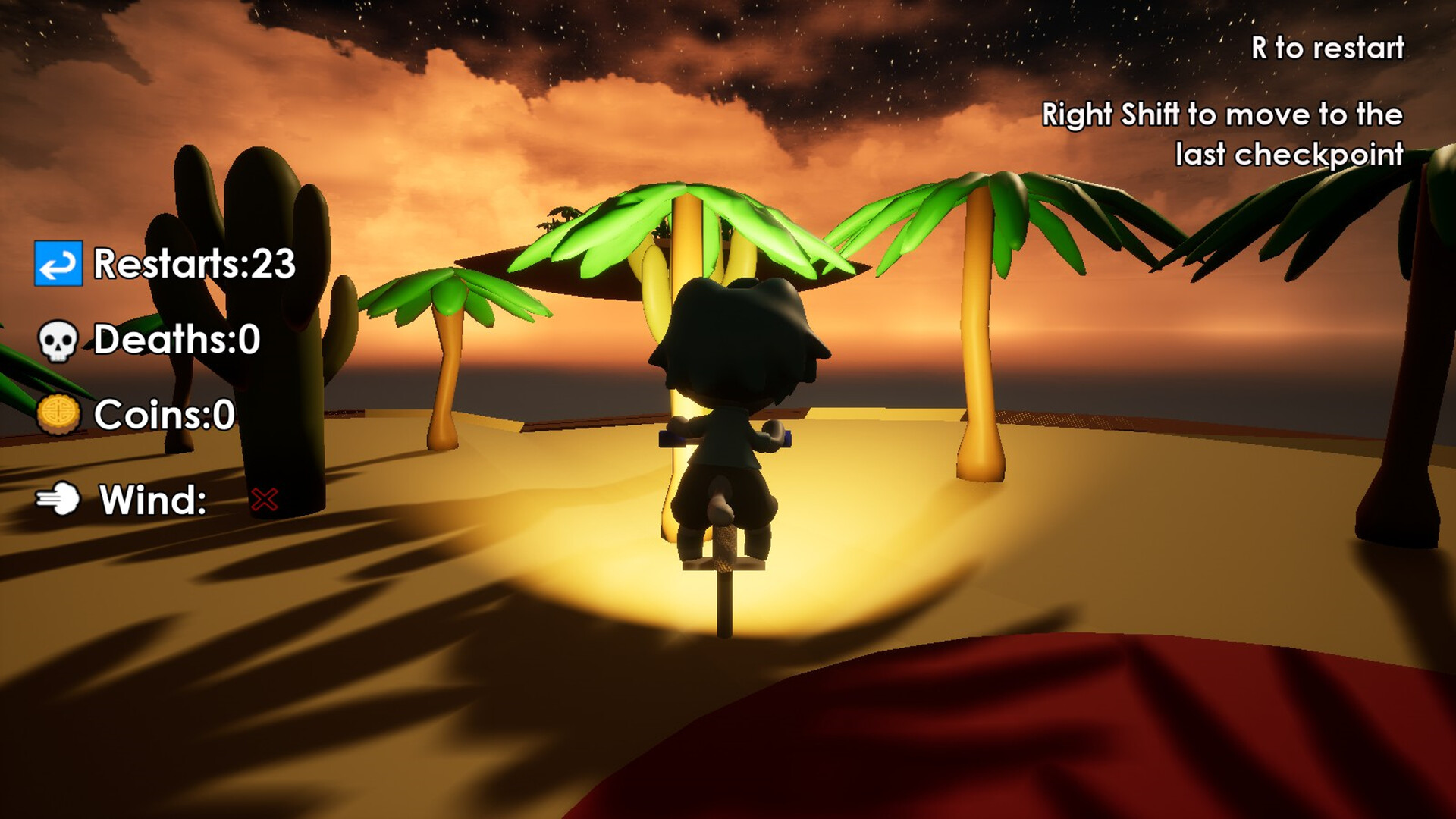
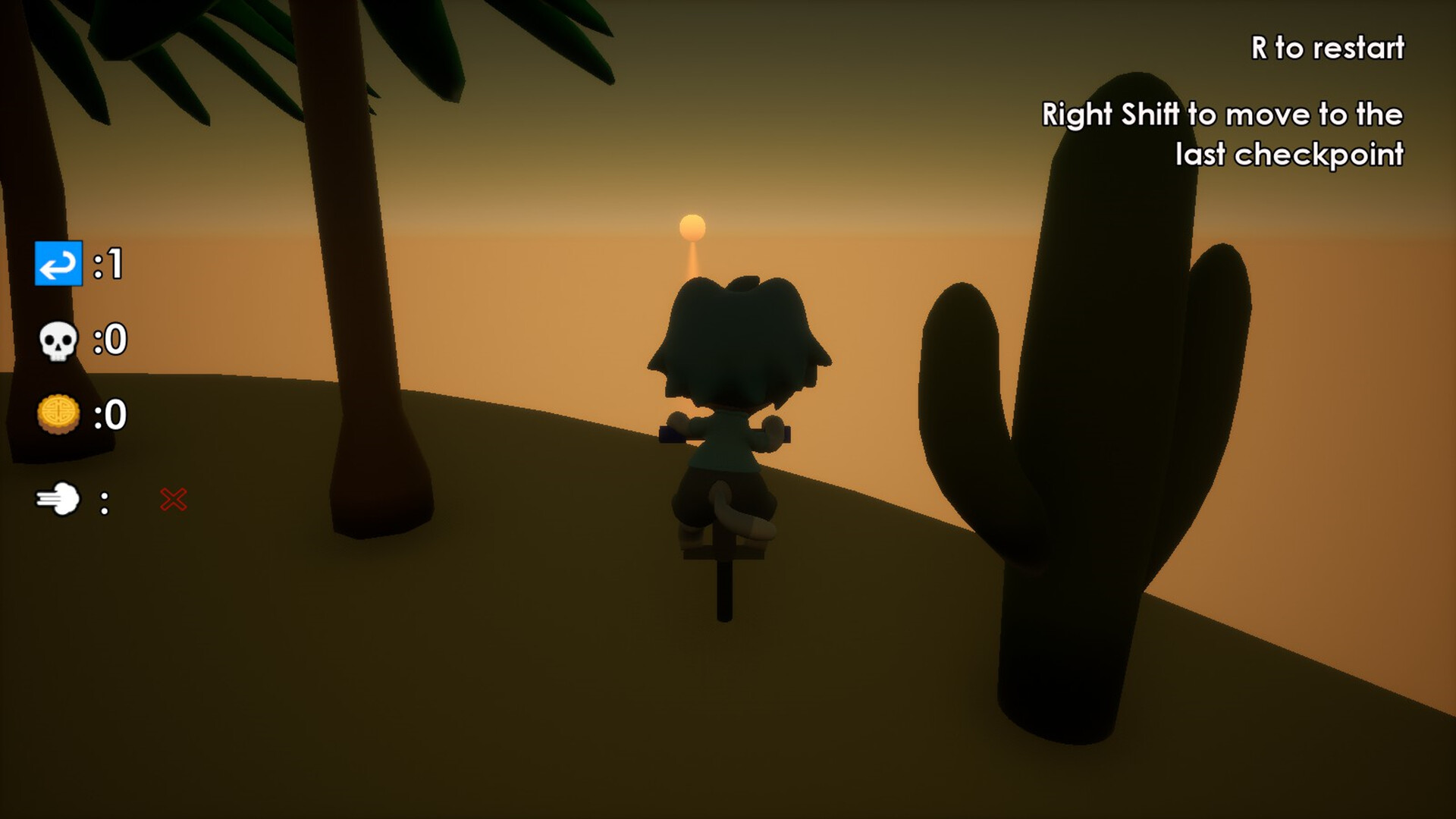
You pick a cat — four are available, including Neco-Arc and PlanetClue — and you bounce. That's the verb. No double jump, no dash, no grapple. The pogo is your only means of locomotion, which means every gap becomes a timing problem and every landing is a negotiation with momentum. The 40 levels span "different settings," per the listing, and the store page warns you'll "fall down.
A lot." That's not false modesty; it's a design statement. This is a game about the comedy of failure, and the multiplayer turns that failure into a spectator sport. When someone misses a platform by a hair, the other 63 players get to watch them plummet. That's the loop.
The minute-to-minute texture matters here, because a single-verb platformer lives or dies on the feel of that verb. The 3D Hopper inspiration is the tell: that demo was built around the weight and timing of a pogo bounce, the way momentum carries you past a safe landing and the way a mistimed press sends you sideways. Kazarma isn't adding mechanics to compensate for the pogo's limits; it's leaning into them.
Every level is a series of negotiations — how much speed to carry into a gap, when to release, whether the next platform is worth the risk. In solo play that's a rhythm game with a cat. In a 64-player lobby it's a crowd of people making the same negotiation at the same time, which means the failures arrive in waves. The store page's "fall down. A lot" isn't a warning about difficulty; it's a description of the entertainment.
The 64-player question
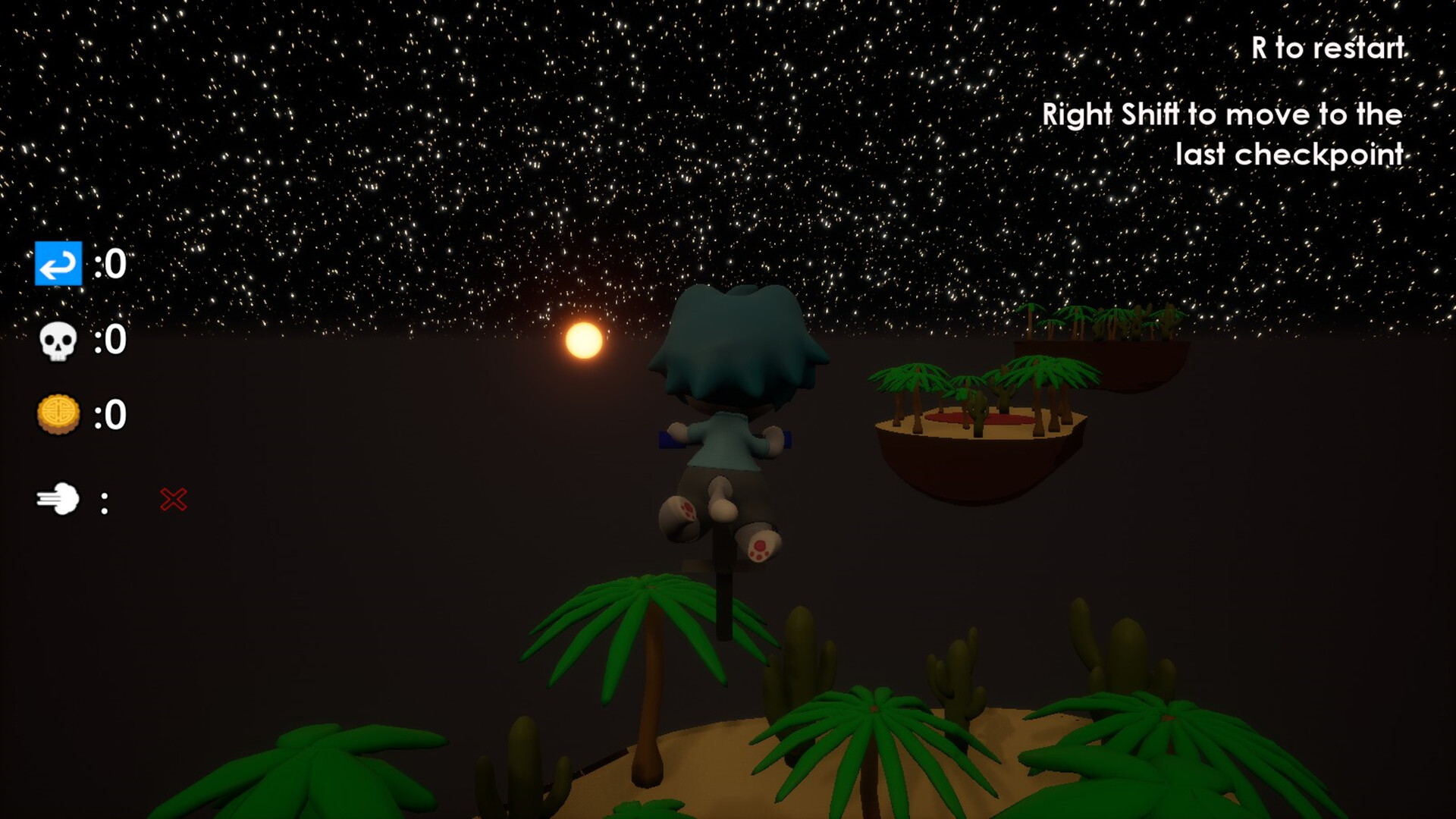
The listing calls it "multiplayer for 64 people," and the Steam signals show a current player count of 0 at the time of writing. That's not a death knell — the game released on Oct 28, 2026, and it's an 89-cent indie with no review quotes yet. But it's worth being honest: a 64-player lobby is a promise, not a guarantee.
The low system requirements ("everything that supports at least OpenGL 3.2") suggest Kazarma built this to run on potato hardware, which makes the 64-player mode feel less like a technical flex and more like a deliberate invitation to chaos. If you can get 64 people into a server, the pogo-stick physics will do the rest. If you can't, the game still works solo — the levels are designed for one hopper, after all.
The multiplayer is a layer, not a crutch.
There's a specific kind of optimism in shipping a 64-player mode on an 89-cent game with no marketing budget and no review coverage. It's the optimism of a developer who believes the physics will sell themselves. And they might: a lobby of 64 cats on pogo sticks is the kind of thing that generates clips, and clips generate lobbies.
The OpenGL 3.2 floor is the smart part of the bet — it means the game can run on laptops, office machines, and the kind of hardware that normally gets left out of multiplayer experiments. The barrier to entry isn't a graphics card; it's finding 63 other people who also paid less than a dollar. That's a lower bar than most games set, even if the current count of 0 shows the bar hasn't been cleared yet.
Progression, or the lack of it
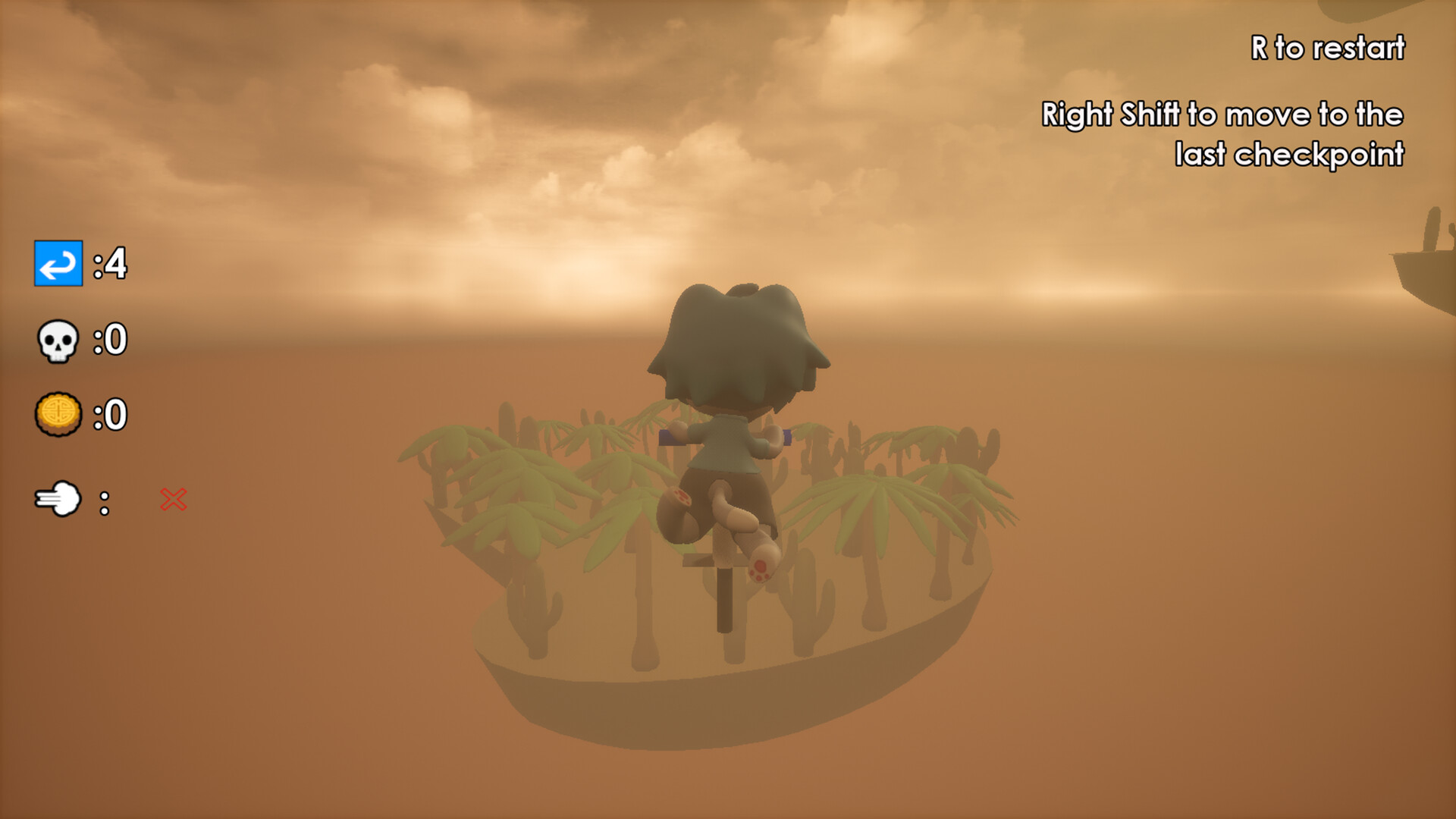
Here's my honest reservation: the listing promises "10 hours in 650 MB" and "a ton of gameplay," but it doesn't mention upgrades, unlocks, or a progression system beyond clearing levels. That's fine for a game this cheap, but it means the loop has to hold on novelty alone. The four cats are cosmetic choices, not classes.
The music comes from "unknown authors," which is either charming or a warning sign depending on your tolerance for SoundCloud-core. What holds the loop together is the pogo itself — the physics are the content. If bouncing feels good, 40 levels is a generous buffet. If it feels floaty, 40 levels is a chore.
The 3D Hopper inspiration suggests Kazarma understands the weight and timing that make a pogo stick satisfying, but I can't confirm it from the store page alone.
The 650 MB figure is worth sitting with. That's a download smaller than most phone photos, and it contains 40 levels, four cats, and a 64-player mode. The "10 hours" estimate is the developer's math, not mine, but it's plausible if the levels are dense and the multiplayer eats time the way multiplayer always does. What the listing doesn't say is whether there's a reason to replay a level beyond getting better at it.
For some players that's enough — the *Trials* series built a decade of goodwill on exactly that premise. For others, the absence of unlocks will read as thinness. The four cats being cosmetic is the clearest signal of intent: this is a game about the verb, not the wardrobe.
The price is the argument
Eighty-nine cents. That's less than a coffee, less than a Steam trading card, less than the tax on most indie games. At that price, *Seema's Pogo 3* is competing with *Balatro*'s demo and *Vampire Survivors*' earliest builds — not in quality, but in the willingness to take a punt. The comparison that fits best is *PowerWash Simulator*: both games take a single, repetitive verb and ask you to find the meditative pleasure in it.
*PowerWash* has the satisfaction of visible progress; *Seema's Pogo 3* has the comedy of visible failure. The difference is that *PowerWash* costs real money and this costs less than a bag of crisps. The 650 MB download is a rounding error on any modern drive. The 10-hour estimate is optimistic but not absurd for a game with 40 levels and a multiplayer mode that could eat hours if you find a lobby.
The price also functions as a filter. At 89 cents, the game selects for people who are curious rather than committed, which is exactly the audience a physics comedy needs. A full-price release would invite scrutiny of the progression system, the music, the level variety. A sub-dollar release invites you to laugh at a cat falling off a platform and move on. That's not a knock — it's a business model that matches the content.
The 650 MB footprint reinforces it: this is a game you can install on a whim and delete without guilt. The 10-hour claim is the only place the listing overreaches, and even that is forgivable at this price.
What the comparisons miss
*PowerWash Simulator* and *Fall Guys* are the obvious reference points, and both are useful, but neither captures what *Seema's Pogo 3* is doing. *PowerWash* is about the satisfaction of completion — the grime disappears, the surface gleams, the job is done. *Seema's Pogo 3* is about the comedy of incompletion. You don't clean the platform; you miss it.
*Fall Guys* is about obstacle courses designed to be survived by a lucky few, with a shrinking pool of contestants and a winner at the end. *Seema's Pogo 3* has no elimination, no shrinking pool, and no winner's podium in the listing. It's 64 cats on the same 40 levels built for one, and the point isn't to be the last one bouncing. The point is to be there when someone else isn't.
That's a different social contract. *Fall Guys* creates tension through scarcity — only one can win. *Seema's Pogo 3* creates comedy through abundance — everyone is equally badly equipped, and the levels weren't built for any of you.
The 3D Hopper inheritance is what makes this possible: a solo tech demo's level design is tight, precise, and unforgiving, and dropping 64 players into it doesn't widen the challenge, it multiplies the failure. That's the thing *PowerWash* and *Fall Guys* can't do. *PowerWash* is solitary by design; *Fall Guys* is competitive by design. *Seema's Pogo 3* is neither.
It's a crowd in a hallway built for one person, and the hallway doesn't care.
The community reaction
The player quotes on the store page are few, but they're telling. One reads: "the pogo is the whole game and that's the point." Another: "i fell off the same platform 14 times and laughed every time." Neither is a polished testimonial — they read like someone typing between attempts — and that's exactly the register the game operates in.
The first quote is a defense of the design against the obvious criticism that a single-verb platformer is thin. The second is the loop in miniature: repetition, failure, and the willingness to find it funny. Neither quote mentions the 64-player mode, which is worth noting. The people who bought it early are playing it solo, or at least talking about it solo, and they're still recommending it.
That's a useful signal for anyone worried about the player count of 0. The game doesn't need a lobby to work; it needs a player who finds the pogo funny. The quotes suggest that player exists. What the store page doesn't show is whether the 64-player mode has found its audience yet — no quote mentions a full lobby, no quote mentions 63 other cats.
The multiplayer is the headline and the solo loop is the reality, at least for now. If the clips start circulating, that could change. If they don't, the game still has its 40 levels and its 89-cent price and its two players who laughed at the same platform 14 times.
Who should skip it
If you need a narrative hook, a skill tree, or a reason to care beyond "the cat bounced and fell off," this will bore you inside twenty minutes. If you're allergic to early-access energy — the game is out, but the player base is a question mark — wait for a sale, even though the sale would be pennies. And if you demand a guaranteed 64-player server at 3 a.m. on a Tuesday, temper your expectations.
But if you've ever laughed at a physics glitch, if you've ever played *Fall Guys* and wished the obstacles were meaner, if you've ever wanted to pay less than a dollar for a game that knows exactly what it is — this is your weekend. The current player count of 0 is a snapshot, not a verdict. The 89-cent price is the real signal. Kazarma made a game that costs less than a bus fare and asks you to bounce a cat across 40 levels.
That's not a hard sell. That's a dare.