Scarlet Skips Proves One Button Can Carry a Roguelite—But Not Forever
Scarlet Skips turns rope jumping into a score-chasing roguelite with one input. That tiny control surface helped Yerk Games earn attention in the September 4 report, where the game appeared at No. 73 in Malaysia's Steam revenue chart with 480 concurrent players and 443 reviews at 72.0% positive.

Scarlet Skips turns rope jumping into a score-chasing roguelite with one input. That tiny control surface helped Yerk Games earn attention in the September 4 report, where the game appeared at No. 73 in Malaysia's Steam revenue chart with 480 concurrent players and 443 reviews at 72.0% positive.
The September 7 check shows a game converting more of that attention into feedback. Steam reported 354 current players and 908 all-language reviews: 690 positive and 218 negative, equal to 76.0% positive. Review volume more than doubled in roughly three days while sentiment improved by four percentage points.
That is not breakout-scale proof, and unit sales are private. It is a meaningful early signal for a deliberately small PC action game. This article analyzes the public launch evidence and official materials; it is not a hands-on review.
Release state and the one-sentence pitch
Scarlet Skips launched on Steam for Windows PC on September 3, 2026. Yerk Games is both developer and publisher. The store classifies it under Action and describes a one-button roguelike about skipping rope, powering up ropes, jumping higher, surviving longer, and chasing absurd scores.
The game is a full release rather than Early Access. Its scope is unusually legible: one character, one recurring physical action, short runs, upgrade choices, and escalating visual chaos. That clarity is commercially useful. A viewer understands the mechanic within seconds, and a creator can show failure or a surprising build without explaining a campaign.
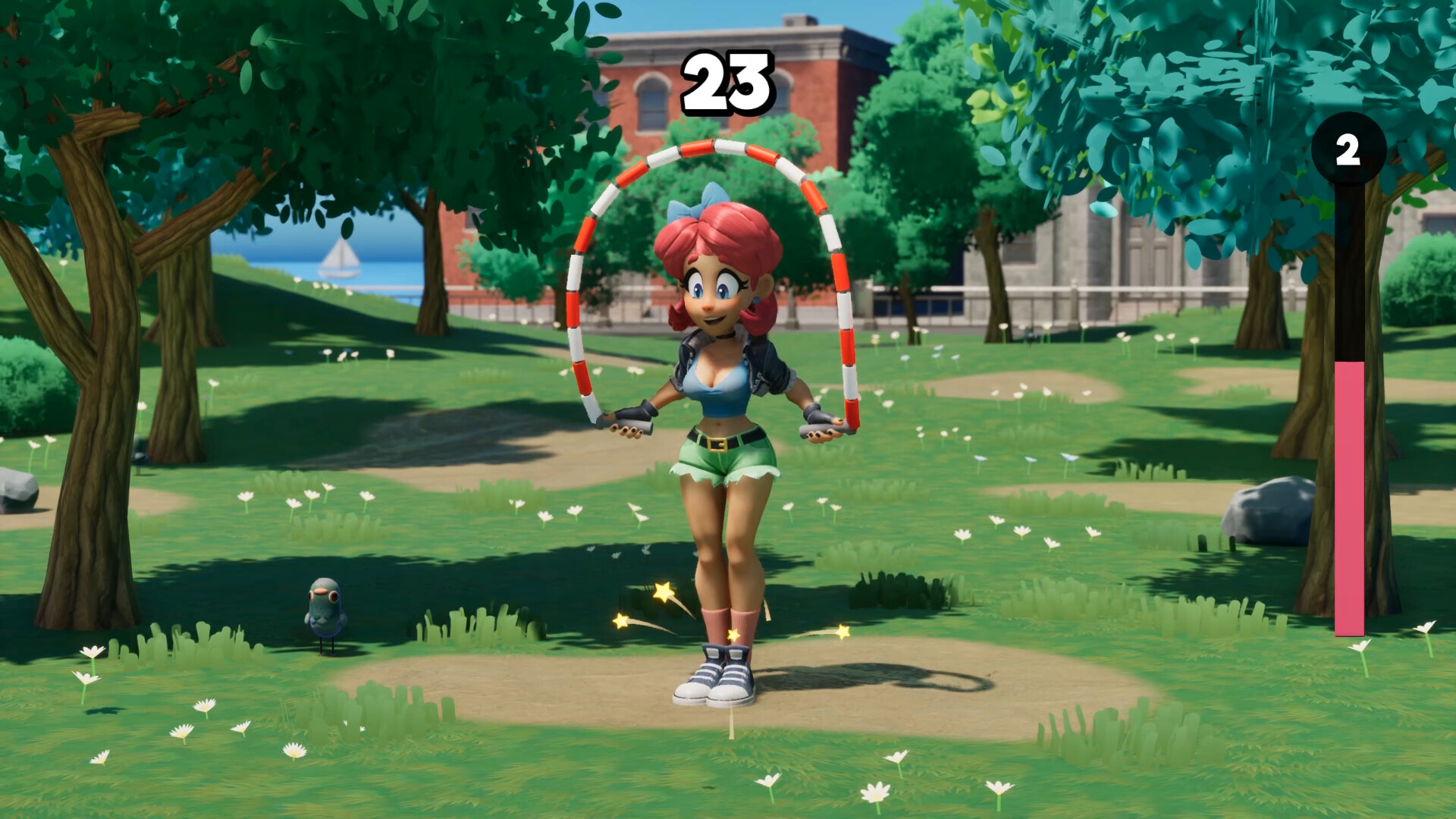
The simplicity also exposes every weakness. When there is only one primary input, timing, animation readability, collision rules, and upgrade pacing carry nearly the entire experience. There is no inventory-management layer or exploration map to distract from a jump that feels late.
The core loop: time, choose, compound, fail
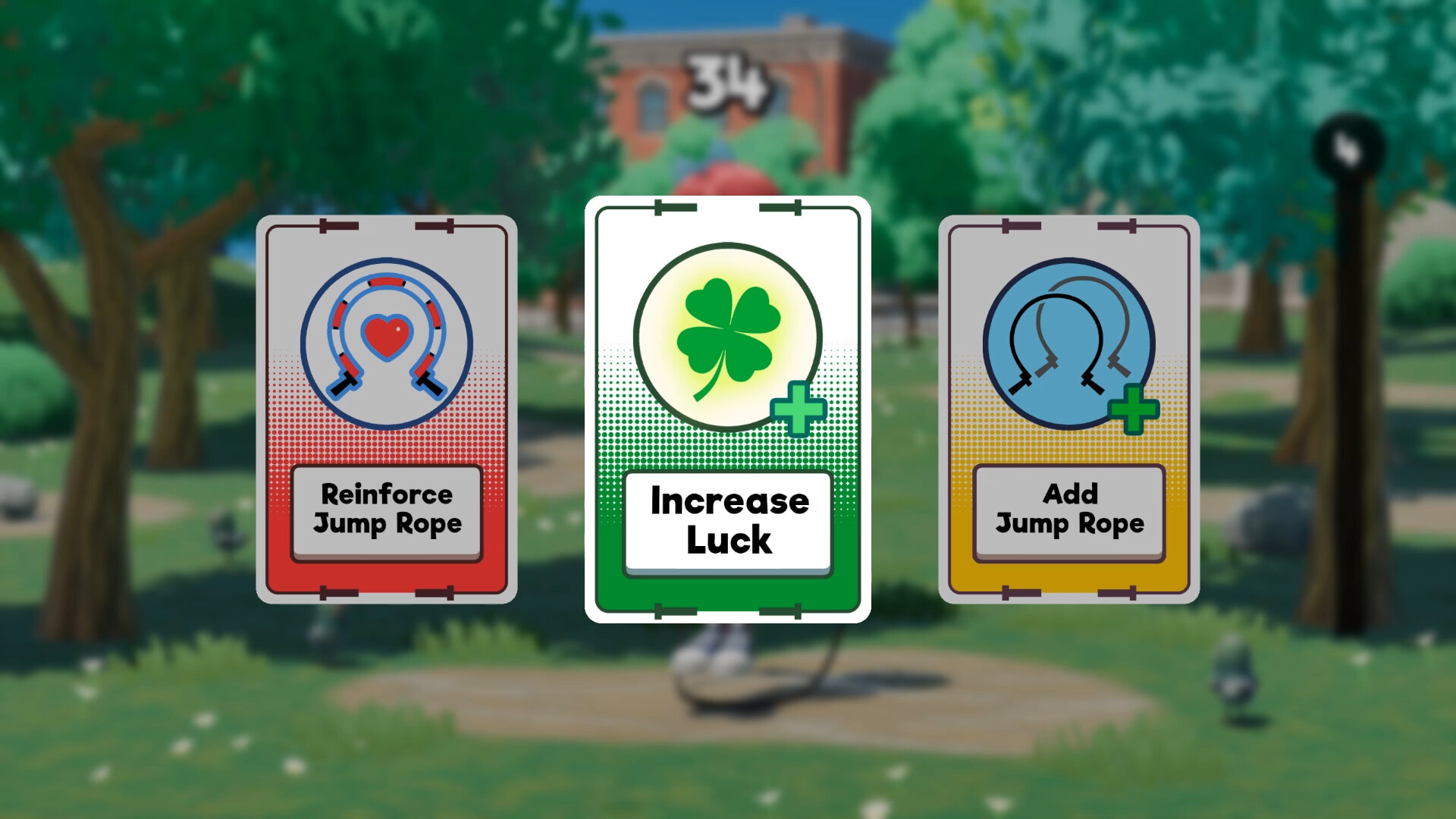
A run asks the player to press, hold, or release through repeated rope cycles, then choose among upgrades that change height, rope behavior, scoring, hazards, or survival. Successful timing extends the run; upgrades produce increasingly extreme combinations; one mistake ends the attempt and returns the player to another build.
This is a compact version of the survivor-like and arcade-roguelite formula. The physical action stays stable while the variables around it accelerate. Because upgrades arrive in sets, players make quick tradeoffs between immediate safety and a combination that may scale later.
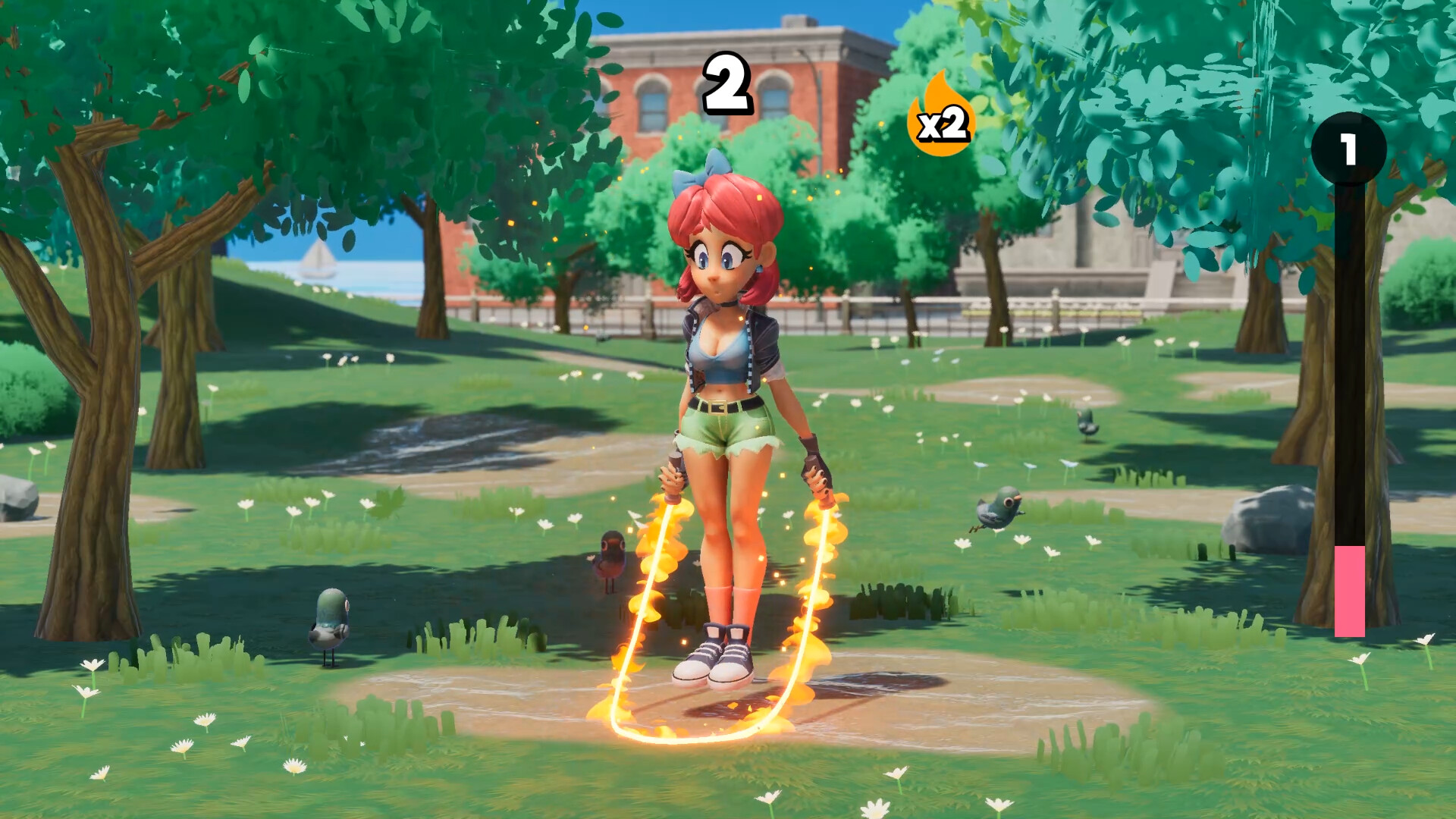
The best design idea is not merely the single button. It is that growth remains visible. A stronger build does not live only in a statistical menu; the rope, jump, effects, or score rhythm becomes more dramatic on screen. That helps the game communicate progression in clips and screenshots.
Short failure cycles make experimentation cheap. A bad upgrade choice does not ruin a 40-hour character. The player can immediately try a different sequence, which is important when the base action could otherwise become monotonous.
What the positive signal says
The positive count rose from roughly 319 implied by the September 4 percentage and sample to 690 confirmed positives by September 7. The exact early rounded figure should not be overinterpreted, but the direction is clear: many more people reviewed the game and the aggregate improved.
Positive reactions cluster around the immediate premise, playful presentation, low learning barrier, and satisfaction of turning a simple action into an overpowered run. Players appear to appreciate that the game knows its scope. It does not pretend one-button input is a temporary tutorial before revealing a conventional action game.
The format also works for short sessions. A player can complete a run or make progress toward a score without remembering a complicated quest state. That gives Scarlet Skips a useful place between deep desktop games and mobile-style repetition, while avoiding the monetization structure associated with many mobile score chasers.
The improved sentiment matters because a 443-review sample could still be strongly shaped by launch-day fans. At 908 reviews, the audience is broader, though still early. The current "Mostly Positive" label is supportive rather than definitive.
Where players find the rope too thin
The 218 negative reviews indicate recurring limits. The central risks are repetition, inconsistent-feeling timing, visibility once effects stack, balance between upgrades, and whether there are enough meaningful run variations after the joke has landed.
One-button design reduces input complexity but does not remove cognitive complexity. Players still need to read the rope, character state, hazards, modifiers, and reward choices. If procedural animation makes a foot or rope position difficult to parse, failure can feel arbitrary rather than earned.
Upgrade systems face a second problem: more is not always deeper. Ten effects that increase numbers can create spectacle without changing decisions. Durable runs need combinations that alter timing, risk, or route to a high score. Otherwise the correct choice becomes obvious and replay value collapses into grinding.
The game's character-forward marketing creates expectations about charm and animation. That is an advantage for discovery, but presentation cannot indefinitely substitute for new mechanical situations. Post-launch support should prioritize additional rule interactions and accessibility options over cosmetic volume alone.
Why Scarlet Skips matters to small developers
Scarlet Skips is a useful scope-control case. It demonstrates that a marketable PC game can begin with one action and a small set of upgrade cards. The team concentrates effort on animation, feedback, audio, upgrade synergy, and a clean restart loop rather than building a world larger than the mechanic can support.
Compared with Vampire Survivors-style games, it asks for active rhythm rather than continuous movement and target positioning. Compared with traditional rhythm games, it lets upgrades distort the timing problem rather than preserving a fixed chart. Compared with precision platformers, it replaces authored levels with an escalating repeated test.
Its ceiling may be lower because the action vocabulary is narrow. The current numbers reflect a healthy niche launch, not proof that every simple control scheme can reach a large market. Theme, animation, pricing, timing, and creator visibility all contribute.
Who should buy—and the purchase caution
Buy if you like score attack, short roguelite runs, absurd build escalation, and games that explore one mechanic deeply. The current review direction is encouraging, and 354 current players is a solid signal for a primarily solo score game where matchmaking health is irrelevant.
Wait if repetition bothers you or if you need extensive meta-progression and content variety. Watch how recent reviews discuss run diversity after the first several hours. A growing lifetime percentage can still hide late-game fatigue if new buyers are reviewing early.
Players sensitive to rapid effects should check current gameplay footage and accessibility settings. Later-run spectacle is part of the reward, but readability is also the fairness contract.
IndieGame.party verdict
Scarlet Skips has moved from "small interest" to a credible positive launch. Doubling the review pool while improving sentiment is stronger evidence than a temporary chart placement. The design earns attention by making its scope instantly understandable and by turning upgrades into visible changes.
The verdict is recommended for focused arcade-roguelite players, with a longevity caution. The game does not need thousands of concurrent players to work, but it does need upgrade variety to keep one button from becoming one note.
Data and image sources
- Official Steam store page: https://store.steampowered.com/app/4513480/Scarlet_Skips/
- Steam public review summary and current-player endpoints, checked September 7, 2026 at 1:58 p.m. MYT.
- All four images are official Steam store assets supplied by Yerk Games, downloaded locally on September 7, 2026 for identification, reporting, and criticism. They are not composited or materially altered.