Sandustry Makes Every Pixel Part of the Factory—and Players Are Buying the Logic
Sandustry entered Early Access with a premise that turns the world itself into the production problem. At approximately 7:25 p.m. Malaysia time on September 8, Steam reported 2,026 current players and 4,782 all-language reviews: 4,650 positive and 132 negative, or 97.2% positive after rounding.
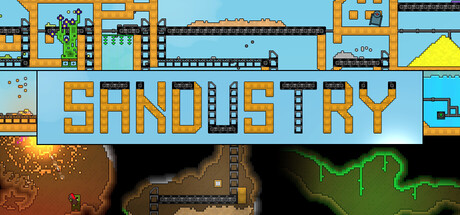
Sandustry entered Early Access with a premise that turns the world itself into the production problem. At approximately 7:25 p.m. Malaysia time on September 8, Steam reported 2,026 current players and 4,782 all-language reviews: 4,650 positive and 132 negative, or 97.2% positive after rounding.
That is a strong public signal for a systems-heavy indie game less than a month into Early Access. It is not a sales figure, and Steam does not expose copies sold through the endpoints used here. This article evaluates official materials and public review patterns; it is a market analysis, not a hands-on review.
Why Sandustry is notable now
Lantto Games released Sandustry into Steam Early Access on August 13, 2026, with Hooded Horse publishing. Steam lists Windows, macOS, and Linux support and classifies the game as Simulation, Strategy, and Early Access.
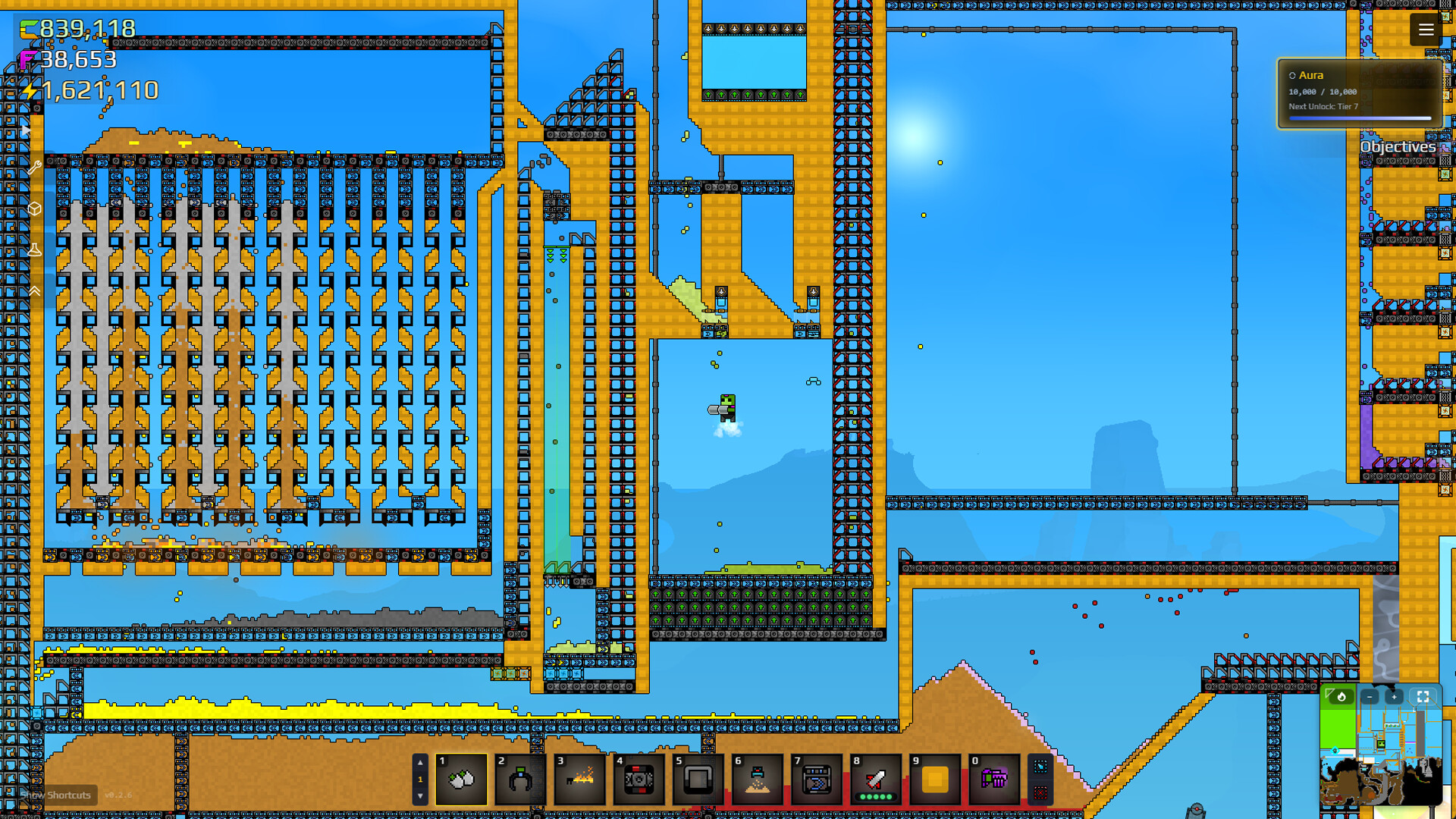
The latest available market report highlighted the design phrase “every pixel is a resource.” That phrase explains the visual and economic proposition at once. Players excavate granular terrain, route materials, build processing chains, and push deeper. The map does not merely contain deposits; its physical cells move, block, collapse, mix, and become inputs.
The report cited an external estimate of more than 200,000 copies. Because that estimate is not an official disclosure, it is excluded from the verdict. The current-player and review signals independently establish meaningful traction.
The loop: excavate, route, process, expand
The player begins by extracting material from a 2D world. Resources must then reach machines, be separated or processed, and feed construction that enables deeper or more efficient extraction. Each expansion changes the geometry of the environment and creates new flow problems.
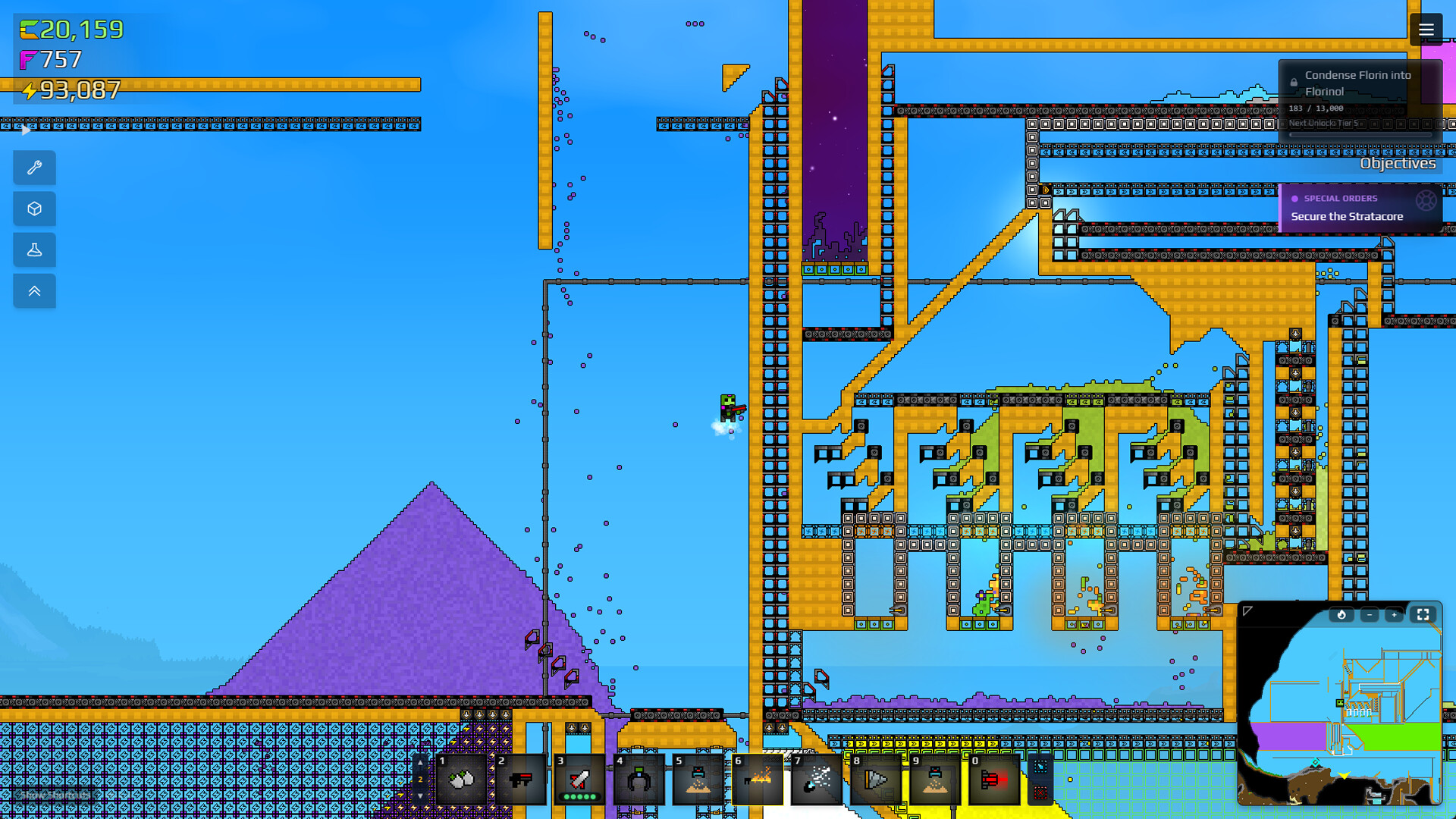
Automation converts manual progress into throughput. Conveyors, pipes, containers, and processing structures must account for the physical behavior of what they carry. The reward is visible twice: production numbers improve, and the terrain itself transforms into a larger machine.
This coupling is Sandustry's main differentiator. In many factory games, deposits are nodes that shrink while belts remain clean abstractions. Here, the messy movement of material is part of the puzzle. A blockage or spill is not decorative; it alters production and can demand redesign.
Why every pixel matters to scope and spectacle
The 2D cross-section lets the player see cause and effect across a large system. Material falls, machines operate, cavities open, and transport lines spread. Progress changes the silhouette of the whole screen rather than only increasing a resource counter.
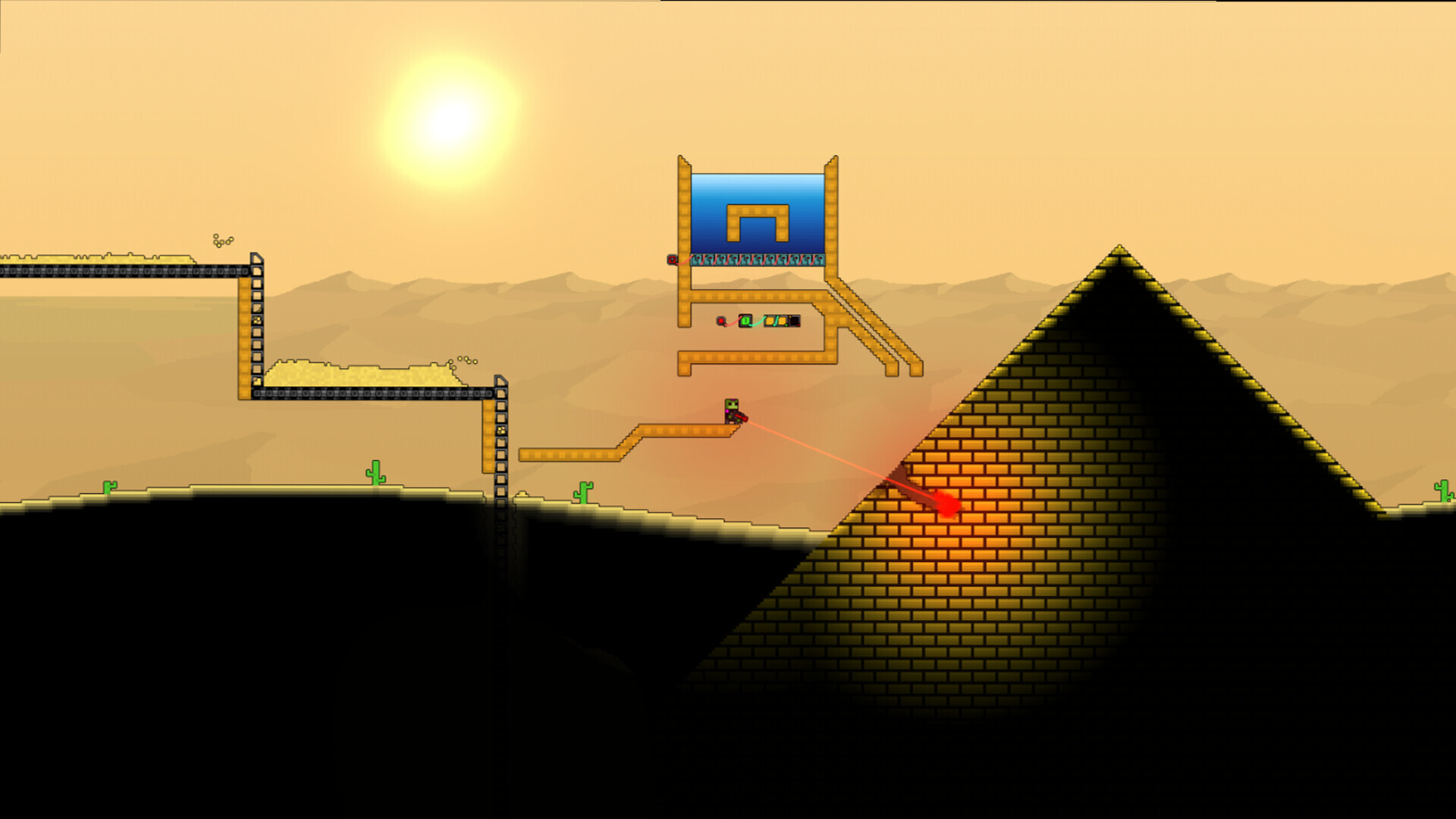
For development scope, shared material rules can generate many situations without a unique scripted mission for each one. A limited palette of substances becomes content when each has distinct movement, processing, heat, corrosion, or contamination behavior. The system produces scenes for the art team.
That efficiency is not automatic. Cellular simulation must remain performant and predictable enough for planning. If materials behave inconsistently or a large factory slows the game, the same system that creates delight creates distrust. Automation players invest hours because they believe a carefully designed line will keep obeying its rules.
What the review signal says
We inspected bounded recent samples of up to 50 positive and 50 negative public Steam reviews. Positive patterns repeatedly mention the satisfaction of excavating and watching material move, flexible automation, strong performance for the apparent simulation complexity, frequent “one more redesign” motivation, and comparisons with beloved factory and falling-sand games.
Negative patterns focus on Early Access incompleteness, interface friction, unclear explanations, quality-of-life gaps, balance or progression pacing, and cases where a physical system creates cleanup rather than an interesting decision. Some reviewers want more endgame purpose or additional content after mastering the current production chain.
The bounded samples are self-selected and not a representative survey, and no individual wording is reproduced. Only 132 of 4,782 aggregate recommendations were negative at the check. That imbalance supports a very positive consensus while still identifying concrete work for Early Access.
The rating can change as the audience broadens and updates alter systems. Early Access reviews evaluate both the current build and confidence in development. Buyers should read recent feedback and the official update cadence rather than treating 97.2% as a permanent score.
The competitive meaning
Sandustry sits between factory builders such as Factorio, mining games, and falling-sand simulations. Compared with a grid-clean automation game, it makes resource movement less abstract and the environment more deformable. Compared with a pure sandbox, production goals turn physical experiments into an economy. Compared with survival mining, logistics and throughput are the long-term challenge.
The game demonstrates that pixel art can be mechanically expensive even when asset resolution is modest. Simulation rules, performance, interface clarity, and debugging replace some of the cost of authored 3D content. “2D” is not synonymous with easy; the advantage is that engineering effort creates visible systemic variety.
Competitors can imitate the appearance more easily than the contract between material behavior and factory planning. Sandustry's moat depends on how many meaningful interactions emerge without becoming unpredictable noise.
Who should buy—and the Early Access caution
Buy now if you enjoy optimizing flows, learning material rules, rebuilding inefficient systems, and watching a world become infrastructure. Linux and macOS support broaden the audience, though buyers should still check platform-specific recent reports.
Wait if you require a finished campaign, polished onboarding, extensive quality-of-life tools, or a defined endgame. Early Access explicitly means systems and saves may change. Review the developer's current roadmap and update history before committing to a long factory.
Players who dislike cleanup caused by simulated materials should watch uninterrupted gameplay. The friction is part of the identity, not simply a temporary missing feature.
IndieGame.party verdict
Sandustry has one of the clearest design-to-market fits in the report. Its 2,026-player snapshot, 4,782-review pool, and 97.2% positive share show that the granular-material premise supports more than an attractive trailer.
The verdict is recommended for automation players who accept Early Access, with an onboarding and completeness caution. The game's central achievement is making excavation, art, physics, and economy the same system. Every removed pixel is progress, a logistical consequence, and a visible record of what the player built.
Data and image sources
- Official Steam store page: https://store.steampowered.com/app/2764460/Sandustry/
- Steam public review summary and current-player endpoints, checked September 8, 2026 at approximately 7:25 p.m. MYT.
- Review-pattern summary used bounded samples of up to 50 recent positive and 50 recent negative public reviews; individual wording was not reproduced.
- All four images are official Steam store assets supplied by Lantto Games and Hooded Horse, downloaded locally on September 8, 2026 for identification, reporting, and criticism. They are not composited or materially altered.