ReStory Turns Obsolete Electronics Into a Repair Shop With Staying Power
ReStory: Chill Electronics Repairs has converted a precise nostalgia pitch into one of the strongest cozy-simulation signals in the latest available market report. At approximately 7:25 p.m. Malaysia time on September 8, Steam showed 1,465 current players and 9,834 all-language reviews: 9,379 positive and 455 negative, or 95.4% positive.

ReStory: Chill Electronics Repairs has converted a precise nostalgia pitch into one of the strongest cozy-simulation signals in the latest available market report. At approximately 7:25 p.m. Malaysia time on September 8, Steam showed 1,465 current players and 9,834 all-language reviews: 9,379 positive and 455 negative, or 95.4% positive.
Steam does not disclose unit sales through those endpoints, and review volume is not a substitute for purchases. The public evidence does show a substantial audience recommending the game one month after release. This is a market analysis using official materials and public review signals, not a hands-on review.
Why it stands out now
Mandragora released ReStory on August 6, 2026, with tinyBuild publishing it for Windows and macOS. The store classifies it as Indie and Simulation. Its hook is narrower than “run a cozy shop”: receive electronics associated with the 2000s, open them, identify faults, clean or replace parts, return them to customers, and expand the business while learning their stories.
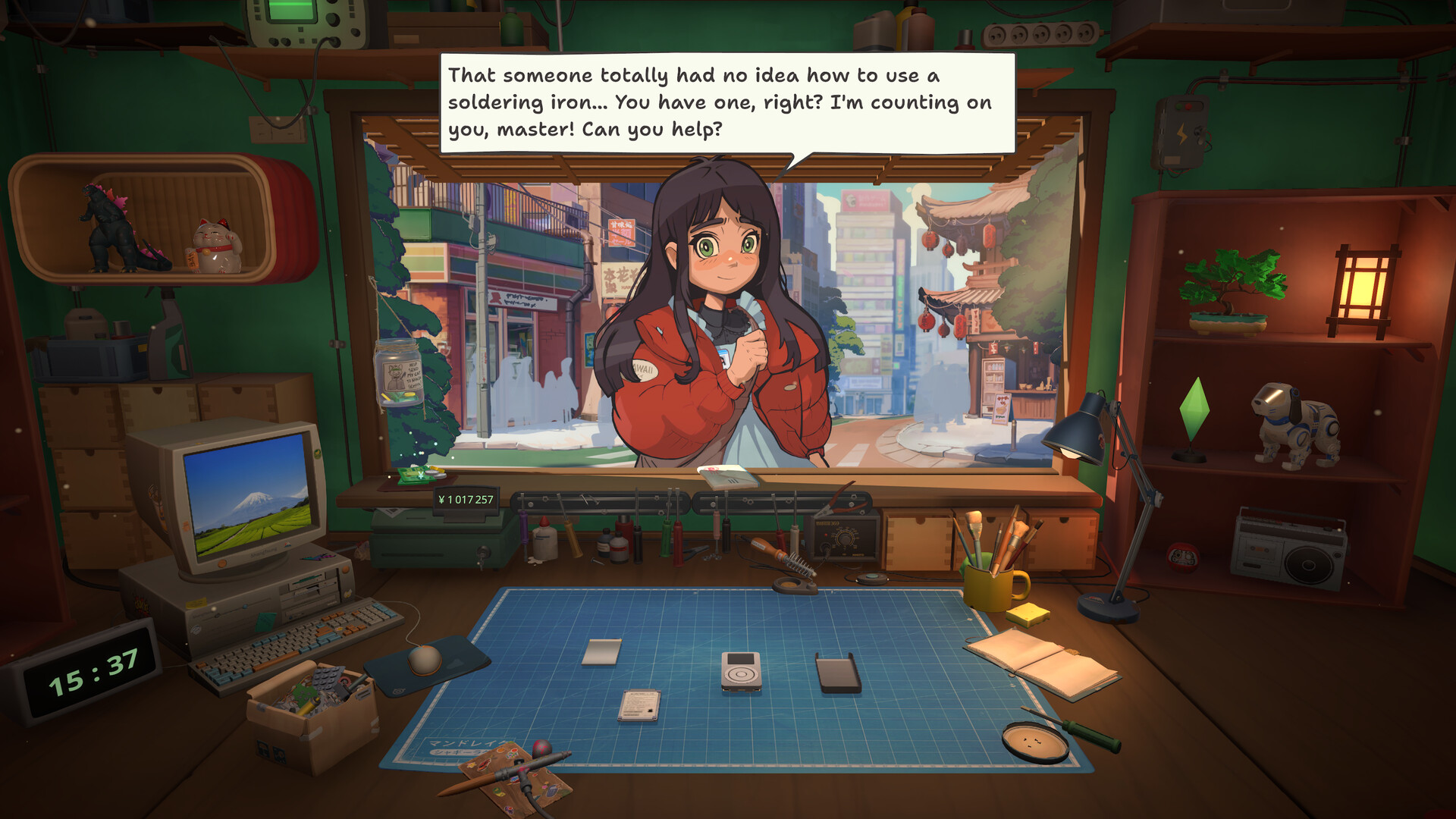
The specificity matters. Old phones, handhelds, music players, and other familiar devices carry tactile and emotional associations. Repair creates a reason to inspect them rather than display them as decoration. The object becomes a mechanical puzzle and a story prop at the same time.
The September 6 report noted an external estimate of roughly 500,000 copies. That figure is not an official disclosure and is not treated here as fact. The verified review total, positive share, and live-player snapshot are sufficient to establish continuing traction.
The loop: diagnose, disassemble, restore, relate
A customer brings in a device and a problem. The player examines symptoms, removes components, cleans damage, replaces or repairs parts, reassembles the unit, and tests the result. Payment and reputation support improvements to the shop and access to additional work.
The mechanical loop is legible because each job has a visible before-and-after state. Dirt disappears, parts come apart, and a dead object becomes functional. That physical transformation supplies the satisfaction that a spreadsheet-only business simulator must create through numbers.
Customer conversations add context and pacing. A broken device can represent a relationship, memory, or personal decision. The narrative layer gives routine tasks a reason to differ even when tools are reused. It also lets the game create stakes without turning a low-pressure workshop into a survival economy.
Why the nostalgia is functional
Many cozy games use a broad warm palette and generic small-town friendliness. ReStory anchors its atmosphere in recognizable electronics and an era when personal devices felt less sealed and disposable. The repair process makes that nostalgia interactive.
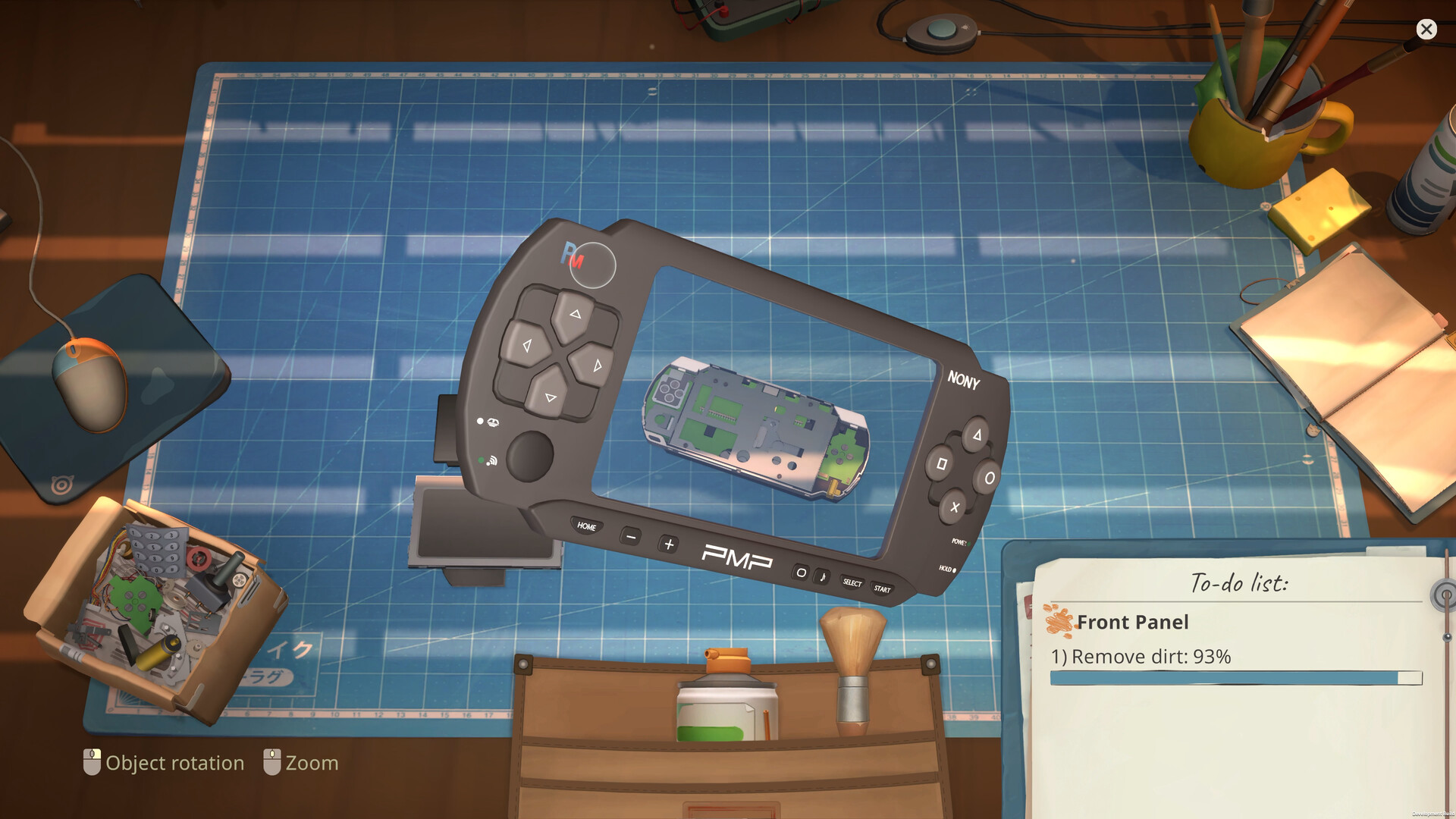
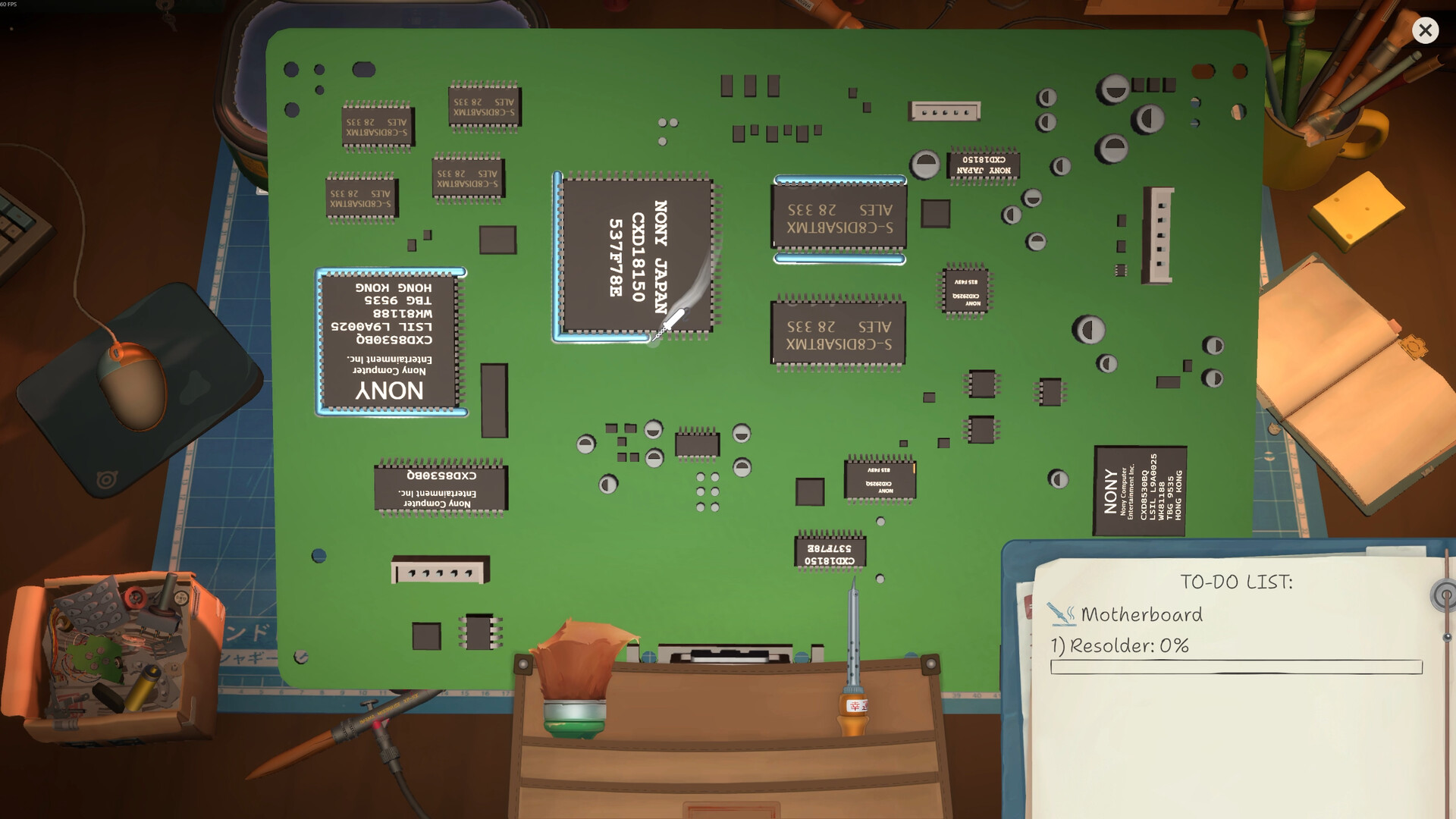
The design is efficient for a small or mid-sized team. A curated set of detailed objects can support many steps, faults, customer stories, and visual states. The same workbench and shop remain useful throughout the game. Content cost moves into object fidelity, animation, writing, and the combinatorics of repair rather than a giant traversable world.
That concentration raises the quality bar. If screws are hard to select, instructions are unclear, or reassembly becomes repetitive, the main pleasure collapses. A game about careful work must make the interface feel precise without simulating every inconvenience of real repair.
What players repeatedly praise and criticize
We reviewed bounded recent samples of up to 50 positive and 50 negative Steam reviews and compared them with the full aggregate. Positive feedback repeatedly highlights the soothing repair rhythm, detailed object interaction, early-2000s atmosphere, customer stories, and the satisfaction of restoring a device. Players also value that the jobs feel concrete rather than abstract.
The negative sample clusters around repetition, occasional interface or interaction friction, bugs, limited depth in some repair procedures, and pacing or narrative preferences. Some complaints suggest that an object can become a sequence of prescribed clicks once the player understands its solution. Others want broader customization or more variation across later jobs.
These patterns summarize self-selected public reviews; they do not copy individual sentences or represent every player. The negative pool contains 455 reviews, enough that its recurring issues should not be dismissed. Yet a 95.4% positive share across 9,834 reviews is an unusually strong consensus.
What it means beside other simulators
ReStory sits near repair simulators, shop-management games, and narrative cozy titles. Compared with a broad retail simulator, it emphasizes craftsmanship over stocking and price optimization. Compared with a restoration game, customer stories and the 2000s setting give each job a social identity. Compared with a puzzle game, the shop provides longer-term continuity.
Its strongest competitive lesson is that “cozy” becomes more marketable when attached to a concrete verb and a recognizable material culture. Repairing a translucent handheld is easier to imagine than “living a relaxing life.” The object advertises the interaction.
The ceiling may depend on procedural depth. Once every tool and fault type is familiar, narrative variety must carry more weight. Additional devices help only if they create new diagnostic choices rather than cosmetic shells around the same sequence.
Who should buy—and the purchase caution
Buy if you enjoy methodical object interaction, light management, customer vignettes, and nostalgia for personal electronics. The live-player count is healthy for a mostly solo simulation where matchmaking is irrelevant, and the review consensus is strong.
Wait if you dislike repeated step-by-step procedures or need a highly realistic electrical-engineering simulation. Watch current gameplay to judge whether the interaction model feels satisfyingly precise or too guided for your preference.
Players buying mainly for story should check how recent reviewers describe pacing and character tone. Players buying mainly for systems should look for discussion of late-game diagnostic variety.
IndieGame.party verdict
ReStory demonstrates that a small physical workspace can support a large commercial idea when every object carries mechanical and emotional meaning. One month after release, its 9,834-review pool and 95.4% positive share show that the promise survived contact with a broad audience.
The verdict is recommended for cozy-simulation and restoration fans, with a repetition caution. Its durable advantage is specificity: not a generic shop, but a place where yesterday's electronics arrive with both faults and memories.
Data and image sources
- Official Steam store page: https://store.steampowered.com/app/3812600/ReStory_Chill_Electronics_Repairs/
- Steam public review summary and current-player endpoints, checked September 8, 2026 at approximately 7:25 p.m. MYT.
- Review-pattern summary used bounded samples of up to 50 recent positive and 50 recent negative public reviews; individual wording was not reproduced.
- All four images are official Steam store assets supplied by Mandragora and tinyBuild, downloaded locally on September 8, 2026 for identification, reporting, and criticism. They are not composited or materially altered.