Parisian Bistro Simulator Launches With Strong Reviews and a Clear Co-op Service Loop
Parisian Bistro Simulator arrives with a broader promise than its cozy street-corner presentation suggests. Players serve food directly, manage inventory and staff, tune a menu, expand across floors, and eventually open a rooftop overlooking a stylized Paris. Up to eight people can share the work—or create a different kind of restaurant chaos.
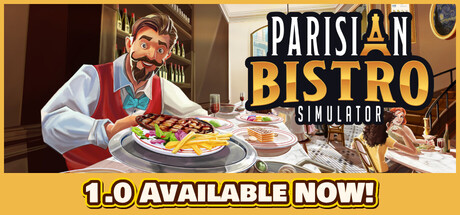
Parisian Bistro Simulator arrives with a broader promise than its cozy street-corner presentation suggests. Players serve food directly, manage inventory and staff, tune a menu, expand across floors, and eventually open a rooftop overlooking a stylized Paris. Up to eight people can share the work—or create a different kind of restaurant chaos.
At 13:17 MYT on September 19, Steam's public endpoints showed 284 current players and 572 public reviews: 535 positive and 37 negative, or 93.5% positive. That review base is much larger than most one-day launches because the game spent time in early access before its September 18 full release. The current audience and review history together support a credible 1.0 signal, but they should not be mistaken for day-one sales.
This is a launch analysis based on official material and public review patterns, not a hands-on review.
Why it matters now
Version 1.0 gives Parisian Bistro Simulator a cleaner market moment and a feature-complete pitch: run the restaurant alone or in online co-op, expand the building, and progress from direct service toward management. The Eiffel Tower, detailed dishes, and rooftop provide instantly recognizable trailer material.
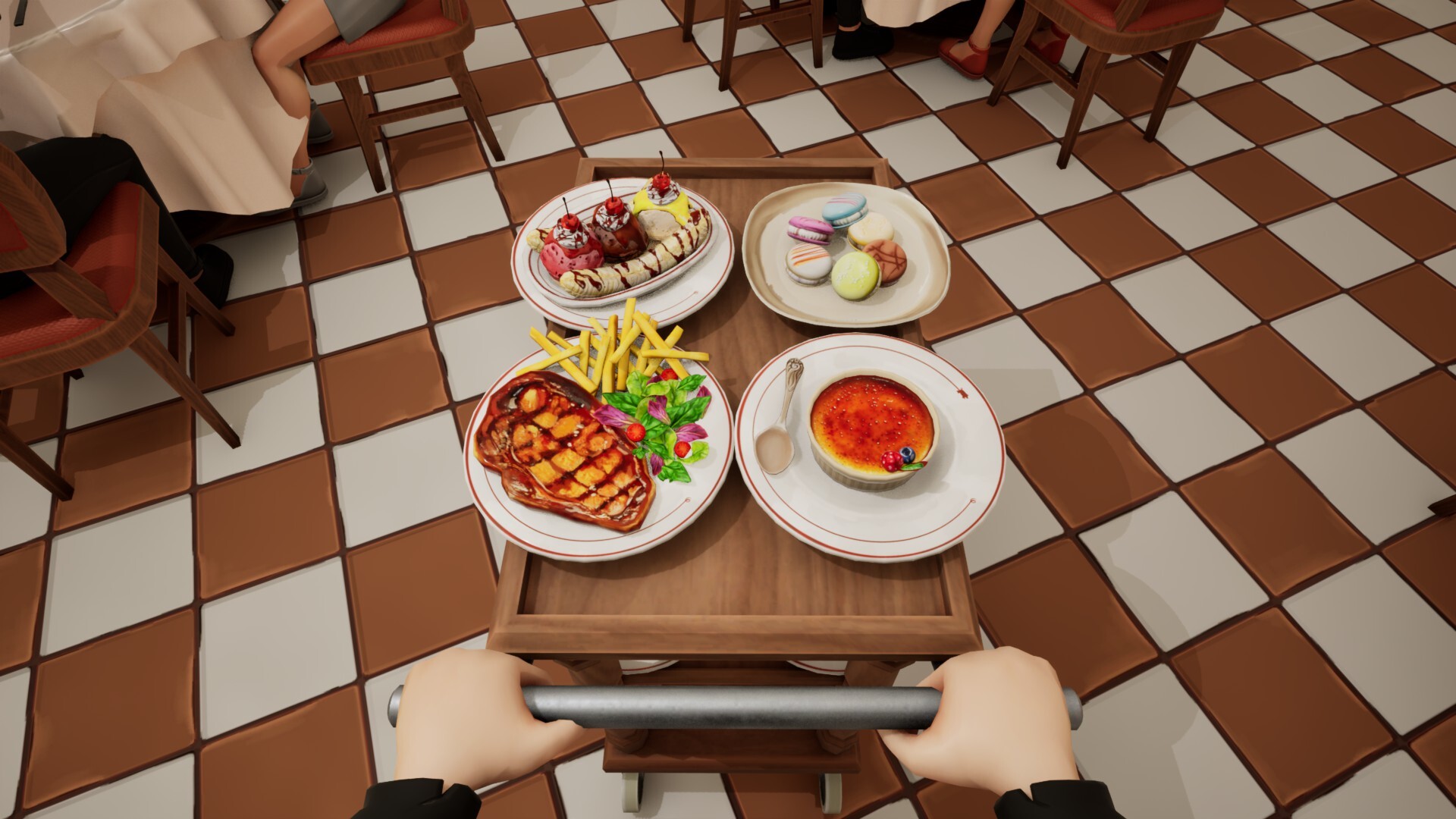
The game's strongest commercial signal is not raw concurrency. A current count of 282 is healthy but modest. The stronger evidence is the combination of hundreds of reviews, a 93.5% positive share, and comments spanning dozens of hours. The early-access period gave Quark Studios time to expand systems and respond to feedback before the full-release label.
The morning report selected the game because the labor can be distributed naturally. Ordering, cooking, carrying, seating, cleaning, restocking, and management are already distinct roles. Co-op emerges from the simulation instead of being attached as a separate mode.
Genre, platform, and release state
Steam lists the game as a released Windows title across casual, indie, simulation, and strategy categories. It supports single-player, multiplayer, online co-op, achievements, full controller support, cloud saves, and family sharing.
The official page advertises co-op for up to eight players. That is unusually large for a restaurant simulator and changes the design requirement. A two-player kitchen can rely on conversation and improvisation; eight players need sufficient simultaneous jobs, navigation space, and communication.
The game also asks more from hardware than its stylized look might suggest. Its listed recommended specification includes a modern midrange graphics card and 16 GB of memory. Buyers on older laptops should compare the requirements and recent performance reports rather than assuming every cozy simulator is lightweight.
The core loop: service first, management later
The early loop is direct and physical. Players order supplies, prepare or collect menu items, seat customers, deliver food, clear tables, and close out service. Revenue funds staff, furniture, menu growth, and building expansion.
As the bistro grows, management becomes more important. Hiring and training employees can automate basic tasks. Menu selection and expected customer preferences change demand. New floors, a terrace, and a rooftop increase capacity while creating longer delivery routes.
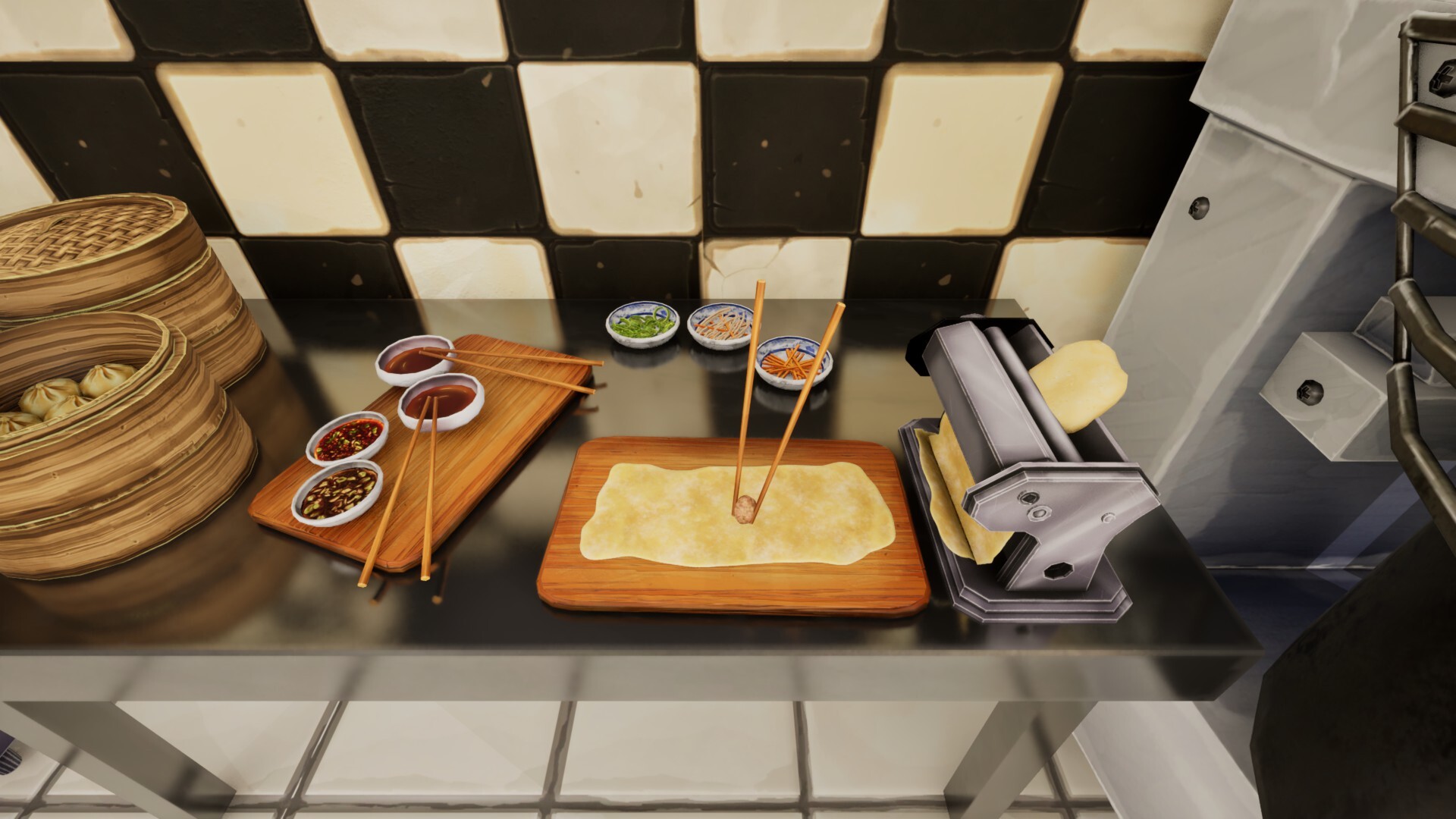
This produces a useful progression fantasy: the player begins inside every task, then designs a service system. The risk is that successful automation removes the most enjoyable interactions. A late game that plays itself can feel like a reward to optimization fans and an empty restaurant to players who bought the tactile serving fantasy.
Co-op helps preserve activity. Friends can keep cooking and serving even after staff become available, or divide floors and specialties. Public lobbies, however, need communication tools and clear ownership rules so players do not work against each other accidentally.
Verified public snapshot
The September 19 check supports these facts:
- version 1.0 release: September 18, 2026;
- platform: Windows through Steam;
- modes: solo, multiplayer, and online co-op for up to eight players;
- current players at 13:17 MYT: 284;
- public reviews: 572 total, with 535 positive and 37 negative;
- calculated positive share: 93.5%;
- Steam summary: Very Positive;
- official unit-sales, revenue, refund, and retention figures: not available.
Because reviews accumulated through early access, they represent more than the 1.0 build. That is useful for identifying long-running strengths, but it prevents attributing the whole review count to one launch day.
What players repeatedly like
Positive reviews praise the atmosphere, appetizing food presentation, extensive unlocks, and the transition from hands-on service to running a larger operation. Many players say the game contains more management depth than its initial presentation implies.
Co-op comments emphasize teamwork and comic interference. Friends can divide work efficiently, but they can also throw items, distract each other, or improvise around a rush. That social elasticity is valuable: the game supports optimization and playful disorder using the same systems.
The developer's update frequency and responsiveness appear repeatedly in reviews across languages. That is especially important for an early-access graduate. Players are not only approving the concept; many believe the product improved in response to feedback.
Long playtimes in the public sample suggest that the unlock structure can sustain dedicated simulation fans. This is not proof of median retention, because highly engaged players are more likely to write detailed reviews, but it is evidence that substantial content exists for some buyers.
The complaints: expectation gaps and late-game automation
Several critical reviews focus on the boundary between cooking and restaurant management. Promotional scenes show food preparation, but some players expected a deeper recipe-by-recipe cooking simulator. The game appears more focused on the whole service business than on manual culinary complexity.

Tutorial experiences vary. Some reviewers call the onboarding detailed and friendly; others report being unable to understand a basic preparation task. That conflict suggests that guidance may work for the intended sequence but break when a player misses a prompt or approaches a station out of order.
Technical complaints include crashes, sandbox limitations, object-placement oddities, and AI confusion. One severe crash report should not be generalized to all systems, especially when another reviewer praises optimization, but it is a reason to check hardware-specific reports.
The late game can become passive after employees automate service. Players ask for better staff control, floor-specific deliveries, more restaurant ratings, and more reasons to intervene. The design must ensure that expansion creates decisions rather than merely longer travel paths.
How it compares with restaurant co-op games
Parisian Bistro Simulator sits between first-person job simulators, management games, and frantic co-op kitchens. It is less abstract than a tycoon spreadsheet because players physically carry and serve items. It is less level-based than Overcooked-style games because the restaurant persists and grows.
The differentiator is continuity. A shift is not a self-contained score attack; it contributes to staffing, layout, menu, and new floors. That persistent ownership can deepen attachment to the space.
The cost is complexity. Customer preferences, weather or event effects, inventory, staffing, black-money or casino mechanics mentioned by reviewers, building expansion, and direct service all compete for clarity. Every additional system must reinforce the restaurant fantasy rather than distract from it.
Who should buy—and who should wait
The game is a strong match for players who enjoy restaurant management, first-person task loops, decorating, gradual automation, and cooperative chaos. Existing positive review volume makes it less speculative than many launch-day simulators.
Wait if your priority is detailed manual cooking, fully proven public-lobby communication, low-end hardware performance, or a late game that always demands direct action. Solo players should decide whether hiring staff and optimizing systems sounds like progression or like losing the hands-on game they enjoyed.
IndieGame.party verdict
Parisian Bistro Simulator is a credible 1.0 restaurant-management release with a strong review base and a naturally social task structure. Its main strength is the shift from serving one table to operating a larger institution. Its main risk is allowing automation and feature breadth to dilute the tactile restaurant work.
Our verdict is recommended for management-minded co-op groups and simulation fans; cautious for buyers seeking a deep cooking game.
Data and image sources
- Official Steam listing and developer materials: https://store.steampowered.com/app/3058360/
- Steam public review endpoint: https://store.steampowered.com/appreviews/3058360?json=1&language=all&purchase_type=all
- Steam public current-player endpoint: https://api.steampowered.com/ISteamUserStats/GetNumberOfCurrentPlayers/v1/?appid=3058360
- Market snapshot checked September 19, 2026 at 13:17 MYT.
- The hero and three in-article images are official Steam store assets, © Quark Studios and Gamersky Games, downloaded from the official listing on September 19, 2026, stored locally without compositing, and used in the minimum scope needed to identify and analyze the game.