
Only Luck Asks You to Roll Five Sixes, Then Quietly Changes the Odds
Five sixes is a 1 in 7776 roll. I know this because I once lost a board game night to that exact probability, and I have never fully recovered. Only Luck, a pixel-art dice clicker from DNN GAMES, opens with that number and then asks the only question that matters: what if you could make it 1 in 10? That is not a promise of skill. It is a promise of upgrades, and I am a sucker for a promise of upgrades.
The pitch is the punchline
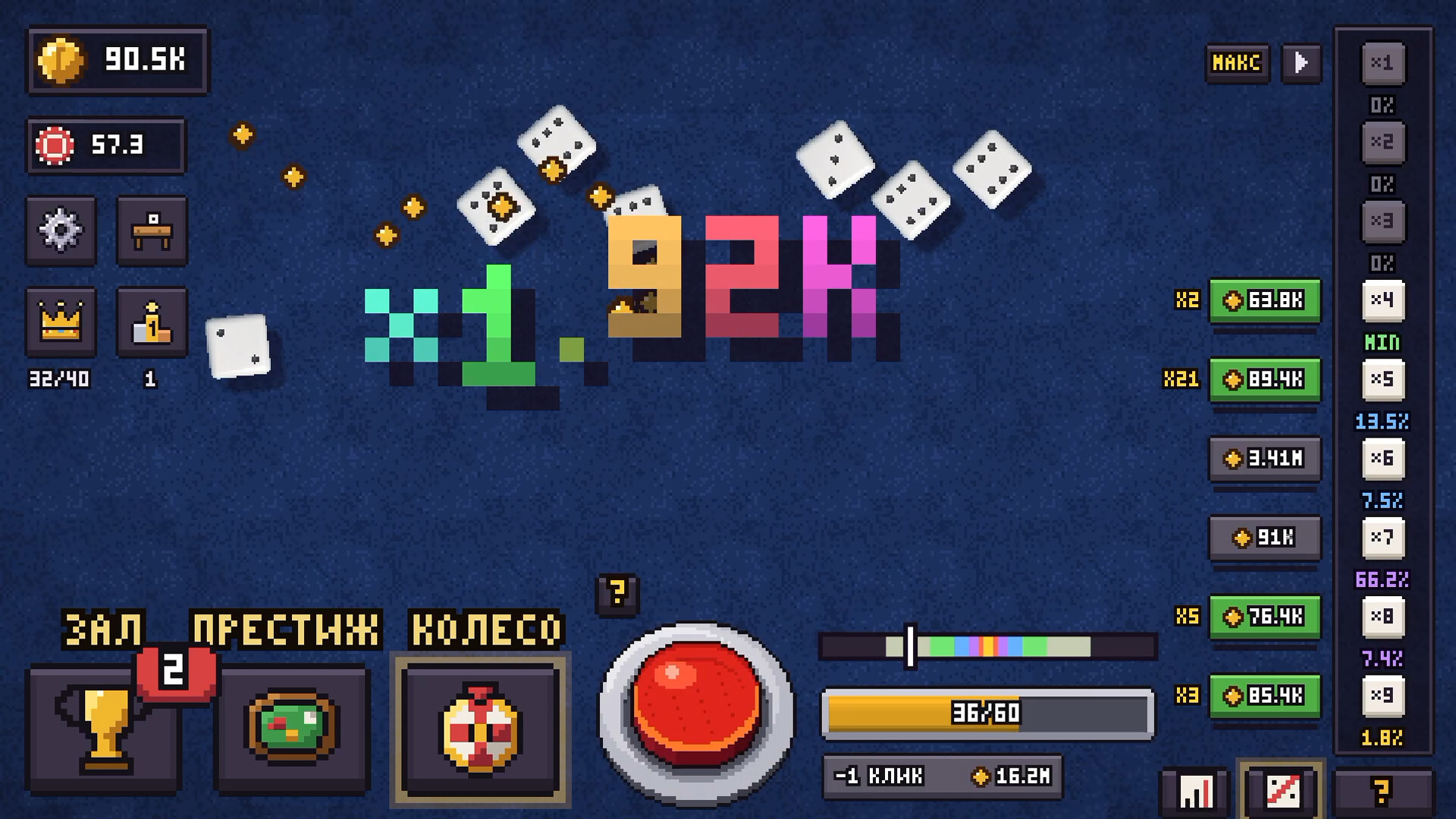
You click to charge a throw, then toss up to nine dice. The goal is to collect 1100 rare combinations, farm coins, and earn prestige chips. The store page lists these as bullet points, but the joke is in the gap between the first sentence and the last: you start with impossible odds, and you end with a table so upgraded that the impossible becomes routine.
It is the same arc as Balatro, where a bad poker hand becomes a nuclear bomb after enough joker synergies, but here the fantasy is simpler and more primal. You are not building a deck. You are building a dice table that quietly cheats in your favour.
The store description leans into this with a line about bending the rules, and the 1100 combinations suggest that the bending is not just a marketing flourish but the core of the progression. The pitch is essentially a mathematical joke: start with the worst odds imaginable, then upgrade until they are merely bad, then merely okay, then suspiciously good. The pleasure is in watching the number 7776 shrink.
What you actually do, minute to minute
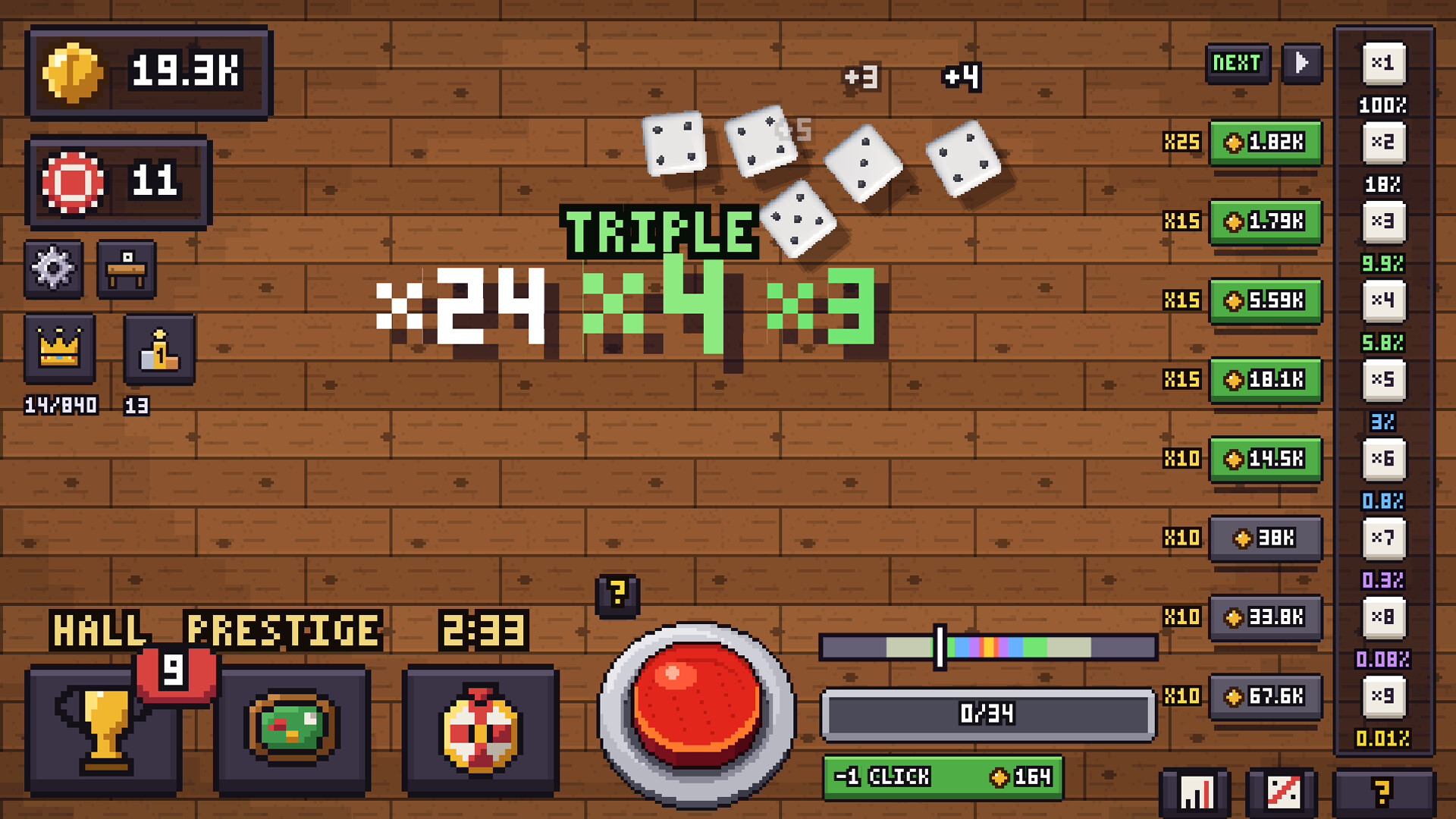
The loop is click, charge, toss, collect. That is it. The depth comes from the upgrade tree: better tables, more dice, a Wheel of Luck that boosts your odds, and prestige chips that let you bend the rules. The store description says "then bend the rules" in all caps, which is the kind of line that could be empty marketing or a genuine design philosophy. Given the 1100 combinations, I suspect it is the latter.
The collection is the carrot: each rare roll you tick off is a small dopamine hit, and the prestige chips are the stick that keeps you rolling after the novelty of five sixes wears off. It is a clicker, so the moment-to-moment is deliberately thin. The question is whether the progression curve is thick enough to carry it.
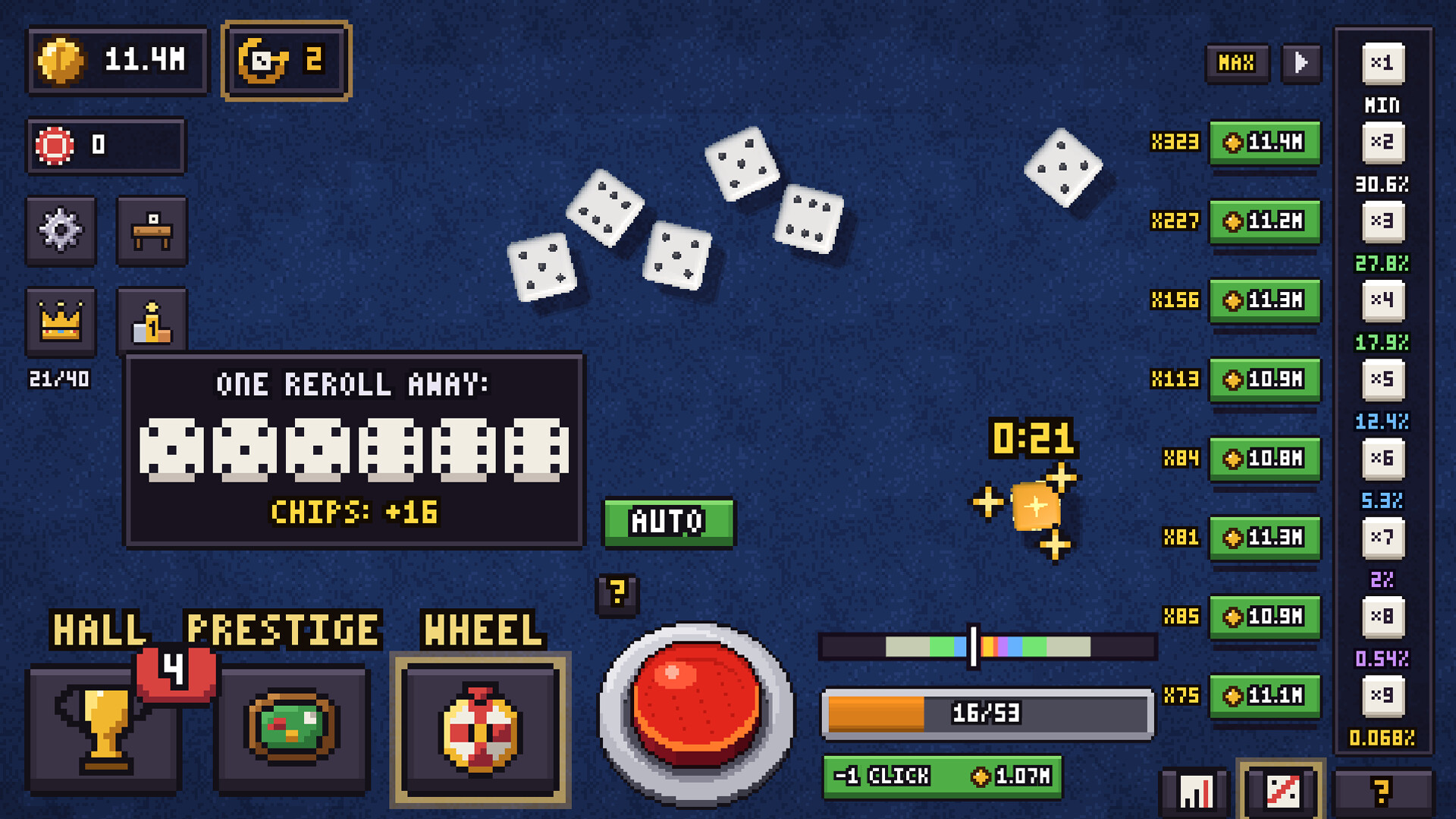
The Wheel of Luck adds a slot-machine thrill to the proceedings, a random boost that might shave a few points off your odds or grant a temporary multiplier. The prestige chips sound like a reset mechanic, the kind that wipes your progress in exchange for a permanent boost. That is a proven structure, but it lives or dies on how generous the boost feels.
If the first prestige reset gives you a meaningful shortcut, the loop has legs. If it feels like a tax, the loop collapses into busywork.
The Balatro comparison is unavoidable, and Only Luck knows it
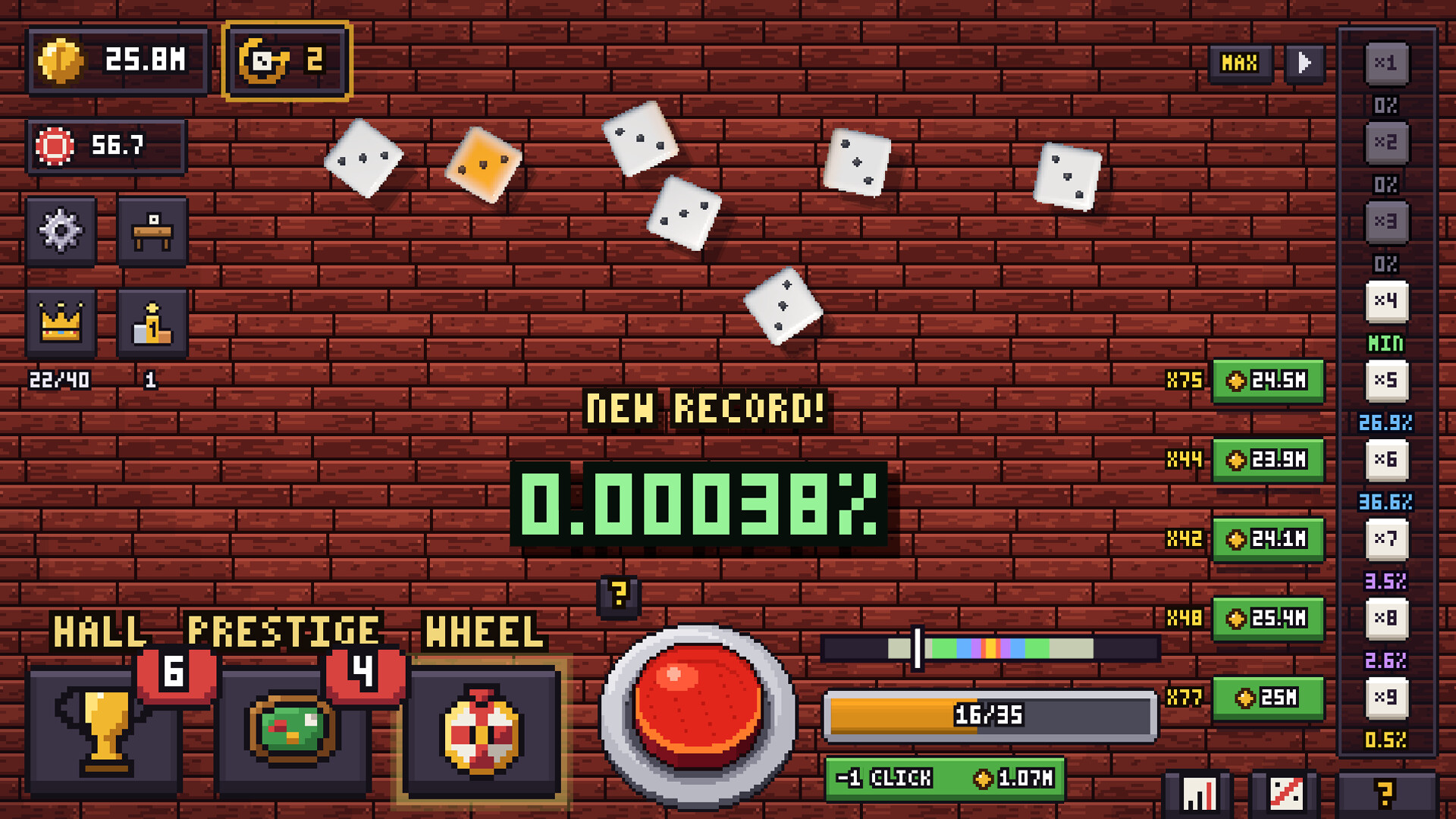
Balatro turned a simple card game into a roguelike obsession by making every run a puzzle of multipliers and synergies. Only Luck borrows the collection log and the prestige reset, but it swaps the deck for dice and the poker hands for combinations. The difference is agency: in Balatro you are constantly making choices about which jokers to buy and which hands to play.
In Only Luck, the choice seems to be which upgrades to prioritise and when to spin the Wheel of Luck. That is a narrower decision space, and it might be enough for a casual clicker, but it is not the same kind of brainworm. The pixel art and the casual tag suggest DNN GAMES is aiming for something you play while listening to a podcast, not something you lose a weekend to. That is a fine ambition, but it is a different one.
Balatro demands your attention; Only Luck seems content to reward your patience. The collection log in Balatro is a record of your cleverness; in Only Luck, it is a record of your persistence. Both are valid, but they scratch different itches.
The numbers are not the story yet
Only Luck is coming soon, with no price listed and zero current players at the time of writing. That is not a red flag; it is a pre-release game with no reviews and no player count to interpret. The store page has no player quotes yet, so I cannot tell you what players are saying.
What I can tell you is that the hook is specific and the math is on its side: 1100 combinations is a lot of carrots, and the prestige chip loop is a proven structure. The risk is that a clicker with no hands-on coverage yet is a clicker you have to take on faith.
The trailer and the store description are all we have, and they are promising a progression fantasy that only works if the upgrade tree is deep enough to make the early grind feel like investment rather than busywork. The absence of a price is also a small unknown: a budget price would signal a casual diversion, while a mid-tier price would suggest more substantial systems.
Without that signal, the game's ambitions remain a question mark.
What the game does that its comparisons do not
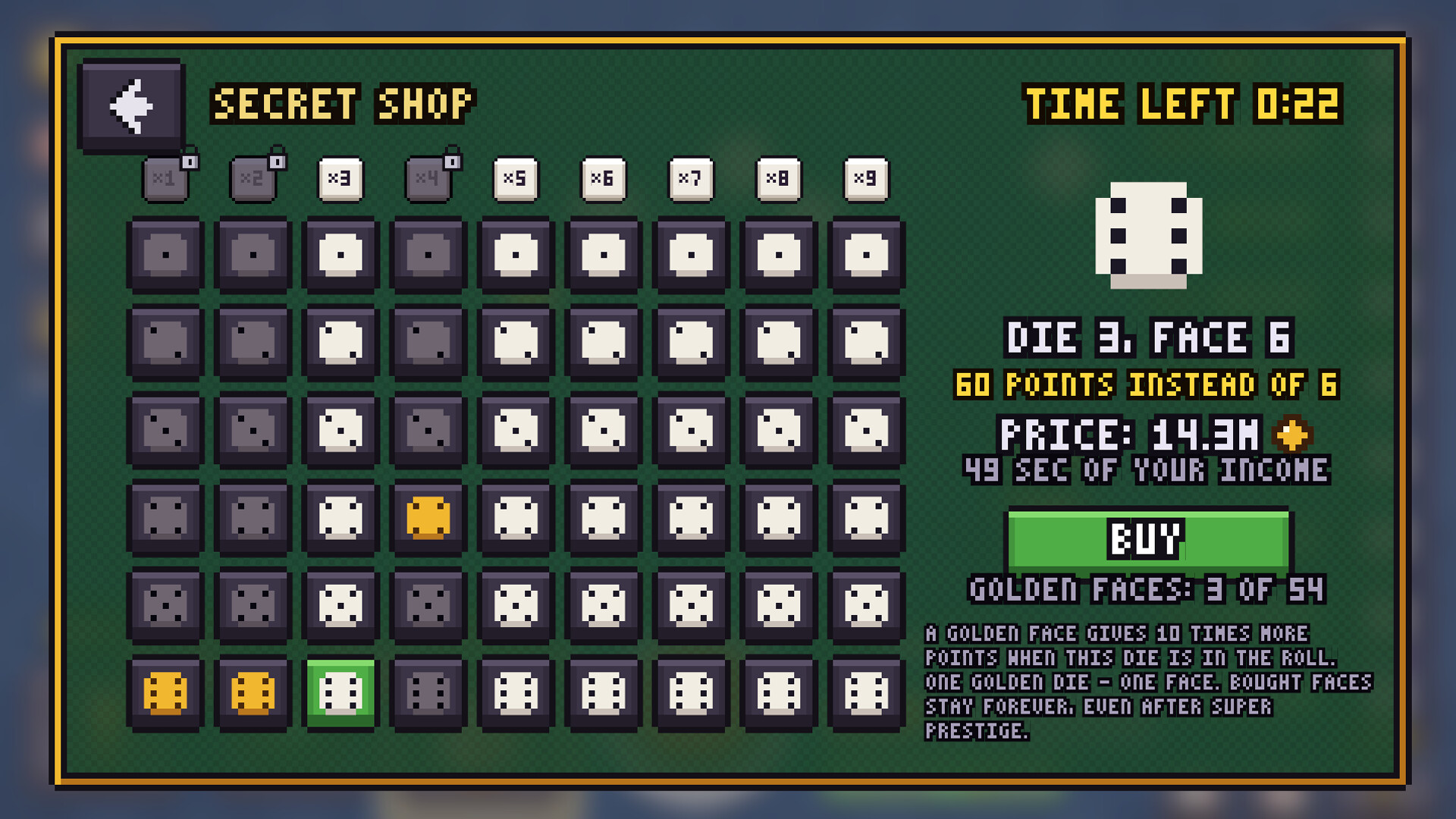
Where Only Luck diverges from both Balatro and the standard clicker is in its explicit embrace of probability as a tangible object. Balatro abstracts odds into deck composition and joker effects; you rarely see a percentage tick down in real time. Only Luck puts the number 7776 on the store page and then lets you watch it shrink as you upgrade.
The Wheel of Luck is a literal randomiser, a mechanic that admits the game is a gamble and then gives you a lever to adjust the gamble. That is a different fantasy from Balatro's deterministic puzzle-solving or a clicker's endless incremental growth. It is the fantasy of the casino floor, where the house edge is real but you can buy your way to a better seat.
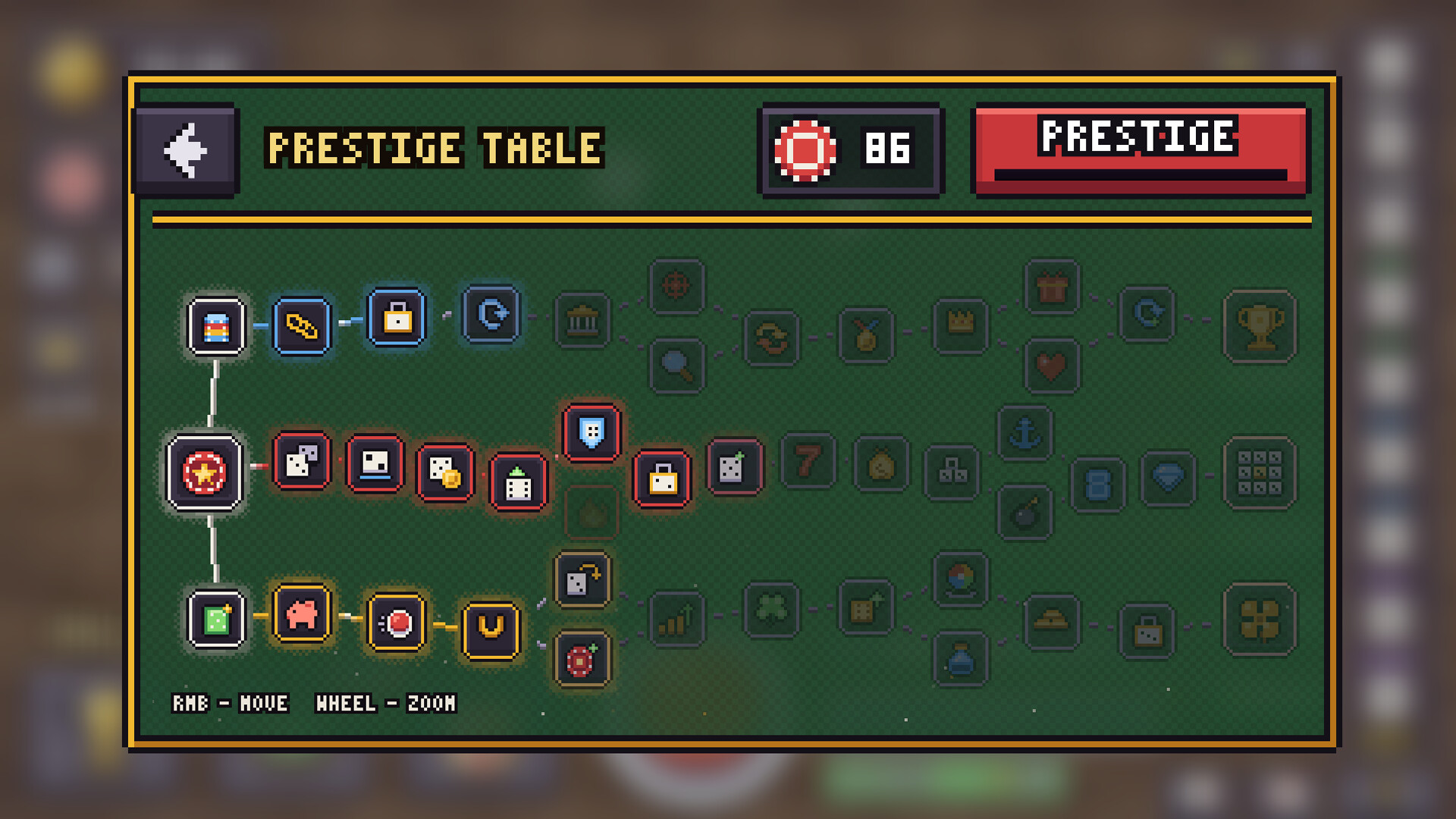
The prestige chips sound like a way to cash out your progress for a permanent advantage, which is a more explicit bargain than most clickers offer. Most clickers hide their math; Only Luck seems to be putting it on the table.
The community reaction so far
The game is unreleased, so the community reaction is thin on the ground. The store page has no player quotes yet, and the player count sits at zero. That means the conversation is happening in wishlists and forum threads rather than reviews. Without a demo or a release date, the community is essentially reacting to a pitch and a trailer.
That is not nothing: a trailer can communicate tone and loop in a way that a store description cannot. But it is also not the same as hands-on feedback. The risk is that the game's specific hook, the 7776-to-1-in-10 fantasy, is exactly the kind of thing that sounds great in a trailer and feels grindy in practice. Until players can actually roll the dice, the community reaction is a promise rather than a verdict.
Who should skip it
If you need a game with a narrative, a protagonist, or a reason to care about anything other than a number going up, Only Luck will not convert you. It is a casual indie with a Windows release and a single mechanic: roll dice, collect combos, upgrade table. If you bounced off Balatro because the poker hands felt like homework, this might be the gentler version.
If you bounced off clickers because they felt like a second job, this might not be different enough. The honest reservation is that a game about bending the rules has to earn its own rule-bending; the prestige chips need to feel like a clever shortcut, not a grind tax. Until there are reviews, that is a gamble.
Why it is worth a wishlist
The best indie games are the ones that take an absurd premise and treat it with dead seriousness. Only Luck is about the joy of beating probability, and it has the good sense to put the number 7776 on the store page. That is a design statement: we know the odds are ridiculous, and we are going to make them feel fair. DNN GAMES is an unknown quantity, and the game is coming soon with no price and no player count to back it up.
But the collection log is a proven hook, the pixel art is charming, and the promise of a table that turns 1 in 7776 into 1 in 10 is exactly the kind of small, specific fantasy that makes a clicker worth trying. I will be watching the reviews when they land. If the upgrade tree is half as satisfying as the premise, this is a quiet winner.