One Last Hand Has a Great Friend-Group Hook—and a Matchmaking Problem
One Last Hand turns secret card auctions, poker hands, and rule-breaking relics into a compact social betrayal machine. Its verified Steam signal is mixed: 100 reviews with 74% positive sentiment, but only two players online at our September 18, 2026 check. This is a market analysis based on store data and public review patterns, not a hands-on review.

One Last Hand turns secret card auctions, poker hands, and rule-breaking relics into a compact social betrayal machine. Its verified Steam signal is mixed: 100 reviews with 74% positive sentiment, but only two players online at our September 18, 2026 check. This is a market analysis based on store data and public review patterns, not a hands-on review.
Why it is visible now
The September 18 indie-market report highlighted an unusual launch story. Fire Brick Games says roughly 11,000 wishlists converted into about 12,000 copies during the first two weeks, with around 90% of sales coming from China. Those figures are developer-reported and were not independently audited, so they should be treated as a case study rather than a verified sales record.
What can be verified is the Steam footprint. The game launched on August 14 at $6.99. At 13:25 MYT on September 18, Steam's public review endpoint returned 100 reviews, 74 positive, and a “Mostly Positive” label. Steam's public player-count endpoint showed two concurrent users. That does not capture private sessions or players offline, but it confirms that open matchmaking is thin at this moment.
The contrast explains the article. A party game can sell meaningfully through creators and friend groups while retaining too little public concurrency for a reliable stranger queue.
Genre, platform, and release state
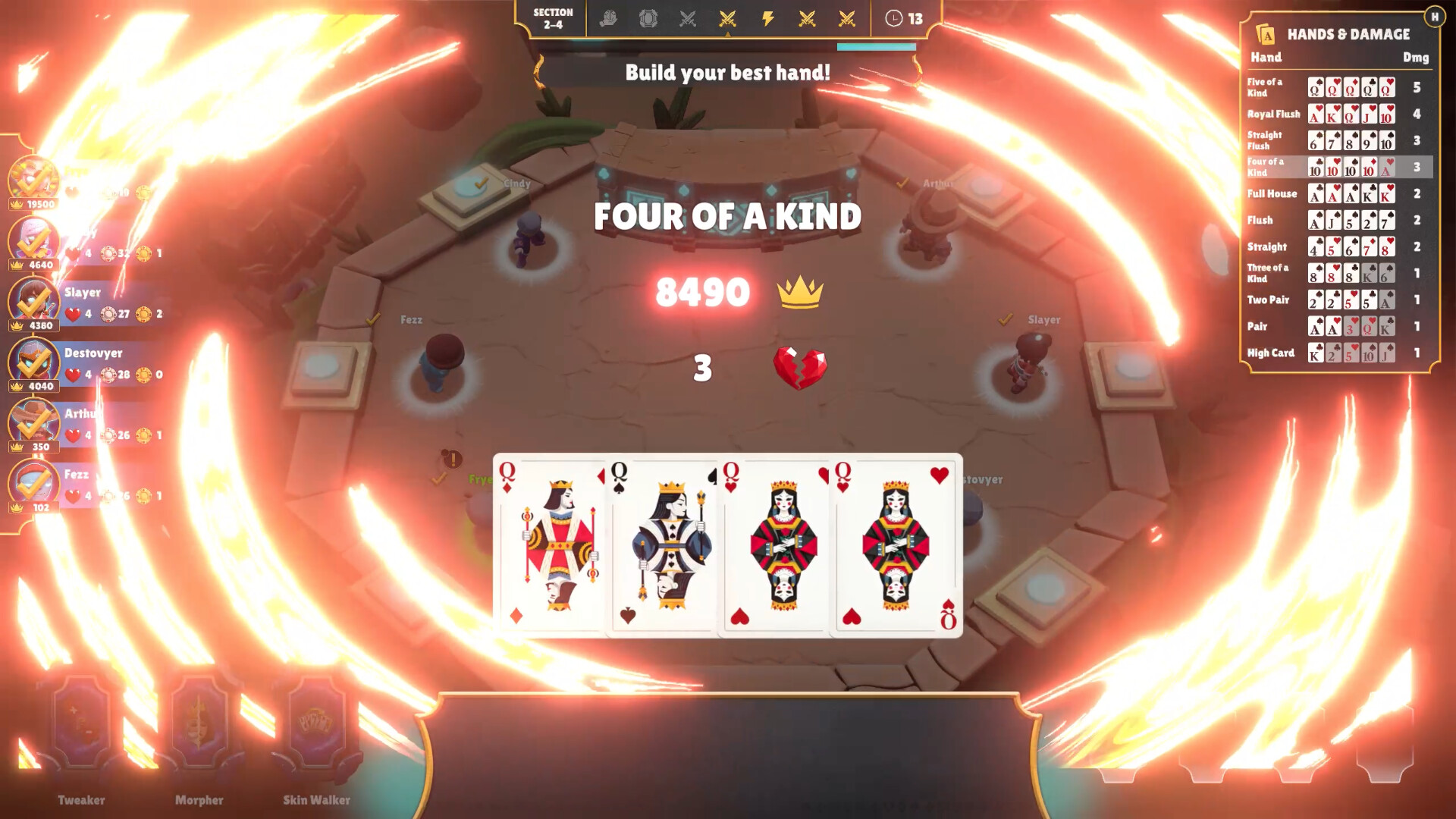
One Last Hand is a released 2–6 player online party card battler for Windows and macOS. It includes single-player support and bots, though the store pitch is built around private multiplayer. The structure borrows recognizable poker hands without trying to simulate poker as a sport.
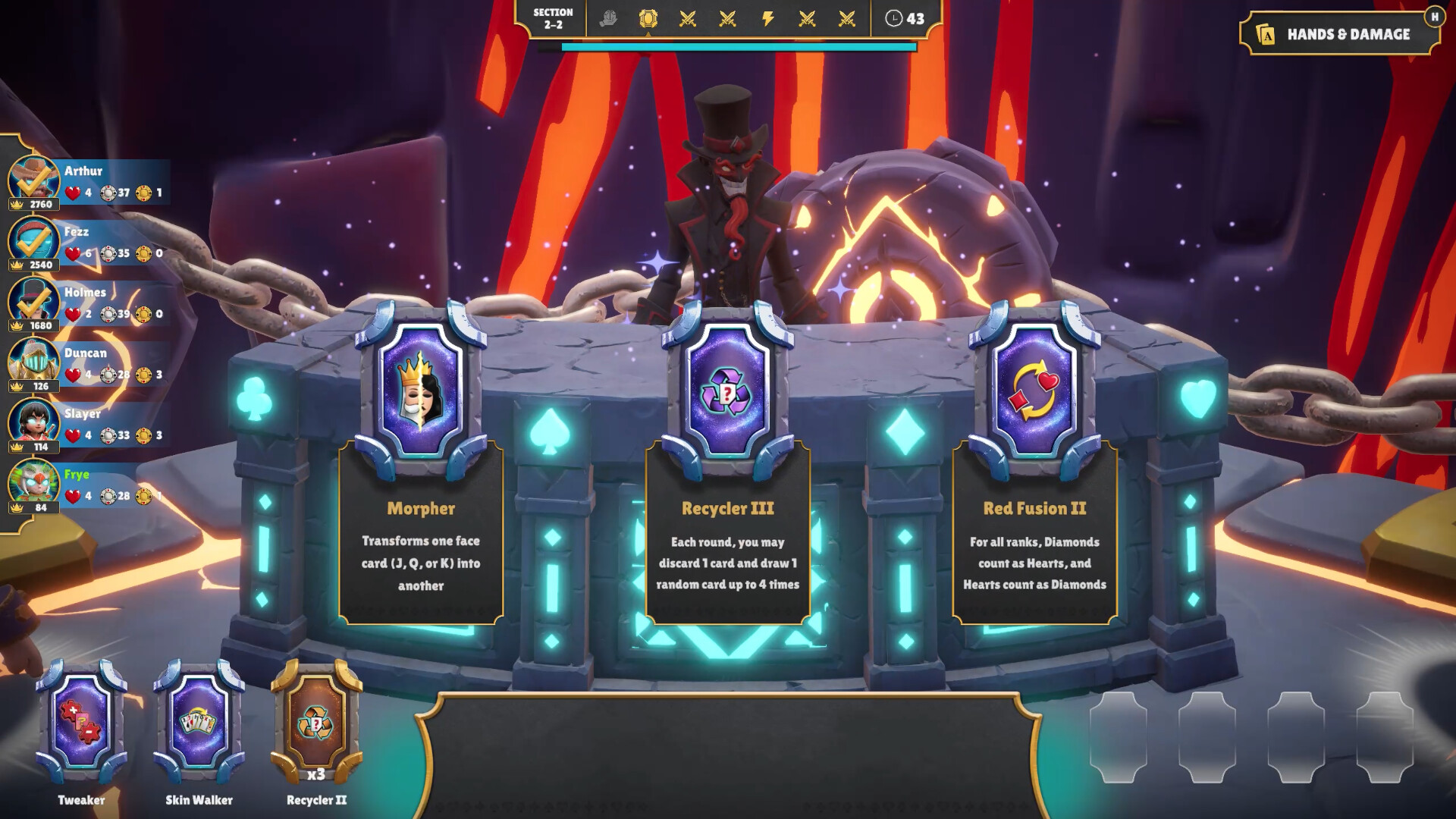
Players secretly bid for individual cards, assemble an attack hand and backup defense, then apply relics and power-ups that can alter suits, values, survival, or possible combinations. The result is closer to a social roguelike battler than a traditional card room.
That distinction matters for buyers. Competitive-card players who want stable probability and restrained interaction may find the modifiers arbitrary. A voice-chat group that enjoys revenge, bluffing, and public reversals is the intended audience.
The core loop and differentiation
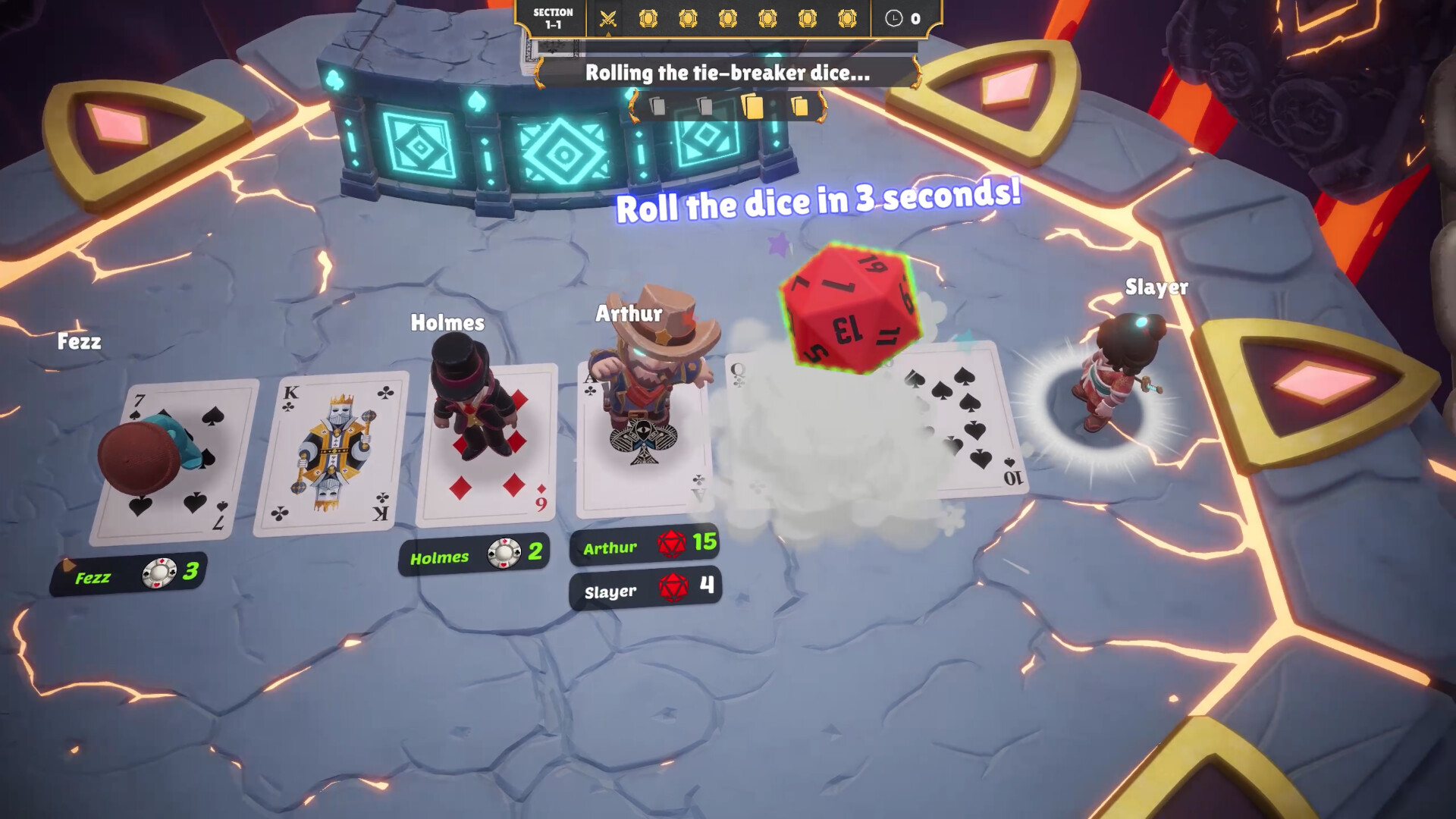
The cleanest part of the design is that card acquisition creates player interaction before combat begins. A card has three possible values: it improves your hand, blocks an opponent, or reveals what another player may be building. Secret bids convert familiar poker information into a social auction.
The finished hand then becomes an attack rather than a score. That gives pairs, straights, flushes, and five-of-a-kind an immediate visual consequence. Relics destabilize the table by changing what combinations are possible. Strong modifiers create comeback stories, though the same system can undermine strategic trust when one effect dominates.
The game differentiates itself from poker by making denial and sabotage explicit. It differentiates itself from *Balatro*-style solo deckbuilding by directing the combo at other people. The strongest matches should generate a narrative every round: who overpaid, who lied, who completed an absurd hand, and who became the table's target.
Current market signal
The verified snapshot is small but readable:
- Steam price: $6.99 in the United States.
- Release date: August 14, 2026.
- Lifetime public reviews: 100.
- Positive reviews: 74, or 74%.
- Public concurrent players: 2 at 13:25 MYT on September 18.
- Developer-reported early result: approximately 12,000 copies in two weeks from 11,000 wishlists, not independently verified.
Review count is not sales. Concurrent players are not total daily users. The two-player reading can understate coordinated private sessions, but it is highly relevant to a product that advertises online play.
The sales claim and low concurrency can coexist. A concentrated creator campaign may drive purchases; a fixed friend-group requirement, host migration problems, and shallow long-term content may then reduce public activity.
What players repeatedly praise and criticize
We sampled the 100 public reviews returned by Steam's recent-review query. Positive reviews repeatedly describe the game as easy to learn, chaotic with friends, and more strategic than its party presentation suggests. Several compare the combination-building to *Balatro*, while praising secret bidding, bluffing, revenge, and the “one more round” rhythm.
The repeated complaints are more operational. Players report unstable connections, crashes, no reconnection after a drop, and entire sessions ending when a host leaves. Several say public rooms are difficult to fill. Bot skill is described as weak, reducing its value as a substitute for absent players.
Balance is the other recurring concern. Reviews cite overpowered ace-conversion or duplication effects and argue that a few relics overwhelm bidding strategy. Some players also say the full release adds too little over the demo, and that the content pool becomes familiar after several hours.
This pattern is consistent with the 74% rating. The loop works for the target group, but networking, population, and modifier balance interfere with the social contract.
Meaning beside competitors
Compared with conventional poker clients, One Last Hand is faster to explain as entertainment and less suitable for serious competition. Compared with *Balatro*, it gives combo-building a human target but cannot offer the same always-available solo depth. Compared with lightweight party games, the auction and hand construction provide more room for reads and grudges.
The closest strategic risk is not another card game. It is group friction. A six-player design asks customers to coordinate schedules, maintain stable sessions, and accept asymmetric luck. Every networking failure wastes the effort required to assemble the room.
For a small multiplayer title, host migration, reconnection, capable bots, and short alternate modes are not secondary polish. They protect the core loop from a fragile population.
Who should buy—and who should wait
Buy if you already have three to six friends who use voice chat, enjoy poker vocabulary, and treat unfair reversals as comedy. The price is modest and the premise is legible within one match.
Wait if you expect dependable public matchmaking, ranked competition, deep solo progression, or tight relic balance. Mac users should also read recent technical feedback before purchasing because some reviews specifically report platform problems.
Steam refunds provide a practical safety valve, but buyers should test networking with their actual group early rather than assuming the public queue will supply players.
IndieGame.party verdict
One Last Hand has the right viral object: a hand that becomes a public slap. The bidding phase creates suspicion, the combat phase produces a punchline, and relics create replayable stories.
The current signal is a friend-group recommendation with a public-matchmaking warning. The next proof point is not another sales anecdote. It is whether updates improve host migration, reconnection, bot competence, relic balance, and the active-player floor.
Sources, check time, and image rights
- Official Steam store: https://store.steampowered.com/app/4209830/
- Steam public review summary: https://store.steampowered.com/appreviews/4209830?json=1&language=all&purchase_type=all
- Steam public current-player endpoint, checked September 18, 2026 at 13:25 MYT: https://api.steampowered.com/ISteamUserStats/GetNumberOfCurrentPlayers/v1/?appid=4209830
- Market-report sales claim: developer-reported and not independently verified.
- All four images are official Steam store assets for One Last Hand, © Fire Brick Games, downloaded locally September 18, 2026 for identification, reporting, and criticism. They are not hotlinked or materially altered.