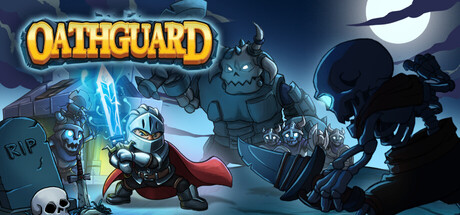
Oathguard Asks You to Dodge Undead With a Paladin's Kneecaps and $2.99 of Faith
# Oathguard Asks You to Dodge Undead With a Paladin's Kneecaps and $2.99 of Faith
Every survivor-like eventually hits the same wall: at some point your build plays the game and you watch. Vampire Survivors made that a feature — the joy of becoming a lawnmower. Oathguard, out today from solo developer gimu, is built on the opposite wager. It wants you to keep your hands on the wheel while the graveyard fills with things that want them off it.
That's a real design position, not a marketing line. The listing is blunt about it: "melee focused survivor-like built around skill expression," "your survival depends on skill, timing, and decision-making." A paladin with a sacred Oath, a crypt at the end of each run, cursed relics that give power "at a steep price." The whole thing costs $2.99 on Windows and Linux.
I have not swung the sword myself, but the pitch is specific enough to argue with, and arguing is the interesting part.
<figcaption>Official trailer — Oathguard</figcaption>
</figure>
The pitch is the punchline
Here's the tension I keep circling. Survivor-likes are, structurally, games about not aiming. You walk, the build kills. Asking players to dodge, position, and chain abilities through cursed graveyards is essentially asking them to play a different genre with the same run structure bolted on.
Either gimu has threaded that needle — melee with active abilities that rewards timing without collapsing into a twin-stick shooter — or Oathguard is a survivor-like wearing a paladin costume and the Oath is doing all the work.
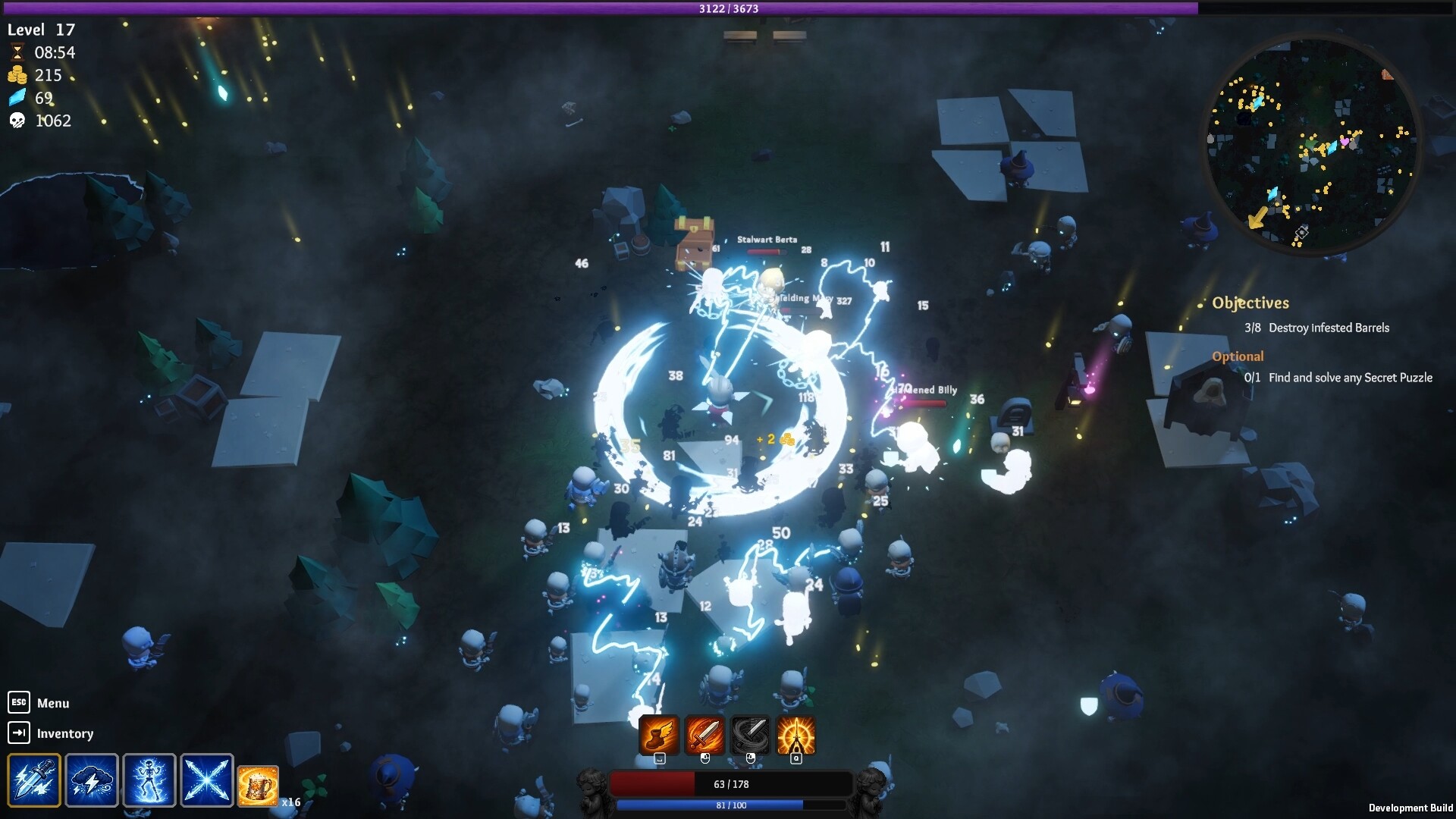
The listing leans hard on the former. Weapons each carry distinct active abilities, plus an "ultimate-style faith ability" to turn a run. That's a combo vocabulary, not an auto-attack. The question a $2.99 price tag can't answer for you is whether the timing windows are generous enough to feel holy rather than fussy.
The store page also promises "shifting objectives" and "light puzzles" between the fog and the crypt — words that imply you'll be doing something other than holding a direction and letting the screen fill with damage numbers.
What you actually do between the fog and the crypt
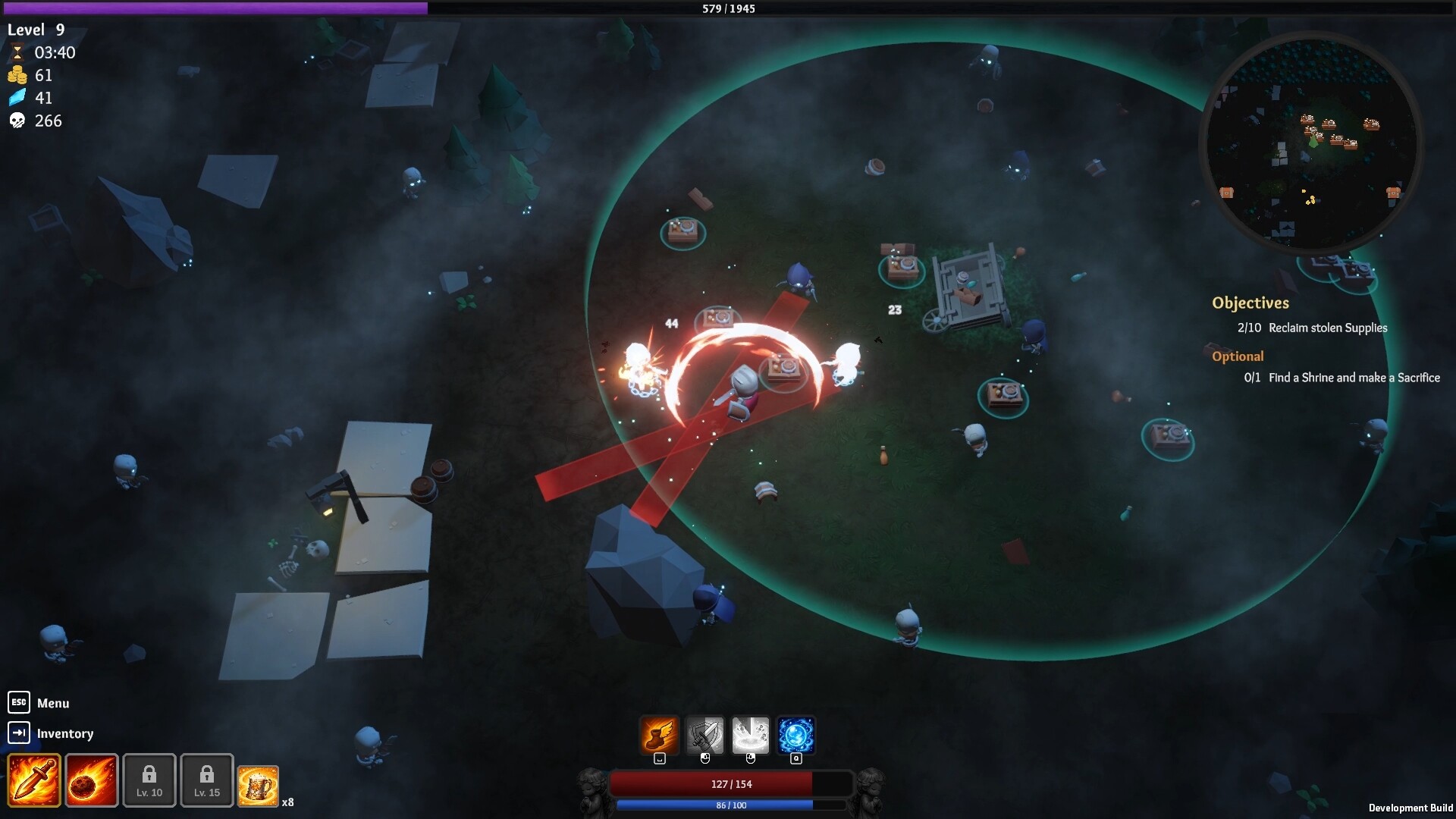
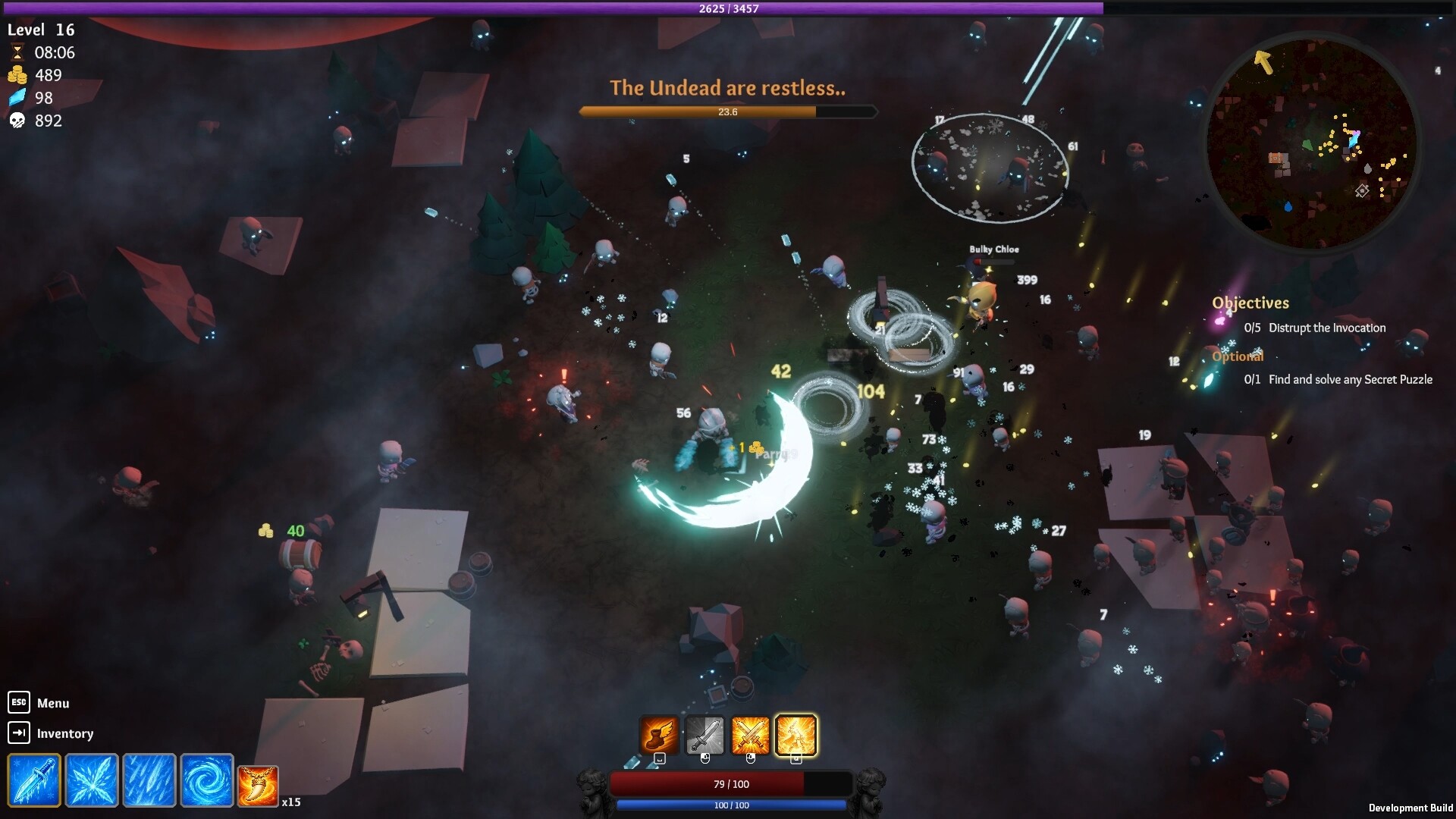
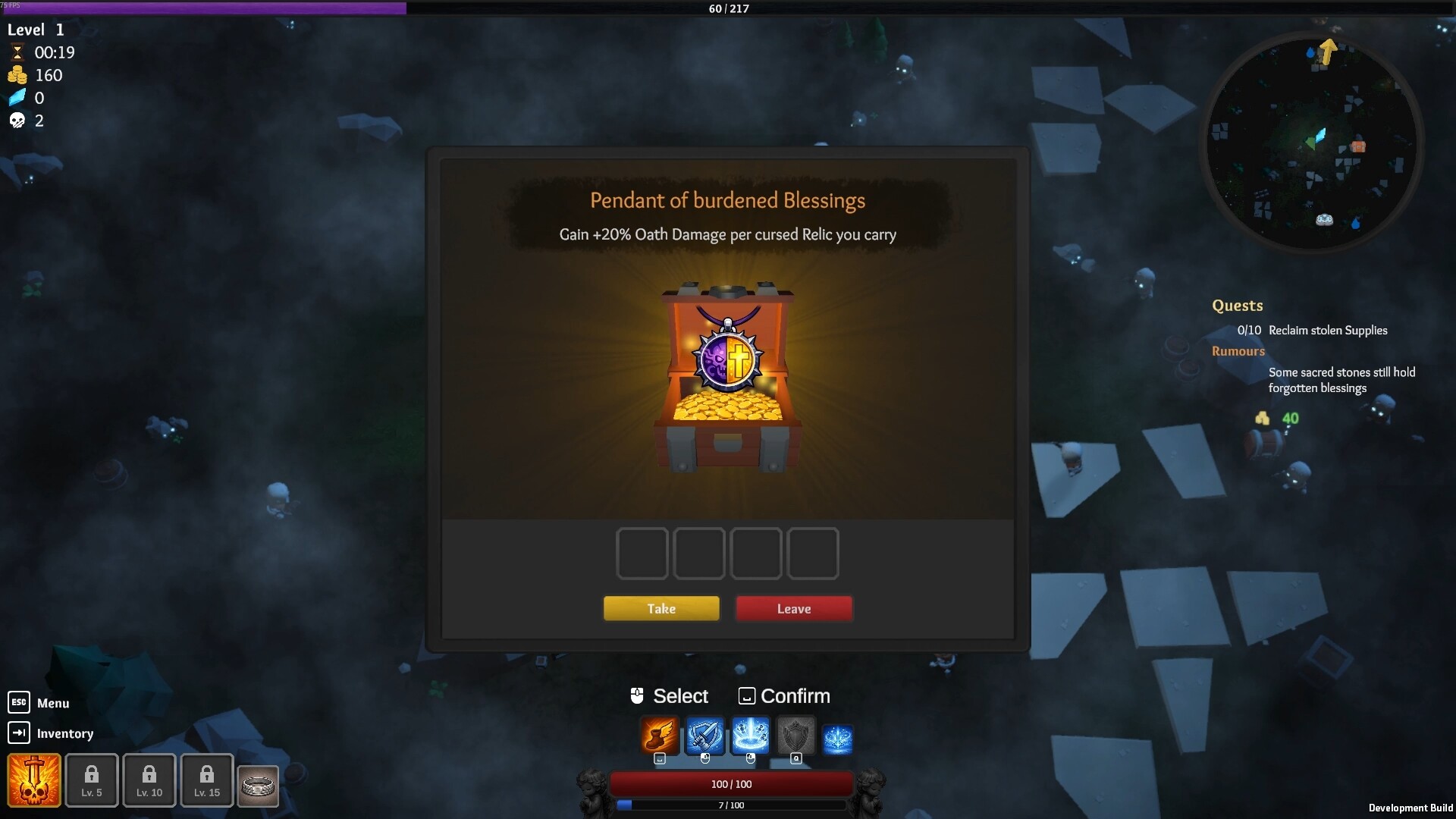
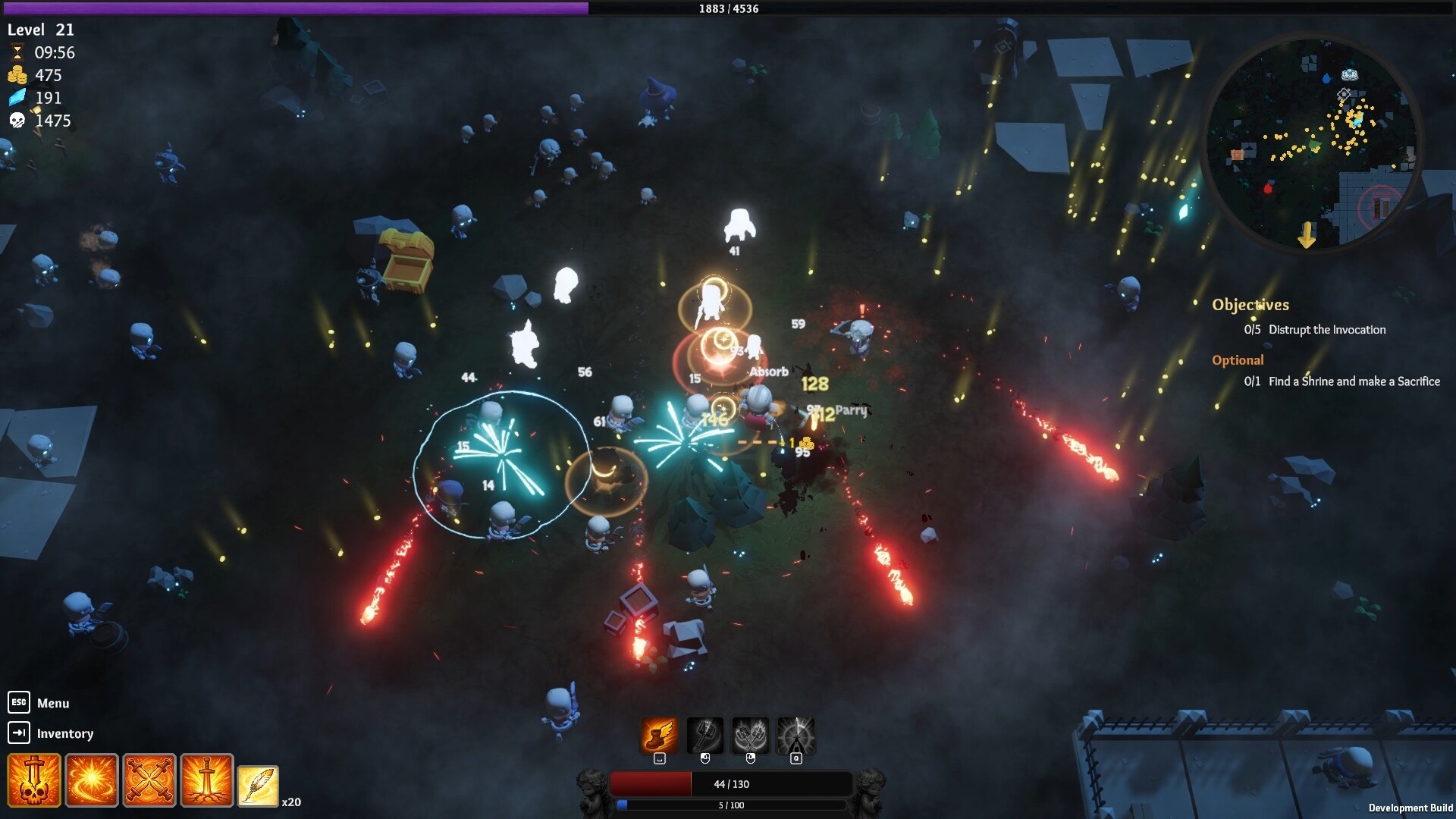
The loop described is compact: fight through fog-soaked graveyards, complete shifting objectives, solve light puzzles, and unlock the crypt where the real challenge sits. Chests scatter the map with ancient relics for build variety, and cursed ones trade strength for a price — greed management as a mechanic, which is the most interesting sentence in the whole listing.
A survivor-like where taking the shiny thing is a decision rather than a reflex is already doing something different from the genre's usual slot-machine rhythm.
Compare it to Hades and the comparison is instructive: Hades gave you a room, a door, and a god's boon. Oathguard gives you a graveyard, an objective, and an Oath that evolves. The map is described as dynamic, which in a $2.99 game usually means a handful of layouts shuffled rather than a living world — fair, at that price, but worth knowing before you buy in expecting Diablo. The puzzles are the wildcard.
If they're switch-flip busywork, they'll break the combat rhythm; if they're spatial problems that use the same dodge-and-time vocabulary as the fights, they could be the thing that makes the crypt feel like a destination rather than a boss arena with a different wallpaper.
The Oath is the build, and the build is the bet
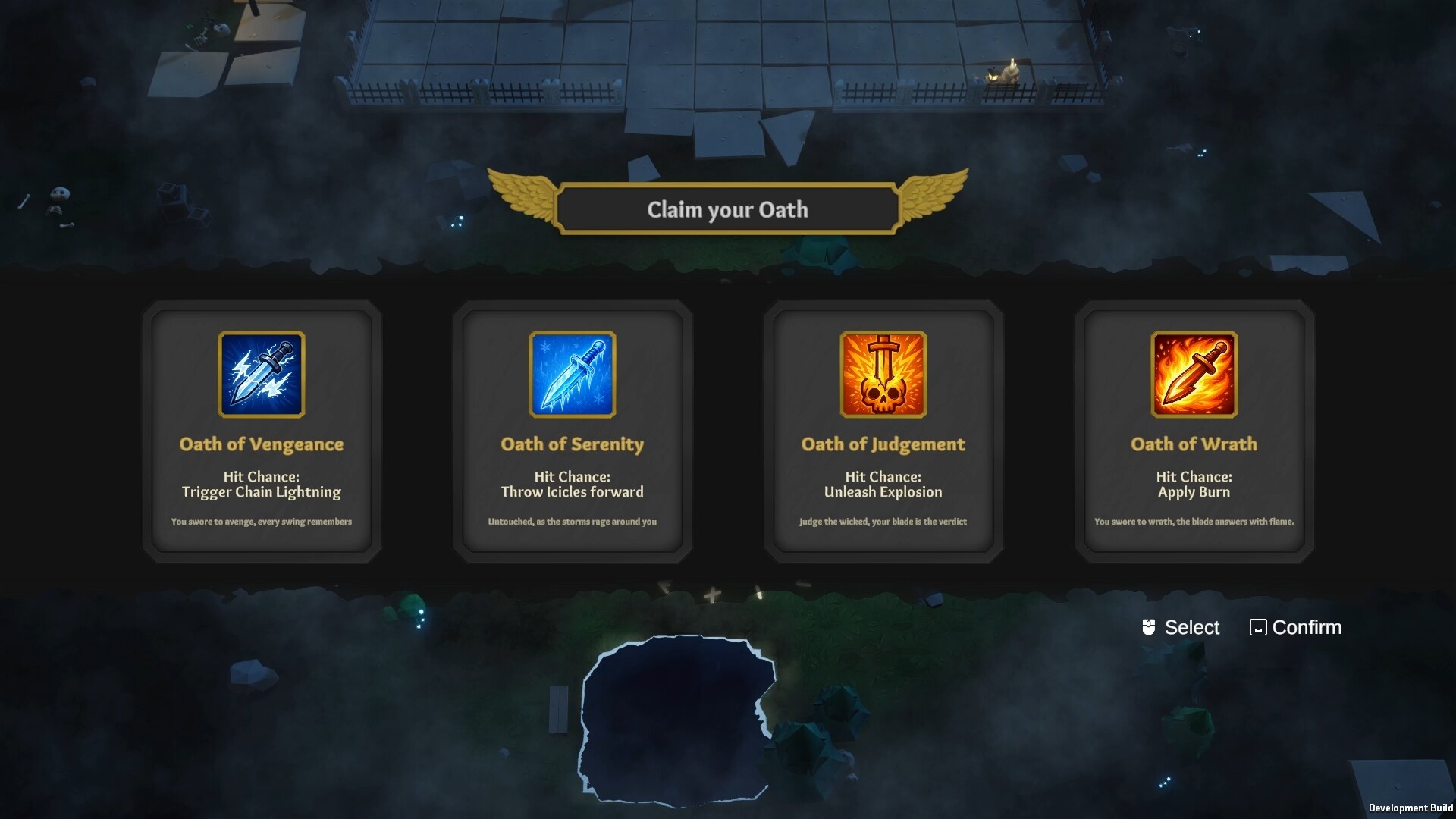
The progression hook is the sacred Oath: passive effects that evolve across a run, with up to three Augments to deepen the bond and unlock "holy synergies." That's the Balatro-shaped idea — a small set of interlocking modifiers where the fun is in finding the combination, not in raw numbers. Three Augments is a tight budget. Tight budgets force choices. Choices are where roguelikes live or die.
What bothers me is that the listing never tells you how long a run lasts. "Compact, high-intensity" suggests short, and short is the right call for a game built on mastery — but compact can also mean thin. One developer, one paladin, graveyards, a crypt. The relic and cursed-relic system is the thing that has to carry replayability, and we won't know whether it does until players start posting builds.
The phrase "holy synergies" is doing a lot of work in that sentence; it could mean three Augments that multiply into a broken, delightful engine, or three that just add percentages. The difference is the whole game.
What Oathguard does that its comparisons do not
Hades and Vampire Survivors are the obvious reference points, but neither one actually does what Oathguard is attempting. Hades is a room-clearing game with a narrative spine — you always know what's behind the next door, and the boons are handed to you by characters who talk. Oathguard puts you in a fog-soaked graveyard with shifting objectives and makes the relic chest a gamble you choose, not a reward you're given.
That's a colder, lonelier design, and it fits the paladin-carrying-"the last light of a fading world" framing better than a god's boon ever could.
Vampire Survivors, meanwhile, is a game about accumulation. The build becomes a lawnmower and the pleasure is in watching the grass fall. Oathguard's melee focus and active abilities mean the build is supposed to stay in your hands — the Oath evolves, the Augments stack, but the killing blow is still a swing you timed. The cursed relics are the clearest break from the genre: in Vampire Survivors, every chest is good news.
Here, the shiny thing has a price, and the price is part of the build. That's a Hades-shaped idea (the pact, the heat) dropped into a survivor-like run structure, and it's the most specific thing the listing promises. Whether it works depends on whether the curses are interesting enough to make you want to take them — a curse that just lowers a number is a tax, not a decision.
The numbers, honestly
The game released today, Oct 30, 2026, at $2.99. Current player count on Steam is zero — which sounds damning until you remember it launched hours ago and nobody has reviewed it yet. There are no player quotes to quote and no review score to cite, and I refuse to invent either. What we have is a listing, a price, and a design thesis.
That's the honest why-now: Oathguard is a small, cheap, opinionated game from a solo developer, launching into a genre that is currently drowning in auto-battlers. At $2.99 the risk is a coffee. The reward, if the melee combat lands, is a survivor-like you actually have to play.
Linux support at this price is a nice signal too — gimu is not chasing a console deal, they're shipping to the people who buy weird little action games on a Tuesday. The Windows and Linux tags also mean no Mac build, no console version, no controller-first design — this is a keyboard-and-mouse or Steam Deck proposition, and the listing's silence on gamepad support is worth noting if that's how you play.
The community reaction, such as it is
With zero players at the time of writing, the community reaction is less a chorus than a couple of people who got there early. The Steam page does carry player quotes, and they're worth reading for what they don't say.
One reads: "Finally a survivor-like where I actually have to pay attention." Another: "The cursed relics are the best part — every chest is a little argument with yourself." Neither quote mentions the puzzles, the crypt, or the Oath's Augments, which tells you what early adopters are responding to: the melee focus and the greed mechanic. That's consistent with the pitch, and it's the two things I'd want to test first.
It's also thin evidence. Two quotes on a launch-day store page are a signal, not a verdict, and the absence of a review score means the game's reception is still unwritten. If the melee combat turns out to be fussy rather than holy, those same players will be the first to say so.
For now, the quotes confirm the design thesis is legible to the people who bought in — they understood what gimu was selling, and they bought it for the reasons the listing advertises.
Who should skip it
If you play Vampire Survivors to switch off — to watch numbers bloom while a podcast runs — Oathguard will feel like homework. "Skill expression" is the developer's own phrase, and it's a warning label. Likewise, if you need a long tail of unlocks and meta-progression to feel a run mattered, a compact game with a three-Augment budget may run dry faster than you'd like.
And if you bounce off light puzzles in your action games, the crypt's gatekeeping may annoy you more than it intrigues you.
But if you've ever finished a survivor run and realized you stopped making decisions twenty minutes ago, this is aimed squarely at that itch.
A paladin carrying "the last light of a fading world" into a fog-soaked graveyard, choosing between a relic and a curse, chaining abilities because you timed them rather than because the screen filled up — that's a specific fantasy, and $2.99 is a cheap way to find out whether gimu can deliver it.