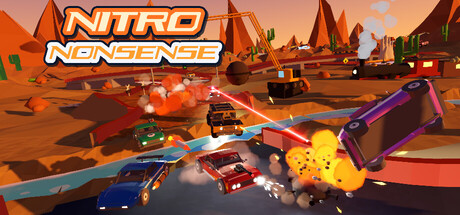
<img src="/assets/nitro-nonsense-store-check-screen-2.jpg" alt="Nitro Nonsense official Steam screenshot 2" loading="lazy" />
<figcaption>Official in-game view — Nitro Nonsense, Laggy Lobster · Laggy Lobster. Source: Steam AppID 5000550 (checked 2026-10-27).</figcaption>
<img src="/assets/nitro-nonsense-store-check-screen-3.jpg" alt="Nitro Nonsense official Steam screenshot 3" loading="lazy" />
<figcaption>Official in-game view — Nitro Nonsense, Laggy Lobster · Laggy Lobster. Source: Steam AppID 5000550 (checked 2026-10-27).</figcaption>
</figure>
Player Count and Setup Options
The listing says the game supports 1, 2, 4, 8, or up to 16 players, locally or online. It explicitly offers two viewing modes: traditional split-screen or a shared top-down view that keeps everyone on one screen. For players, that means the same purchase covers solo play and large-group sessions, and the top-down option implies groups can share a single display instead of needing multiple screens. The listing does not state whether online play requires separate accounts per player or how matchmaking works.
The Winner Edits the Track
The description says the race winner gets the track editor while everyone else is in the garage. The winner can raise and carve terrain, reroute the track, resize the map, and place jumps, boosts, walls and traps. This implies a rotating-authority loop: each race outcome hands design power to one player, so tracks change between rounds rather than staying fixed. The listing does not say whether edited tracks can be saved or shared outside a session.
Losing Upgrades Your Car
The listing states that every loss improves your car, and that the more you lose, the more powerful you become. This implies a rubber-band progression system where repeated defeats feed into vehicle upgrades for the next round. For players, that suggests rematches are meant to stay competitive even when one person keeps finishing last. The listing does not specify how many upgrade tiers exist or whether upgrades reset between sessions.
Weapons and Traps Named in the Listing
The description names specific items: the Cannon spins out whoever it hits, the Hook latches onto the car ahead and slingshots you past them, the Jammer reverses their steering, and the Brick Wall leaves a breakable wall behind you. It also lists mines, oil slicks, shockwaves, homing missiles, and passives including shield, 4WD, hang glider, and a bumper that lets you ram without taking the hit yourself. These imply a combat-heavy racer where position matters less than item use, and the passives suggest defensive builds are possible. The listing does not give item drop rates or which modes use which items.
Chile-Inspired Environments
The listing says every environment is inspired by the landscapes, wildlife and culture of Chile, naming the Atacama Desert, Chilean Antarctica, Rapa Nui, the vineyards of the Colchagua Valley and the Valdivian forests. It mentions landmarks, native vegetation and animals such as condors and huemules recreated in a colorful low-poly style. For players, that implies a themed tour rather than generic tracks. The listing does not state how many tracks ship at launch or whether the editor can use these environment themes.
Platforms, Price and Who It Suits
The listing covers windows, mac, and linux, priced at $3.59, released Oct 26, 2026, from developer and publisher Laggy Lobster. Genres listed are Casual, Indie, and Racing. At that price, the game targets groups wanting a low-cost party racer with local and online options, plus tinkerers drawn to the winner-edits-track loop. The listing does not mention a campaign, progression persistence, or cross-platform play between the three supported operating systems.