Next Reign: Kingdom Has Better Player Numbers Than Its Review Count Suggests
Next Reign: Kingdom entered the September 4 report as a promising but unproven pixel incremental game: 213 concurrent players and only six Steam reviews, all positive. The mismatch made it hard to judge. A handful of recommendations cannot establish quality, even when the live audience is respectable.

Next Reign: Kingdom entered the September 4 report as a promising but unproven pixel incremental game: 213 concurrent players and only six Steam reviews, all positive. The mismatch made it hard to judge. A handful of recommendations cannot establish quality, even when the live audience is respectable.
Three days later, the picture is clearer but still early. At 1:58 p.m. Malaysia time on September 7, Steam showed 281 current players. The all-language review pool had reached 48, including 42 positive and six negative recommendations, or 87.5% positive. The audience is larger than the report snapshot, and the review sample has multiplied eightfold without collapsing.
Those numbers do not reveal sales or long-term retention. They do justify a closer look at why Tiny Tulip Games' compact kingdom builder is finding an audience. This is market analysis based on official materials and public signals, not a hands-on review.
What the game is—and why the release matters
Next Reign: Kingdom launched on Steam for Windows PC on September 3, 2026. Steam lists it under Indie, Simulation, and Strategy. The official pitch is to transform a tiny settlement into a medieval kingdom through about 20 hours of progression, more than 100 prestige upgrades, many in-run upgrades, resource collection, army development, and mechanics unlocked at milestones.
This is a full release rather than an Early Access build. That gives the advertised progression length and endgame more weight. Players are not buying a promise that the missing systems will arrive later; they are evaluating whether the current growth curve delivers a satisfying beginning, reset, and final phase.
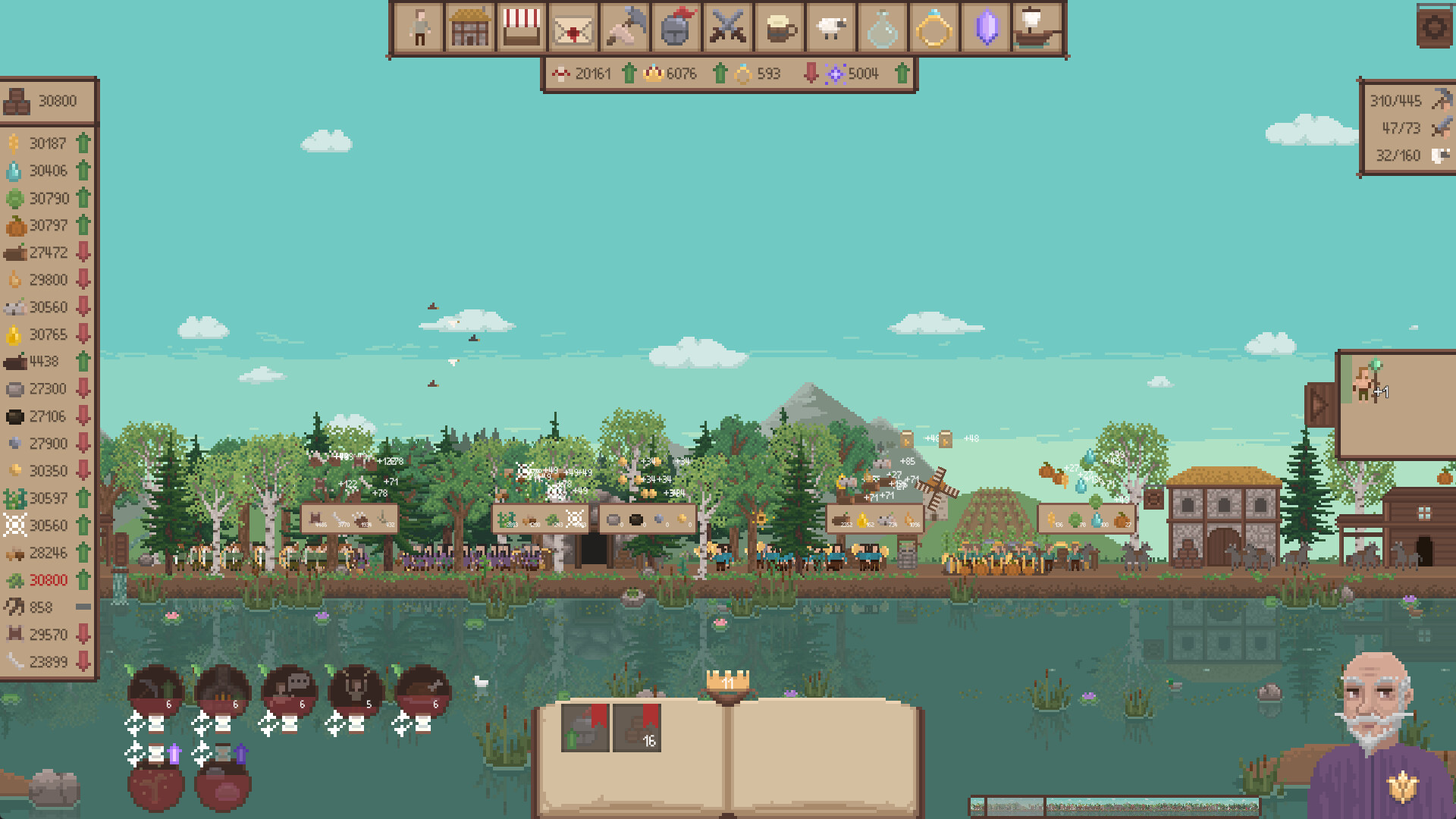
The pixel presentation supports the game's scope. Buildings can be constructed from reusable tile modules, while upgrades change silhouettes, density, color, and animation. The visual target is not realism. It is making the kingdom look different enough after each milestone that numeric growth feels physical.
The core loop: expand, optimize, prestige, rebuild faster
The player begins with a small settlement, generates and allocates resources, buys buildings and upgrades, develops an army, unlocks additional mechanics, and eventually uses a prestige layer to restart with persistent advantages. Each reign should move faster or open a new decision that changes the next one.
Incremental games live on conversion chains. Wood enables a building; the building produces another resource; that resource unlocks a unit or multiplier; the new capacity reaches a milestone; the milestone changes what the player can automate. If each link is visible and well paced, even a small input vocabulary can feel strategic.
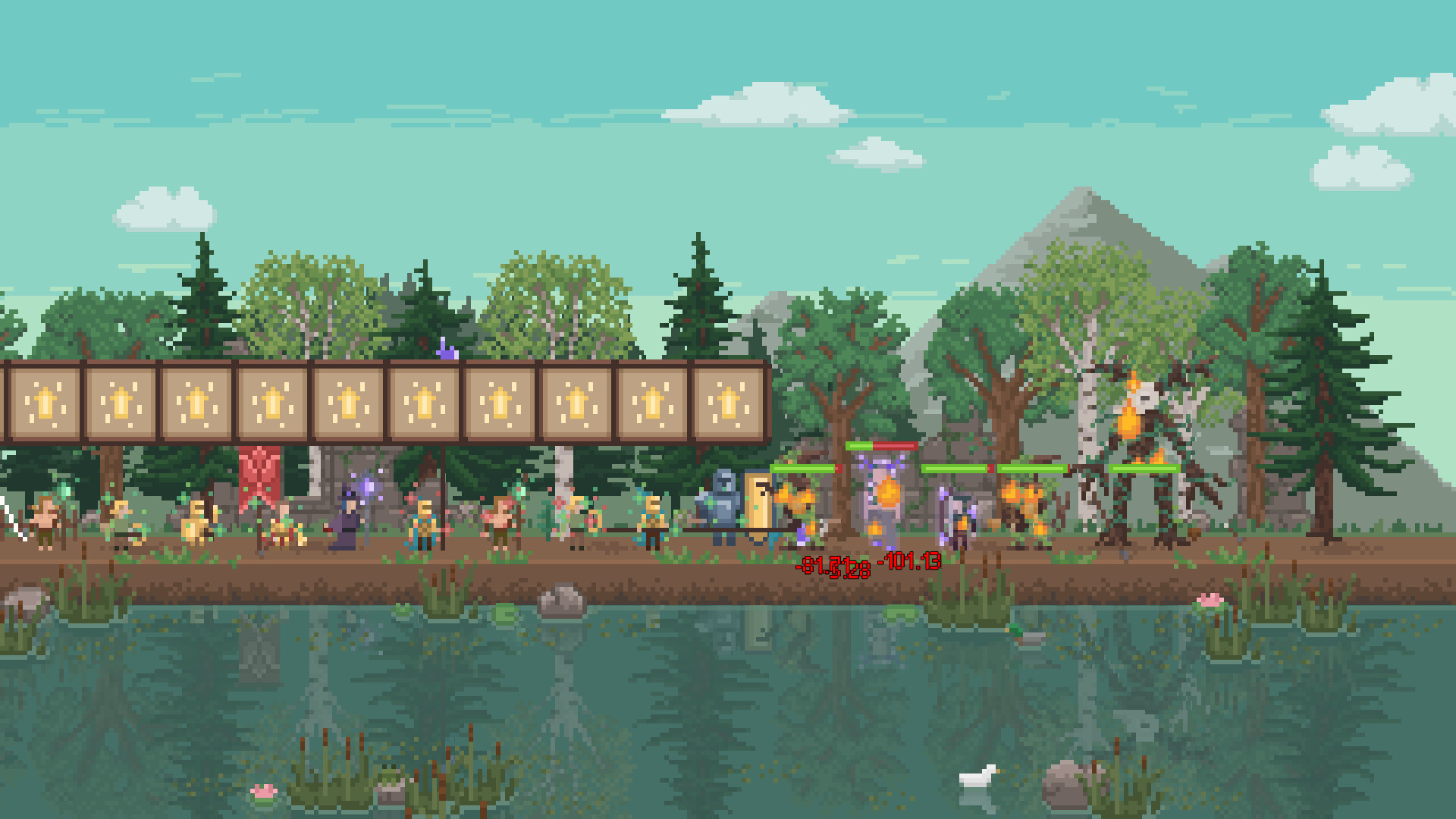
The army layer gives the economy a purpose beyond making larger numbers. Military pressure can create timing decisions about whether to reinvest in production or convert resources into defense and conquest. The most valuable upgrades are therefore not flat multipliers but ones that change the relationship between systems.
Prestige is the structural risk. A reset feels good when it compresses mastered content and reveals a new layer. It feels manipulative when the game merely removes progress and sells it back at a faster rate. More than 100 prestige upgrades sound substantial, but count alone does not prove meaningful choice.
What the current market signal says
The rise from six to 48 reviews changes the confidence level without making the sample large. Forty-two positives indicate that the first wave generally likes the growth rhythm, pixel presentation, quantity of unlocks, and value proposition. Six negatives are enough to show that the experience is not universally landing, but not enough to map every complaint reliably.
The current-player movement is more surprising. Steam showed 281 people in game during the September 7 check compared with 213 in the September 4 report. Concurrent counts vary by hour and day, so this is not a 32% retention claim. It does show that the launch signal did not disappear immediately.
Incremental games can generate long sessions because players wait for thresholds, optimize production, or leave the game active. Concurrency therefore cannot be compared directly with a short action game. It measures occupied sessions, not unique buyers, revenue, or satisfaction.
Still, 281 current players against 48 reviews suggests a broader user base than the feedback count alone reveals. The game may also have many buyers who have not played long enough to review, or players whose sessions inflate concurrency. Both explanations are compatible with the public data.
Repeated praise and the emerging complaints
Positive response appears centered on the constant visibility of growth, relaxed pacing, steady unlock schedule, and the way a small kingdom develops into a busier map. Players who enjoy optimization value discovering which upgrade sequence accelerates the next milestone.
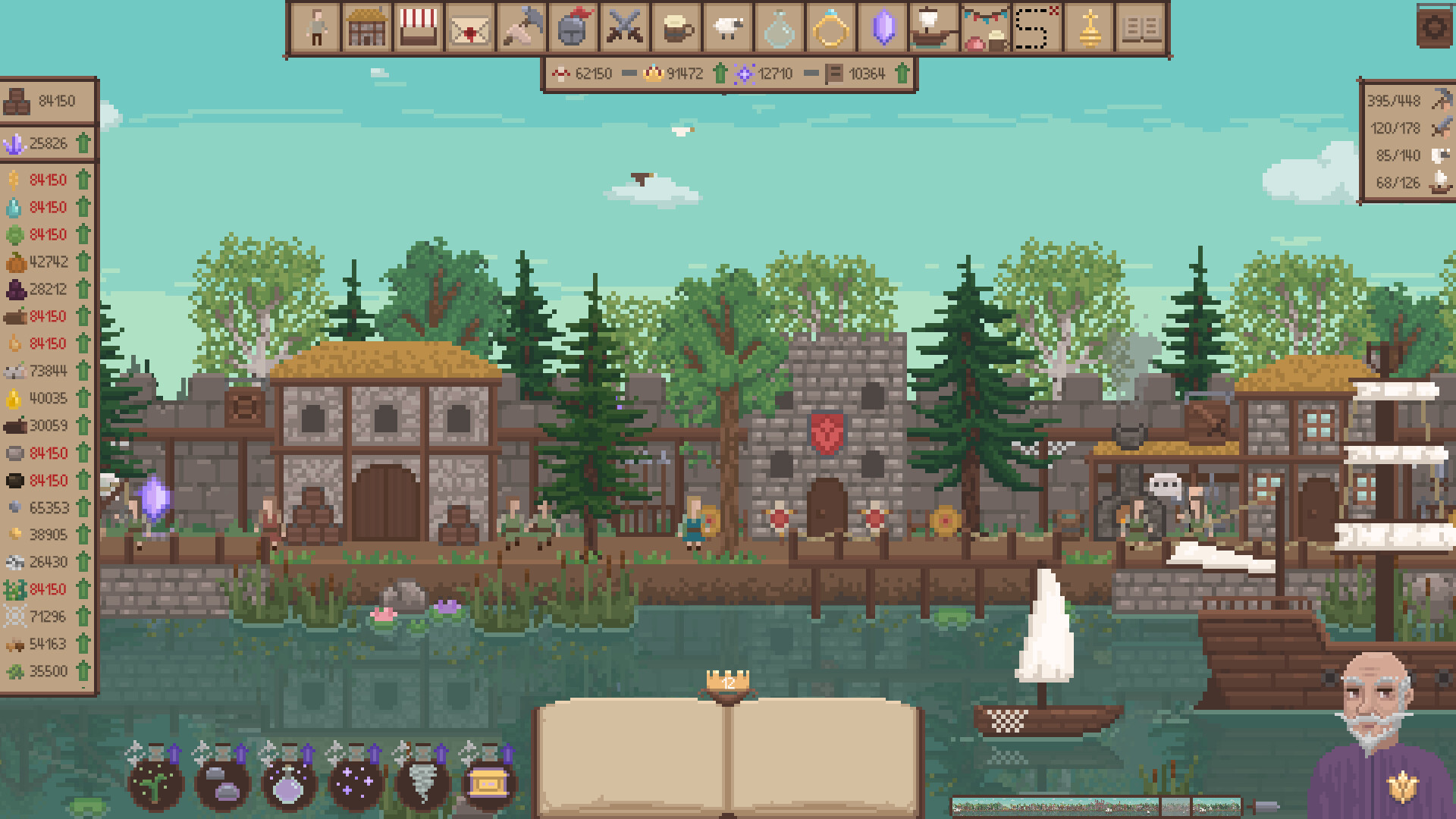
The negative side is still a six-review sample, so no complaint should be generalized to the whole audience. Early reservations in this genre commonly focus on pacing walls, unclear mechanics, shallow choices hidden behind many upgrades, automation arriving too early or late, and the amount of active input required after systems are understood.
The advertised 20-hour progression is a useful boundary. Players wanting an endless idle platform may consider that short. Players who prefer a game with an authored endpoint may see it as disciplined. Store messaging should keep that expectation explicit.
Readability becomes harder as a pixel settlement fills. Resource rates, alerts, combat status, and upgrade availability must be visible without turning the screen into a dashboard. The art can create charm, but interface hierarchy determines whether the later kingdom remains manageable.
Meaning beside other incremental kingdom games
Next Reign competes with idle city builders, prestige-heavy number games, and more traditional strategy titles. It is less demanding than a grand strategy campaign and more system-driven than a decorative village simulator.
Its strongest distinction is compressing the fantasy of centuries of kingdom growth into a manageable, largely single-player progression. Unlike a mobile free-to-play builder, it does not need to sell timers or protection to monetize each return. That lets the pace serve the design rather than a currency store.
Against deeper PC strategy games, its decisions may appear light. Against pure clickers, the visible settlement and army give multipliers context. The product succeeds if players feel they are shaping a kingdom, not simply watching an elaborate progress bar.
For small developers, the scope lesson is strong: reuse building modules, reserve major palette and silhouette changes for milestones, and make every new mechanic consume or produce something already present. Content becomes cheaper when systems recombine instead of expanding as isolated features.
Who should buy—and what to watch
Next Reign is a reasonable buy for players who enjoy finite incremental campaigns, prestige optimization, pixel settlements, and mostly relaxed single-player play. The current 87.5% positive signal is encouraging, and matchmaking health is irrelevant.
Wait if you need complex diplomacy, tactical combat, or a sandbox designed for hundreds of hours. Check current reviews for late-game pacing and whether the promised endgame feels complete. With only 48 reviews, the percentage can move sharply after a small number of new ratings.
The most useful next signals are review growth after the first weekend, completion patterns, and whether updates address explanation and pacing rather than only add multipliers. Do not infer copies sold from concurrency.
IndieGame.party verdict
Next Reign: Kingdom has advanced beyond the report's six-review uncertainty. The eightfold increase in review volume, 87.5% positive share, and 281-player observation show a small game maintaining credible early interest.
The verdict is promising and recommended for incremental-strategy fans, with sample-size caution. Its market meaning is not that every pixel idle kingdom works. It is that a visibly transforming settlement, a bounded progression, and carefully layered systems can make modest art scope feel larger than it is.
Data and image sources
- Official Steam store page: https://store.steampowered.com/app/4536900/Next_Reign_Kingdom/
- Steam public review summary and current-player endpoints, checked September 7, 2026 at 1:58 p.m. MYT.
- All four images are official Steam store assets supplied by Tiny Tulip Games, downloaded locally on September 7, 2026 for identification, reporting, and criticism. They are not composited or materially altered.