Neat! Finds an Audience for Pixel-Art Tidying but Its Placement Friction Shows
Neat! turns the visual satisfaction of restoring order into a short pixel-art game. Players unpack, sort, and place objects across hand-authored rooms while small environmental details suggest the lives of their owners. The launch found hundreds of concurrent players, but its review ratio shows that a relaxing premise can become stressful when placement itself is imprecise.

Neat! turns the visual satisfaction of restoring order into a short pixel-art game. Players unpack, sort, and place objects across hand-authored rooms while small environmental details suggest the lives of their owners. The launch found hundreds of concurrent players, but its review ratio shows that a relaxing premise can become stressful when placement itself is imprecise.
At 1:13 p.m. Malaysia time on September 15, Steam's public endpoints showed 358 concurrent players and 104 all-language reviews, 80 positive and 24 negative, or 76.9% positive. The morning market report recorded 518 players and 88 reviews at 79.5% positive. Review volume grew while sentiment slipped, a useful warning that the launch audience is dividing as it expands. This is review-signal analysis, not a hands-on review.
Why it is visible now
The game launched September 14 with an instantly legible before-and-after hook. A cluttered shelf becomes ordered. A pile of objects becomes a readable room. That transformation works in screenshots and short video without requiring viewers to understand a combat system or economy.
Pixel art gives Neat! a distinct position beside Unpacking and A Little to the Left. Its scenes can contain many recognizable objects without requiring high-resolution 3D models, materials, and lighting for every item.
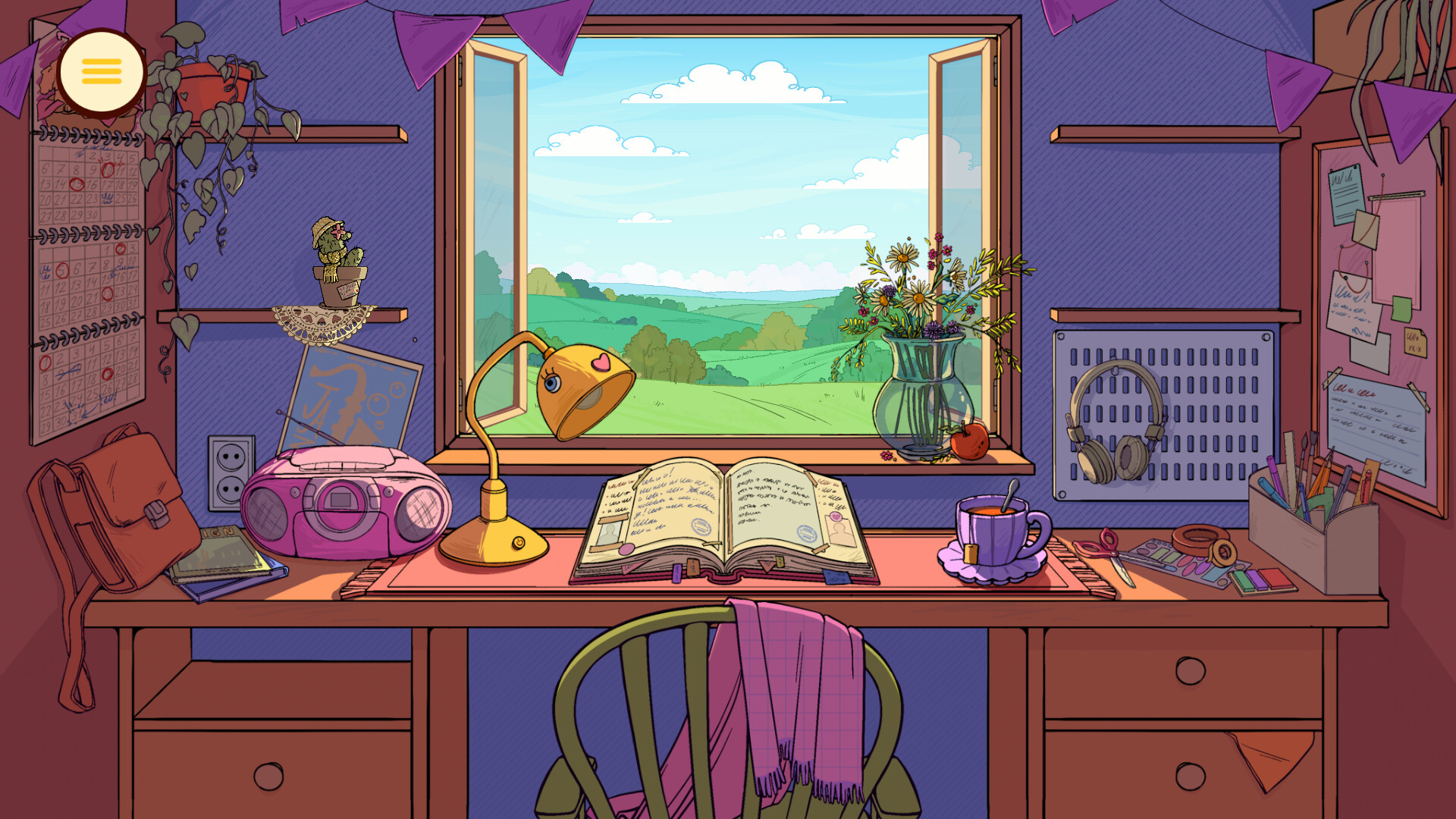
The official store listed Windows and macOS support, plus a 30% launch discount at RM17.84, down from RM25.49. The low price fits a compact experience, but multiple reviews still judged the available length and level count against cost.
Genre, platform, and release status
Steam categorizes Neat! as casual, indie, and simulation. The practical genre is object-placement and organization with light environmental narrative. The developer describes eight handcrafted locations and a story discovered through the spaces.
The game released as version 1.0 rather than early access. That matters because object placement is not peripheral polish; it is the core control surface. When a book will not stand, yarn will not settle into a box, or a small object becomes hard to select, the game's intended calm reverses.
Mac availability broadens the audience for a cozy, mouse-driven game. Public Steam data does not break current players or review satisfaction down by operating system.
The core loop and differentiation
Players inspect a room, move objects from containers or clutter, infer useful categories, rotate and place each item, satisfy the level's hidden or explicit organization rules, and reveal a small narrative transition.
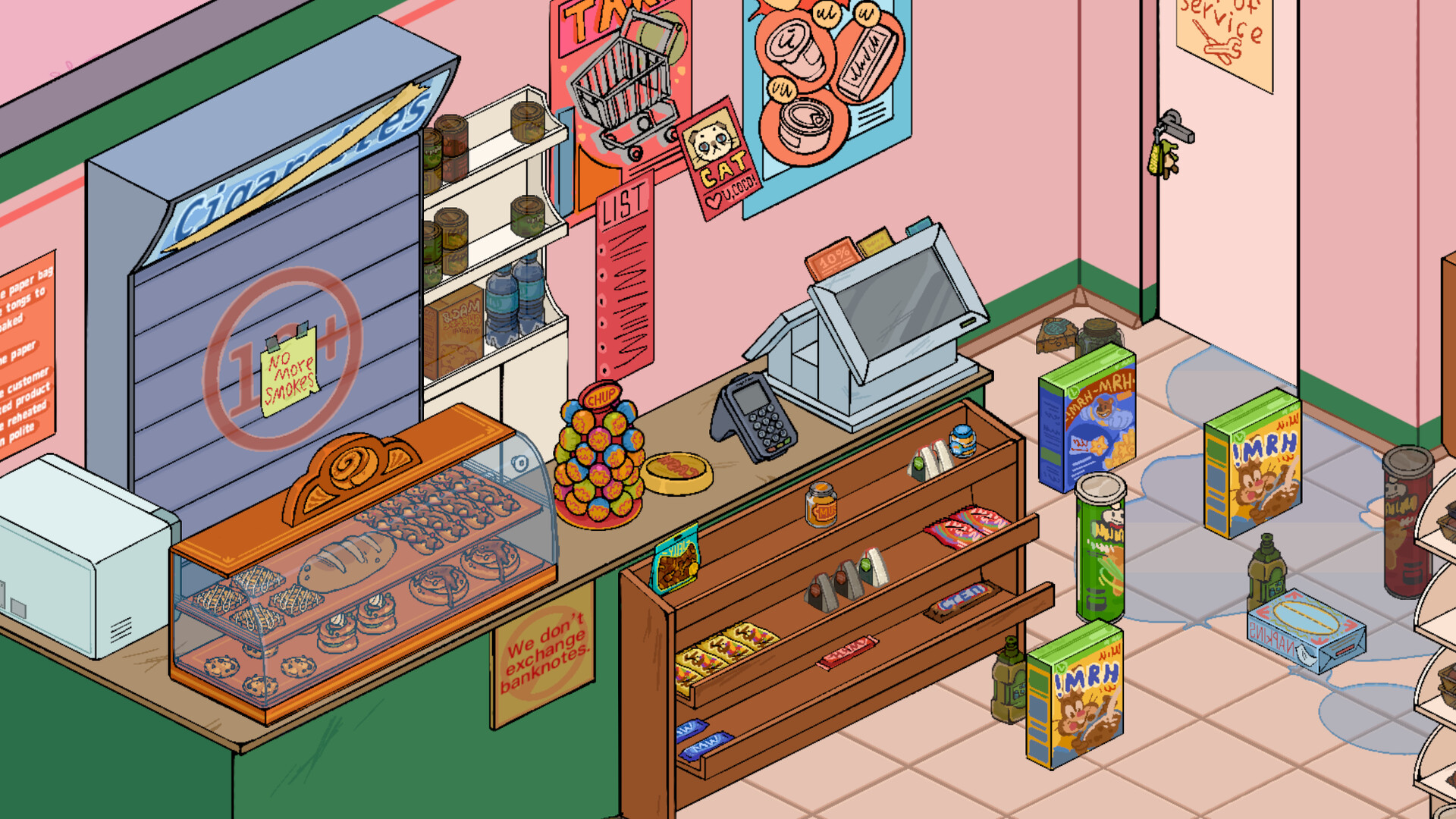
The loop has two kinds of reward. The first is visual: empty space, alignment, color grouping, and a completed shelf. The second is interpretive: objects imply the personality, history, or interests of the person who owns the room.
Neat!'s freer placement differentiates it from puzzles with one exact solution. That freedom also raises the technical burden. The system must understand surfaces, depth, overlap, rotation, and when an object is “close enough” to a plausible home. Snapping that is too aggressive removes expression; snapping that is too weak creates fiddly frustration.
The game uses a dense pixel-art object library to make each environment collectible and readable. Reusing objects lowers production cost, but several reviewers said repetition reduced novelty across a short campaign.
Verified market snapshot
Steam returned 104 total reviews and a 76.9% positive ratio at publication. Current players were 358. Those are meaningful launch numbers for a compact organization game, but the sentiment is well below the cleanly positive signal of today's other launches.
The report's earlier snapshot showed 70 positive reviews out of 88 and 518 players. By 1:13 p.m., sixteen additional reviews had arrived, ten positive and six negative. A four-hour slice cannot predict long-term reception, but it shows why a launch score should not be frozen at the first checkpoint.
Steam does not reveal sales, refunds, average completion, or the share of players who used the demo. The two-hour completion claims in reviews are individual reports, not telemetry.
Repeated praise and complaints
Across 20 recent reviews, praise repeatedly focused on the art style, music, relaxing pace, decoration freedom, and the basic pleasure of organizing a room. Players looking for a low-pressure game often recommended it despite specific frustrations.
Complaints were unusually consistent: short length, repeated objects, awkward rotation, difficulty placing items on shelves or inside containers, insufficient snapping, weak feedback about which item is wrong, and scenes that remain visually crowded after completion. Several reviews also raised concerns about recognizable references to existing entertainment properties. That is a repeated user perception, not a legal finding by this article.
Some positive reviews contained the same criticisms as negative ones. That suggests the concept is carrying the recommendation while the interaction layer reduces satisfaction.
Competition and market meaning
Neat! competes with Unpacking, A Little to the Left, Assemble with Care, and a growing field of cozy task games. Its pixel presentation and freer room composition create an appealing identity. Its competitors also set a high standard for tactile feedback.
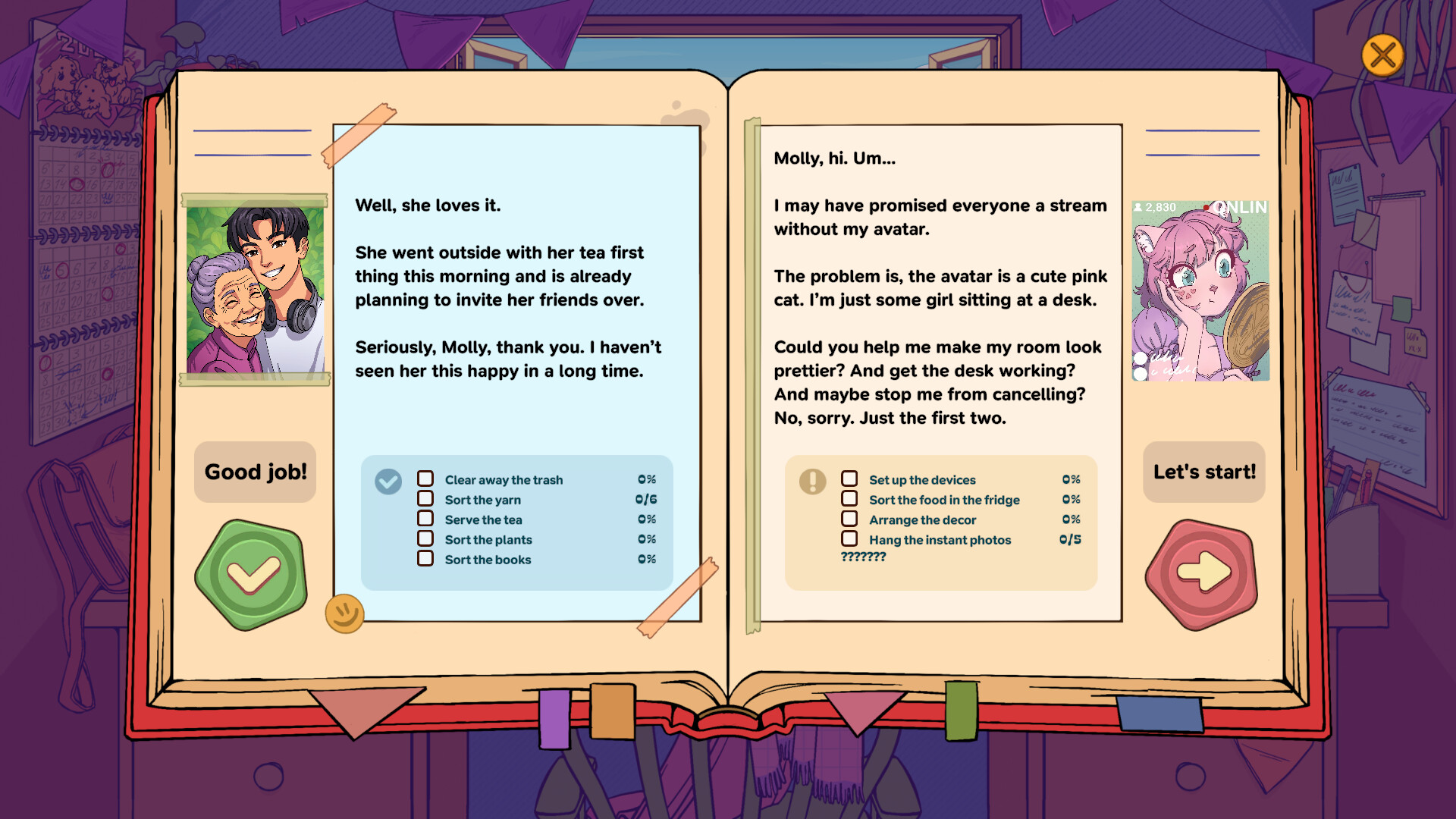
The market lesson is that a “relaxing” genre demands precision. In an action game, slight friction can be interpreted as challenge. In an organization game, the interface must nearly disappear. Small teams should prototype placement, occlusion, and completion feedback with dense real levels before expanding the object catalog.
Who should buy and who should wait
Buy now if the pixel style and a short, gentle tidying experience are enough, and if you tolerate manual adjustment. The launch discount makes the value proposition easier for players who prefer compact games.
Wait if smooth snapping, long playtime, fresh objects in every room, or strong environmental storytelling are essential. Patches that improve placement and feedback could materially change the experience without redesigning the whole game.
IndieGame.party verdict
Neat! has a proven visual hook and a divided interaction signal. Hundreds of current players show real demand, while the declining positive ratio and repeated placement complaints identify the exact problem to fix. Our verdict is cautious: recommended for art-first cozy players, wait for control patches if tactile precision determines your enjoyment.
Data and image sources
- Official Steam store: https://store.steampowered.com/app/4300090/Neat/
- Steam public review summary: https://store.steampowered.com/appreviews/4300090?json=1&language=all&purchase_type=all
- Steam current-player API: https://api.steampowered.com/ISteamUserStats/GetNumberOfCurrentPlayers/v1/?appid=4300090
- All four images are official Steam store assets, © Korova Games, Rogue Duck Interactive, and Gamersky Games, downloaded locally on September 15, 2026 for identification, reporting, and criticism without compositing or semantic alteration.