King in the Mountain Turns Route Planning Into a Browser Incremental
King in the Mountain asks players to route dwarves through a collapsing mine, extract ore before the torch dies, and feed the proceeds into a recovering kingdom. Its itch.io page shows a 4.2/5 aggregate rating from 107 ratings and 53 public comments. Those are meaningful interest signals, but itch.io does not disclose sales or concurrent players.
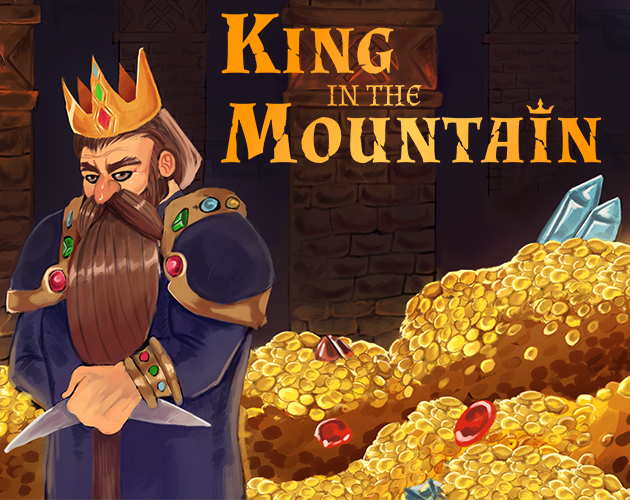
King in the Mountain asks players to route dwarves through a collapsing mine, extract ore before the torch dies, and feed the proceeds into a recovering kingdom. Its itch.io page shows a 4.2/5 aggregate rating from 107 ratings and 53 public comments. Those are meaningful interest signals, but itch.io does not disclose sales or concurrent players.
Why it is visible now
The September 18 indie-market report found King in the Mountain in itch.io's New & Popular discovery area. The developer updated the browser build on September 17, and the store page exposes an active feedback trail rather than a silent prototype.
That matters because browser incrementals have almost no install friction. A player can understand the mining board, draw a route, and watch dwarves execute it within minutes. The game uses low-resolution art and a constrained screen not as a budget apology but as part of the loop's readability.
The verified market signal is community-level, not commercial. The official page reports a 4.2 rating across 107 ratings and shows 53 comments. It does not publish revenue, downloads, daily users, or concurrency. “New & Popular” placement is a discovery signal whose ranking formula and duration are not disclosed.
Genre, platform, and release state
King in the Mountain is a free HTML5 mining incremental playable in a browser on itch.io. The page describes the goal as digging deep, filling the treasury, and restoring a fallen kingdom. The live page was updated September 17, 2026.
This is not a conventional Steam release with a fixed launch package. Browser games can update continuously, and the visible build may change between article publication and a later visit. The article therefore describes the September 18 state and public page.
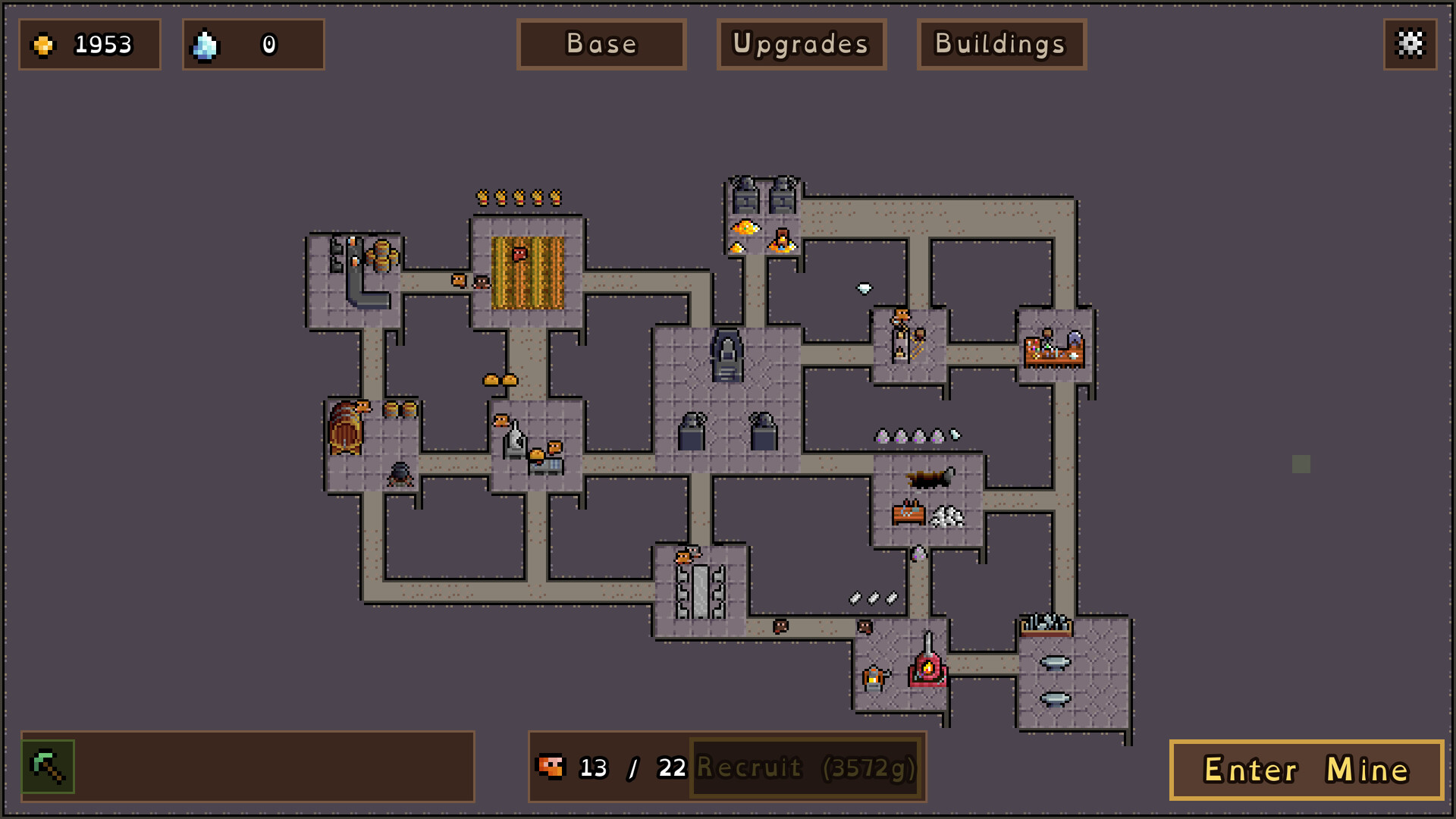
The genre blend matters. Mining provides spatial planning, the torch provides a run timer, ore conversion provides economic feedback, and kingdom buildings create longer-term progression. Incremental games often reduce input as production rises; this design keeps a route-planning decision at the center.
The core loop and differentiation
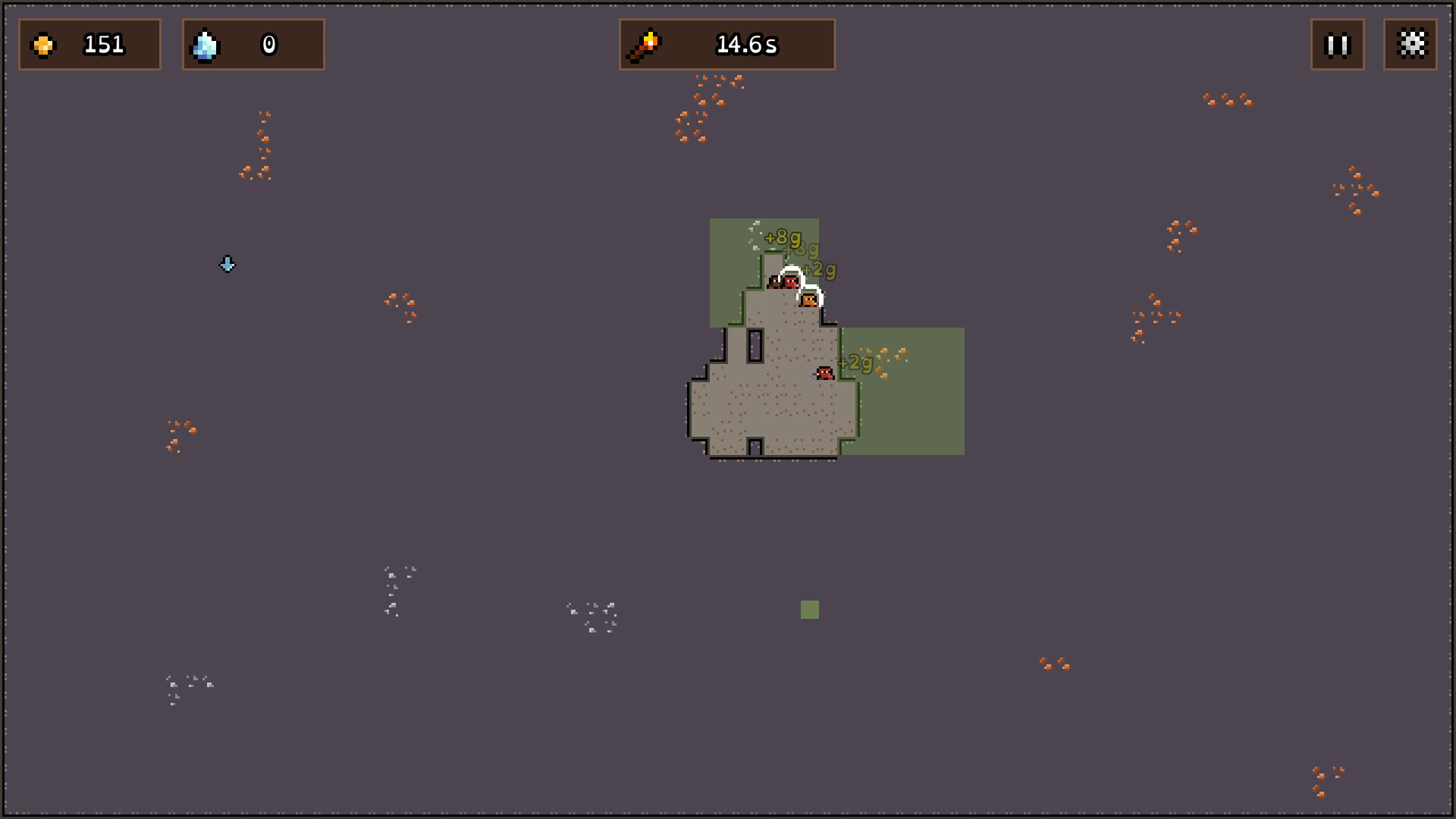
The player marks tiles or paths for dwarves to mine. Workers then traverse the selected area while a limited torch or collapse condition constrains the run. Ore returns to the surface economy, where buildings and upgrades improve later expeditions. Progress unlocks more capacity, which makes deeper or more ambitious routes possible.
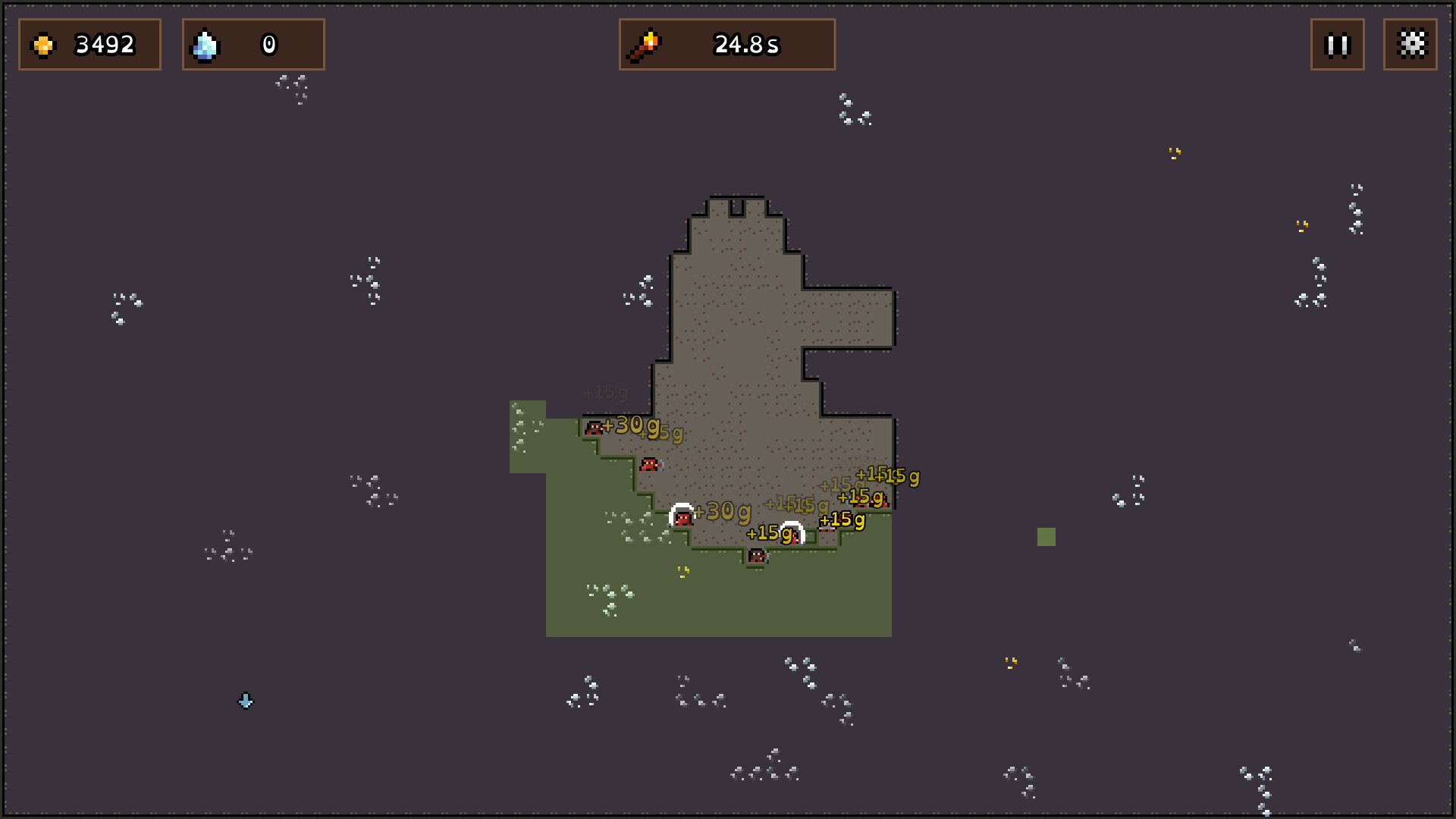
The differentiator is delegated execution. The player does not swing each pickaxe; they design an order and then watch agents carry it out. That creates a readable gap between intention and behavior. An inefficient path, a distant reserved tile, or confused worker can waste the limited run.
This makes the game closer to a light automation planner than an idle clicker. Its best moments come from compressing a large ore pocket into a route that dwarves can complete before time expires.
Current market signal
At 13:25 MYT on September 18, the official itch.io page showed:
- Platform: free browser play.
- Last visible update: September 17, 2026.
- Aggregate rating: 4.2 out of 5.
- Rating count: 107.
- Public comment count: 53.
- Sales, downloads, revenue, and concurrency: not publicly disclosed.
- Discovery signal: present in the daily report's itch.io New & Popular check.
Rating count is not player count, and comments are not retention. The signal is nevertheless stronger than a page with only promotional copy because it includes a substantial set of public reactions and developer responses.
The browser format also changes interpretation. A free game can gather ratings with less purchase friction than a paid Steam title. Commercial potential would need evidence from donations, a paid build, platform migration, or disclosed traffic.
What players repeatedly praise and criticize
We reviewed the 40 most recent comments visible on the first public page, not all 53 comments. Positive reactions repeatedly describe the loop as fun, compelling, or a strong foundation. Players respond to planning routes, watching dwarves execute, and converting a short mining run into persistent town growth.
The repeated complaints concern clarity and control. Commenters ask for a pause or planning phase before dwarves begin, because workers can act before routes are fully marked. Several describe the torch as too short or say dwarves claim distant tiles inefficiently. Building icons, inputs, outputs, expedition versus mining parties, and the value of different resources are recurring points of confusion.
Other requests include moving placed buildings, clearer upgrade states, saving, and more predictable worker pathing. These are not random feature wishes; they cluster around the same design problem. The game delegates action to dwarves, so the interface must make their intent legible before the player commits scarce time.
The developer responds publicly to several reports and references planned fixes. That is a positive support signal, not a guarantee of delivery.
Meaning beside competitors
Compared with pure idle games, King in the Mountain asks for spatial intent every run. Compared with colony simulations, it reduces workers and resources into a compact, browser-readable board. Compared with mining roguelites, the pressure comes from route efficiency rather than direct combat.
The design's low production footprint is strategically useful. Pixel-scale characters, grid tiles, icons, and a constrained map can support many decisions without demanding cinematic animation. That lets a small developer spend effort on pathing, resource relationships, and progression.
The competitive risk is friction masquerading as difficulty. If dwarves behave unpredictably or the interface hides building effects, failed runs do not teach the player. The next iteration should preserve imperfect agents while making their reservations, routes, and priorities visible.
Who should play—and who should wait
Play now if you like incremental progression, grid planning, and watching small workers follow a route. It runs in the browser and costs nothing, making direct evaluation easy.
Wait for later updates if unclear tutorials, limited planning time, or unfinished progression frustrate you. The comments indicate an active work-in-progress, and the current public page should not be treated as a finished commercial release.
IndieGame.party verdict
King in the Mountain has a more interesting core than its simple presentation suggests. It turns the classic incremental question—how quickly can numbers rise?—into a spatial question: which path can the workforce complete before the mine closes?
The current verdict is strong browser prototype with verified community interest and unresolved control clarity. Its next breakthrough will come from better previews of worker behavior, not a larger pile of upgrades.
Sources, check time, and image rights
- Official itch.io game page: https://milopanta.itch.io/king-in-the-mountain
- Official developer devlog RSS: https://milopanta.itch.io/king-in-the-mountain/devlog.rss
- Rating, comment count, update time, and public description checked September 18, 2026 at 13:25 MYT.
- All four images are official assets hosted on the developer-controlled itch.io page, © Dweomer, downloaded locally September 18, 2026 for identification, reporting, and criticism. They are not hotlinked or materially altered.