First Round Hit Asks You to Do Math Before You Pull the Trigger for $6.39
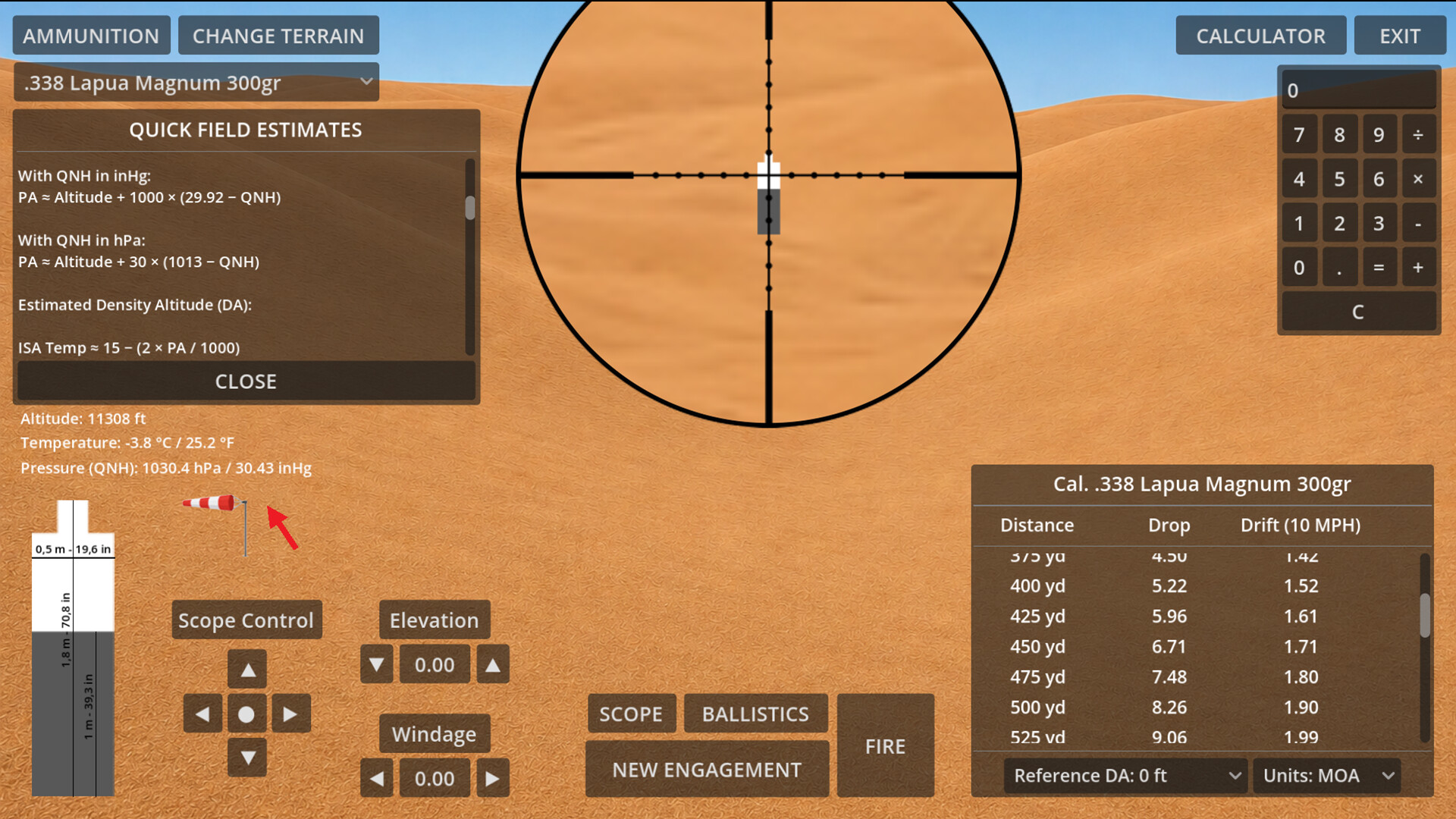
The first thing First Round Hit does is take away the number. There is no rangefinder that spits out 847 metres in glowing digits. There is a Mil-Dot reticle, a target of known size, and a windsock that flaps in a direction you have to read yourself. You do the arithmetic — or you press the calculator button, and feel slightly ashamed.
I have not touched a rifle since a school cadet camp, but I have thought about this game's central demand all week: it wants you to be wrong, and then it wants you to know exactly why.
<figcaption>Official trailer — First Round Hit - The Long Range Shooting Simulator</figcaption>
</figure>
The pitch is the punchline
G3D Studios released First Round Hit: The Long Range Shooting Simulator on Oct 28, 2026, for $6.39 on Windows. It is an indie simulation, and the subtitle is doing a lot of work: this is not a shooting game with ballistics bolted on. It is a procedure.
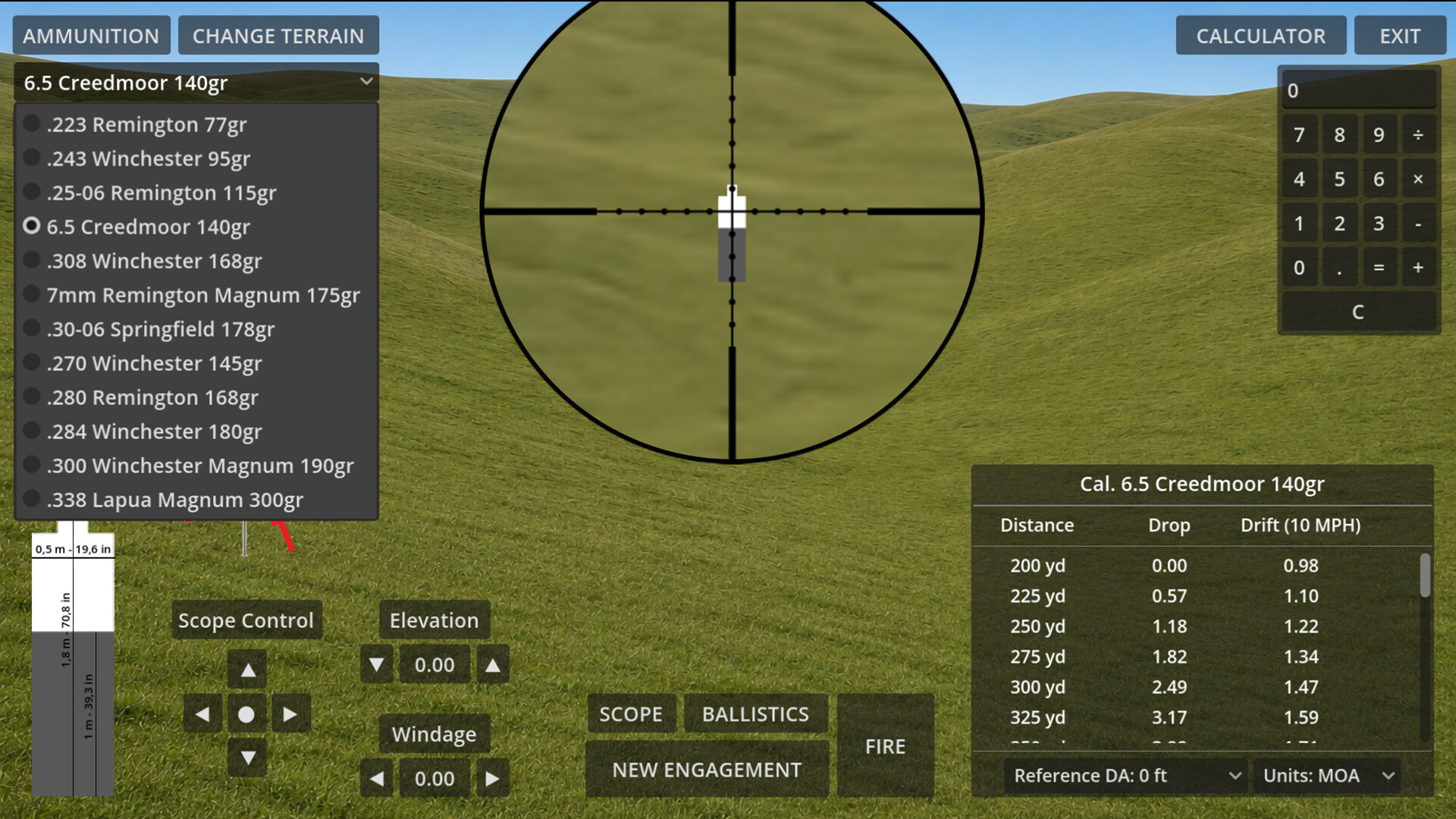
Estimate distance, consult the ballistic reference table for your chosen cartridge, work out elevation and windage in MOA or MIL, dial the turrets at 1/4 MOA per click, and take one shot. The "first round" in the title is the whole point. You are not walking rounds onto a target. You are building a firing solution and living with it.
That is a strange, fussy, deeply unglamorous premise for a game, and it is exactly why it caught my eye. Most shooting games treat the bullet as a laser that happens to drop. First Round Hit treats the bullet as a physics problem with a paper trail.
What you actually do, minute to minute
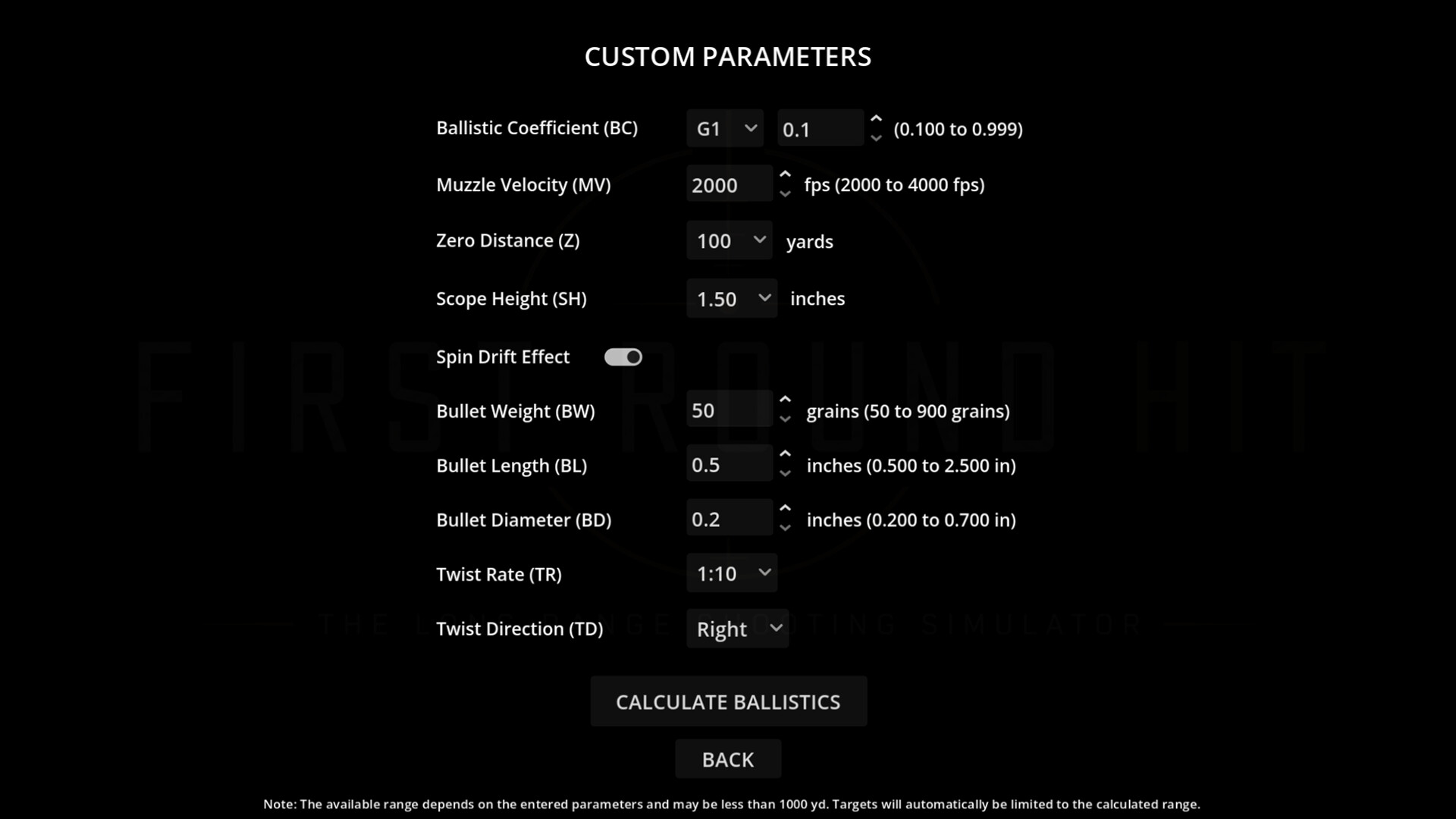
The loop is: read the range, read the wind, read the table, dial the scope, shoot. Twelve preconfigured ballistic profiles are included, and you can build custom configurations with different parameters and ballistic coefficients before you enter the range. That last part matters — it turns the game into a sandbox for trajectory nerds.
You can spend an evening comparing two loads at 600 metres and never fire a shot at anything that shoots back. Nothing shoots back. There is no enemy. The target is a target.
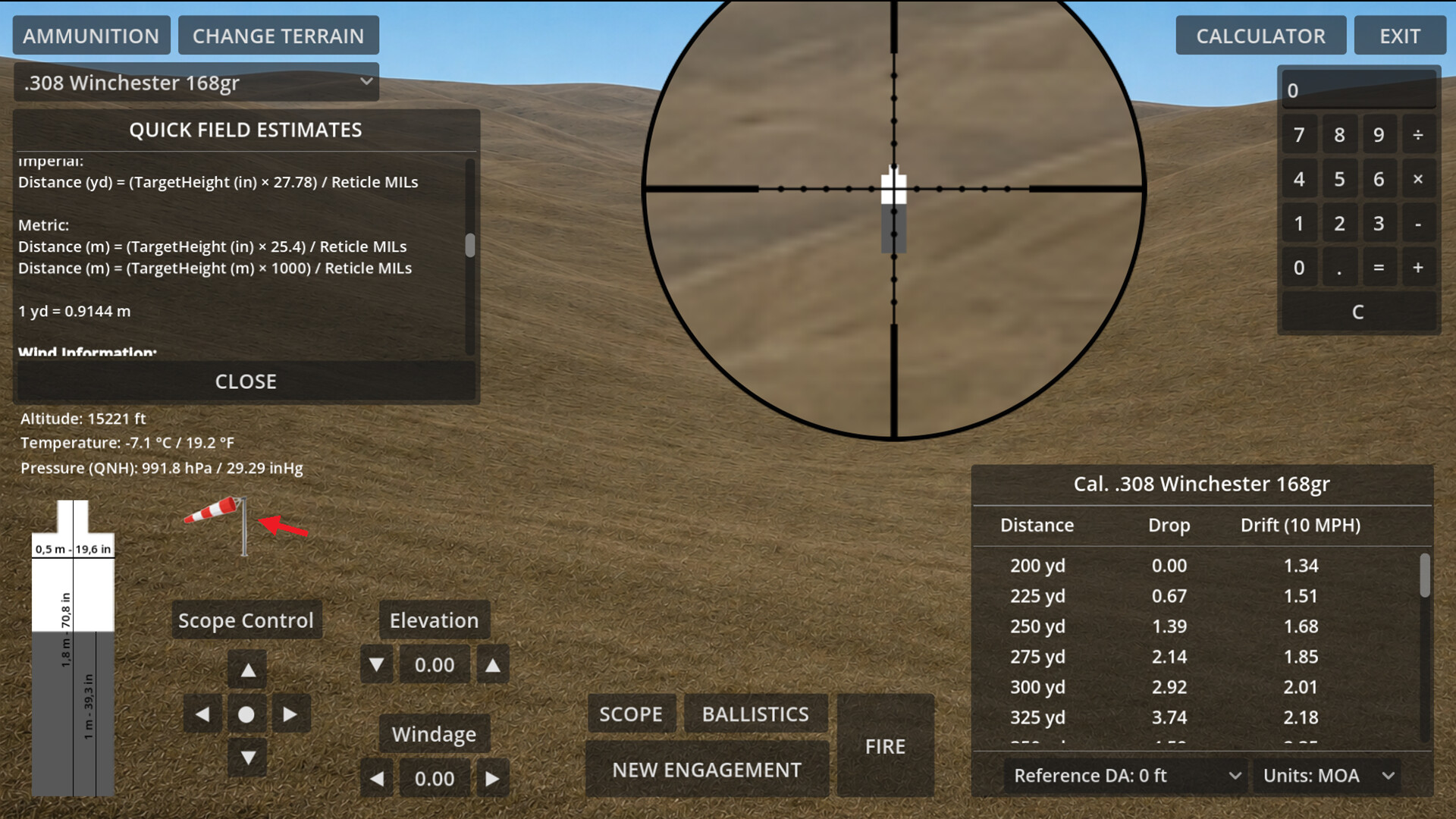
The tension comes from the fact that the exact distance is not given to you. You use the Mil-Dot reticle and the known dimensions of the target to estimate it. Then you consult the reference data, which can be displayed in MOA or MIL. Then you observe the wind arrow and the windsock to estimate speed and angle, work out the effective crosswind component, and estimate the correction for bullet drift.
Then you adjust elevation and windage on turrets graduated in 1/4 MOA per click. Then you shoot. If you have done it right, you get a first-round hit. If you have not, you get a miss and a lesson.
Atmospheric Mode is where the excuses die
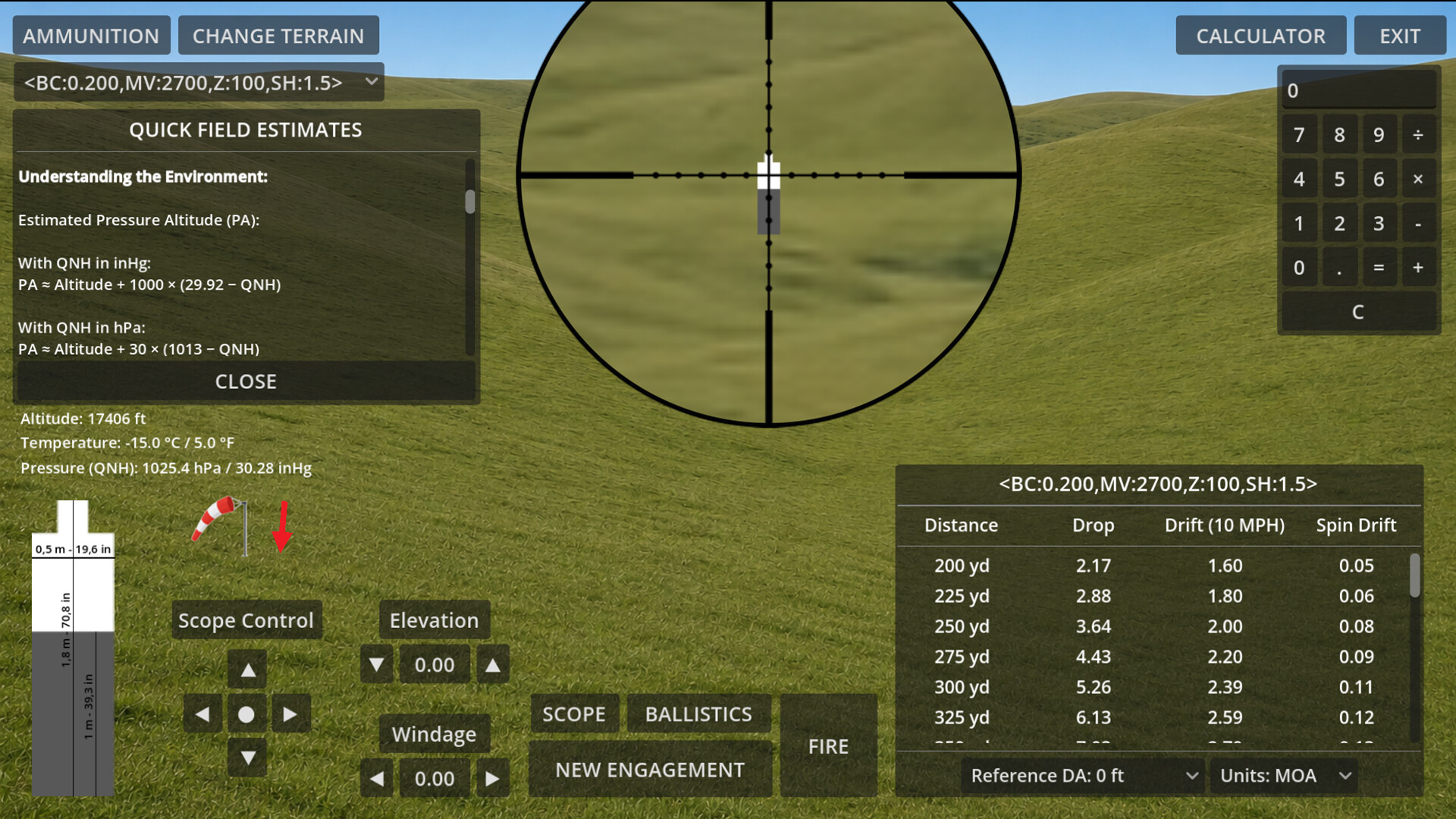
Once you are comfortable with the fundamental procedure, Atmospheric Mode introduces altitude, temperature, and atmospheric pressure (QNH) that vary between engagements. This is the game's smartest move. It takes the thing that makes real long-range shooting expensive and inconvenient — the fact that the air is different every time — and makes it a variable you can practise against.
It also means the ballistic reference tables are not a cheat sheet you memorise once. They are a document you have to interpret in context.
I like that. I like that a $6.39 game trusts me to understand that temperature changes the trajectory. I also suspect it will make me feel stupid in a way that is productive rather than punishing.
The honest reservation
Here is my worry: the game may be too honest about its own niche. The current player count on Steam is 1. One. That is not a verdict on quality — it is a verdict on visibility. A game released yesterday, with no player quotes on the store page yet, and a subtitle that reads like a syllabus, is going to struggle to find an audience.
The people who want this game are the people who already know what a ballistic coefficient is, and there are not many of them. The people who would love it if they tried it are the people who have never heard the phrase "effective crosswind component" and are not sure they want to.
That is the gap First Round Hit has to cross. It is not a game that sells itself with a trailer of things exploding. It sells itself with the promise that the math will be satisfying. Whether that promise lands depends entirely on how good the feedback is when you get it wrong. If the game tells you your range estimate was 40 metres off and your wind call was backwards, you will learn.
If it just says "miss," you will close it and go back to something with a health bar.
Who should skip it, and who should not
If you play games to switch off, skip it. If you have ever watched a long-range shooting video and wondered why the narrator keeps muttering about density altitude, this is your game. It sits in the same curious corner of the sim market as PowerWash Simulator — a game about a repetitive, technical process that becomes meditative once you submit to its rules. PowerWash Simulator gives you a dirty wall and a nozzle.
First Round Hit gives you a distant target and a table of numbers. Both are about the satisfaction of doing a job properly.
It also shares something with Papers, Please: the pleasure is in the procedure, not the action. You are checking your work. You are cross-referencing. You are making a decision and then committing to it. The difference is that in Papers, Please a mistake gets someone turned away at a border. Here, a mistake gets you a miss and a chance to try again.
The case for $6.39
Twelve ballistic profiles, custom configurations, MOA and MIL display options, Atmospheric Mode, and a calculator for when you cannot face the arithmetic. That is a lot of simulation for the price of a coffee. The comparison that keeps coming to mind is Balatro — not because they look alike, but because both games take a system that sounds like homework and turn it into a loop you want to run again.
Balatro did it with poker hands and jokers. First Round Hit is trying to do it with windage and elevation. The difference is that Balatro has a slot-machine dopamine hit every thirty seconds. First Round Hit has a single moment of truth per engagement, and if you miss, you have to do the whole thing again.
That is a harder sell. But it is also a more honest one. The game is not pretending to be anything other than what it is: a long-range shooting simulator focused on range estimation, ballistic reference data, environmental conditions, wind estimation, scope adjustments, and first-round accuracy. The subtitle is the pitch. The pitch is the punchline. And for $6.39, I am willing to find out whether the punchline lands.
One player on Steam right now is not a crowd. But it is a start. And if you are the kind of person who has ever wanted to know why a bullet goes where it goes, First Round Hit is asking you a question worth answering.