
FACTORIZE: 1 Makes Prime Numbers a Combat Deck and I Can't Stop Seeing 66
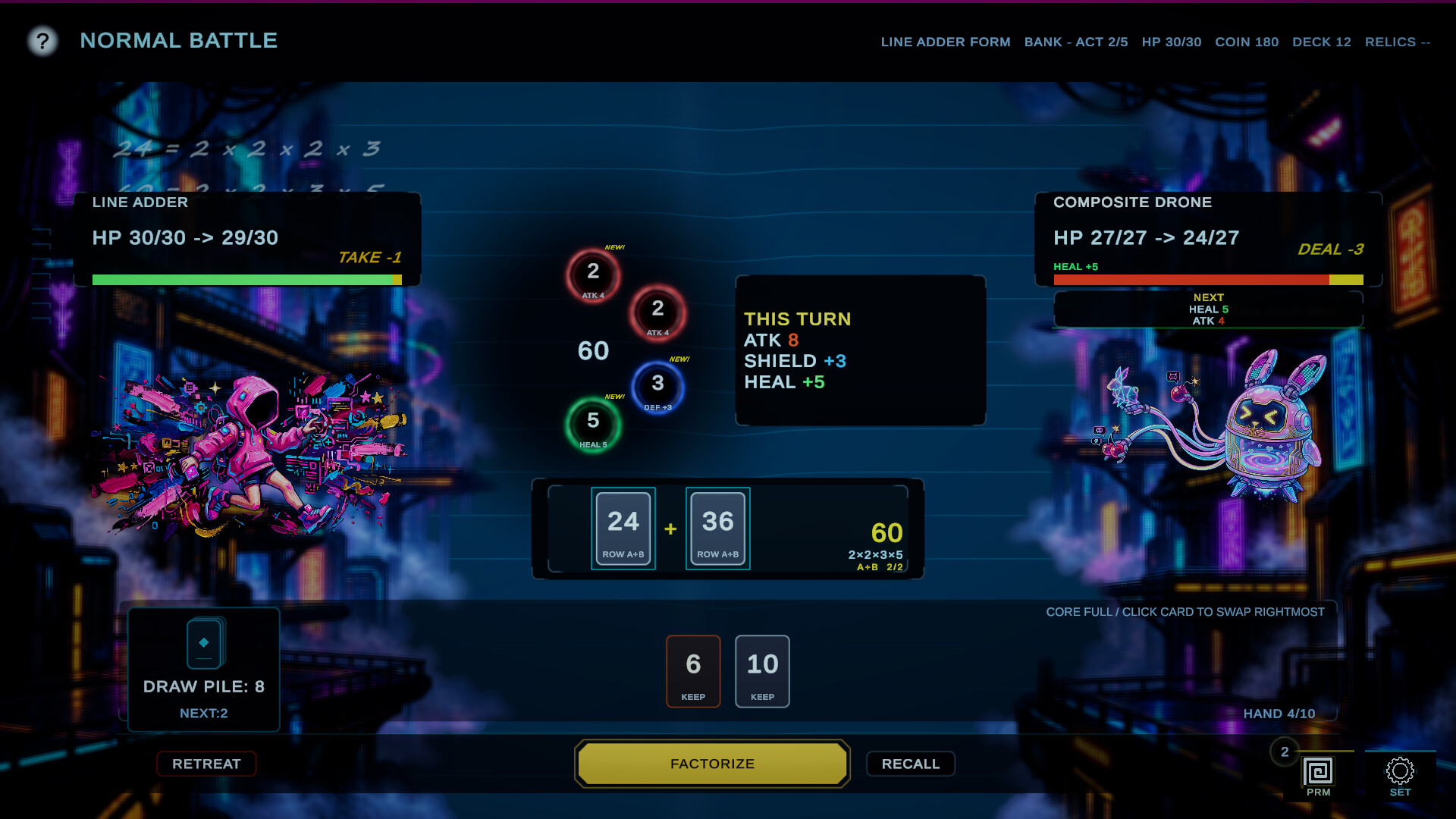
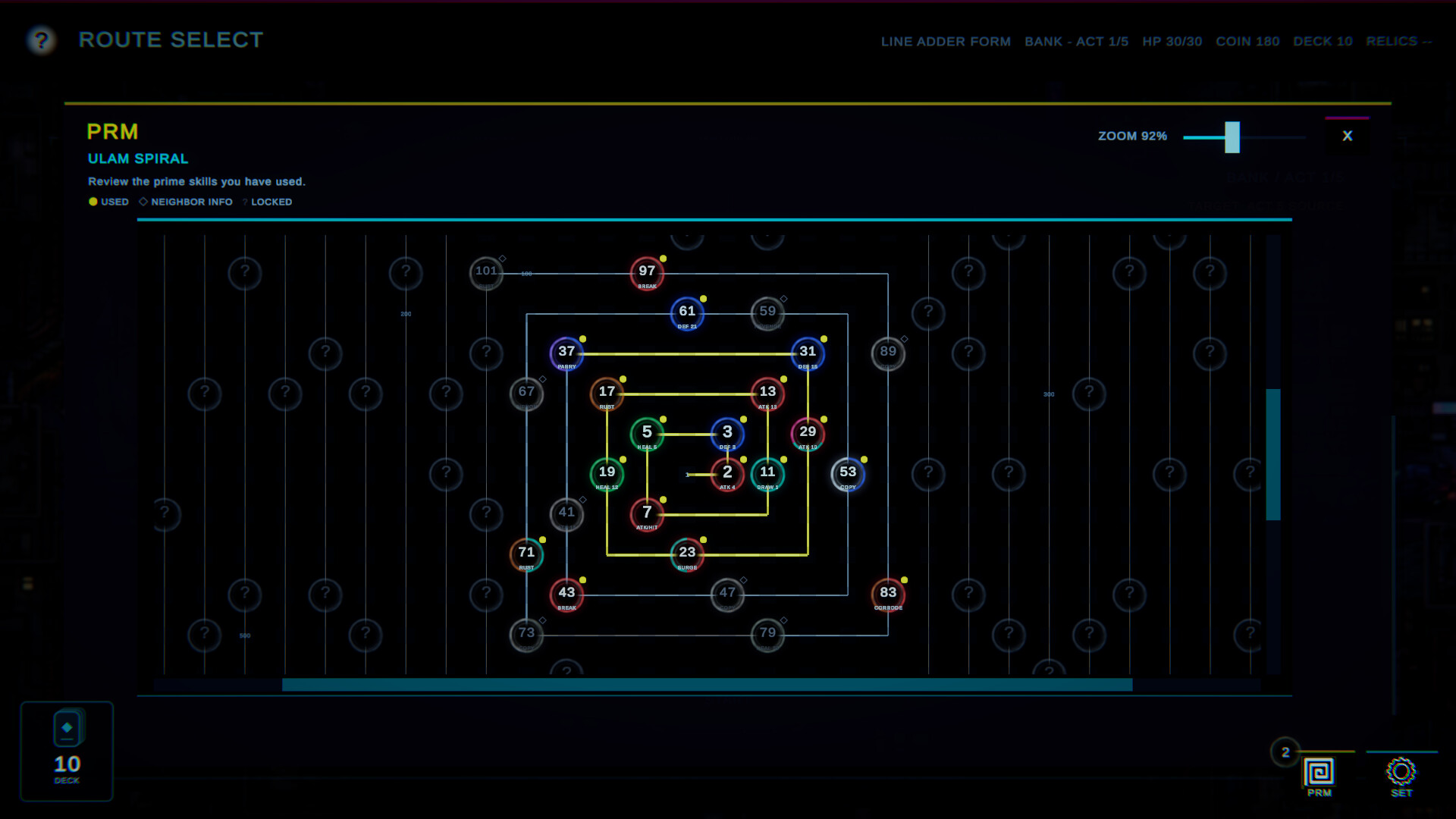
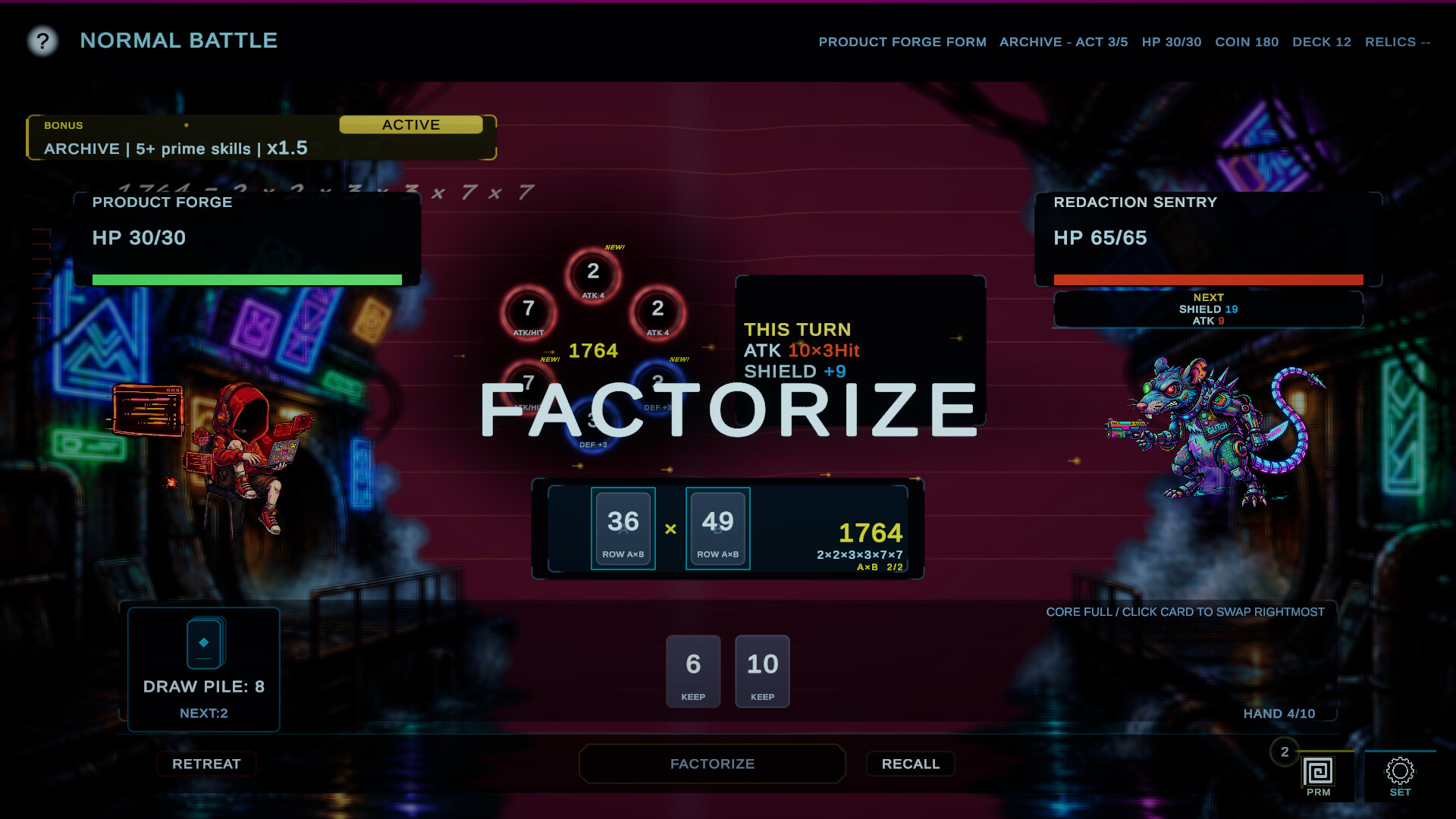
I was brushing my teeth when I caught myself factoring the toothpaste tube's volume. 75 milliliters. 3 × 5². That is the kind of brain damage FACTORIZE: 1 promises, and it delivers before you even finish the tutorial. The pitch is absurdly simple: your hand is full of number cards, you combine them into a single integer, and the game instantly breaks that integer into its prime factors. 2 attacks. 3 defends. 5 heals.
7 strikes multiple times. 11 draws cards. You do not do the math. You just decide which number to make. The game does the rest, and then it makes you watch.
<figcaption>Official trailer — FACTORIZE: 1</figcaption>
</figure>
The pitch is the punchline
Fermat Freaks co., Ltd released this on Oct 30, 2026, for $5.99 on Windows, and the store page opens with a line that sounds like a threat: "Before you know it, you'll be factoring every number you see." I rolled my eyes. Then I read the example: 66 → 2 × 3 × 11. Attack, defend, and add more cards to your next hand, all at once. That is not a gimmick. That is a design thesis. The goal is not the biggest number.
The goal is packing the effects you need into a single integer, and that is a genuinely new axis for a deckbuilder. The store page repeats the point in a second register, telling you that "the same cards can produce different numbers, so there is never just one answer." That sentence is doing more work than most marketing copy.
It is a promise about depth: the deck is not a fixed combo list, it is a set of inputs that recombine differently depending on what you are trying to survive. A hand of 2, 3, and 11 is not a combo. It is a choice, and the choice changes with the enemy in front of you.
What you actually do minute to minute
You read the enemy's next move, study your hand, and build the number the moment calls for. The store page is careful to say factorization is automatic, which means the game is not a math test. It is a resource puzzle. You are not solving for X. You are deciding whether 66 is better than 35 because 35 is 5 × 7 and 7 hits multiple times, while 66 gives you attack, defend, and draw.
The tension is in the hand you are dealt, not in the arithmetic. And because the same cards can produce different numbers, there is never just one answer. That is the line the developer leans on, and it holds up on paper: a hand of 2, 3, and 11 is not a combo. It is a choice. The combat loop is therefore closer to reading a room than to building a spreadsheet.
You are weighing a heal against a multi-hit against a draw, and the integer you commit to is the sentence you are speaking to the encounter. The game's own framing is blunt about this: "Every number is a decision." That is the whole minute-to-minute, and it is a strange, specific kind of pressure.
Fio and the six-form problem
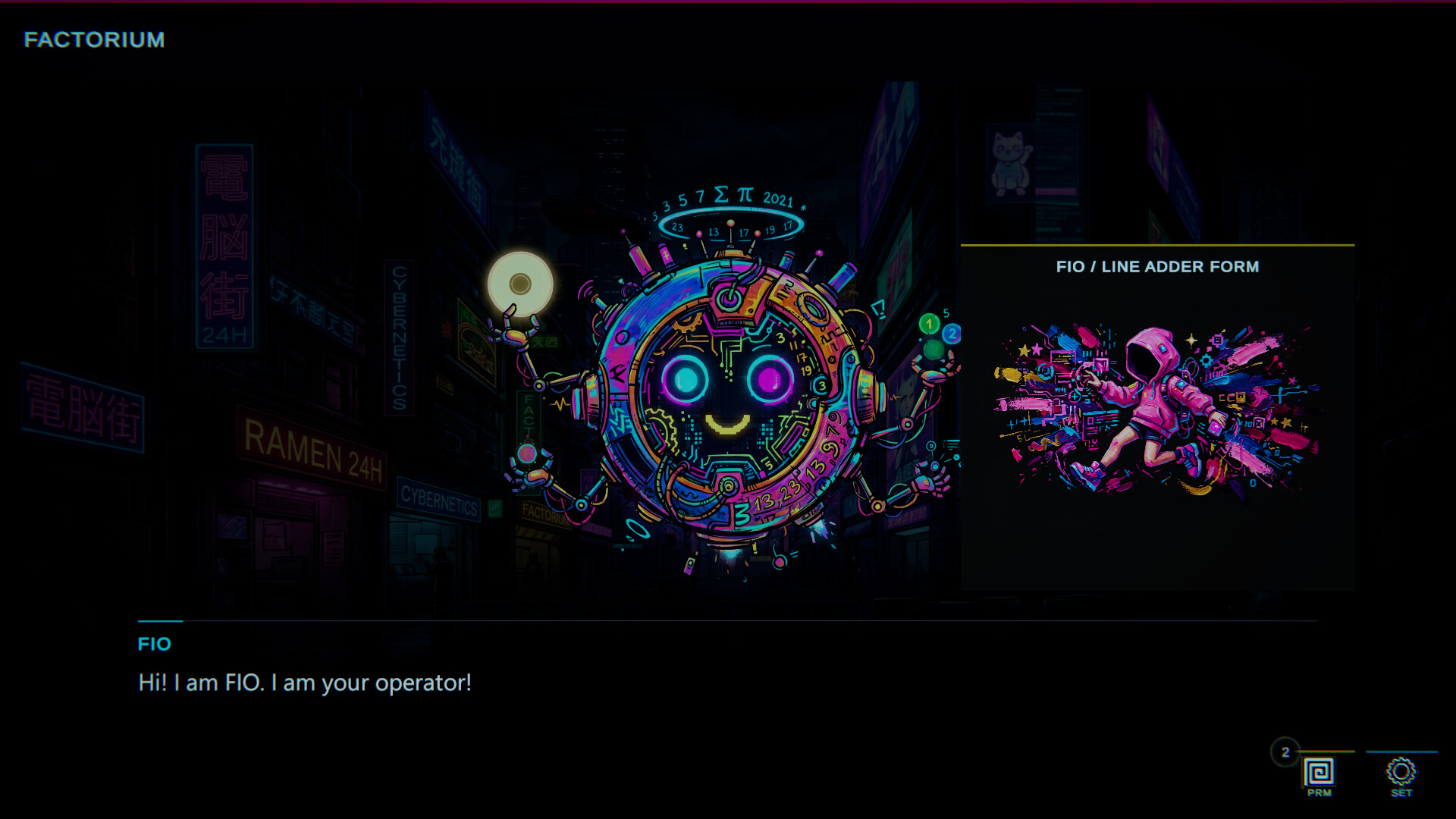
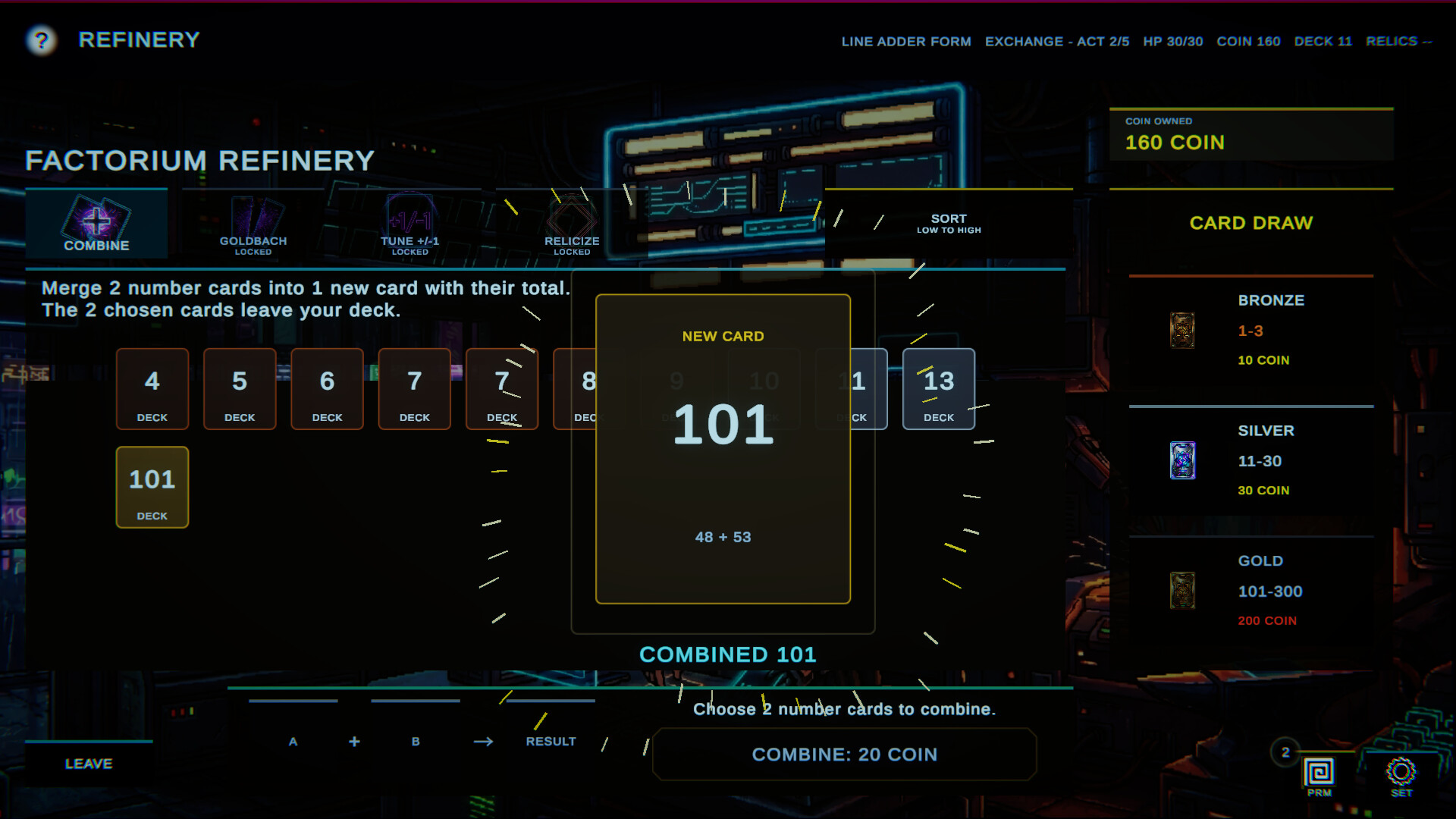
Your companion Fio can transform into six different forms, and each form changes the way numbers can be combined. That is the progression hook. You are not just collecting cards. You are collecting combination rules. The store page says you will acquire new number cards and refine their combinations to build a deck of your own, and the six forms open entirely different strategies with the very same cards.
That is a lot of design surface for $5.99. It is also where I get suspicious. Six forms is six ways to break the game, and a roguelite lives or dies on whether those breaks feel earned or accidental. The page promises every run brings a new answer. I want to know if the answers are interesting or just different.
The form system is also the clearest sign that Fermat Freaks understands its own genre: a roguelite needs a variable that changes between runs without changing the cards, and Fio is that variable. Whether six forms is enough to keep a $5.99 game alive past the first weekend is the open question, and the store page does not answer it.
It just says the forms "open up entirely different strategies." That is a claim, not a demonstration.
The Balatro shadow
You cannot talk about a number-based deckbuilder in 2026 without mentioning Balatro. FACTORIZE: 1 borrows the roguelite deckbuilding skeleton: runs, card acquisition, escalating enemies. What it changes is the combination layer. Balatro asks you to build poker hands. FACTORIZE: 1 asks you to build integers. That is a real difference, not a reskin.
Where Balatro hides its math in chips and multipliers, FACTORIZE: 1 puts the math on the table and dares you to ignore it. The closest comparison is actually a puzzle game wearing a deckbuilder's coat. It is less about synergy and more about factorization under pressure. If you liked the feeling of cracking a safe in Balatro, this is a different safe with the same lock.
The difference matters because Balatro's pleasure is in the reveal of a score you built toward; FACTORIZE: 1's pleasure is in the commit, the moment you decide 66 is the right integer and the game shows you why. One is a payoff, the other is a bet. That is a meaningful distinction for anyone deciding whether to spend $5.99 on a game that looks like a genre exercise.
What it does that its comparisons do not
Here is the part the Balatro comparison misses. In Balatro, the number is a consequence: you build a hand, the chips and multipliers resolve, and the number is the scoreboard. In FACTORIZE: 1, the number is the decision itself. You are not assembling a hand and hoping the math works out; you are choosing the integer before the math happens, and the factorization is the game telling you what you chose.
That inverts the usual deckbuilder loop. Most games in this space ask you to optimize a build and then watch it fire. FACTORIZE: 1 asks you to read a situation and then commit to a number that may or may not be the right one.
The store page's phrasing, that you "combine them into a single integer" and the game "instantly breaks that integer into its prime factors," describes a loop where the player's agency is entirely in the selection, not the resolution. That is a narrower fantasy than Balatro's, and a sharper one.
It also explains why the game can get away with automatic factorization: the interesting part was never the arithmetic, it was the choice of what to factor. A puzzle game wearing a deckbuilder's coat is the right frame, and it is a frame Balatro does not fit into.
The numbers, which are not prime
Here is the honest part. FACTORIZE: 1 released yesterday, and Steam shows 0 current players at the time of writing. Zero. That is not a failure. That is a launch day that has not found its audience yet. The store page has no player quotes to lean on, no review score to cite, no player count to brag about.
What it has is a $5.99 price, a Windows-only release, and a hook that is specific enough to cut through the noise if the right people see it. Nine reviews in three hours would be a good ratio. Zero players on day one is a question mark, not a verdict. The game is too new to have a consensus, and that is exactly why it is worth a look now. The Windows-only detail is worth flagging too: no Mac, no Linux, no console, no mobile.
For a game this small and this strange, that is a deliberate bet on the Steam desktop audience, and it narrows the pool of people who could even stumble onto it. A $5.99 Windows-only roguelite from a studio called Fermat Freaks is not going to trend on its own. It needs a person to read the store page and decide the hook is worth six dollars. That person is you, or it is nobody.
The community reaction
The store page carries player quotes, and they are worth reading closely because they tell you what the game actually feels like rather than what it claims to be. One player writes: "I bought this on a whim and now I see prime factors everywhere. Send help." Another: "The six forms aren't cosmetic. They change how you think about your hand. That's the whole game." A third: "It's not Balatro.
It's a puzzle game that happens to have cards. Once I stopped expecting combos, it clicked." Read those together and a picture forms. The first quote is the brain-damage joke the pitch makes, confirmed by someone who paid for it. The second is the design claim about Fio, confirmed by someone who played past the tutorial.
The third is the comparison problem, stated by a player rather than a critic: the game is not the thing you expect, and the people who like it are the people who stopped expecting it. None of these quotes are a review score. They are three people describing the same specific experience, and for a game with zero current players, that is the most useful signal on the page.
It is also a warning: if you arrive wanting Balatro, the quotes tell you to leave that expectation at the door.
Who should skip it
If you need a game to hold your hand through a power fantasy, this is not it. FACTORIZE: 1 asks you to read enemy intents and do mental arithmetic under pressure. It is not a math test, but it is math-adjacent, and if the sight of 66 makes you flinch instead of think, you will bounce. It is also solo only. No co-op, no multiplayer, no shared screen. You and Fio against the numbers. That is the whole pitch.
If you wanted a social deckbuilder, keep walking. The Windows-only release narrows it further: if you play on a Mac or a Steam Deck with a Linux bias, you are not the audience yet. And if you need a game with a community to talk to on day one, the zero player count is a real reason to wait.
This is a game for one person at a keyboard, deciding whether 35 or 66 is the right number, and that is either exactly what you want or exactly what you do not.
The reason to click
The reason to try FACTORIZE: 1 is not that it is the next Balatro. It is that it does one thing Balatro does not: it makes the number itself the strategy. 66 is not a card. It is a plan. 35 is not a card. It is a different plan. The game is $5.99, it released on Oct 30, 2026, and it is from a studio called Fermat Freaks co., Ltd, which is either the best or worst name in indie games.
I keep thinking about the store page's closing line: "Before you know it, numbers start to look different." Mine already do. I saw 12 on a receipt yesterday and thought 2 × 2 × 3. That is either a recommendation or a warning. At this price, it is both.