Emberward 1.0 Turns Tower Defense Into a Maze-Building Puzzle
Emberward is the strongest fresh Steam signal in today's IndieGame.party check because its numbers are unusually clean for a small strategy release. At 12:34 p.m. Malaysia time on September 20, 2026, Steam's official endpoints showed 1,746 current players and 3,989 all-language public reviews: 3,868 positive and 121 negative, or 97.0% positive. Steam labels that result Overwhelmingly Positive. The store also showed a 15% launch discount, from US$19.99 to US$16.99.

Emberward is the strongest fresh Steam signal in today's IndieGame.party check because its numbers are unusually clean for a small strategy release. At 12:34 p.m. Malaysia time on September 20, 2026, Steam's official endpoints showed 1,746 current players and 3,989 all-language public reviews: 3,868 positive and 121 negative, or 97.0% positive. Steam labels that result Overwhelmingly Positive. The store also showed a 15% launch discount, from US$19.99 to US$16.99.
This is market analysis, not a hands-on review. The article uses the official Steam store page, Steam's public review endpoint, Steam's current-player endpoint, and a bounded recent English review sample. Steam does not disclose unit sales, revenue, refunds, wishlists, or long-term retention, so none of those private figures are estimated here.
Why Emberward is visible now
Emberward reached version 1.0 on September 17 after building a clear identity around a simple twist: the player does not only place towers, but also builds the maze that enemies must cross. The official Steam page describes it as a strategic roguelite tower defense game where tetromino-like blocks shape the path and unique towers handle the damage.
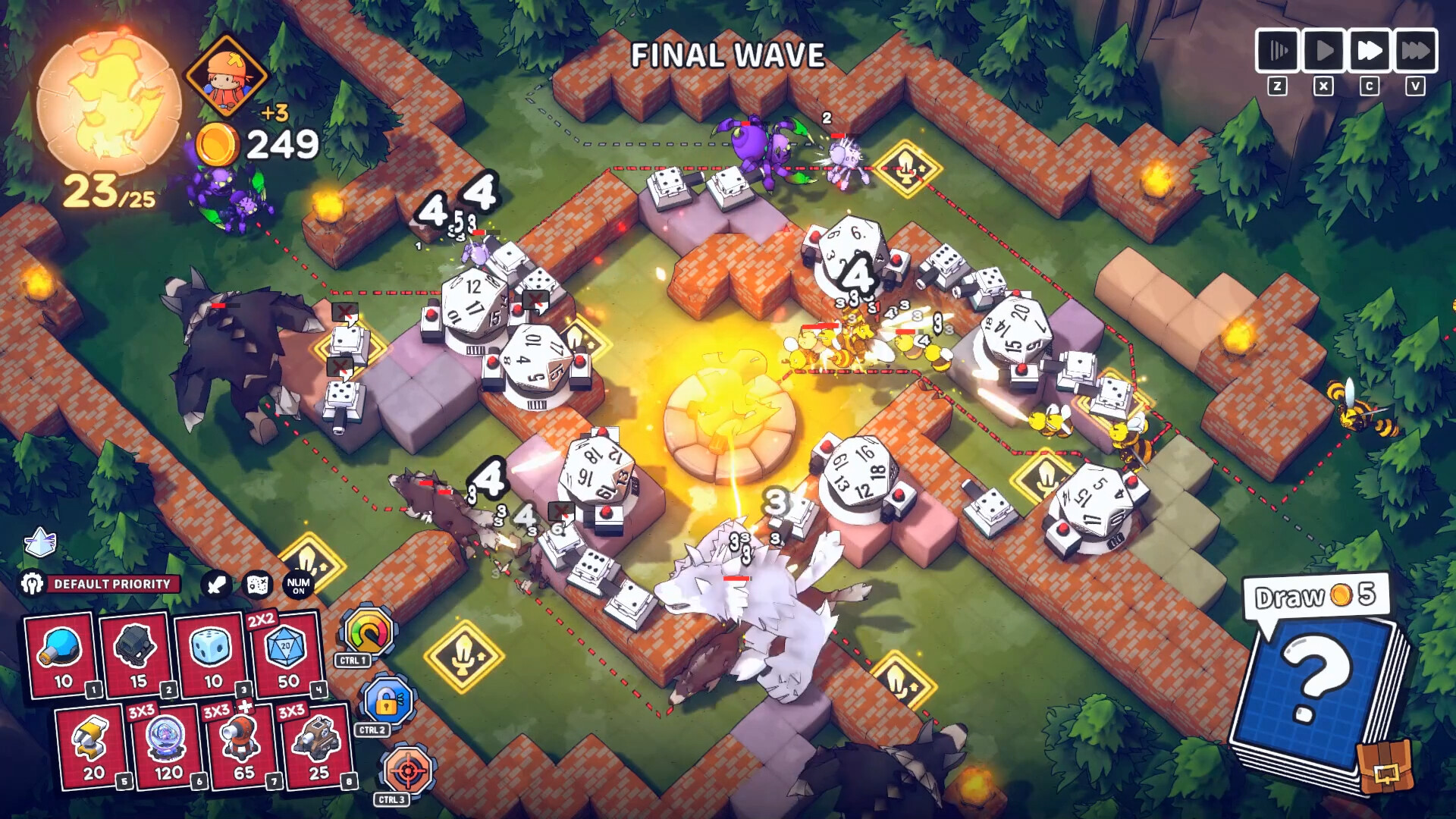
That one change gives the game a stronger hook than a standard lane-defense release. Tower defense already asks players to understand range, damage types, enemy routes, economy, and upgrade timing. Emberward adds a spatial puzzle that viewers can understand immediately. A good wall piece can lengthen the route, redirect pressure, or create better tower coverage. A bad piece can leave defenses underused or make a wave harder than it needed to be.
The market signal is not just review volume. Nearly four thousand reviews with a 97.0% positive share, only three days after the September 17 release date shown by Steam, indicate broad agreement rather than a tiny launch-day burst. The current-player count is also healthy for a paid strategy game whose sessions can be shorter and more solitary than a multiplayer hit.
Genre, platform, and release state
Steam lists Emberward as an indie strategy game on Windows. The store metadata includes tower defense, roguelite, strategy, puzzle, deckbuilding, grid-based movement, and cute visual tags. Refic Games is both developer and publisher, so the official Steam page is also the primary product source for release state, price, store images, and feature claims.
The game is not free despite Steam's genre metadata containing a Free To Play tag in the API response. The checked store price was US$16.99 during the 15% launch discount. That mismatch is a useful reminder that public tag data can contain community or legacy noise; price should be checked against the live store field, not inferred from tags.
The core loop and differentiation
The loop starts before the first enemy reaches a tower. Players use blocks to construct a path, then place towers so that the shaped route becomes a damage plan. Waves test whether the maze actually creates time, overlap, and coverage. Roguelite structure then changes the problem through tower choices, map constraints, upgrades, and run-specific opportunities.
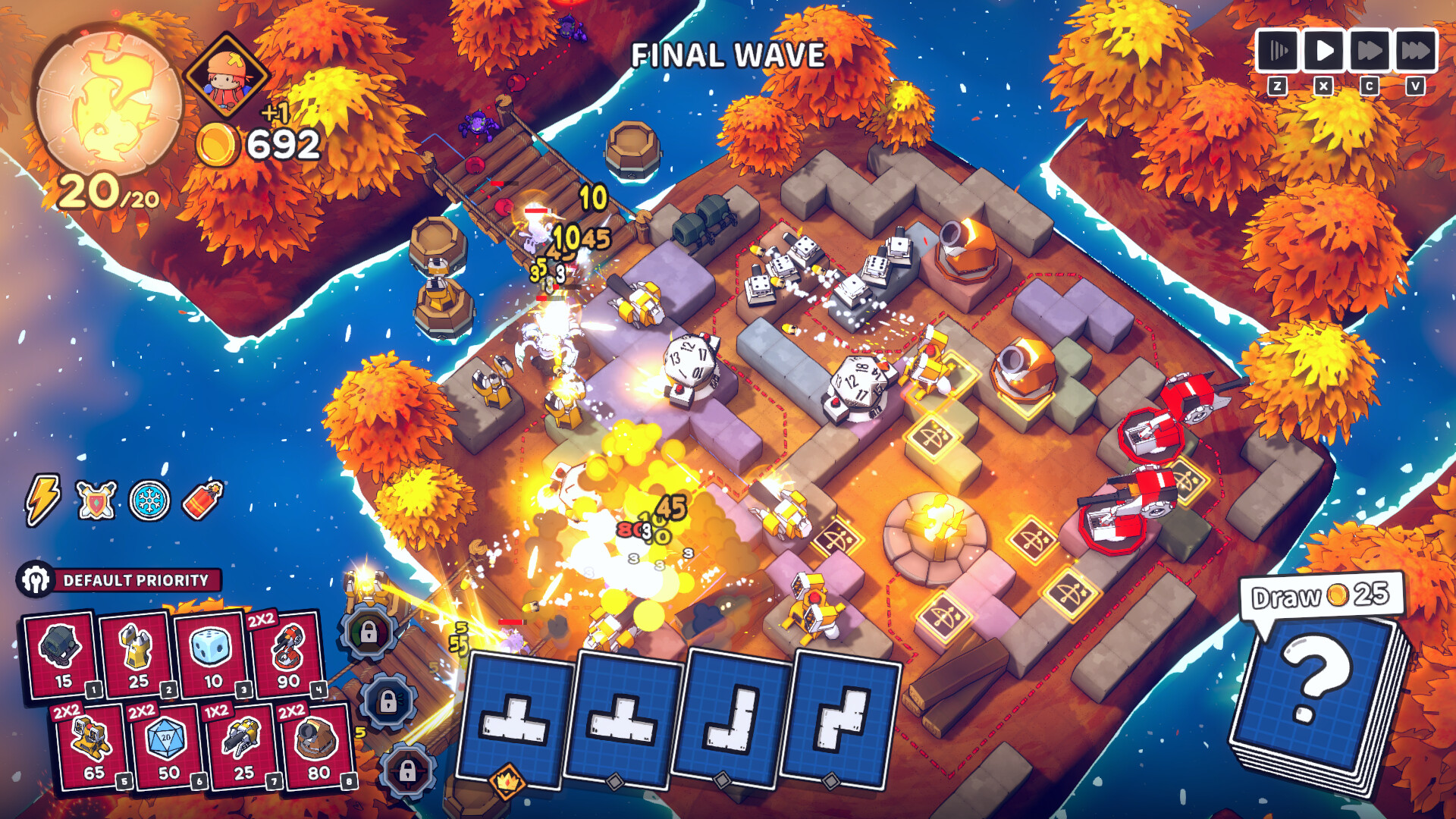
That structure matters because tower defense often falls into two separate decisions: where the path goes, which is fixed by the map, and where the towers go, which is the player's responsibility. Emberward collapses both into the player's plan. The route is not background geometry. It is part of the build.
The tetromino idea also gives the game a physical rhythm. Instead of simply clicking longer corridors into existence, players must work with awkward pieces. A block may be valuable because it bends the path, but inconvenient because it consumes space or closes off a future option. That makes each run less like filling optimal tower slots and more like drafting a defense out of imperfect tools.
Current market signal
The verified Steam snapshot at 12:34 p.m. MYT on September 20 showed:
- 1,746 current Steam players;
- 3,989 all-language reviews across purchase types;
- 3,868 positive and 121 negative reviews;
- 97.0% positive sentiment;
- Overwhelmingly Positive public label;
- US$16.99 launch price after a 15% discount.
These figures are strong, but they should be read carefully. Review count is a proxy for visible player response, not a sales total. Current players are a live moment, not a peak and not a daily average. The store page does not publish owner count, refund rate, or revenue.
Review themes: praise and complaints
The 100 most recent English-language reviews returned during the check contained 98 recommendations and two non-recommendations. In that sample, tower-defense language dominated. Ninety-two reviews used "tower" or related tower-defense phrasing, while recurring comments also mentioned deckbuilding, roguelite structure, accessibility, Steam Deck play, and the satisfaction of building paths.
The positive pattern is unusually consistent. Players repeatedly praise the maze construction as the part that makes Emberward feel different from familiar tower defense games. They also describe it as approachable, cute, easy to read, and comfortable for short sessions. Several reviews frame the game as a strong "pick up and play" strategy title rather than a dense spreadsheet.
The negative sample is too small to support a sweeping defect list, but the weaker notes point toward normal risks for a roguelite tower defense game: balance, long-term content variety, and whether run-to-run novelty holds after the main combinations are learned. A small number of recent reviews mentioned early-access context or future content hopes, which suggests some players are judging 1.0 partly against expectations built before launch.
Competition and market meaning
Emberward sits near games like Bloons TD, Rogue Tower, and tower-defense deckbuilders, but its identity is more tactile because the route is assembled from block pieces. That gives it a cleaner visual explanation than many strategy hybrids. A screenshot can show the maze, towers, enemies, and mistake surface at once.
Compared with heavier roguelite strategy games, Emberward appears to benefit from friendliness. Its art direction and readable grid lower the intimidation cost. Compared with pure puzzle games, waves and towers create urgency. Compared with fixed-map tower defense, block drafting gives players a stronger sense that success or failure came from their own layout.
The design lesson is straightforward: a strong hybrid works when the added genre changes the main decision, not when it sits beside it. Emberward does not merely add roguelite rewards to tower defense. It lets the player draft the battlefield itself.
Buyer caution
Emberward is safest for players who enjoy tower defense, route optimization, roguelite variation, and compact strategy sessions. The current review signal is strong enough that strategy fans do not need to treat it as an unproven experiment.
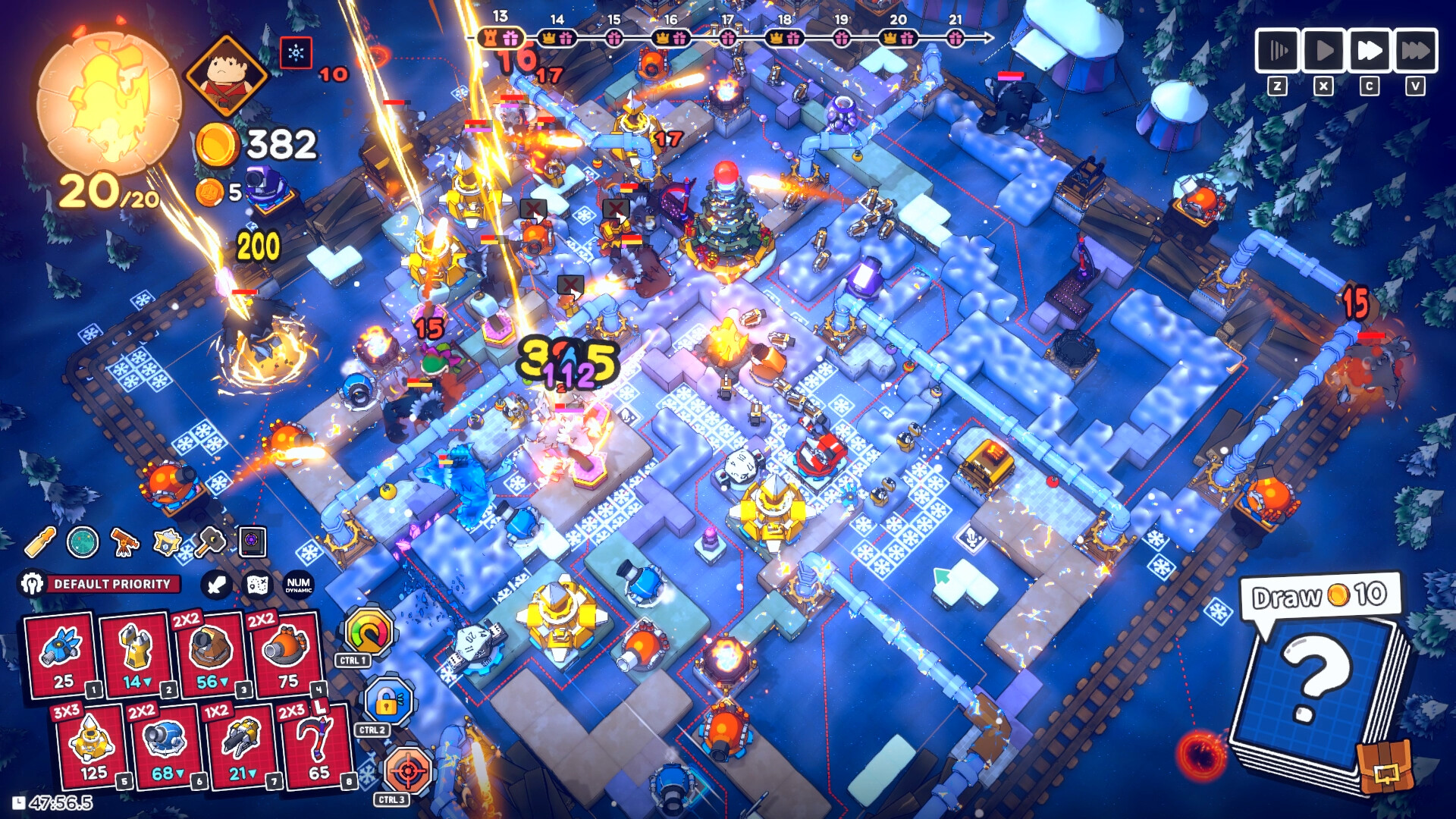
Be cautious if you need a long campaign, high realism, competitive multiplayer, or deep simulation. Players who dislike roguelite repetition may enjoy the early maze novelty but tire of repeated wave structures. People buying specifically for Steam Deck should still check current compatibility notes and controls because the article did not perform a device test.
IndieGame.party verdict
Emberward is a high-confidence market signal. The official data shows meaningful current activity, a large review pool for its scale, and an exceptional positive ratio. More importantly, the repeated praise matches the visible design: building the maze is not a gimmick, it is the main strategic verb.
Our verdict is recommended for tower-defense and roguelite strategy players, with the normal caution that long-term variety will decide whether the excellent opening signal becomes a durable favorite.
Data and image sources
- Official Steam store page: https://store.steampowered.com/app/2459550/Emberward/
- Steam public review summary: https://store.steampowered.com/appreviews/2459550?json=1&language=all&purchase_type=all
- Steam current-player endpoint: https://api.steampowered.com/ISteamUserStats/GetNumberOfCurrentPlayers/v1/?appid=2459550
- Steam metrics checked September 20, 2026 at 12:34 p.m. MYT.
- The hero image and three screenshots are official Steam store assets for Emberward, © Refic Games, downloaded locally from the official listing on September 20, 2026 for identification, reporting, and criticism. They are not hotlinked, composited, or materially altered.