Dicevaders Launch Analysis: Why This Dice-Builder Found an Audience
Dicevaders entered a crowded roguelike market on September 29 with a compact pitch: build a set of dice, place the results into an alien-defense machine, and turn probability into a scoring engine. Four days after launch, its public signals were strong enough to deserve attention. Steam showed 273 user reviews, 258 positive and 15 negative, or about 94.5% positive, while Steam's public player endpoint reported 929 players in game at 1:04 p.m. Malaysia time on October 3.

Dicevaders entered a crowded roguelike market on September 29 with a compact pitch: build a set of dice, place the results into an alien-defense machine, and turn probability into a scoring engine. Four days after launch, its public signals were strong enough to deserve attention. Steam showed 273 user reviews, 258 positive and 15 negative, or about 94.5% positive, while Steam's public player endpoint reported 929 players in game at 1:04 p.m. Malaysia time on October 3.
This is a launch analysis based on the official store materials, public Steam data, and a sample of visible user reviews. It is not a hands-on review and does not score control feel, balance, or long-session stability from personal play.
Why It Matters Now
The launch is useful because Dicevaders does not depend on photorealism or a licensed setting. It combines three legible ideas—dice manipulation, roguelike drafting, and score chasing—then presents them as one repeatable run. That creates an immediate “one more attempt” promise and gives stream viewers enough information to follow decisions without a long tutorial.
The current-player number is a snapshot, not a lifetime sales estimate. Review volume is also influenced by key distribution, regional mix, and the percentage of buyers who leave feedback. Taken together, however, the concurrent-player and review signals show genuine early activity rather than a store page receiving attention with no visible play.
Genre, Platform, and Launch Status
Pengonauts describes Dicevaders as a dice-building roguelike deckbuilder. Playstack publishes the Windows PC release. The genre label matters because the game borrows the draft-and-synergy language of deckbuilders while making dice faces, placement, and probability the resources being tuned.
It is a fully launched game, not a demo or an early-access forecast. Buyers should still check the current Steam page for language, controller, and system-support details because those fields can change after publication.
The Loop and the Distinctive Hook
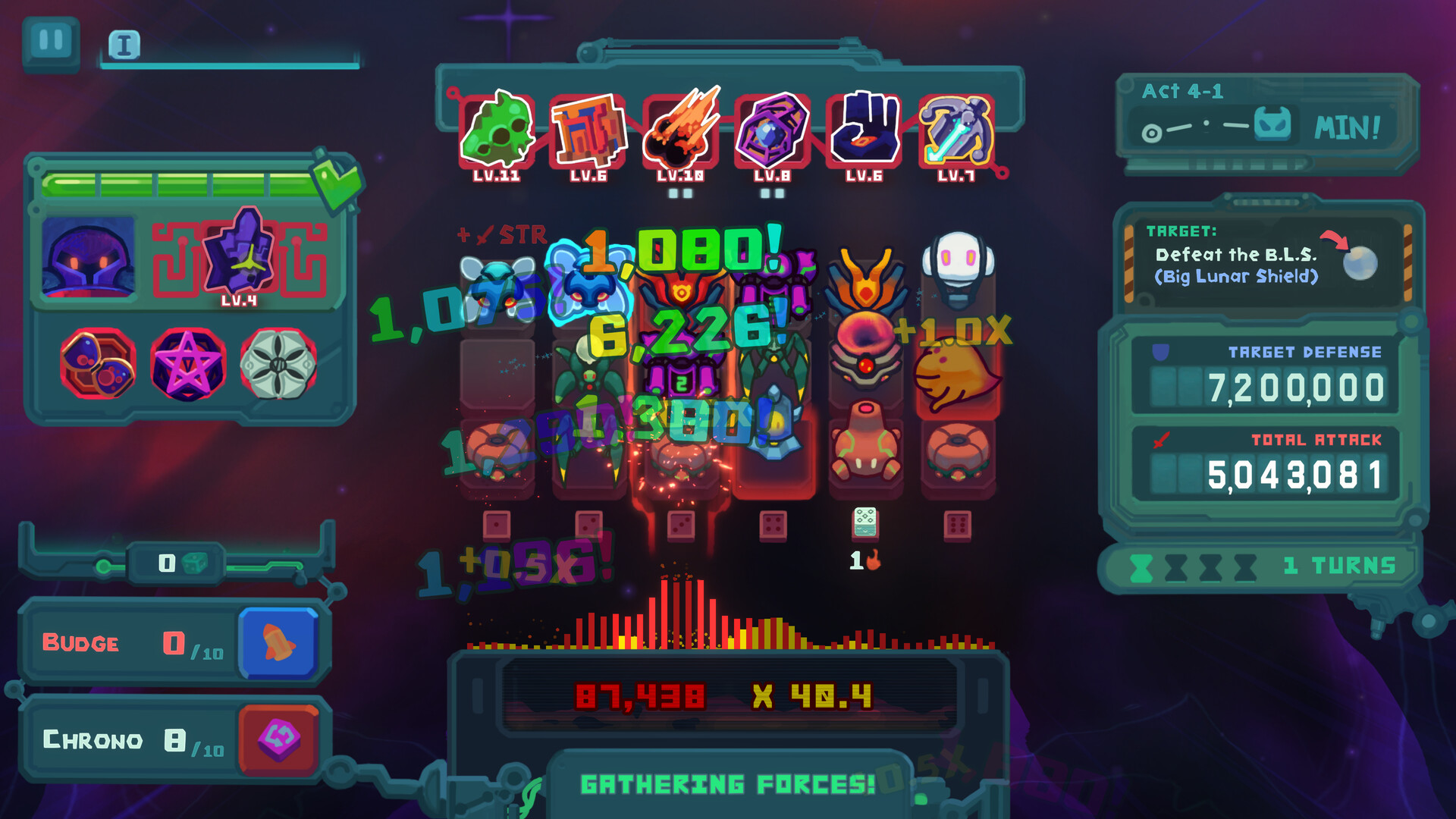
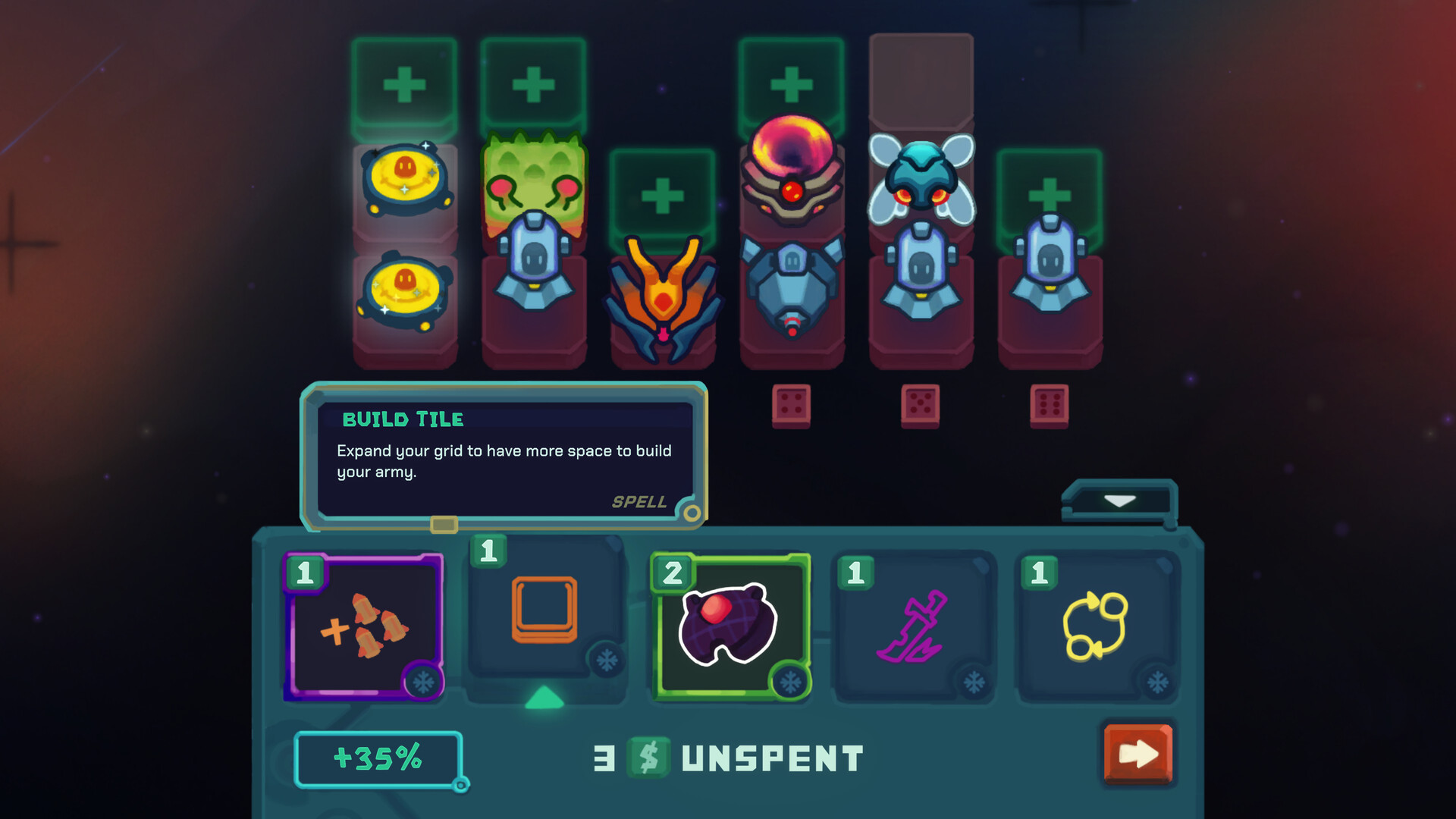
A run appears to revolve around rolling a customized pool, assigning results, taking rewards, and building combinations that survive escalating pressure. The official screenshots emphasize readable boards, highlighted dice, upgrade selections, and an invasion theme. The hook is not merely that attacks use random numbers. Players shape the distribution itself: new faces, effects, and interactions can make a previously weak roll useful.
That design shifts the interesting question from “did I roll high?” to “did I build a system that can use several outcomes?” Strong dice-builders offer mitigation, conversion, and redundancy. If Dicevaders sustains that variety across repeated runs, it can produce stories about engineered luck rather than stories about being defeated by luck.
Public Market Data at the Check Time
At 1:04 p.m. MYT on October 3, Steam's public review summary showed 273 reviews: 258 positive and 15 negative. That is approximately 94.5% positive and carried a Very Positive label. Steam's public current-player API returned 929 players in game at the same check.
These figures are time-stamped because both can move quickly during a launch week. Concurrent players do not equal owners, and reviews do not represent every buyer. The useful signal is directional: a small, mechanically focused title had enough conversion and retention to generate hundreds of simultaneous players several days after release.
What Players Repeatedly Mention
Across a sample of visible reviews, positive comments repeatedly focused on the number of build combinations, the satisfaction of discovering synergies, and the pull of the scoring system. Several reviewers described an initially dense ruleset that became more rewarding after a few runs. That is consistent with the official presentation: much of the pleasure appears to come from learning which symbols and upgrades multiply one another.
Critical comments were less uniform, but recurring cautions included complexity during the first runs, a desire for more activities or content, and the fact that an addictive loop is not the same as perfect balance. These are patterns in a non-random review sample, not measured prevalence. Individual reviews were used as reaction signals; factual claims about features come from the official store page.
Competitors and Positioning
Dicevaders sits near Dicey Dungeons, Slice & Dice, Astrea: Six-Sided Oracles, and score-driven roguelites that ask players to draft a probability engine. Dicey Dungeons is friendlier and character-led; Slice & Dice emphasizes party tactics; Astrea builds an elaborate purification system around dice. Dicevaders' opportunity is to own the intersection of arcade-readable invasion pressure and optimization-heavy dice construction.
The competitive risk is discoverability. Players already have several acclaimed ways to manipulate dice, and the broader deckbuilding category releases new games every week. Clear onboarding and meaningful run variety will matter more than the novelty of dice by itself.
Who It Is For—and Who Should Be Cautious
The strongest audience is players who enjoy probabilistic planning, cascading synergies, score optimization, and runs that reveal their rules gradually. It may also appeal to deckbuilder fans who want a different visual grammar from cards.
Players who dislike randomness, dense icons, repeated attempts, or learning through failed runs should watch unedited gameplay first. Accessibility and input needs should be checked on the current store listing. The early positive ratio does not guarantee that the balance curve or content volume fits every player.
Verdict
Dicevaders has a credible early launch story: a clear mechanical identity, a Very Positive review pattern, and a visible active-player base four days after release. The interesting design lesson is that randomness becomes more acceptable when players can reshape and route it. The longer-term question is whether the content supports the same excitement after the first discoveries are exhausted.
Sources and Image Rights
- [Official Steam store page](https://store.steampowered.com/app/3917700/) — features, developer, publisher, release date, review summary, and official media; checked October 3, 2026.
- [Steam public current-player endpoint](https://api.steampowered.com/ISteamUserStats/GetNumberOfCurrentPlayers/v1/?appid=3917700) — 929 at 1:04 p.m. MYT, October 3, 2026.
- [Steam public review endpoint](https://store.steampowered.com/appreviews/3917700?json=1&language=all&purchase_type=all) — aggregate counts and reaction sample; checked October 3, 2026.
The hero and three screenshots are unmodified official Steam store assets owned or supplied by Pengonauts/Playstack. They are stored locally and used minimally to identify and critique the game; source page checked October 3, 2026. No community uploads or fan art are used.