Crimson Moon Found an Audience—Then Its Combat Lost Their Trust
Crimson Moon is not struggling to be noticed. ProbablyMonsters' solo-and-two-player action RPG reached a reported No. 63 position in Steam's global revenue chart during the September 4 market snapshot and had 2,504 concurrent players in that observation. At 1:58 p.m. Malaysia time on September 7, Steam's public player endpoint showed 1,024 people in game. Its all-language review pool had expanded to 2,700 reviews: 1,605 positive and 1,095 negative, or 59.4% positive.
Crimson Moon is not struggling to be noticed. ProbablyMonsters' solo-and-two-player action RPG reached a reported No. 63 position in Steam's global revenue chart during the September 4 market snapshot and had 2,504 concurrent players in that observation. At 1:58 p.m. Malaysia time on September 7, Steam's public player endpoint showed 1,024 people in game. Its all-language review pool had expanded to 2,700 reviews: 1,605 positive and 1,095 negative, or 59.4% positive.
That combination makes Crimson Moon worth examining now. The game has a real audience, a clear store pitch, and enough feedback to reveal recurring friction. It is also a warning against treating visibility as validation. Players are entering the funnel; too many are leaving with reservations about the combat and launch condition.
This is a launch and market analysis based on official store materials and public review aggregates, not a hands-on review.
The premise and release state
ProbablyMonsters released Crimson Moon on Steam for Windows PC on September 1, 2026. Steam classifies it across Action, Adventure, and RPG, while the store describes a human-angel hybrid named Nephilim fighting demons alone or with one co-op partner. The developer and publisher are both ProbablyMonsters.
The commercial promise is straightforward: aggressive melee combat, supernatural abilities, large groups of enemies, character-building choices, and boss fights that can be tackled solo or cooperatively. It is already released, not an Early Access project or a demo. That distinction matters because buyers are judging the current build as a finished paid product.
The September 4 report recorded 2,187 reviews at 60.4% positive. By the September 7 check, the sample had grown by 513 reviews while the positive share slipped to 59.4%. A one-point movement is not decisive by itself, but growth without sentiment recovery suggests the complaints were not confined to a tiny launch-hour cohort.
The core loop: fight, shape a build, test it on bosses
Crimson Moon's basic loop is built for immediate comprehension. Enter an encounter, use melee attacks and supernatural powers to clear demon groups, collect progression resources, strengthen a build, and push toward more punishing bosses. Co-op adds coordination and revive dynamics without turning the game into a full party-management RPG.
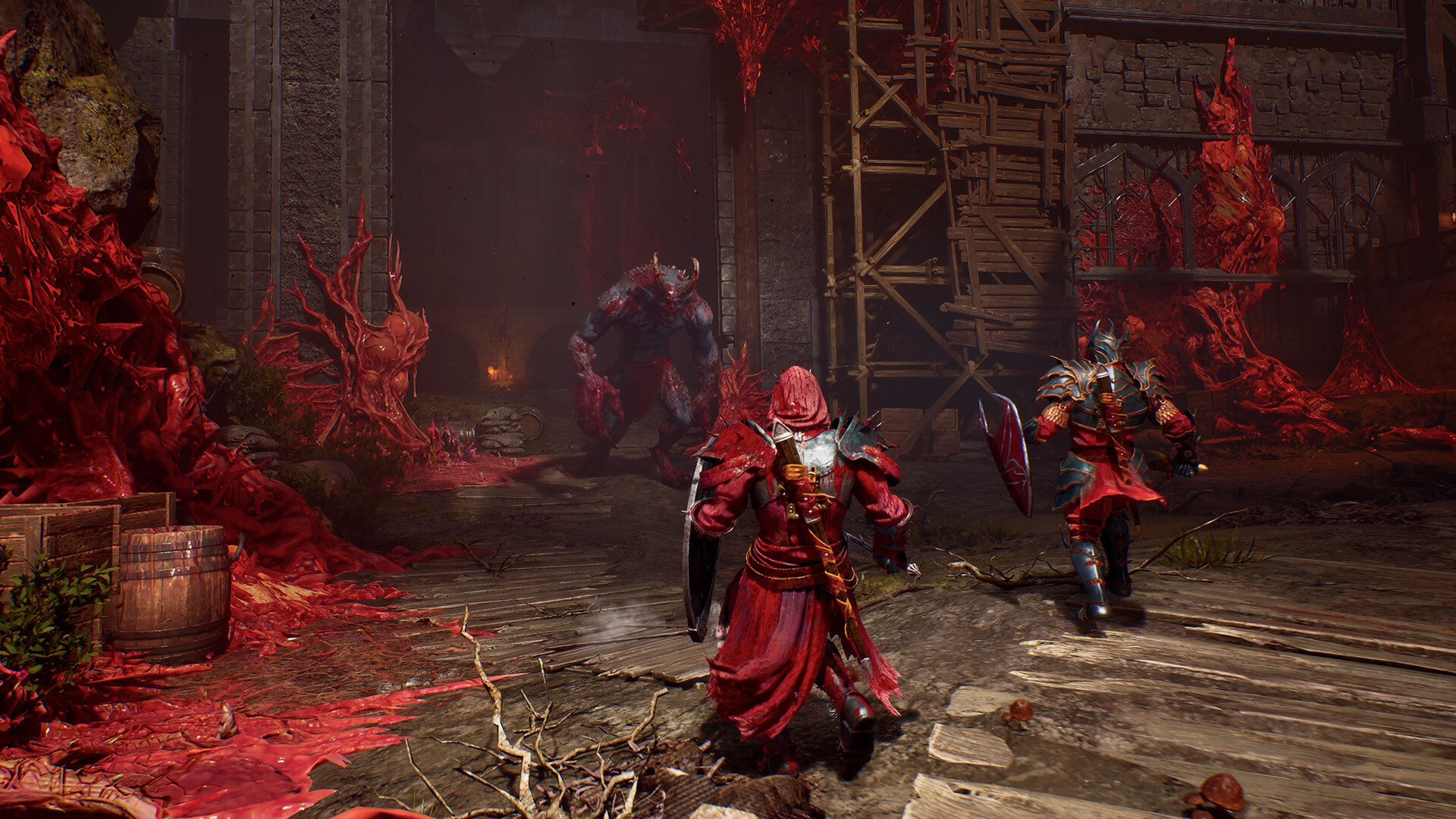
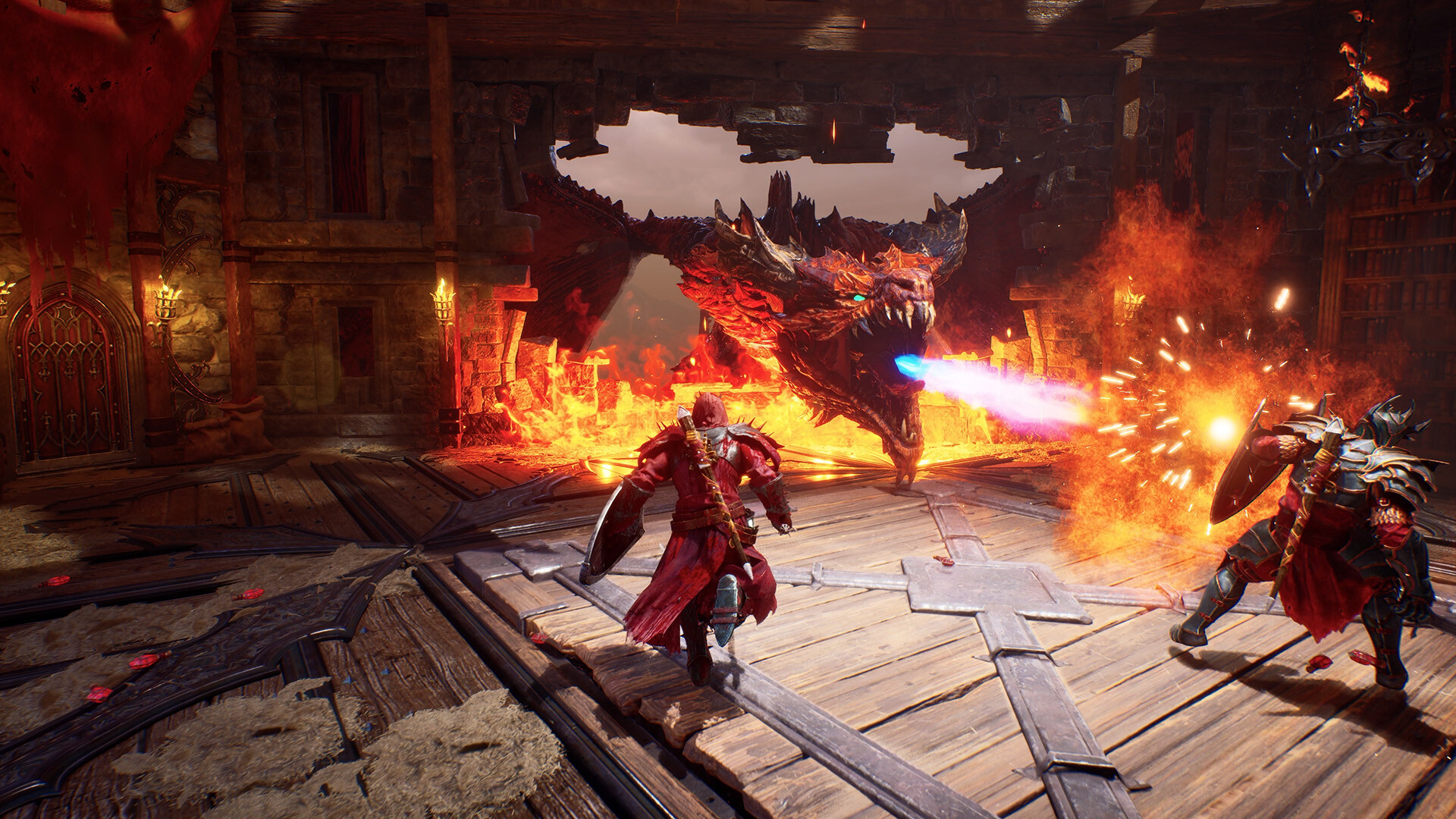
The differentiator is supposed to be physical intensity. The store footage and screenshots emphasize dense arenas, violent finishers, towering enemies, and a protagonist who can move through crowds rather than carefully pull one target at a time. The hybrid identity supports the ability kit: martial force on one side, supernatural escalation on the other.
This loop sits between character-action games and loot-driven action RPGs. It needs attacks to feel readable and responsive in the moment, while upgrades need to change how encounters are approached. If either side is shallow, repetition becomes visible quickly. Strong effects cannot conceal weak hit feedback, and a long upgrade tree cannot rescue encounters that ask for the same response.
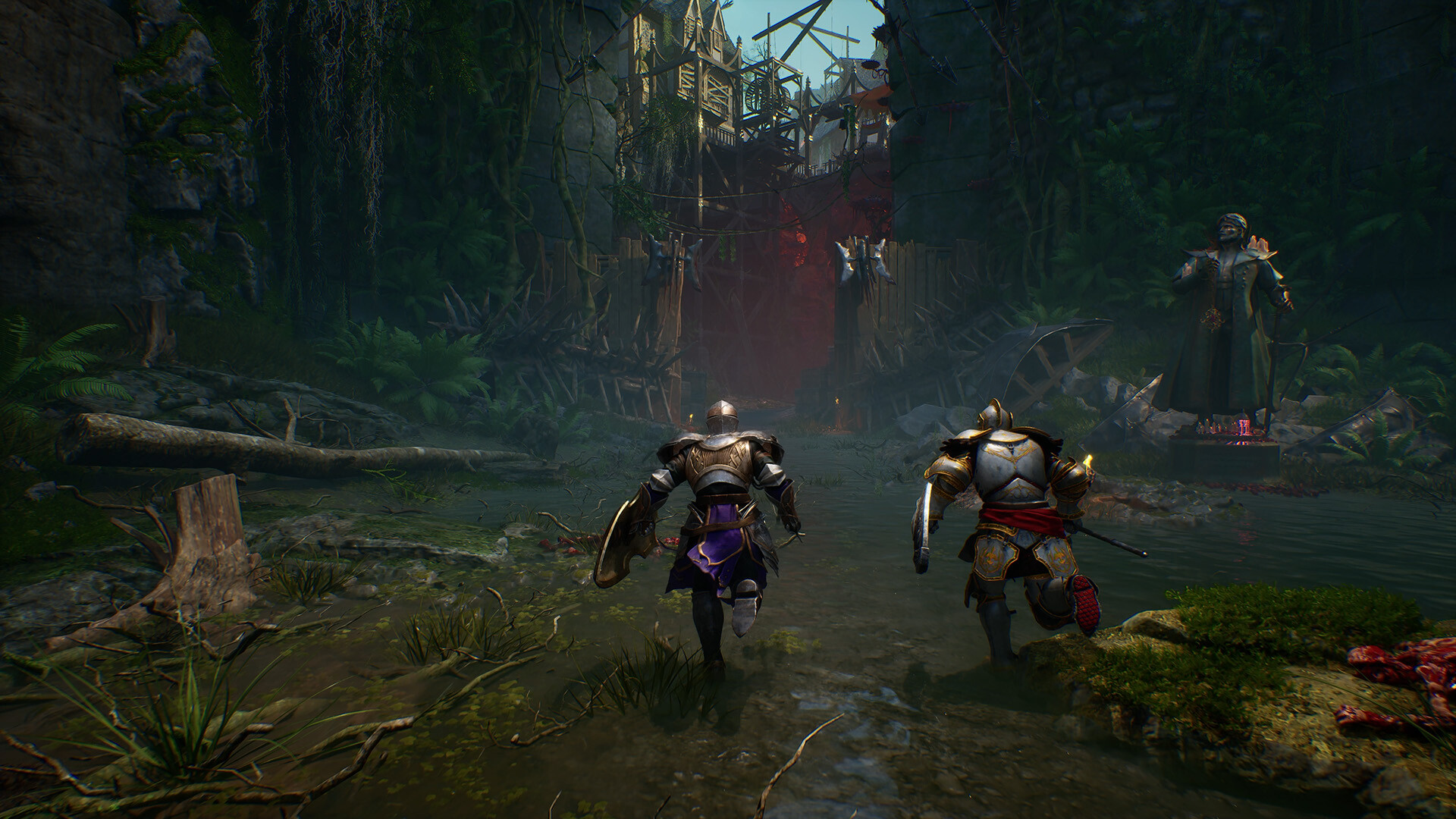
Co-op raises the quality bar. A solo player may tolerate a rough camera or inconsistent enemy tracking; two players introduce network behavior, visual overlap, and questions about who drew aggression. The same spectacle that looks good in a trailer can become noise when both players trigger effects around a large boss.
What positive reviews appear to value
Across 1,605 positive recommendations in the September 7 aggregate, the broad signal is that the premise has appeal. Positive players repeatedly reward the dark-fantasy power fantasy, the chance to play the campaign with one friend, the visual ambition of major encounters, and the pleasure of assembling an ability combination that clears a previously difficult room.
The two-player limit may help compared with four-player chaos. It preserves a more authored camera and encounter scale while still offering social play. For players who want a focused campaign rather than an endless service game, that boundary can be a benefit.
There is also value in a new intellectual property taking a direct swing at melee co-op. Many cooperative games use shooting because ranged combat is easier to network and frame. Crimson Moon's willingness to center close combat gives it an identity even when execution is debated.
These are patterns summarized from the public aggregate and store-facing community signal. Individual review wording is not reproduced here, and 2,700 reviews cannot represent every buyer.
Why the negative signal is serious
The 1,095 negative recommendations are too numerous to dismiss as a few edge cases. Recurring dissatisfaction centers on the feel and reliability of combat: responsiveness, enemy behavior, camera and targeting pressure, difficulty spikes, technical performance, and whether progression adds enough variety to sustain repeated arenas.
These complaints strike the product's load-bearing system. In a dialogue-heavy RPG, imperfect melee can be one component among many. In Crimson Moon, combat is the reason to move from one room to the next. When an animation locks a player longer than expected, a camera loses the threat, or a boss hit feels poorly communicated, the game undermines its own promise.
The rating is also a discovery problem. Steam labels the aggregate "Mixed," a visible warning for prospective buyers. That can reduce conversion precisely when a launch is receiving chart exposure. Patches may improve the build, but the early review base remains part of the store's public history.
Developers face a sequencing challenge. Fixes to crashes, frame pacing, input, and networking should come before additional content. Balance changes should distinguish a deliberately difficult encounter from one that is hard because feedback is inconsistent. Communication needs to say what changed without arguing with disappointed players.
What it means beside its competitors
Crimson Moon competes for time with polished action RPGs, character-action games, and co-op hunting experiences. It does not need the content volume of the largest franchises, but it does need a combat language players can trust.
Compared with a loot-first action RPG, Crimson Moon's narrower two-player campaign can feel more authored. Compared with a dedicated character-action game, its progression can offer more reasons to revisit abilities. Its danger is landing between the categories: less precise than the best action systems and less expansive than the best loot games.
The market numbers show that packaging and demand were not the first problem. A four-digit current player count nearly a week after release is material for a new action property, and 2,700 reviews indicate substantial purchasing activity without requiring any private sales estimate. The conversion from attention to satisfaction is the unresolved part.
Who should buy—and who should wait
Consider Crimson Moon now if a two-player dark-fantasy campaign is specifically what you want, you are tolerant of launch roughness, and current footage of the combat looks convincing to you. Buying through Steam also gives eligible customers a defined refund window, though buyers should check the current policy themselves.
Wait if responsive melee, stable performance, or solo balance is non-negotiable. Watch recent-review direction and patch notes rather than the lifetime score alone. A rise in positive recent sentiment accompanied by technical fixes would be better evidence than one large content roadmap.
Avoid treating the global revenue rank from September 4 as proof of long-term success. Charts move quickly, regional pricing and launches affect position, and Steam does not disclose unit sales in this dataset.
IndieGame.party verdict
Crimson Moon has achieved the hard first step: people care enough to try it. The current evidence says the launch build has not earned equivalent trust. At 1,024 concurrent players and 2,700 reviews, this is not an invisible game being punished by a handful of reviewers. It is a visible game receiving a consistent quality warning from a large early sample.
The recommendation is wait and monitor, especially for solo players or anyone sensitive to technical and combat-readability problems. Co-op action fans may still find the premise worth the friction, but the store signal should be taken seriously.
Data and image sources
- Official Steam store page: https://store.steampowered.com/app/4317690/Crimson_Moon/
- Steam public review summary endpoint, checked September 7, 2026 at 1:58 p.m. MYT.
- Steam public current-player endpoint, checked at the same time.
- All four images are official Steam store assets supplied by ProbablyMonsters, downloaded locally on September 7, 2026 for identification, reporting, and criticism. They are not composited or materially altered.