Asgard's Fall 1.0 Has a Strong Build Engine—and a Performance Warning
Asgard's Fall left Early Access on September 9 with a useful mid-tier market signal rather than a breakout. At approximately 1:03 p.m. Malaysia time on September 10, Steam's public endpoints showed 413 current players and 1,299 all-language reviews, including 1,065 positive and 234 negative recommendations. That is 82.0% positive after rounding. The morning market report had observed 476 concurrent players at 9:08 a.m.; the two snapshots are close enough to describe a live launch audience, but neither is a retention curve or a sales figure.
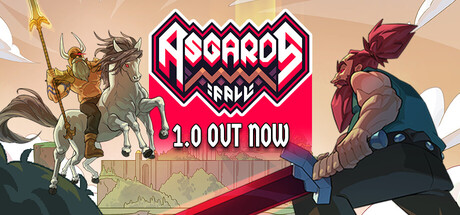
Asgard's Fall left Early Access on September 9 with a useful mid-tier market signal rather than a breakout. At approximately 1:03 p.m. Malaysia time on September 10, Steam's public endpoints showed 413 current players and 1,299 all-language reviews, including 1,065 positive and 234 negative recommendations. That is 82.0% positive after rounding. The morning market report had observed 476 concurrent players at 9:08 a.m.; the two snapshots are close enough to describe a live launch audience, but neither is a retention curve or a sales figure.
The release matters because version 1.0 adds the Druid, a new Helheim boss, more ability variation, and an unusually visible Twitch extension that lets viewers vote on help or interference. The game is inexpensive at launch—Steam showed a $9.99 U.S. list price and a temporary 50% discount to $4.99—but price does not erase the main caution. Several recent reviewers report menu slowdowns, crashes, or progress frustration around the transition from Early Access. This is a launch and review-signal analysis based on public data, not a hands-on review.
Why it is visible now
The immediate reason is a full-release beat with enough new material to reactivate an existing community. Soulpotion is not introducing an unknown prototype. It is asking players who followed the 2025 Early Access period to reassess a more complete package, while the new Druid gives experienced players a concrete reason to return.
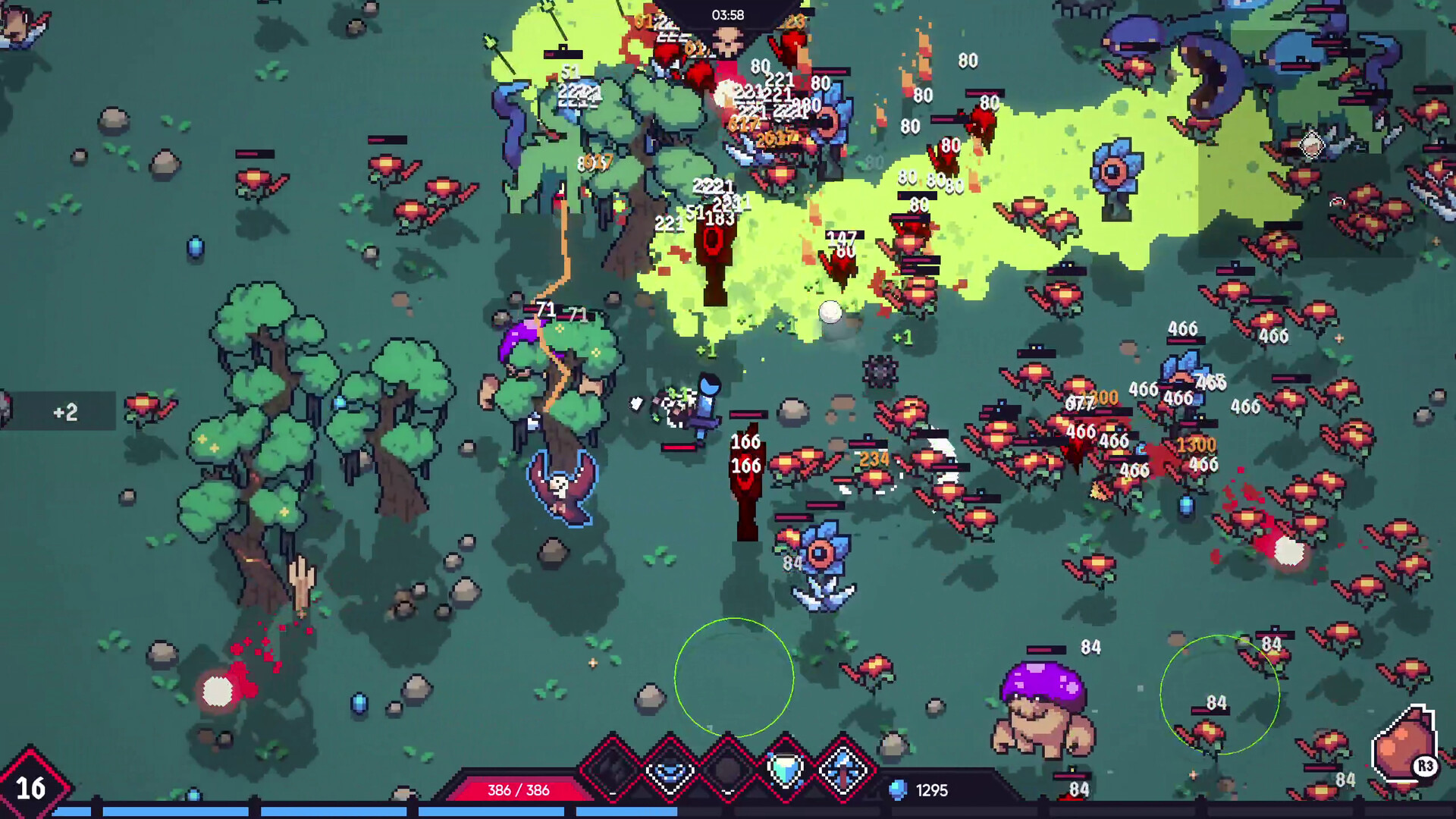
The broader reason is that survivors-likes remain easy to read in a short clip: enemies fill the arena, attacks become denser, and a build either clears space or collapses. Asgard's Fall wraps that familiar rhythm in Norse mythology, then tries to distinguish itself through Warpaint upgrades, the Web of Wyrd, runes, weapon combinations, and a large ability-modification pool. The official launch material describes nine realms and 37 abilities with 74 variants, so the sales pitch is depth inside a known structure rather than a new genre.
The 413-player snapshot is meaningful for a focused premium release, yet modest beside the genre leaders. It supports the claim that people are actively testing 1.0. It does not establish long-term momentum, profitability, or the health of every region and time zone.
Genre, platform, and release status
Steam lists Asgard's Fall as Action, Adventure, Casual, Indie, RPG, and Strategy for Windows. It is now a fully released product, not Early Access. Soulpotion is the developer; Assemble Entertainment and Sidekick Publishing are listed as publishers.
That status changes what buyers should expect. During Early Access, limited content and rough interfaces can be understood as work in progress. A 1.0 label shifts attention toward stability, late-game variety, progression continuity, and whether the available characters feel complete. The launch-day review pool includes older Early Access feedback, so the lifetime 82.0% should not be treated as a clean score for version 1.0 alone.
The game is also not an automatic-attack idle experience. Positioning through dense hordes, choosing upgrades, arranging rune-based progression, and understanding ability synergies remain central. Players who dislike the escalating visual density or the repeated 20-minute run structure are unlikely to be converted by the Norse theme alone.
The core loop and differentiator
The loop begins with a hero entering a realm and fighting increasingly dense waves. Kills produce experience and upgrade opportunities. The player selects abilities, modifies them, combines weapons, and tries to create enough area coverage or focused damage to survive bosses. A successful or failed run feeds permanent systems, including Warpaint and the Web of Wyrd, which shape later attempts.
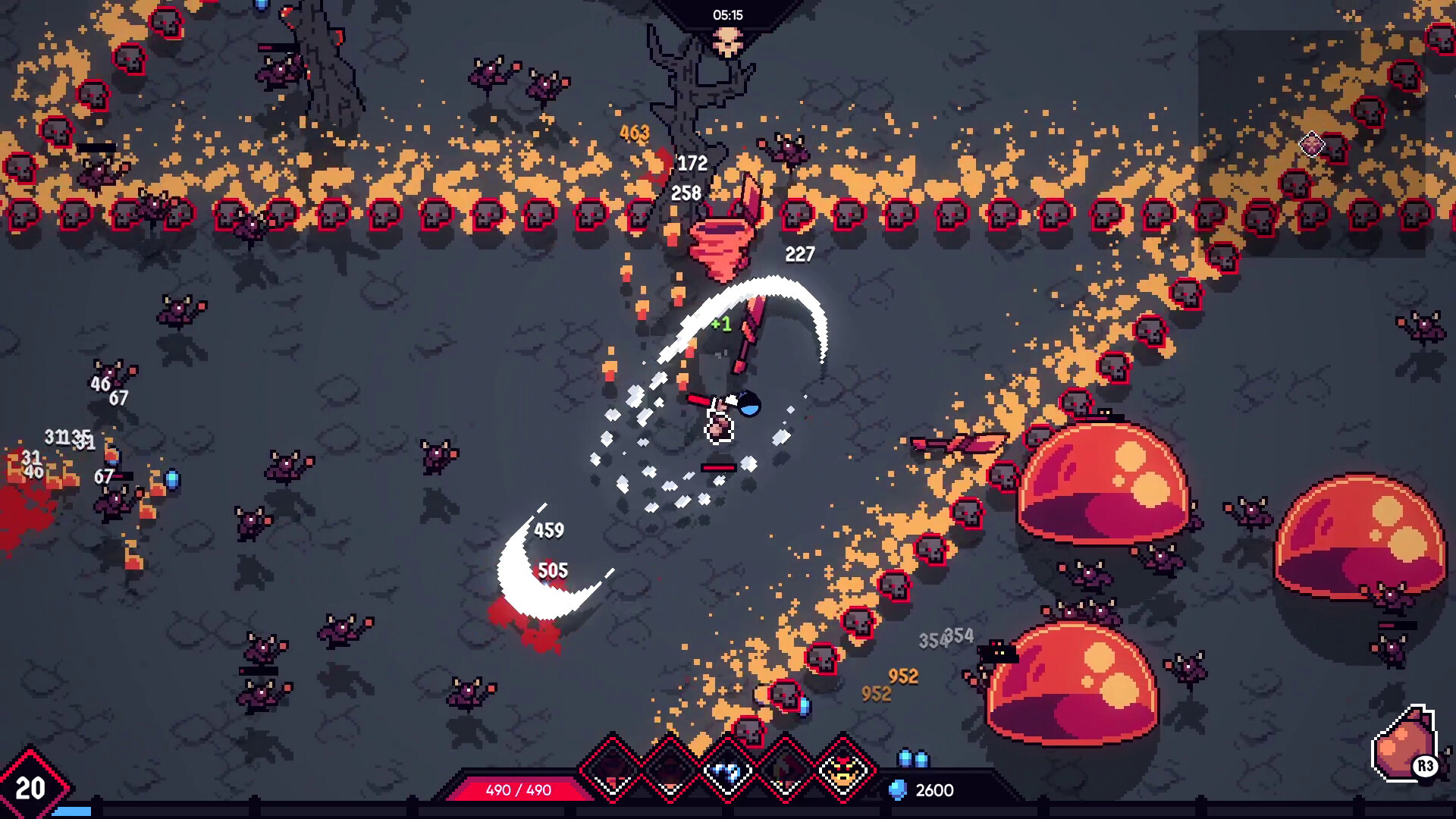
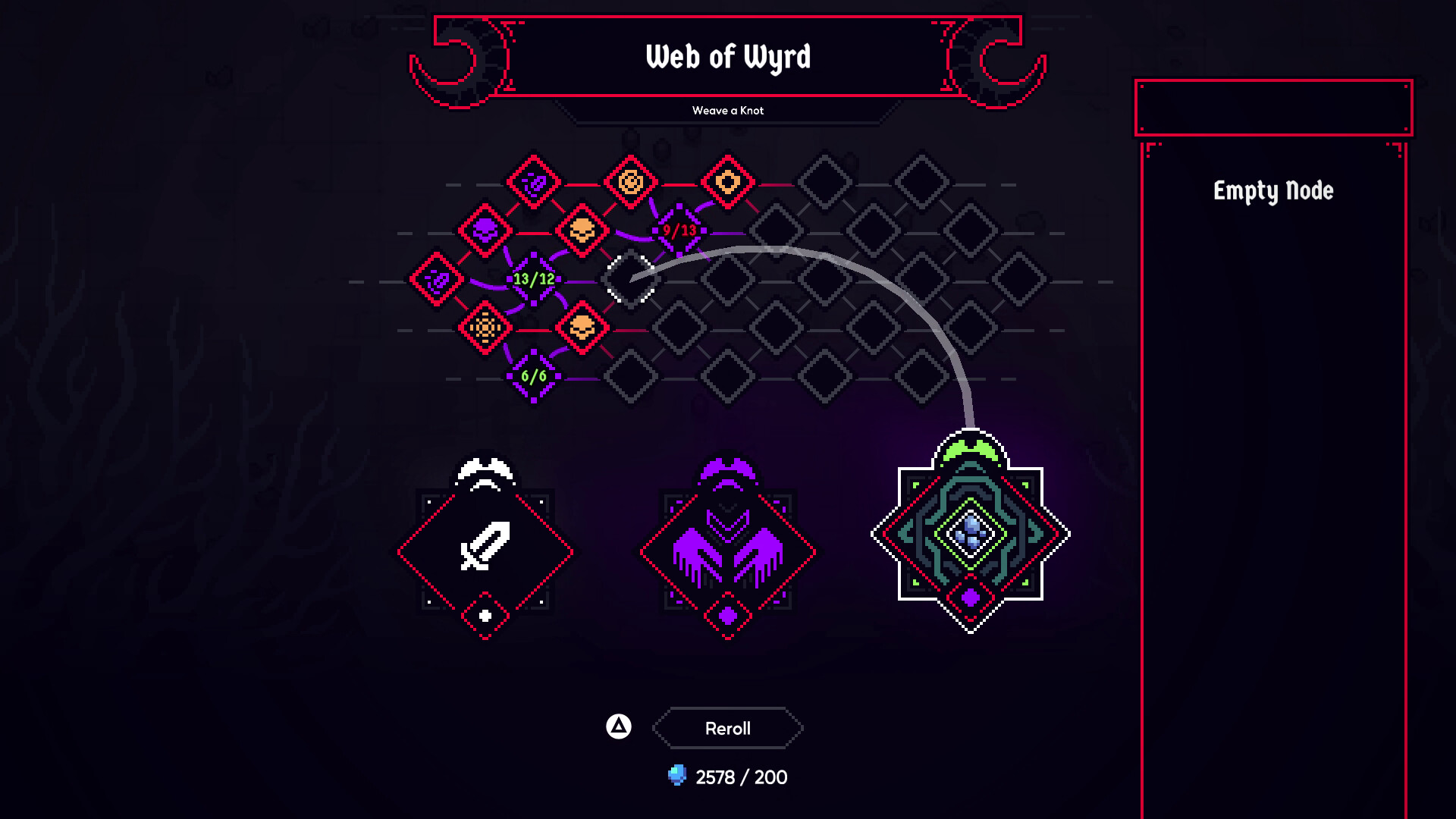
The differentiator is not simply "Vampire Survivors with Vikings." The stronger idea is that several progression layers interact. An ability choice affects the current run; variants alter how it behaves; runes create an inventory-like planning problem; permanent progression changes the next starting position. That gives players more to optimize than raw damage percentages.
The Twitch extension adds a second layer of asymmetry. Viewers can vote to bless or hinder the player, converting a solitary run into a lightweight live event. It is a smart discovery feature because the audience can influence outcomes without learning the entire build system. It is still an amplifier, not a substitute: if movement, performance, and build variety do not hold up, audience interaction cannot repair the core loop.
Market numbers and review signal
The refreshed public snapshot was:
- 413 current Steam players at approximately 1:03 p.m. MYT;
- 1,299 all-language reviews;
- 1,065 positive and 234 negative recommendations;
- 82.0% positive after rounding;
- $9.99 U.S. list price, temporarily discounted to $4.99;
- full release on September 9, 2026.
Steam does not publish unit sales, net revenue, refund volume, or the portion of reviewers playing the final build. We therefore do not infer copies sold. The market report's 476-player morning observation and our 413-player refresh are time-stamped snapshots, not proof of growth or decline.
We inspected a bounded sample of 30 recent public reviews returned by Steam. Twenty-four were positive and six negative. That 30-review sample is not representative enough to replace the 1,299-review aggregate, but it does reveal what recent players repeat when discussing the release transition.
What players praise and criticize
Positive comments repeatedly praise the satisfying power curve, build synergies, Norse presentation, Warpaint or rune systems, and the familiar pleasure of clearing huge hordes. Multiple reviewers call the game addictive or unusually deep for its price. Several specifically value the way weapons, mappings, and permanent progression create different routes toward an overpowered run.
The negative cluster is more operational. Recent reviewers mention menu frame-rate collapse, a possible memory leak, crashes that erase run progress, UI freezes, and confusion about the 1.0 progression reset. Others say the game remains light on characters or long-term content compared with established competitors. Even positive recommendations sometimes attach a performance warning.
Those patterns explain the current rating better than a single enthusiastic or angry post. Players broadly like the build engine, but the 1.0 transition has placed technical stability and progression expectations under a brighter light. The studio's fastest path to a stronger recent score is likely performance and crash work before another major content layer.
Meaning beside its competitors
Asgard's Fall competes in a crowded field where Vampire Survivors established a very low price and where games such as Halls of Torment, Soulstone Survivors, and Deep Rock Galactic: Survivor offer distinct visual identities or progression structures. Simply adding more abilities is not enough; players have learned to identify whether choices create genuinely different runs or only larger numbers.
The Norse theme gives Asgard's Fall recognizable realms, creatures, and heroes, while the rune and Warpaint systems create a planning identity. Its current advantage is value: the launch discount makes experimentation inexpensive. Its disadvantage is comparison pressure. At 1.0, buyers can reasonably ask whether the technical experience and content breadth match games that have spent years refining the formula.
The Twitch integration is the clearest marketing distinction, especially for small creators who want audience participation without installing a separate multiplayer game. That feature will matter commercially only if creators can set it up easily and if viewer interference produces readable, funny consequences rather than random frustration.
Who should buy—and who should wait
Asgard's Fall is most suitable for players who already enjoy survivors-likes, want several overlapping build systems, and like a Norse wrapper. At the temporary $4.99 price, it is a low-cost way to explore a substantial progression tree. Streamers with an active chat have an additional reason to test the viewer-voting extension.
Wait if crashes, menu performance, or progression resets are deal breakers. Players who exhausted the Early Access build should read current patch notes and recent reviews before assuming every old concern has changed. Anyone looking for a dramatically different combat genre should also calibrate expectations: the innovations sit inside the survivors-like template.
IndieGame.party verdict
Asgard's Fall has earned a cautious positive launch signal. The 1,299-review pool is large enough to show sustained approval, the current-player snapshot confirms an active 1.0 audience, and the build systems offer more identity than a theme swap. The 82.0% score is healthy, not exceptional.
Our recommendation is buy for build experimentation or Twitch interaction, but verify performance first. The release will look stronger if Soulpotion stabilizes menus and crashes quickly and communicates clearly about progression changes. The core loop is winning praise; the release layer is where confidence can still be lost.
Data and image sources
- Official Steam store page: https://store.steampowered.com/app/2780710/Asgards_Fall__Viking_Survivors/
- Steam public review-summary and current-player endpoints, checked September 10, 2026 at approximately 1:03 p.m. MYT.
- Official September 9 launch announcement distributed by Assemble Entertainment: https://www.gamespress.com/tr/Asgards-Fall---Out-Today-on-Steam
- Review themes summarize a bounded sample of 30 recent all-language public reviews; individual wording was not reproduced.
- All four images are official Steam store assets supplied by Assemble Entertainment and Sidekick Publishing, downloaded locally on September 10, 2026 for identification, reporting, and criticism. They are not composited or materially altered.