Anime Shop Simulator Has a Strong Collection Hook and a Weak Launch Foundation
Anime Shop Simulator combines two compulsive fantasies: building a specialty retail store and deciding whether a collectible belongs on the shelf or in a personal collection. Its launch proves that the concept can attract an audience. It also shows why a readable hook is not enough when staff automation, customer pathing, placement, and progression arrive rough.

Anime Shop Simulator combines two compulsive fantasies: building a specialty retail store and deciding whether a collectible belongs on the shelf or in a personal collection. Its launch proves that the concept can attract an audience. It also shows why a readable hook is not enough when staff automation, customer pathing, placement, and progression arrive rough.
At 1:03 p.m. Malaysia time on September 14, Steam's official endpoints showed 1,422 concurrent players and 477 all-language reviews: 347 positive and 130 negative, or 72.7% positive. That is meaningful activity for a three-day-old indie release, but the review ratio is a caution signal rather than a clean endorsement. This is launch and review-signal analysis, not a hands-on review.
Why it is visible now
The game explains itself through objects people already want to collect: manga, figures, trading cards, clothing, and themed merchandise. Players order inventory, stock shelves, set prices, serve customers, open packs, display rare pulls, and can battle with collected cards. Up to four-player co-op turns routine shop work into a social task.
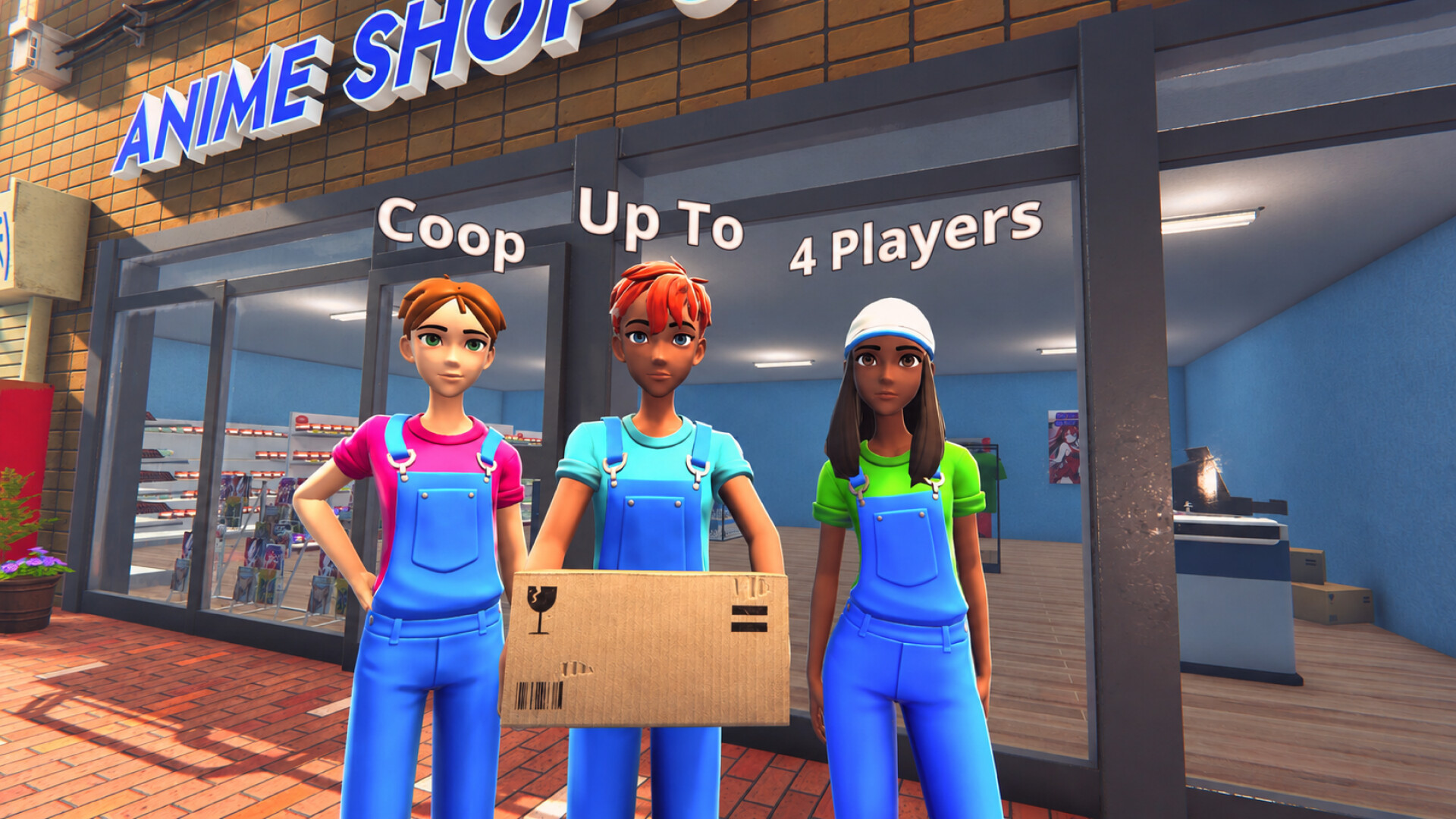
That bundle differentiates it from a generic supermarket simulator. A case of ordinary products is only margin. A collectible pack can become inventory, a display object, a playable card, or a personal trophy. The same purchase therefore supports several motivations.
The September 14 market report recorded 2,232 players earlier in the morning. The lower afternoon count is consistent with a daily cycle, while the continuing four-digit audience confirms real interest. Malaysia pricing was RM31.45 during a 15% launch promotion, down from RM37.00 at the check.
Genre, platform, and release status
Steam lists a released Windows game with simulation, casual, RPG, action, adventure, sports, and multiplayer tags. The practical category is first-person retail management with collection and co-op systems. Its breadth on the store page should not be mistaken for equal depth across each genre.
The game supports solo play and four-player cooperation. Co-op is an important promise because stocking, checkout, ordering, cleaning, and collecting naturally divide into roles. Recent reviews, however, mention multiplayer problems. Buyers interested primarily in co-op should verify current patch notes and region-specific reports.
The release is not labeled early access on the official listing. That raises expectations for basic employee behavior, collision, shelf placement, and progression pacing. Several negative reviews describe the current build as having potential but feeling insufficiently tested.
The core loop and collection engine
The store loop is straightforward: order products, place them on shelves, set prices, serve customers, reinvest profit, hire or direct staff, expand the floor, and react to trends. Collectible-card packs introduce uncertainty and ownership decisions. Keeping a rare card sacrifices immediate sale value but grows a personal display or battle deck.
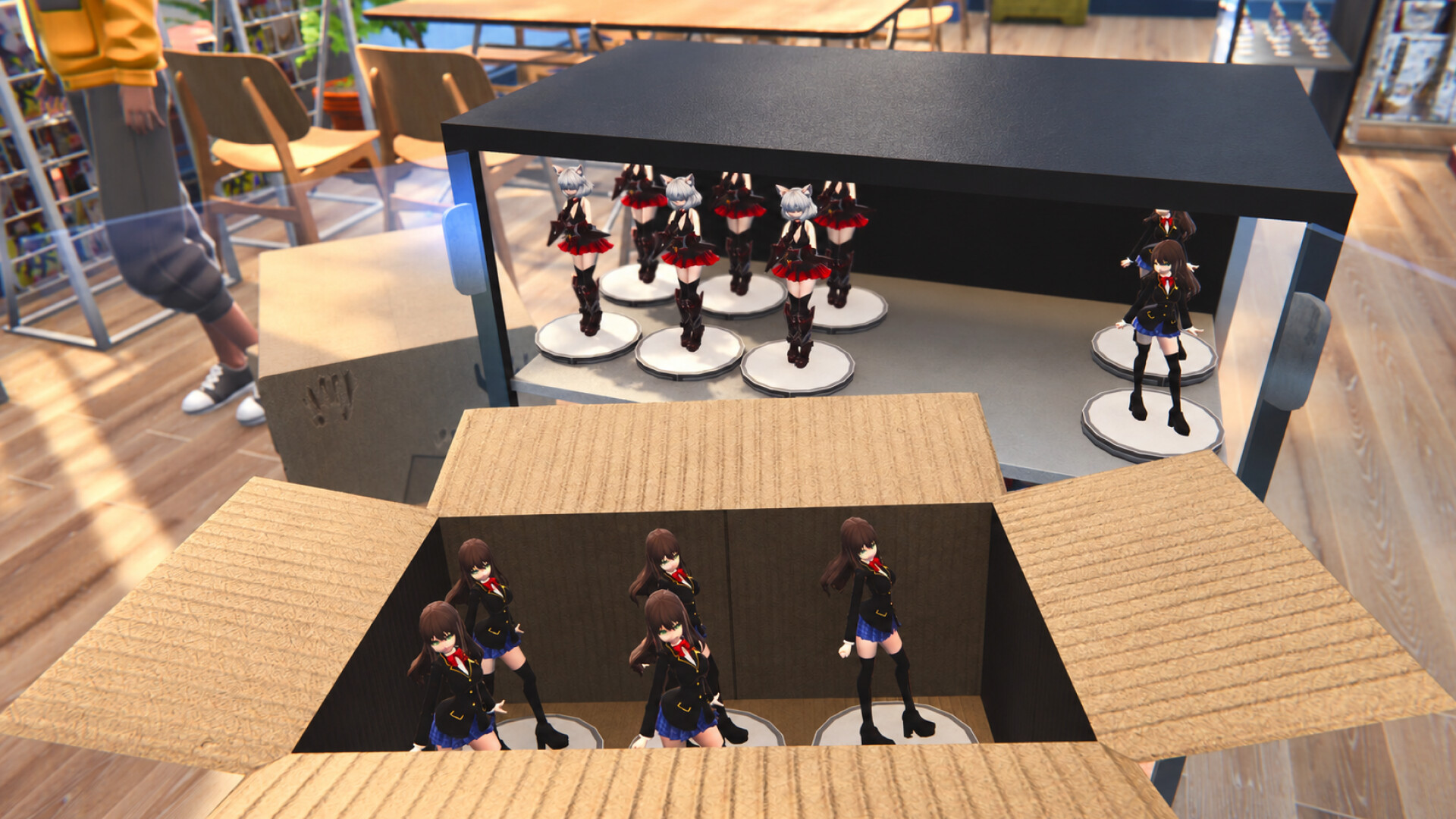
That decision is the game's best system. Inventory simulators often become a solved spreadsheet once the highest-margin product is known. Collection creates emotional value that is not identical to cash value. A player may chase completion, aesthetics, or competitive utility.
Card battles can close the loop if they make the collection mechanically useful. The danger is building a shallow second game that distracts from store polish. Every card effect, opponent, balance change, and user-interface state adds maintenance cost.
Employees are supposed to automate repetitive tasks as the store grows. Recent criticism says workers are unreliable, customer behavior can block checkout, and expensive shelving creates punishing progression. Automation must arrive before the manual loop becomes exhausting; otherwise expansion increases chores instead of leverage.
Verified market snapshot
The all-language public review endpoint returned 477 reviews with 347 positive and 130 negative. A 72.7% ratio corresponds to a “Mostly Positive” Steam summary and signals divided experience. Current players were 1,422 at the publication check, with the morning report recording 2,232.
The data indicates strong curiosity and weak-to-moderate satisfaction. It does not reveal sales, revenue, refunds, or the number of co-op sessions. Review writers are self-selected, and the sample can change rapidly during launch week.
The store's recommendation count may differ from the API summary because of update timing and display rules. This article uses one consistent public endpoint for the ratio and records its timestamp.
Repeated praise and complaints
Positive reviews repeatedly praise pack opening, collecting, displaying cards, and the fantasy of running an anime store. Several users call the loop addictive or especially fun with friends. The specificity of that praise is encouraging: players are responding to the differentiating system, not merely the premise.
Negative reviews cluster more clearly than in Elderfield's sample. Complaints include broken or ineffective employees, bugs near game-breaking severity, reused customer assets, awkward shelf placement, customer collision around checkout, punitive costs, and a sense that the full release contains less polish than expected.
The 20 recent reviews sampled for this article are not a census. They are enough to identify recurring launch risks but not enough to estimate how many players encounter each issue. Some positive reviewers mention the same bugs while still recommending the game.
The most serious design complaint concerns progression economics. If a shelf costs far more than the daily operating surplus, the player may repeat a narrow routine for too long. That pacing can be corrected numerically, but employee and pathfinding failures require deeper engineering.
Competition and significance
The game competes with Supermarket Simulator, TCG Card Shop Simulator, and a growing wave of first-person job simulations. Its advantage is thematic density: products, store decoration, collection, and card play all reinforce the same fantasy.
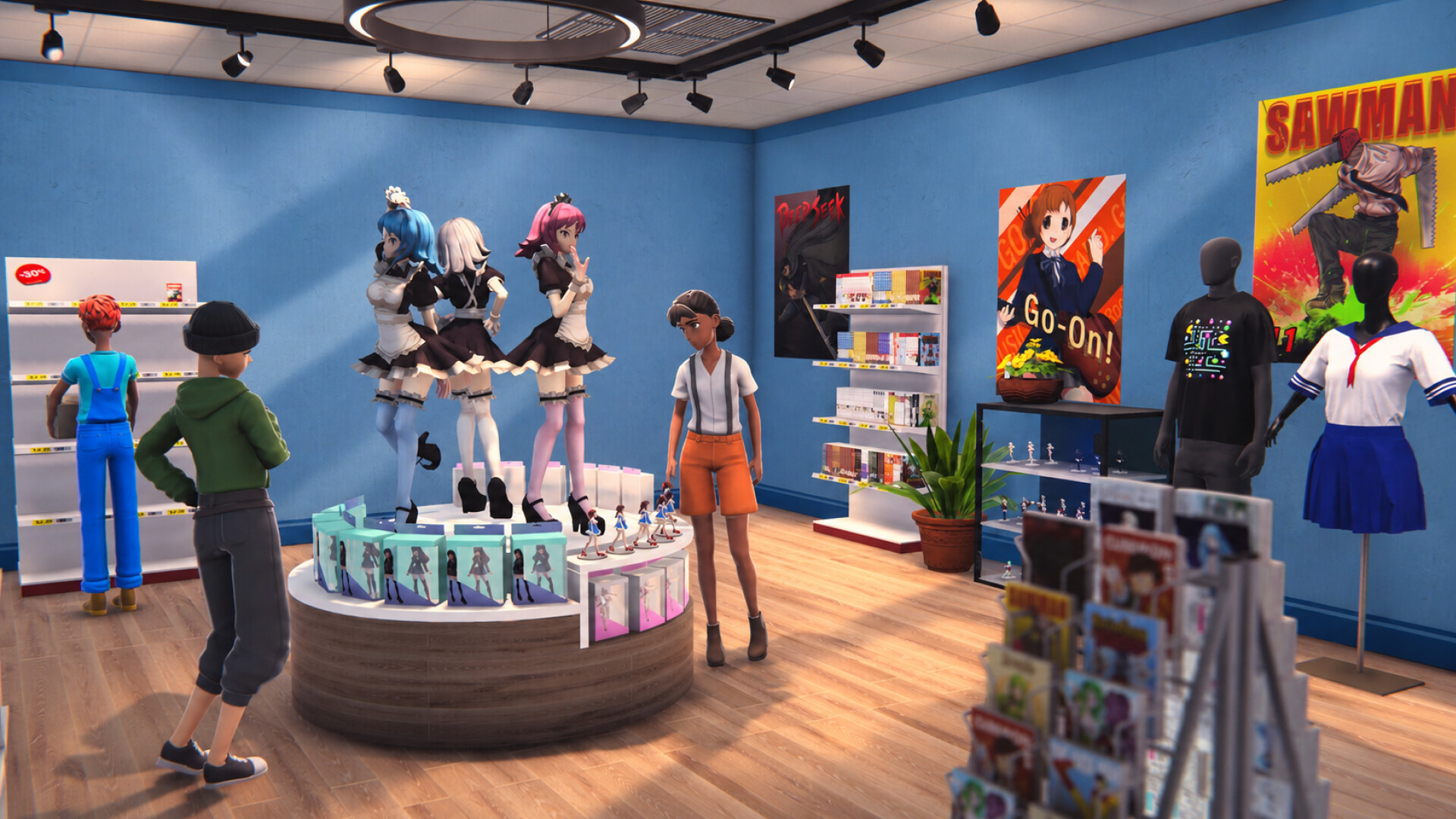
Its disadvantage is direct comparison with games that have already refined stocking and employee systems. A niche theme can acquire the first session; reliable automation determines whether the fifteenth hour feels like growth.
For developers, the launch demonstrates both sides of a hybrid loop. One object serving as merchandise, collection item, and gameplay component is efficient design. Adding co-op and simulated employees before the foundation is stable multiplies failure states.
Who should buy and who should wait
Buy now only if the collection fantasy is unusually appealing and you tolerate launch bugs. Solo players who enjoy manual stocking and card opening may find enough value despite rough systems.
Wait if employee automation, smooth co-op, polished customer behavior, or predictable progression are essential. The current review ratio and detailed complaints justify watching several patch cycles rather than assuming every issue is cosmetic.
IndieGame.party verdict
Anime Shop Simulator has a proven attention hook but an unfinished-feeling operating layer. The collectible decision is smart and the active audience is real. Our verdict is cautious: wishlist or wait for patches, especially for co-op buyers. The game can improve materially if the team fixes employees, collision, placement, and economy pacing before the launch audience moves on.
Data and image sources
- Official Steam store: https://store.steampowered.com/app/3393280/Anime_Shop_Simulator/
- Steam public review summary: https://store.steampowered.com/appreviews/3393280?json=1&language=all&purchase_type=all
- Steam current-player API: https://api.steampowered.com/ISteamUserStats/GetNumberOfCurrentPlayers/v1/?appid=3393280
- All four images are official Steam store assets, © One More Time and Polnoch, downloaded locally on September 14, 2026 for identification, reporting, and criticism without compositing or semantic alteration.